Python If Then Else In One Line
Hey there, fellow digital explorers! Ever feel like you're juggling a million things, and your code, well, it could use a bit of that effortless cool? Like a perfectly curated playlist or a barista who knows your order before you even open your mouth? Yeah, me too. Today, we’re diving into a little slice of Python magic that’s going to seriously level up your coding game without breaking a sweat. We’re talking about the "if-then-else in one line". Think of it as your coding superpower, a secret handshake with the universe of logic, all wrapped up in a neat, tidy package.
You know those moments when you need a quick decision in your code? Like, "if the user is logged in, show the dashboard; else, show the login page"? Traditionally, that’s a few lines, right? Maybe a couple of `if`, `else`, and the curly braces (or indentation, if you're a Pythonista like us) to keep things structured. It's perfectly fine, totally functional, and honestly, it’s the bread and butter of coding. But sometimes, you want to be a little more… sleek. A little more like you just effortlessly tossed off a brilliant line of poetry. And that’s where our one-liner hero swoops in!
The Humble Beginnings: Why We Love Options
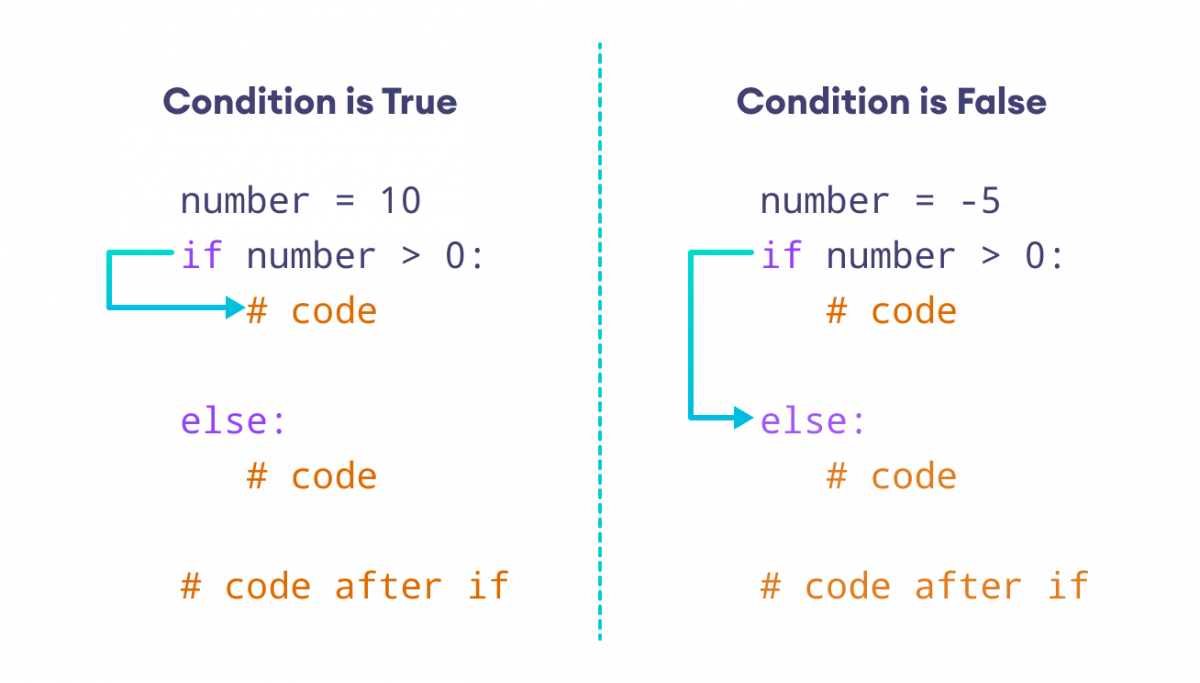
Before we get to the flashy bit, let’s appreciate the classic. The good ol’ multi-line `if-else` statement. It’s like the comfy sweater in your wardrobe – reliable, familiar, and gets the job done. In Python, it looks something like this:
Must Read
if condition:
    # do this
else:
    # do that
This is foundational. It’s how we teach beginners, how we build complex logic. It's clear, it's readable, and it’s robust. But imagine if you could condense that clarity and robustness into a single, elegant line? That’s the dream, right? It’s like the difference between explaining a recipe step-by-step versus showing someone a quick, expert chop. Both get you the delicious food, but one feels a little more… artful.
Think about the history of programming. We've gone from punch cards to these incredibly expressive, high-level languages. Each step has been about making things more efficient, more readable, and more powerful. The one-liner `if-else` is a tiny but significant step in that same direction, a little nod to conciseness that makes you feel like you’ve unlocked a hidden level.
Enter the One-Liner: A Splash of Elegance
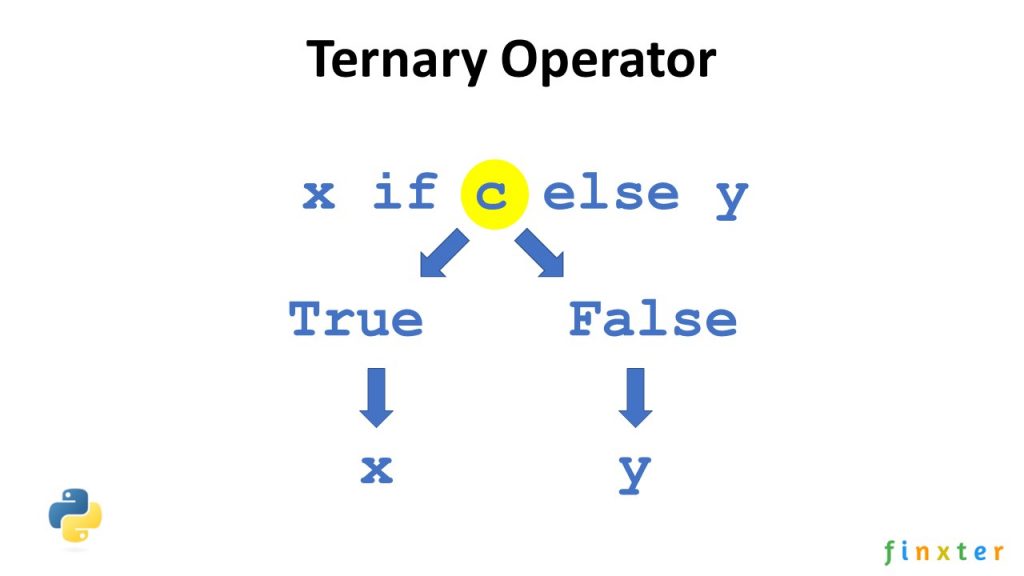
So, how do we achieve this feat of brevity? Python offers a beautiful construct called the conditional expression, often affectionately referred to as the "ternary operator" (a nod to its three-part structure). It’s a single line that packs the punch of an `if-else` statement.
The syntax goes like this:
value_if_true if condition else value_if_false
See that? It reads almost like English. Let’s break it down:
value_if_true: This is what gets returned or assigned if the `condition` is met (evaluates to `True`).if condition: This is the logical check you’re making.else value_if_false: This is what gets returned or assigned if the `condition` is not met (evaluates to `False`).
It’s like a tiny, self-contained decision-making machine. And the beauty is, it evaluates to a value. This means you can use it directly in assignments, in function calls, or even within other expressions. Mind. Blown.

Practical Magic: Putting it to Work
Let’s get real. Where would you actually use this? Everywhere! Well, maybe not everywhere, but in plenty of common scenarios where you need a simple, binary choice.
Assigning Variables with Flair
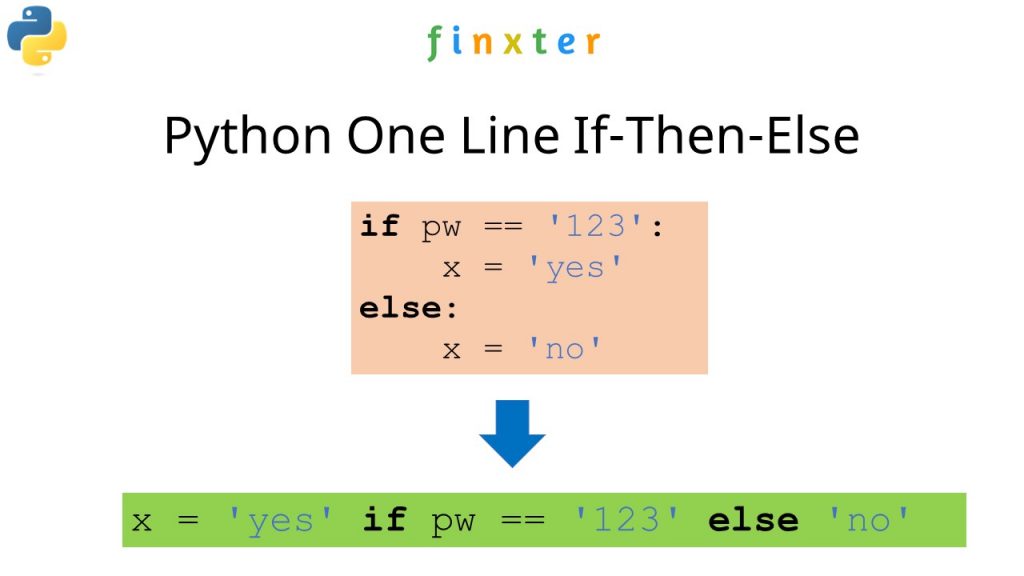
This is probably the most common use case. Let’s say you’re getting user input and need to assign a status based on their age. Instead of:
age = int(input("Enter your age: "))
if age >= 18:
    status = "Adult"
else:
    status = "Minor"
print(f"Your status is: {status}")
You can go:
age = int(input("Enter your age: "))
status = "Adult" if age >= 18 else "Minor"
print(f"Your status is: {status}")
Boom! Two lines instead of four. It’s cleaner, and for simple assignments, it’s arguably more readable because the assignment and the condition are right next to each other. It’s like ordering a gourmet coffee with a single, decisive word instead of a lengthy explanation. The barista gets it, and you get your perfect brew.
Short-Circuiting Your Logic
This one-liner is also fantastic for when you want to conditionally choose a value to pass to a function or use in a calculation. Imagine you’re calculating a discount. If the order total is over $100, you get a 10% discount; otherwise, you get no discount.
Traditional:

order_total = 120.50
discount_rate = 0.0
if order_total > 100:
    discount_rate = 0.10
final_price = order_total * (1 - discount_rate)
print(f"Final price: ${final_price:.2f}")
One-liner elegance:
order_total = 120.50
discount_rate = 0.10 if order_total > 100 else 0.0
final_price = order_total * (1 - discount_rate)
print(f"Final price: ${final_price:.2f}")
It’s subtle, but it makes your code flow better. It’s like a well-edited sentence where every word counts. No wasted space, just pure, functional beauty. This is the kind of optimization that doesn't just save you typing; it can also make your code more enjoyable to read and maintain, especially for those quick, clear decisions.
Returning Values from Functions
Functions are all about returning values, right? And sometimes, the value you return depends on a simple condition. This is another prime spot for our one-liner.
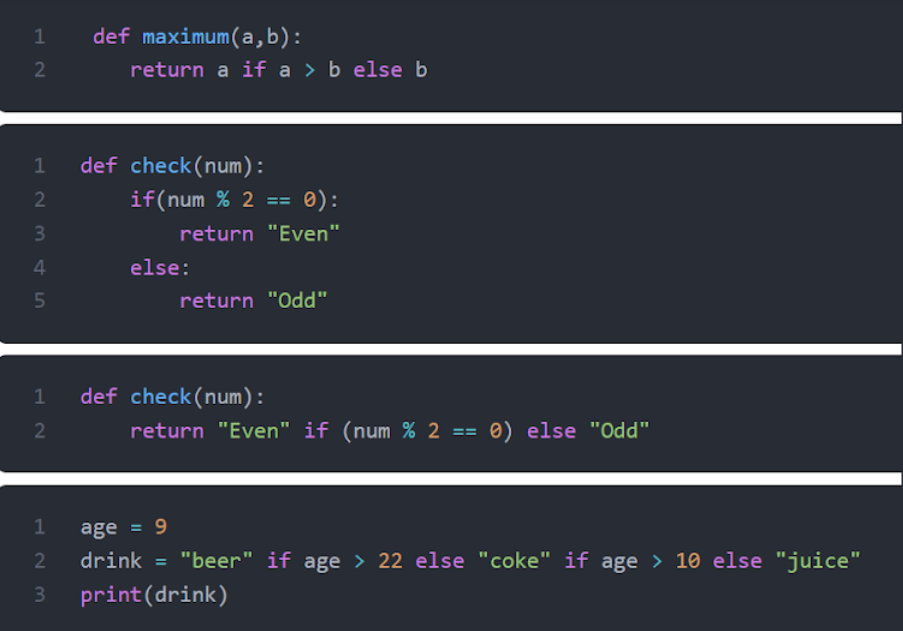
Consider a function that determines if a number is even or odd:
def check_even_odd(number):
    if number % 2 == 0:
        return "Even"
    else:
        return "Odd"

print(check_even_odd(5))
print(check_even_odd(10))
Refactored with a conditional expression:
def check_even_odd(number):
    return "Even" if number % 2 == 0 else "Odd"

print(check_even_odd(5))
print(check_even_odd(10))
This is incredibly common in functional programming paradigms, where small, pure functions are the building blocks. It’s like a chef plating a delicate dish – each component is essential, and the presentation is key. This version is so compact, it feels almost cheeky, but it’s perfectly Pythonic.
When to Embrace the Brevity (and When to Hold Back)
Now, before you go replacing every `if-else` statement in existence with a one-liner, let’s talk about balance. Like a good cup of coffee, moderation is key. This construct is best for simple, straightforward conditions. If your `value_if_true` or `value_if_false` involves multiple lines of code, complex calculations, or further conditional logic, you’re probably better off sticking to the traditional `if-else` block.
Think of it this way: when you’re assembling IKEA furniture, sometimes the Allen key is perfect. Other times, you need the power drill. Both have their place. The one-liner is your Allen key – precise, efficient for small tasks, and makes you feel like a pro.
Rule of thumb: If you can read the entire conditional expression and understand its intent within, say, 5-10 seconds, it's probably a good candidate. If you find yourself squinting, rereading, or mentally expanding it back into a multi-line statement, then it's probably time to give it some breathing room.
Adding too much complexity to a one-liner can lead to code that’s harder to debug and less readable for others (and even your future self!). It’s like trying to cram a whole novel onto a business card – you might succeed, but no one’s going to enjoy reading it.
Fun Facts and Cultural Nods
Did you know that the concept of a ternary operator exists in many other programming languages, though the syntax might differ? C, Java, JavaScript, and C# all have versions of it. Python’s syntax is often considered one of the most readable. It’s like how different cultures have their own unique twist on a common dish – the essence is the same, but the flavor is distinct.
The term "ternary operator" comes from the fact that it has three operands: the condition, the value if true, and the value if false. It’s a little linguistic quirk that hints at the structure. It’s like the subtle naming conventions in music theory that reveal underlying harmonies.
In the world of Python, Guido van Rossum, the creator of Python, designed it to be clear and readable. The placement of `if` and `else` makes it feel more natural to read from left to right, mimicking how we naturally process information. It’s a small design choice that makes a big difference in the developer experience. It’s like the user interface design in your favorite app – intuitive and pleasant to interact with.
The Zen of Concise Code
So, why bother with this one-liner? It’s more than just saving a few keystrokes. It’s about adopting a mindset of clarity and efficiency. It’s about appreciating the elegance that can be found in simplicity. It's like learning to make a perfect pour-over coffee; the technique is simple, but the result is sublime.
It encourages you to think about your logic in a more distilled way. When you’re forced to condense a decision into a single expression, you often end up simplifying your thought process. It’s like a comedian honing a joke – every word has to count. This can lead to more robust and easier-to-understand code in the long run.
It’s also a nod to the fact that in modern software development, speed and efficiency are often paramount. While readability is king, being able to express common logic concisely can speed up development and make code reviews a breeze. It’s like a well-oiled machine – everything runs smoothly and efficiently.
Think of it as adding a bit of oomph to your coding toolkit. It’s the small details that often make the biggest difference. It’s the difference between a basic outfit and one accessorized with a statement piece – it elevates the whole look.
A Daily Dose of Pythonic Living
This might seem like a tiny detail in the grand scheme of things, but mastering these little Pythonic tricks can profoundly impact your coding journey. It’s like learning to tie a knot perfectly or fold a fitted sheet without a wrestling match. Small skills, big satisfaction.
In our daily lives, we’re constantly making quick decisions. Should I take the umbrella? Is it worth the extra few bucks for the organic coffee? Do I have time for that extra episode? These are all mini `if-else` statements playing out in our brains. And sometimes, we make those decisions almost instantly, without overthinking. Python’s one-liner `if-else` is a reflection of that human efficiency, a way to translate that effortless decision-making into code.
So next time you’re writing a simple conditional assignment, give the one-liner a try. See how it feels. It might just become your new favorite coding habit, a little secret weapon in your arsenal that makes your code not just functional, but also undeniably cool. Happy coding!