How Do I Edit A Wordpress Theme

So, you’ve finally landed on that perfect WordPress theme. It’s sleek, it’s stylish, and it’s going to make your blog the envy of all your cat-loving, artisanal-toast-eating friends. But then you stare at it. And you think, “Hmm, a tiny tiny tweak here… a little something over there.”
And that, my friends, is how the editing journey begins. It’s like ordering a pizza and then deciding you absolutely need to add anchovies, even though you’ve never actually eaten an anchovy before. Exciting, right?
The "Child Theme" Conundrum
First things first, you’ll hear whispers. Scary whispers. Whispers about something called a "child theme". Now, this isn't some mystical creature from a forgotten land. It's actually your best friend in this whole editing escapade. Think of it as a tiny, loyal sidekick to your main theme.
Must Read
Why bother with a child theme, you ask? Well, imagine you have a magnificent castle (your main theme). If you start painting murals on the outside of the castle, what happens when the queen upgrades her favorite shade of royal blue? Poof! Your beautiful murals are gone.
A child theme lets you mess around without angering the original theme gods. It’s like building a little treehouse next to the castle. You can paint that treehouse to your heart’s content, and the castle remains perfectly intact. Revolutionary!
Creating Your Little Rebel
So, how do you get this magical child theme? It’s not exactly a one-click operation, but it’s also not rocket science. You’ll need a couple of simple files. Yep, just a couple of little text documents that hold the keys to your editing kingdom.
The main players are usually style.css and functions.php. Don’t let the fancy names scare you. They’re just fancy names for places where you can put your amazing ideas. Think of them as blank canvases.
You’ll need to create a new folder for your child theme, give it a catchy name, and then pop those two files inside. And, voila! You have your very own, untamed, ready-for-action child theme. Give yourself a pat on the back. You’re practically a theme wizard now.
Dabbling in the CSS Cauldron
Now for the fun part: making things look exactly how you want them. And the primary tool for this is CSS. Ah, CSS. The language of web design. It's where you tell your website what color its buttons should be, how big the text should appear, and whether that little social media icon should wink at you (okay, maybe not that last one).
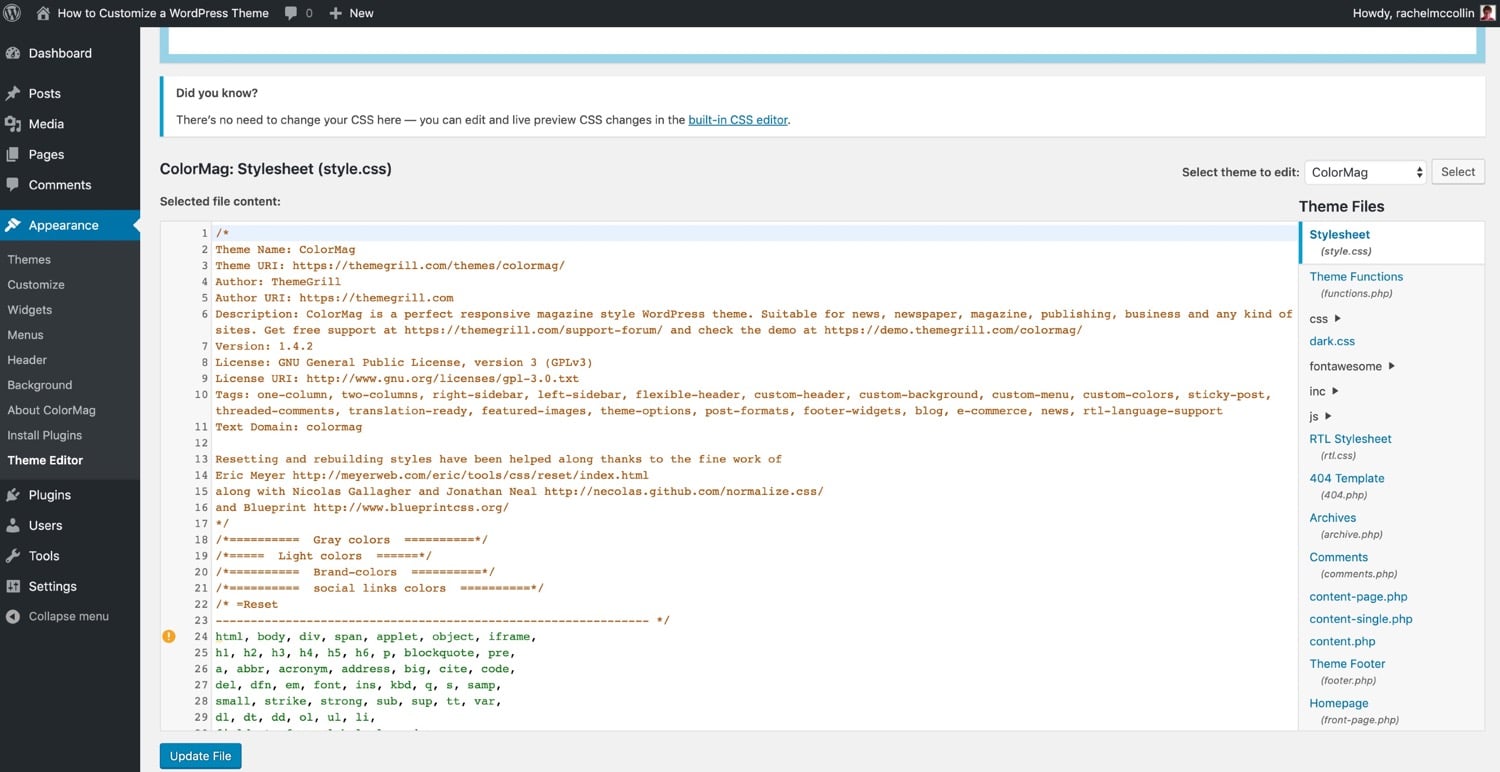
You can find the style.css file within your child theme folder. Open it up. It might look like a bunch of scribbles at first. But fear not! Those scribbles are commands. Commands for your website to obey.
Let’s say you want to make all your headings a fetching shade of neon green. You’d find the code that’s already there for headings (probably something like h1, h2, h3 { ... }) and add a line that says color: #00FF00;. Boom. Neon green headings. You’re practically Michelangelo of the internet.
It’s all about finding the right “selector” (like h1) and then giving it a “property” (like color) and a “value” (like #00FF00). Easy peasy, lemon squeezy.
Color, Fonts, and the Occasional Surprise
You can change fonts, adjust spacing, add borders, make things disappear and reappear. The possibilities are, well, almost endless. It’s like having a magic wand, but instead of chanting “abracadabra,” you’re typing semicolons and curly braces.
Sometimes, you might want to change something that seems like it should be in the style.css, but it’s hiding. This is where things can get a little… adventurous. You might need to peek into the parent theme’s style.css to see how they did it, and then lovingly override their choices in your child theme.

It’s a bit like following a recipe. You see they put in a cup of sugar, but you prefer a heaping cup. So, you just add a little more in your version. The trick is to know where to add your extra sugar without making the whole cake collapse.
The Mysterious `functions.php`
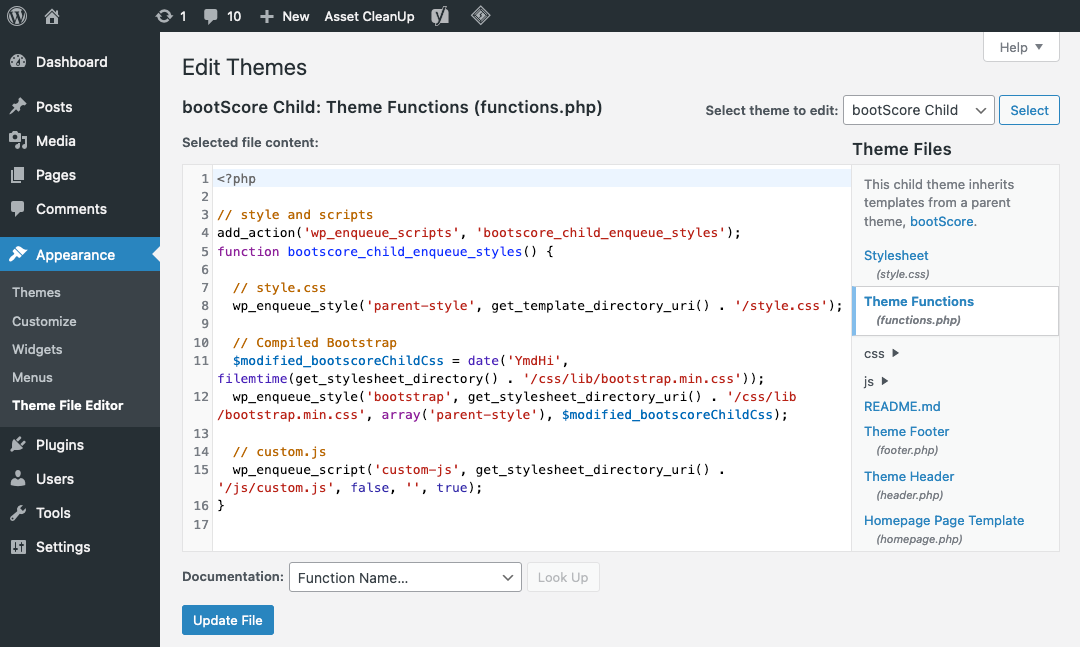
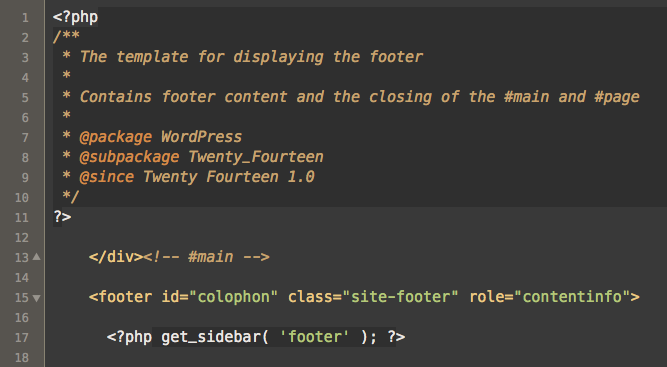
Then there’s the enigmatic functions.php. This file is like the engine of your website. It’s where the magic happens behind the scenes. You can add new features, modify existing ones, and generally make your WordPress site do things it never dreamed of.
Adding a new widget area? Want to enqueue a fancy new script that makes your images do a little jig? functions.php is your playground. You’ll be writing PHP code here, which might sound intimidating, but often it’s about copying and pasting snippets found online (with a healthy dose of skepticism, of course).
It’s crucial to be careful with functions.php. If you make a mistake, you could accidentally turn your beautiful website into a blank white screen of despair. It’s like playing Jenga with your website’s backbone. High stakes, high reward!
Copy, Paste, Pray (Sometimes)
The internet is a treasure trove of PHP snippets for WordPress. Found a cool little function that adds a “read more” button with a fun animation? Chances are, you can copy that code, paste it into your child theme’s functions.php, and watch it come to life. It’s like being a digital alchemist, transforming snippets of code into functional marvels.
But here’s an unpopular opinion: sometimes, just copying and pasting is perfectly fine! You don’t have to understand every single line of PHP to make your website do cool things. Start small. Add a little something. See what happens. It’s all part of the grand adventure.
And if something goes wrong? Well, that’s what backups are for! And a good cup of coffee. And maybe a short nap. We’ve all been there. Staring at that white screen, wondering what digital demon we’ve unleashed.
The WordPress Customizer: Your Friendly GUI
Now, not all editing requires diving into code. WordPress has a built-in friend called the Customizer. This is your friendly graphical interface for making those simpler tweaks without getting your hands too dirty.
You can access it by going to Appearance > Customize in your WordPress dashboard. Here, you’ll find options for changing your site’s title, tagline, colors, menus, and widgets. It’s the user-friendly side of editing, designed for humans who might not have a degree in computer science.
It’s like having a color palette and a set of brushes that instantly show you the results. Want to change the background color? Click, pick, see. Want to adjust your logo size? Click, drag, behold. It’s almost too easy!
What You Can and Can't Do
The Customizer is great for theme-specific options. Your theme developer might have built in controls for fonts, layouts, and other visual elements right here. It’s a fantastic starting point for making your site look unique.
However, the Customizer has its limits. If you want to move entire sections of your website around or add complex new functionalities, you’ll likely need to venture into the code. Think of the Customizer as the well-decorated living room of your website, while the code is the entire house, including the plumbing and electrical systems.
But for those quick, impactful changes that make your site feel like yours, the Customizer is an absolute godsend. It’s the friendly face of WordPress editing, reminding you that you don’t always have to wrestle with code to get what you want.
When to Call a Pro (or Just Google It Harder)
Let’s be honest. Sometimes, you’ll hit a wall. You’ll be staring at a piece of code, and it will stare back, mocking you with its cryptic symbols. This is a sign. A sign that maybe, just maybe, it’s time to ask for help.
This could mean asking a friend who’s a bit more tech-savvy, or it could mean heading to the vast, wonderful, and sometimes overwhelming world of Google. There are countless tutorials, forums, and communities dedicated to helping you solve almost any WordPress problem.
And sometimes, the best solution is to just accept that your theme is almost perfect. That the little quirk you can’t fix is actually part of its charm. An unpopular opinion for sure, but hey, sometimes "good enough" is actually great.
Editing a WordPress theme is a journey. It’s a bit of a mess, a bit of a triumph, and a whole lot of learning. So go forth, experiment, and remember: the most important thing is to have fun with it!