Public Limited Examples

I remember when I was a kid, probably around eight or nine, and my dad took me to see a big, shiny Tesco supermarket. It felt like a palace of wonders. Mountains of crisps, aisles of toys, and this huge, rumbling checkout system. I asked him, "Dad, who owns all of this?" And he said, "Well, lots of people, really. It's owned by the public."
Now, at nine years old, "owned by the public" sounded like a fairy tale. Did that mean I owned a little bit of that giant building? It was a bit mind-boggling, honestly. Fast forward a couple of decades, and that same confusion, albeit a more informed one, still pops up for a lot of people. What exactly does it mean for a company to be "publicly owned"? Let's dive in, shall we?
The Mystery of the "Publicly Owned" Empire
So, that big Tesco store, or the coffee shop you pop into every morning, or even that massive tech giant you're probably scrolling through right now – many of them are what we call Public Limited Companies, or PLCs. And that "public" part? It's not about freebies for everyone (sadly, no free crisps for nine-year-old me). It's about who can actually own a piece of the company.
Must Read
Think of it like this: imagine you bake the most amazing cookies in the world. You start small, in your kitchen. Then, suddenly, everyone wants your cookies. You need more ovens, more ingredients, more people to help bake and sell. Where do you get the money for all that?
Well, you could ask your family for a loan, but that might not be enough. So, you decide to sell little slices of your cookie business to other people. These slices are called shares. If people like your cookies and believe your business will grow, they'll buy these shares, giving you the money you need. And in return, they become part-owners of your cookie empire.
That, in a nutshell, is what a Public Limited Company does. It's a business that has sold its shares to the general public on a stock exchange. So, when we talk about Tesco, or Marks & Spencer, or even Apple (though that’s a US example, the principle is the same!), we're talking about companies where you, me, your nan, your neighbour – anyone really, with a bit of cash – can buy a tiny piece of ownership.
Breaking Down the PLC Jargon (Without the Snooze-Fest)
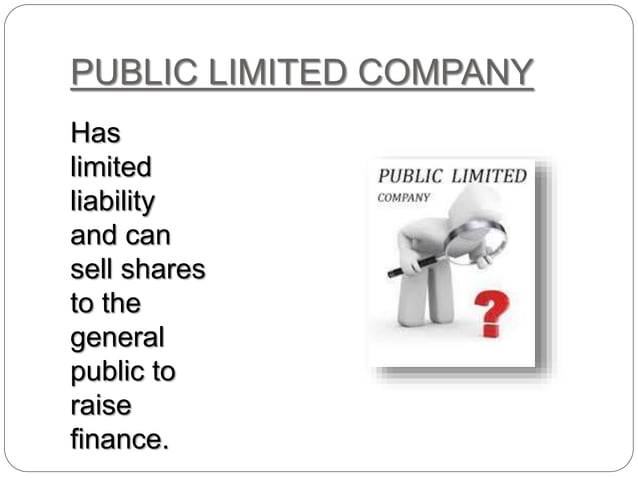
Let's get a little more specific, shall we? The "Public Limited Company" structure is a big deal, especially in the UK. It basically means the company is a separate legal entity from its owners. This is super important! It means if the company goes bust (let's hope not!), the owners (the shareholders) only lose the money they've invested in buying the shares. Their personal assets, like their house or car, are generally safe. That's called limited liability, and it’s a pretty sweet deal for investors.
And the "limited" part? Well, that's tied into the limited liability we just talked about. Your liability as a shareholder is limited to the amount you've invested. You won't owe the company more than you paid for your shares.

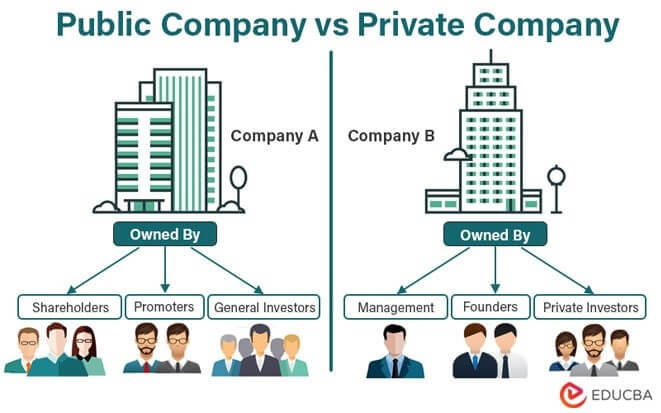
The "public" part, as we've established, means the company's shares are available for anyone to buy and sell on a public stock market, like the London Stock Exchange. This contrasts with a Private Limited Company (Ltd), where shares are held privately by a small group of people, usually the founders, family, or a select group of investors, and aren't traded on an open market. Think of a small, local bakery versus a giant supermarket chain – that's often the difference.
Why Would a Company Go Public? The Big Money Question
So, why would a company bother with all the fanfare of becoming a PLC? Why open themselves up to the world of shareholders and stock market fluctuations? The main reason, as you might have guessed, is access to capital. Loads and loads of capital.
When a company is private, raising money can be tricky. You might have to rely on bank loans, which come with interest, or persuade wealthy individuals to invest, which means giving up a significant chunk of control. But by going public, a company can sell shares to thousands, even millions, of investors. This provides a huge influx of cash that can be used for:
- Expansion: Opening new stores, building new factories, entering new markets.
- Research and Development: Investing in new technologies, creating innovative products.
- Acquisitions: Buying up other companies to grow even faster.
- Paying Down Debt: Improving the company's financial health.
It’s like getting a massive injection of rocket fuel for growth. And, let's be honest, for many businesses, that growth is the ultimate goal.
Another perk? Increased public profile and prestige. Being a PLC often lends a company a certain gravitas. It implies a level of transparency and stability that can attract customers, partners, and even talented employees. It’s like a stamp of approval, in a way.
The Downsides of Being in the Limelight
But it's not all sunshine and rainbows. Becoming a PLC comes with its own set of challenges and responsibilities:

Increased Scrutiny: Once you're public, everyone’s watching. You have to comply with strict regulations, report your financial performance regularly, and be prepared for the market to react to every piece of news. Investors will be asking questions, analysts will be dissecting your every move, and the media will be reporting on it all. It's a constant performance, and not always a comfortable one.
Loss of Control (to an extent): While the original founders might still hold a significant stake, decision-making can become more diffused. The board of directors has a duty to all shareholders, not just the original owners. This can sometimes lead to disagreements and a slower decision-making process.
Short-Term Pressure: Stock markets can be notoriously fickle. There's often pressure on PLCs to deliver impressive short-term financial results to keep shareholders happy and the stock price up. This can sometimes lead to decisions that might not be in the company's long-term best interest.
The Cost of Compliance: All those regulations and reporting requirements? They cost money. PLCs need legal teams, finance departments, and compliance officers to ensure they're playing by the rules. It’s a significant overhead.
Real-World Examples: Who Are These Publicly Traded Giants?
Okay, enough theory. Let's talk about some actual companies you’ll recognise. These are the household names that have gone public, allowing people like you and me to own a slice of their pie. (Or, you know, a tiny fraction of a share of their pie).
The Retail Kings and Queens
We’ve already mentioned them, but let’s give them a proper shout-out. Companies like:

- Tesco PLC: The supermarket giant. You buy your weekly groceries there, and guess what? If you own Tesco shares, you're a part-owner! Pretty neat, right?
- Marks & Spencer Group PLC: Another iconic British retailer. From Percy Pigs to stylish suits, M&S is a staple, and it’s publicly traded.
- J Sainsbury PLC: The other big supermarket contender in the UK. Yep, your weekly shop at Sainsbury's might be funding your neighbour's share portfolio.
These companies are massive, employing thousands, and their share prices are constantly in the news. Their ability to raise funds by selling shares has been crucial to their growth and ability to compete.
The Fashionistas and High Street Heroes
It’s not just food. Think about where you get your clothes:
- Next PLC: A powerhouse of retail, known for its catalogue business and extensive store network.
- Associated British Foods PLC: This one might sound a bit dry, but it owns familiar brands like Primark (which is hugely successful) and brands like Twinings tea. So, you're getting your morning cuppa and a bargain outfit, all from publicly owned entities!
These companies have navigated the changing retail landscape, often using the capital raised from public offerings to adapt and expand.
The Tech Titans (Even if Some Aren't UK PLCs)
While many of the absolute biggest tech giants are US-based and therefore have different classifications (like Inc.), the principle of public ownership is identical. Companies like:
- Microsoft Corporation (US): You're likely using their Windows or Office products right now.
- Alphabet Inc. (US) (Google's parent company): Search for anything, and you're interacting with a publicly owned entity.
- Meta Platforms Inc. (US) (Facebook, Instagram): Yes, your social media scroll is also part of the public ownership game.
While not UK PLCs, they exemplify the concept of a company whose ownership is distributed among millions of public shareholders. The vast sums of money these companies have raised through share offerings have fuelled their rapid innovation and global dominance.
The Financial Services and Beyond
The financial world is also dominated by PLCs:

- Barclays PLC: One of the UK's major banks. Your mortgage, your current account – potentially all managed by a company owned by the public.
- Lloyds Banking Group PLC: Another banking giant.
- National Grid PLC: The company that keeps the lights on and the gas flowing to your home. Imagine the infrastructure costs! Public shares are a huge part of how they fund that.
These are essential services, and their public ownership structure allows for massive investment in infrastructure and services that benefit us all. It's a different kind of ownership, but still public.
The Shareholder's Role: More Than Just a Number?
So, if you decide to buy shares in a PLC, you become a shareholder. What does that actually mean? Well, beyond the potential for financial gain (or loss, fingers crossed not!), you have certain rights:
- Voting Rights: At the company's Annual General Meeting (AGM), shareholders can vote on important matters, like the election of directors and significant company policies. Your vote might not decide the outcome alone, but collectively, shareholders have a voice.
- Right to Information: You have the right to receive company reports and financial statements.
- Dividends: If the company makes a profit and the board decides to distribute some of it, you’ll receive a share of the profits, known as a dividend. It's like getting a little thank-you cheque from your investment.
It’s a fascinating dynamic, isn't it? You’re an owner, but you’re also a customer, and sometimes even an employee. It connects us to these massive corporations in a way that’s often overlooked.
Is it for Everyone? The Investment Angle
Now, before you rush off to invest your life savings (please, please don't do that without research!), it's crucial to remember that investing in the stock market carries risk. Share prices can go up and down. You could make money, or you could lose money. It's not a guaranteed path to riches, and it requires careful consideration and research.
But the fact remains: the PLC model democratises ownership. It allows ordinary people, not just the super-rich, to participate in the growth and success of major businesses. It’s a cornerstone of modern capitalism, providing both opportunities and responsibilities.
So, the next time you’re in that Tesco, or sipping a Starbucks, or scrolling through your favourite social media app, remember that in a way, you might just be looking at something that belongs, in part, to you. And that’s a pretty powerful thought, isn't it? It's like that nine-year-old me, finally understanding that "owned by the public" wasn't a fairy tale after all, but a fundamental part of how the world works.