How To Cut Paving Slabs By Hand
So, you’ve decided to get your hands dirty, eh? Thinking about transforming that sad patch of dirt into a stylish patio? Excellent choice! And guess what? You don't need a fancy, whirring, dust-chucking machine to get the job done. Nope! We're talking about the ancient art of cutting paving slabs… by hand. It’s like being a medieval stonemason, but with better snacks and probably fewer scurvy outbreaks.
Why on earth would you choose the hand-cut route? Well, for starters, it's incredibly satisfying. There's a primal thrill in shaping something so solid with your own effort. Plus, it’s way more affordable than hiring out, and honestly, a little bit of elbow grease is good for the soul. Think of it as your own personal DIY spa treatment, minus the cucumber eye slices.
Let’s dive into the wonderful world of slab slicing. It’s not as daunting as it sounds. Think of it as a really, really slow-motion puzzle. A puzzle made of rock. And you’re the master puzzle-solver.
Must Read
Gear Up, Buttercup!
First things first, we need some tools. Don't go grabbing your grandma's knitting needles, though. This requires something a little more robust.
The star of our show? The humble brick bolster and mallet. These are your best friends. The bolster is like a chisel on steroids, and the mallet is its trusty sidekick. You’ll also want a tape measure, a pencil (a permanent marker is even better for marking those lines!), and some seriously good safety gear. We’re talking safety glasses (you do not want grit in your eye; it's not a fun party favor) and sturdy gloves. Your hands will thank you.
A spirit level is also a good shout, just to make sure your cuts are going to be straight-ish. We're not aiming for NASA precision here, but wonky edges can look a bit… sad.
The Mighty Brick Bolster
Ah, the brick bolster. It’s a beautiful thing, isn't it? Basically, it’s a long, flat metal bar with a sharp edge. You place this sharp edge where you want to make your cut, and then… whack! That’s where the mallet comes in.

Some people swear by a lump hammer, others a rubber mallet. Experiment and see what feels best for you. Just remember, it’s all about controlled power, not brute force. Think of it as a very determined tap-dance on a rock.
Marking Your Territory
Before any cutting commences, you need a plan. Grab that tape measure and your trusty pencil. Measure twice, cut once, right? That's the golden rule of DIY.
Carefully mark the line where you want your slab to break. Be precise! A wobbly line means a wobbly cut, and we’re going for elegance, not accidental abstract art. Make your line nice and dark. You want to see it clearly when you’re swinging that mallet.
The Art of the Score
Now, for the magic. Lay your slab on a sturdy, flat surface. A couple of old planks of wood underneath is perfect. This prevents the slab from wobbling precariously while you work.
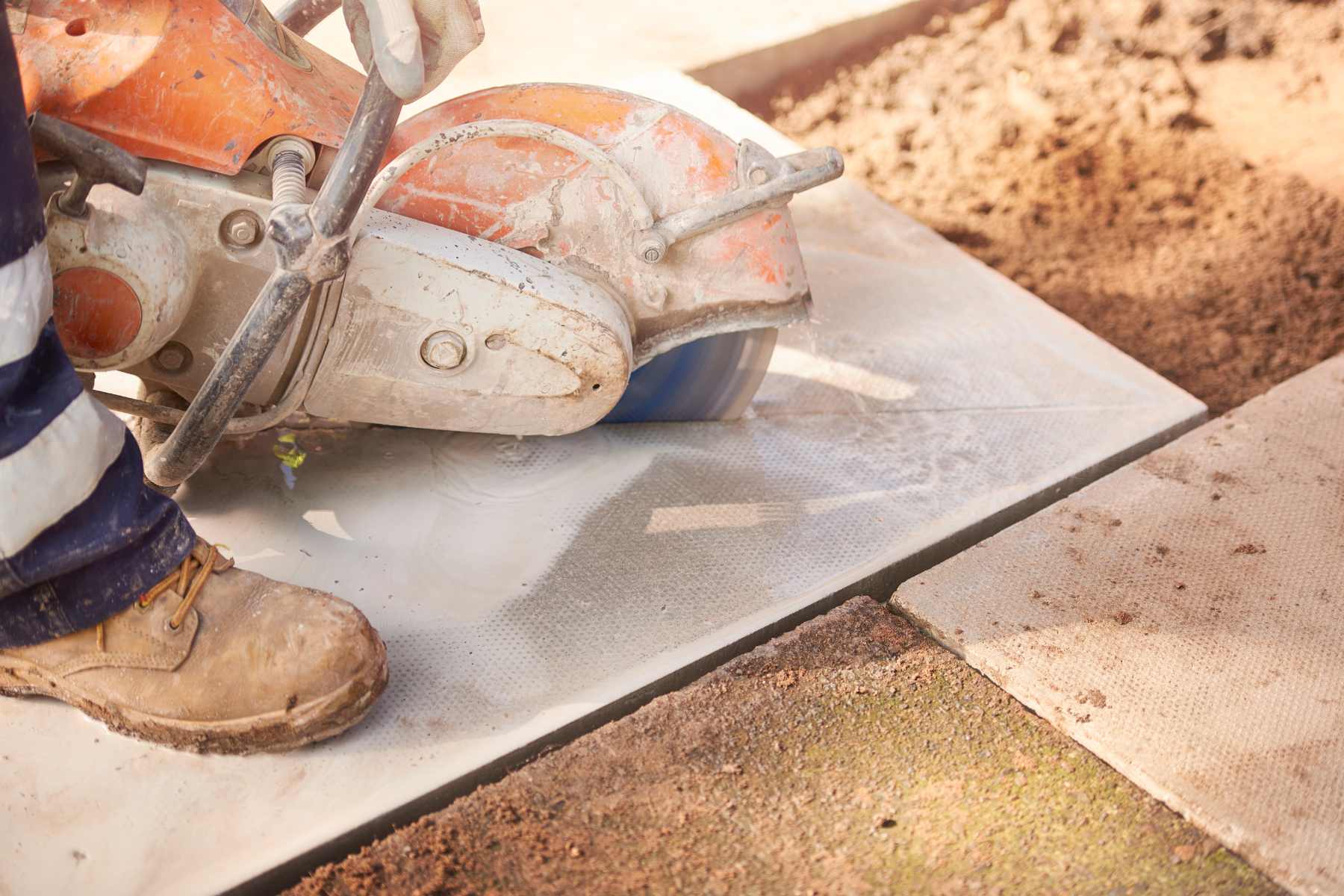
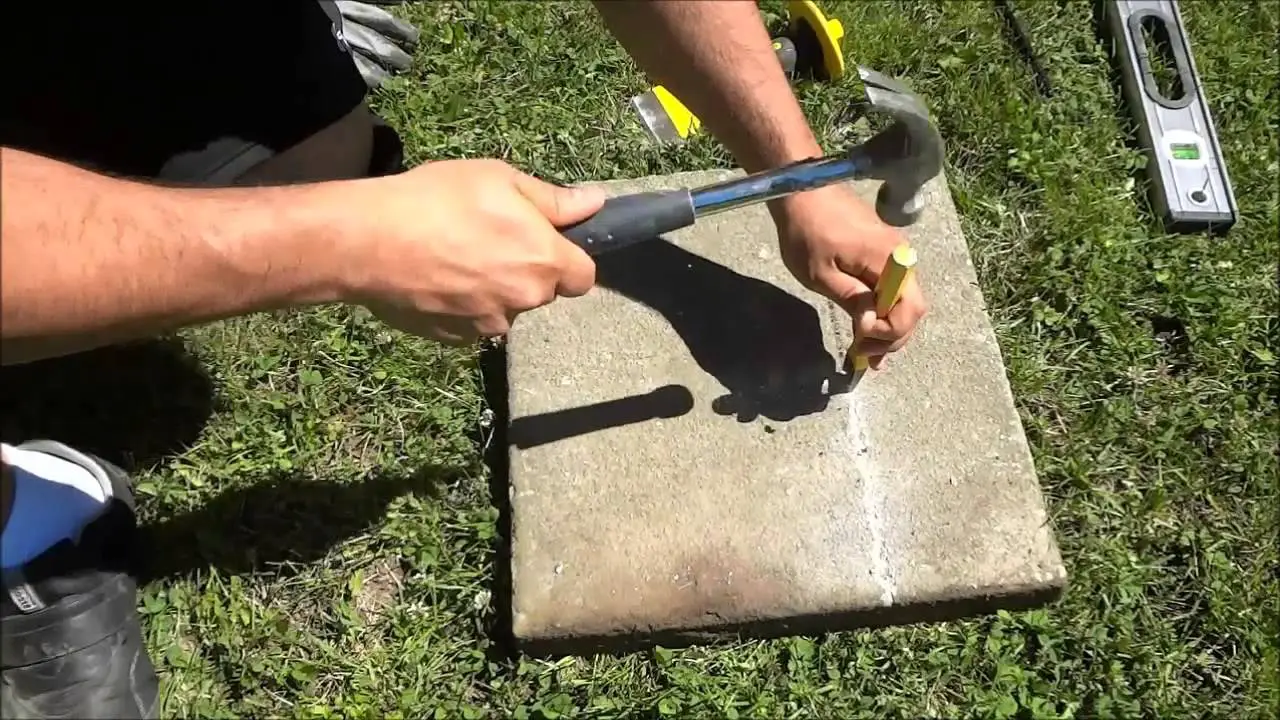
Position your brick bolster right on that marked line. Now, here’s the crucial bit: you want to score the slab first. This means giving it a few sharp taps with the mallet to create a shallow groove along your line. Don’t go all out just yet. Just a gentle persuasion, a little nudge to show the slab where you intend to break it.
Think of it like scoring a piece of paper before you fold it. It makes the break cleaner and more controlled. This step is key to avoiding messy, jagged edges. We're aiming for a satisfying snap, not a sad crumble.
The Moment of Truth: The Chop!
Once you've got a decent score line, it's time for the main event. Place the bolster again, ensuring the sharp edge is firmly seated in your scored groove.
Now, take a deep breath. Line up your mallet. And give it a firm, confident strike. Don't go crazy with the power. A series of controlled, firm hits is much more effective than one almighty swing that might just send the bolster flying.
Aim to hit the top of the bolster squarely. You’re trying to concentrate the force along that line. You’ll feel a slight give, and then, with a satisfying crack, the slab should break.
If it doesn't break cleanly on the first go, don't panic! Just reposition the bolster, re-score if needed, and try again. Patience is your superpower here. Sometimes, it takes a few taps to convince a stubborn slab to cooperate.
Dealing with Stubborn Slabs (and the Quirks of Stone)
Here’s a quirky little fact for you: not all paving slabs are created equal. Some are like butter, slicing through with a whisper. Others are as stubborn as a toddler refusing vegetables.
If you're finding a slab particularly resistant, you might need to work from both sides. Flip the slab over and score the line on the underside too. This can help weaken the material and encourage a cleaner break.
Another tip? Sometimes, applying a bit more pressure from the mallet after you've scored both sides can do the trick. It's like giving it a gentle nudge in the right direction.
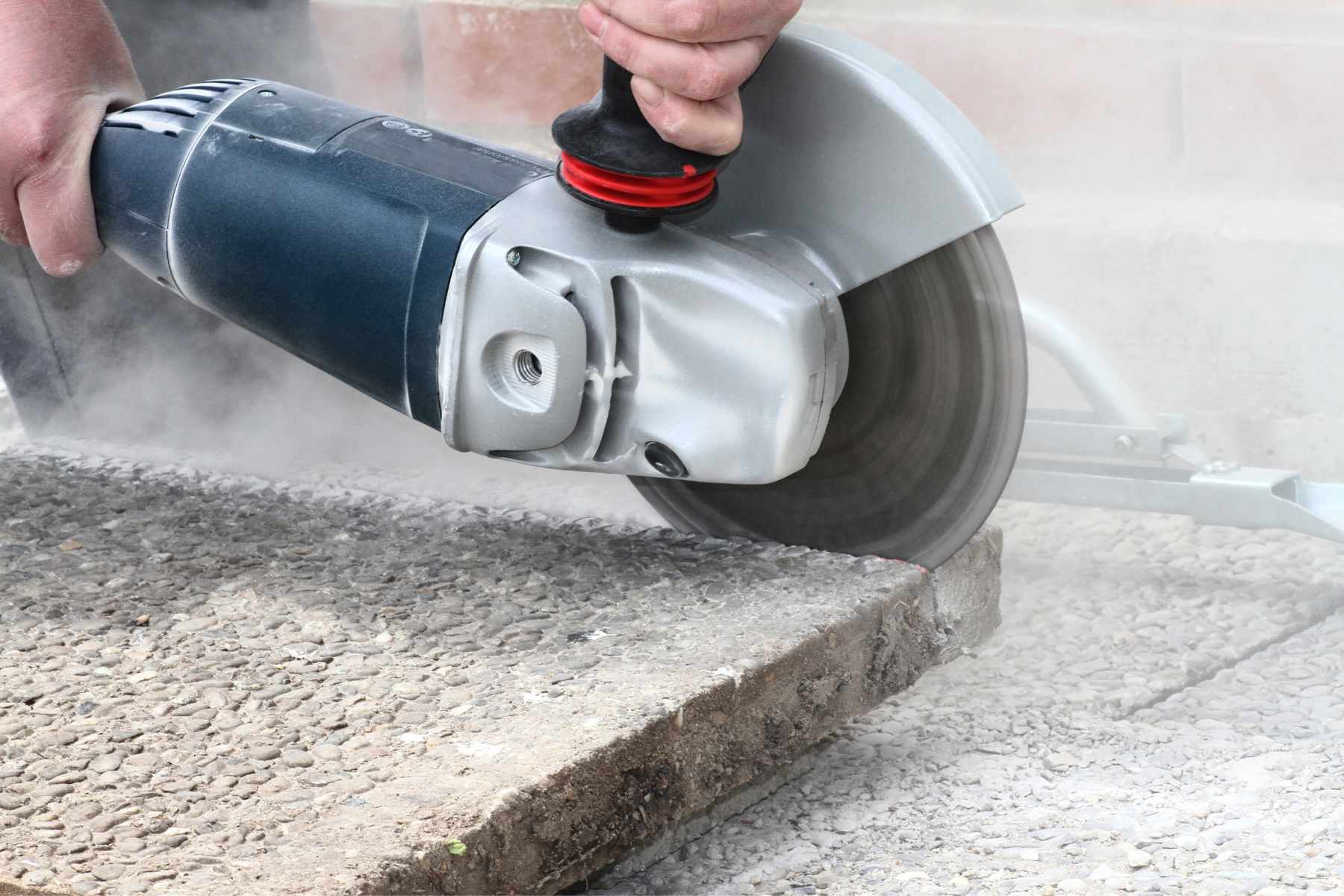
And don't be surprised if you end up with a slightly rough edge. That’s part of the charm! You can always tidy it up with a rubbing stone or a bit of coarse sandpaper if you’re feeling particularly pernickety. Think of it as adding character.
The Joy of Imperfection
Let's be honest, a perfectly straight, factory-perfect edge isn't always the goal. There's a rustic beauty to hand-cut stones. Embrace the little nicks and imperfections. They tell the story of your effort, your grit, and your amazing DIY skills.
Imagine your friends coming over. They admire your new patio. You can proudly say, "Yep, I did that. By hand." That, my friend, is a feeling money can't buy. (Except, you know, for the money you saved on not hiring someone.)
Safety First, Always!
We’ve mentioned it before, but it bears repeating: safety is paramount. Paving slabs can be heavy and surprisingly sharp when they break. Always wear your safety glasses and gloves. And never, ever try to rush the process. Take your time, be deliberate, and enjoy the journey.
Cutting paving slabs by hand is a fantastic way to connect with your project, save money, and develop a seriously satisfying skill. So, go forth, embrace the mallet, and get ready to transform your outdoor space. You've got this!
:max_bytes(150000):strip_icc()/how-to-cut-pavers-213250-02d-d088cb886ee24d0b8837adf933761f78.jpg)