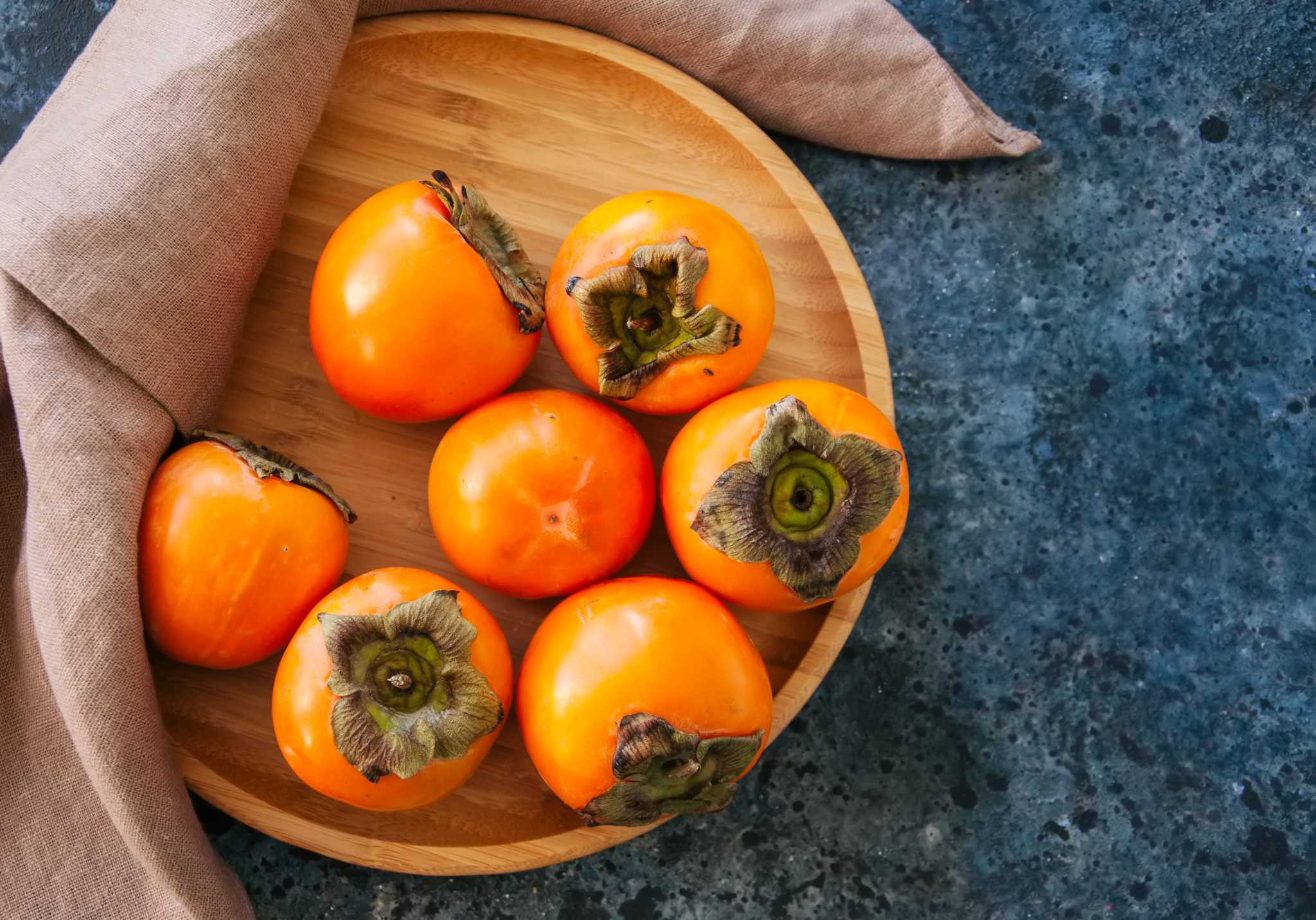
When Persimmons Ripen

I remember, as a kid, my grandmother had this rather unassuming tree in her backyard. It wasn't particularly showy, no vibrant spring blossoms or dramatic fall foliage. Mostly, it just… existed. But come late autumn, and suddenly, it was like the tree had decided to throw a party, albeit a very quiet, orange-tinted one. Little bursts of bright, almost fluorescent orange started dotting its branches. These were persimmons, and I, being a kid with questionable taste (and a distinct lack of patience), would inevitably try to snag one before they were… well, ready.
My grandmother, bless her patient soul, would always gently pull my hand back. "Not yet, darling," she'd say, her eyes twinkling. "They're not sweet yet. They'll make your mouth pucker like a lemon!" And oh, how right she was. The one time I managed to sneak a bite of an unripe persimmon was an experience I wouldn't wish on my worst enemy. It was a shocking astringency, a clinging, drying sensation that made me question all my life choices. My tongue felt like it had been wrapped in sandpaper. Never again, I vowed. And that, my friends, is where the magic (and the potential disaster) of persimmons truly begins: with the ripening.
So, let's talk about when persimmons ripen. It's not exactly a date you can circle on your calendar with absolute certainty, like, say, Christmas or your dentist appointment. It’s more of a feeling, a gradual transformation, a slow dance between the tree and the changing seasons. And depending on where you live and which variety you're dealing with, that dance can start a little earlier or a little later.
Must Read
The Mystery of the Ripe Persimmon
You see, persimmons aren't like apples or pears, which you can often pick and eat with a decent chance of them being palatable. Oh no. Persimmons are divas. They demand respect. They demand patience. They demand that you wait until they’ve gone through their full, glorious metamorphosis.
The whole point of waiting for persimmons to ripen is to avoid that soul-crushing astringency. This unpleasantness comes from tannins. Think of them as tiny little puckering machines inside the fruit. As the persimmon ripens, these tannins break down, becoming soluble and much less noticeable, allowing the natural sweetness of the fruit to shine through. It’s a chemical marvel, really. And a delicious one, if you get it right.
So, when does this magical transformation typically happen? Generally, persimmons are a late autumn to early winter crop. You’ll start seeing them appear in grocery stores, farmers’ markets, and, of course, on their trees, when the air starts to get that crisp, chilly bite. The leaves on many trees are already starting to fall, and the landscape is taking on those beautiful, muted autumn tones. It's the perfect backdrop for the persimmon's vibrant orange glow.
A Tale of Two Persimmons (and Their Ripening Habits)
Now, here's where it gets a little more nuanced. Not all persimmons are created equal, and their ripening schedules can vary quite a bit. The two main types you'll commonly encounter are the astringent and the non-astringent varieties. This distinction is absolutely crucial to your persimmon-eating success.

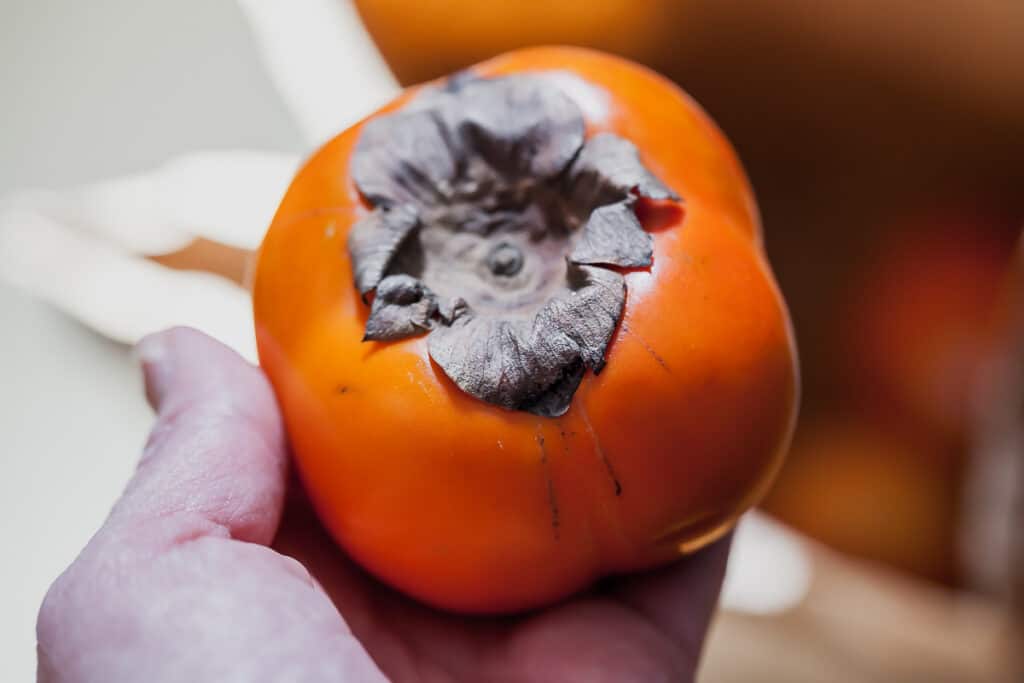
Let's start with the ones that caused me childhood trauma: the astringent varieties. These are the ones you absolutely cannot eat until they are completely soft and jelly-like. Think of a very ripe plum, almost to the point of being overripe. The skin might even be a little wrinkled. The Hachiya persimmon is probably the most famous example of an astringent variety. They are typically acorn-shaped, and if you try to bite into one that's firm, you'll instantly regret it. Seriously, don't do it. I'm still recovering from my childhood indiscretions.
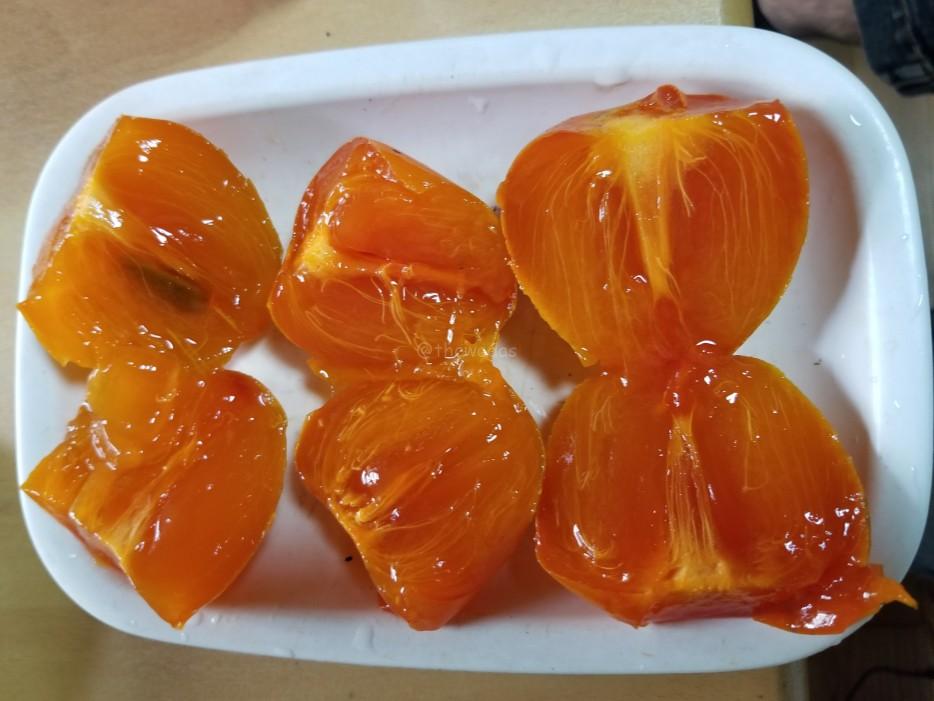
The good news is that astringent persimmons, when fully ripe, are incredibly sweet and delicious. They have a wonderfully smooth, custardy texture that’s just divine. You can eat them fresh by scooping out the flesh with a spoon, or use them in baked goods where their sweetness really shines. But again, the key is absolute softness. No firmness whatsoever!
Then we have the non-astringent varieties. These are the more forgiving ones, the ones that are much easier for the impatient among us (guilty as charged!). Fuyu persimmons are the most well-known non-astringent type. They are usually flatter and more tomato-shaped. The wonderful thing about Fuyus is that you can eat them when they are still firm, much like you would an apple or a pear. They have a crisp texture and a mild, sweet flavor.
While Fuyus can be eaten firm, they also become even sweeter and softer as they continue to ripen on the tree or after picking. So, you have a bit more flexibility with these. You can enjoy them in their crisp state, or let them soften for a different texture and an even more intense sweetness. It’s like getting two fruits in one! Who doesn't love a good fruit bargain?

What to Look For When Buying and Harvesting
So, how do you navigate the persimmon aisle or the backyard jungle without succumbing to the siren song of an unripe fruit? It all comes down to observation and a little bit of feel.
For astringent varieties (like Hachiya), you are looking for complete softness. The fruit should feel very yielding when gently squeezed. It might even look a little bit bruised or wrinkled. Don't let that deter you; it's a sign of perfect ripeness. If it feels firm at all, put it back. You're not ready for that level of puckering. You can often buy them when they are still firm and let them ripen at home. Just leave them on your counter at room temperature, and check them daily. They usually take a few days to a week to soften up.
For non-astringent varieties (like Fuyu), you have a bit more leeway. You can buy them when they are firm and bright orange. They should feel firm to the touch but not rock-hard. You can also buy them when they are slightly softer for a sweeter, juicier experience. If you're picking them yourself from a tree, you'll want them to be a deep, consistent orange. Avoid any with green patches, as those indicate they haven't quite reached their full potential.
A helpful tip: sometimes, even non-astringent persimmons can have a slight lingering astringency, especially if picked a bit too early. If you're unsure, a good way to test is to take a small bite. If it makes your mouth feel dry or puckery, it's not ready. For Fuyus, this is less of a concern, but it’s always good to be aware.
The "I Can't Wait!" Dilemma (and Solutions)
We’ve all been there. You see these beautiful, vibrant orange fruits, and your taste buds are screaming, "Eat me!" But your rational brain (or your grandma) is whispering, "Patience, young grasshopper." What if you just really want to enjoy them now, and the ones you have aren't quite there yet?
This is where the beauty of the astringent varieties truly lies, but with a caveat. If you have astringent persimmons that are still a little too firm to eat but you want them to be ready sooner, you can try a technique called ripening them in a paper bag with an apple or banana. The ethylene gas that these fruits release speeds up the ripening process. Just pop the persimmons and the fruit into a paper bag (not plastic, you want air circulation!) and leave them on your counter. Check them daily. This can often shave a few days off the ripening time.
Just a word of caution: this works best for astringent varieties that are already showing signs of softening. It won't magically make a rock-hard Hachiya edible overnight.
For non-astringent varieties that are slightly underripe, simply leaving them on the counter for a few days will usually do the trick. They'll gradually soften and sweeten. If you're really impatient, you can also use the paper bag trick, but it's usually not as necessary.
When the Stars Align: The Perfect Persimmon Moment
Ultimately, the ripening of persimmons is tied to the rhythm of nature. As the days grow shorter and the nights cooler, the trees signal that it's time to offer up their delicious bounty. It’s a beautiful reminder to slow down, to appreciate the seasonality of food, and to exercise a little bit of that often-elusive virtue: patience.
Walking through a farmer's market in October or November and seeing those mounds of glowing orange is a sure sign. The local growers will tell you, "They're in!" And that's your cue. If you're lucky enough to have a persimmon tree, you'll start noticing the subtle change. The fruits will begin to lose their firmness, their color will deepen, and that tell-tale sweetness will start to develop.
It’s a subtle shift, but once you’ve experienced a perfectly ripe persimmon, you’ll never forget it. That first bite of a truly ripe Hachiya, a burst of honeyed sunshine with a texture like silk, is a reward for all that waiting. And a crisp, sweet Fuyu, eaten like an apple on a brisk autumn afternoon, is pure, unadulterated joy.
So next time you see those beautiful orange jewels, remember the journey they've been on. Remember to check for softness, to understand the difference between astringent and non-astringent, and to give them the time they need. Because when persimmons ripen, they don't just become a fruit; they become a delicious, sweet testament to the rewards of patience. And that, my friends, is a lesson worth savoring.
Now go forth and find some persimmons! Just, you know, wait until they’re ready. Your taste buds will thank you.