What Is The Cv Joint On A Car

Ever heard a weird clunking or clicking sound coming from your car, especially when you’re turning? It might sound like your car is grumbling about being asked to do a sharp corner, but more likely than not, it's a humble hero called the CV joint saying hello! Think of these little guys as the unsung heroes of your car's drivetrain, working tirelessly behind the scenes so you can zip around corners and navigate life's bumpy roads with glee.
So, what exactly is this mysterious CV joint? Let's break it down in a way that's as easy as finding your car keys (most of the time!). Imagine your car's engine is the powerhouse, sending energy to the wheels. But the road isn't always straight and smooth, is it? That’s where our star player, the CV joint, steps in.
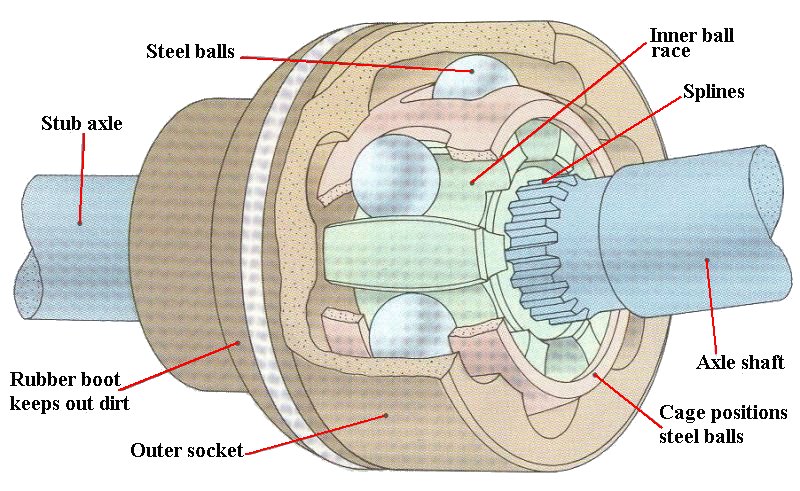
Essentially, a CV joint, which stands for Constant Velocity joint, is a clever piece of engineering that connects the car's transmission (or differential) to the wheels. Its main job is to allow power to flow from the engine to the wheels while also letting those wheels move up and down with the suspension and steer left and right. Pretty neat, right? It’s like a flexible elbow for your car's axles!
Must Read
Think of it like this: your car's wheels have to do a lot of different things. They need to spin, spin fast, spin slow, and then, poof, they need to turn at a weird angle. Without something like a CV joint, the power flow would get all jerky and uneven when you’re turning. It would be like trying to pour juice while wiggling your arm around wildly – messy and inefficient!
The CV joint ensures that the power delivered to your wheels is smooth and consistent, no matter the angle. This is super important for a good driving experience. It’s what allows you to smoothly accelerate out of a turn without feeling like your car is struggling or about to do a sudden, dramatic pirouette. Nobody wants that on a Tuesday morning!
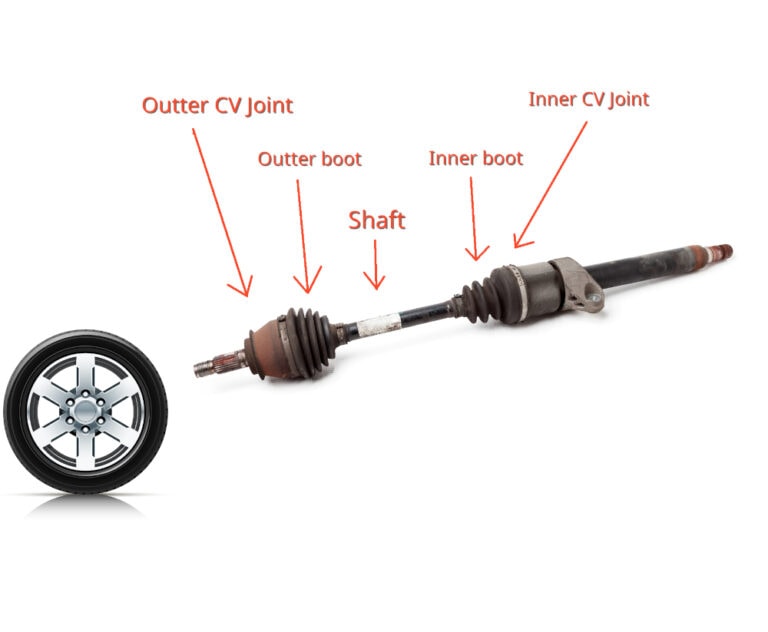
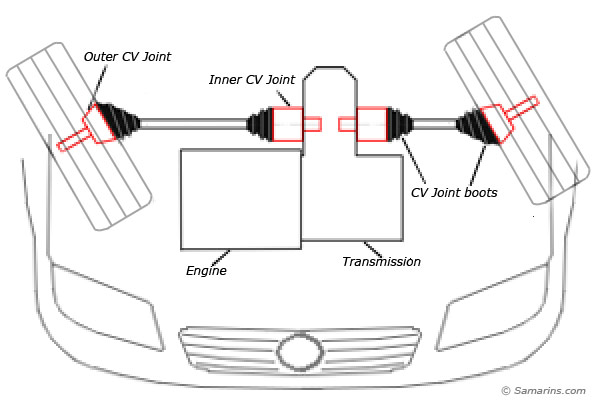
There are typically two main types of CV joints on a car: the ones on the inner side (closer to the transmission) and the ones on the outer side (closer to the wheel). Both are essential for making sure your car’s wheels keep spinning merrily along. They are like a dynamic duo, working in tandem to make your driving dreams a reality.
Let's dive a little deeper into the magic of the CV joint itself. Imagine a little metal cage holding some ball bearings. These ball bearings sit inside grooves, allowing them to slide and pivot as the axle moves and turns. This ingenious design allows for that smooth, constant flow of power, hence the name Constant Velocity.

The outer CV joint is arguably the busiest one. It has to accommodate a wider range of angles because it's the one dealing with the steering. When you crank your steering wheel to make a sharp U-turn, this outer joint is working overtime, twisting and bending to keep the power flowing. It's like a gymnast performing a complex routine!
The inner CV joint is also crucial. It connects to the transmission or differential and allows for the up-and-down movement of the wheels as they go over bumps or dips in the road. Without it, every little pebble would feel like a boulder, and every speed bump would feel like you’re launching off a ramp!
Now, what happens when these hard-working CV joints get a bit… tired? The most common sign is that clicking or popping sound, especially when you’re turning. It’s like the joint is saying, "Hey, I’m getting a bit creaky, can you hear me?" This noise usually gets louder and more frequent as the problem gets worse.
This clicking is often caused by a torn CV boot. What's a CV boot, you ask? It's a flexible rubber or silicone cover that encases the CV joint and its grease. Think of it as a protective superhero cape for the joint, keeping out dirt, water, and debris, and keeping the lubricating grease in.
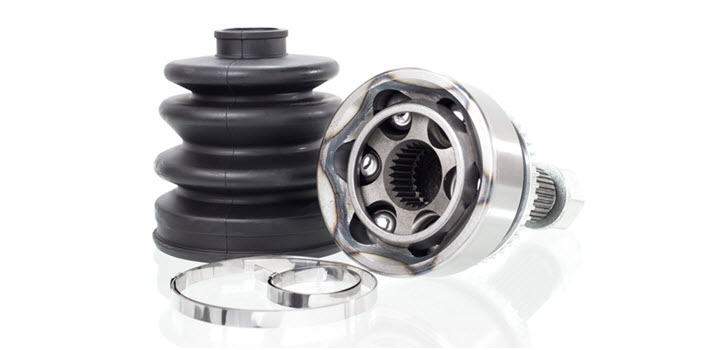
When this protective boot gets a tear or a hole, all sorts of nasty things can get in and start wreaking havoc. Dirt and grit act like sandpaper, grinding away at the delicate parts of the CV joint. The grease, which is the joint's lifeblood, also starts to leak out, leaving it dry and unhappy.
A torn CV boot might start small, like a tiny snag in your favorite sweater. But over time, it allows more and more damage to occur. This is why catching it early is so important. It’s like noticing a small leak in your roof before it becomes a swimming pool in your living room!
If you hear that clicking, it’s your car giving you a friendly nudge. It’s saying, "Psst, my CV joint is having a bit of a tough time, and it needs some attention!" Ignoring that sound is like ignoring a friendly wave – it might seem small, but it’s a sign of connection and a request for interaction.
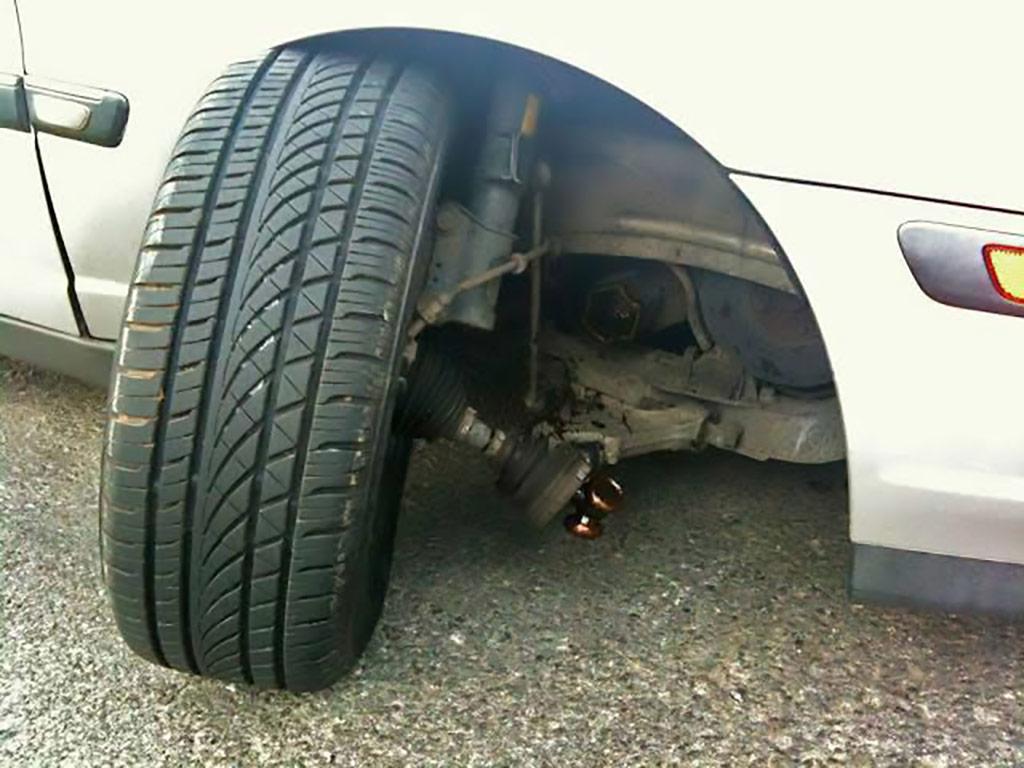
Ignoring these sounds can lead to a much bigger problem. Eventually, a badly damaged CV joint can break completely. This means no more power to that wheel, and you'll be stuck, unable to move. Imagine trying to push a giant boulder by yourself – that's kind of what it's like for your car without a working CV joint.
So, how do you prevent this whole ordeal? Regular check-ups are your best friend! When you take your car for an oil change or any other service, ask your mechanic to give the CV boots a quick look-over. They'll be able to spot any tears or potential issues before they become a major headache.
It’s all about maintenance, really. Keeping those rubber boots intact is like keeping your own protective gear in good shape. It ensures the important stuff underneath stays clean, lubricated, and ready to perform its vital duties. Think of it as giving your car a spa treatment for its axles!
Replacing a CV boot is usually a much cheaper and simpler repair than replacing the entire CV joint. So, a little preventative care goes a long way in saving you time, money, and stress. It’s the car equivalent of brushing your teeth – a small daily habit that prevents much larger, more painful problems down the road.
If you do hear that dreaded clicking, don't panic! It’s a common issue, and mechanics are well-equipped to handle it. They’ll be able to diagnose the problem, replace the damaged boot or the entire joint if necessary, and get you back on the road, smoothly and silently, in no time.
The CV joint might sound technical, but at its core, it’s a brilliant solution to a very real engineering challenge. It’s about making sure your car can handle the dynamic, ever-changing world of driving with grace and power. So next time you take a smooth corner or navigate a bumpy street, give a silent nod of thanks to the unsung hero – your trusty CV joint!
These little guys are the backbone of your car's ability to turn and move with power. They are the silent partners in your driving adventures, ensuring every journey is as smooth and enjoyable as possible. They truly earn their Constant Velocity name, keeping things moving consistently, no matter what the road throws at them.
So there you have it – the wonderful world of CV joints! A testament to clever engineering that keeps our cars, and by extension, our lives, moving forward. They are a small but mighty component, proving that sometimes, the most important things are the ones we don't always see.
Next time you’re out for a drive, and you take a nice, smooth turn, just remember the amazing work happening at your wheels. The CV joints are out there, doing their thing, keeping the power flowing and making sure your car is ready for whatever adventure awaits. They are the unsung heroes of smooth sailing!
Think of them as the secret sauce that makes your car feel connected to the road, agile, and responsive. Without them, your car would be a much clunkier, less enjoyable machine. They are the silent guardians of your driving pleasure.
So, a little bit of awareness, a regular peek under your car, and you can keep these hardworking parts in top shape. It’s a small effort for a big reward: a car that continues to serve you reliably and joyfully, mile after mile.