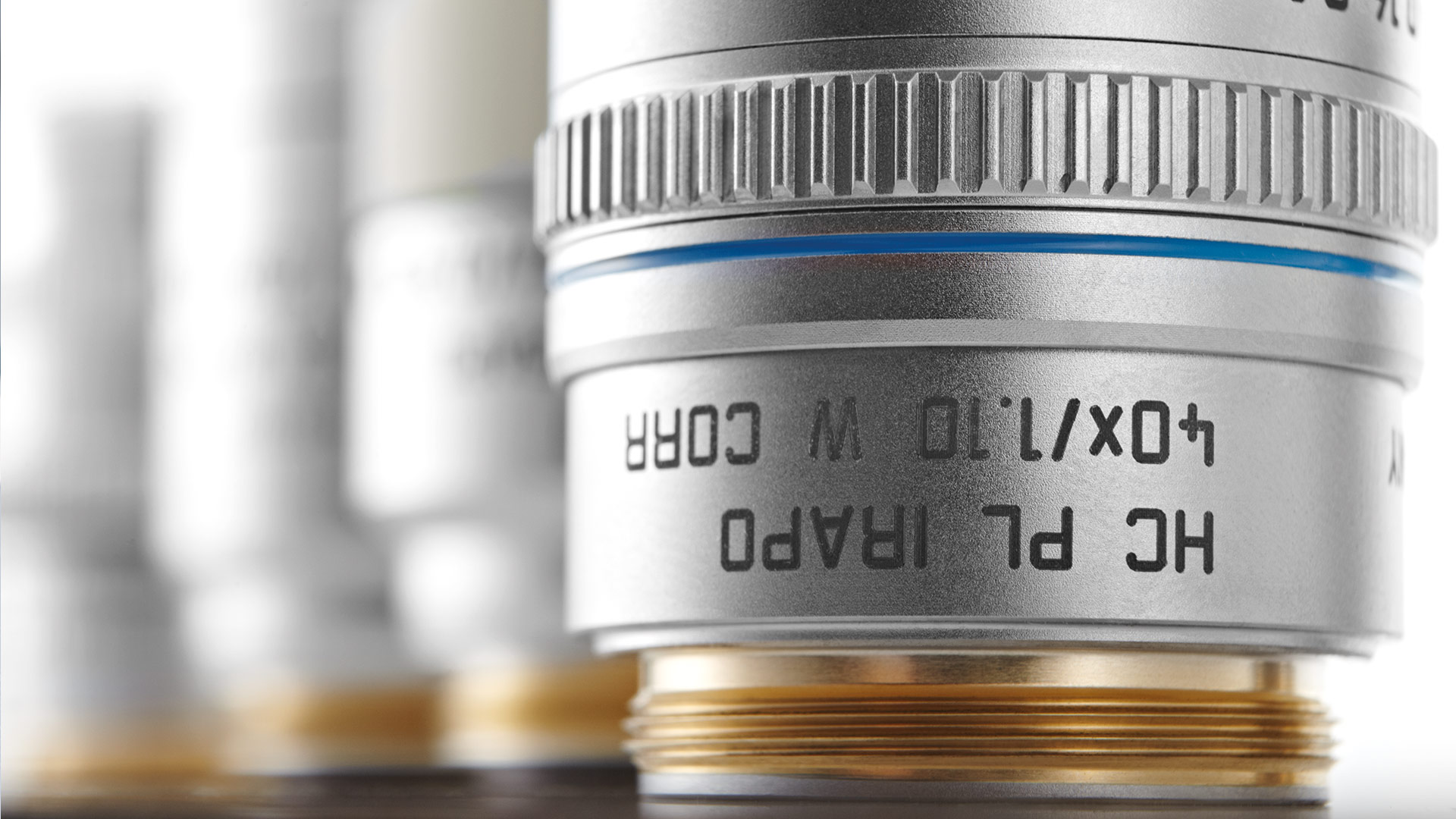
What Are Objective Lenses On A Microscope

Imagine holding a tiny window to a whole new universe. That’s what a microscope does, and at its heart are these magical things called objective lenses. They're not just fancy glass bits; they’re your gateway to seeing the truly astonishing world that’s usually invisible to our eyes.
Think of them as the camera lenses of the microscopic realm. Without them, your microscope would be like a TV with a blank screen – no picture, no fun! These are the hardworking heroes that gather all the light from your tiny sample and create the first, most important magnified image.
So, what exactly are these amazing objective lenses? Simply put, they are the primary magnifying components of a microscope. They sit closest to the thing you want to look at, your little slide with whatever fascinating stuff you’ve placed on it.
Must Read
These lenses are specially designed to be super powerful. They take something incredibly small and blow it up, making it big enough for you to see all its intricate details. It’s like having super-vision for the tiny!
Why are they so special? Because they are the difference between seeing a blurry smudge and seeing a bustling city of cells, or a shimmering landscape of crystals. They bring the unseen into brilliant focus.
The magic of objective lenses is their ability to collect light and bend it. This bending, or refraction, is what creates the magnification. The more they bend the light, the bigger your tiny world appears.
Have you ever looked at a drop of pond water under a microscope? It’s teeming with life! Those little wriggly things, the shimmering algae – you can only see them thanks to the power of the objective lens.
It's like looking through a tiny, incredibly powerful magnifying glass. But instead of just making a letter bigger on a page, it makes entire worlds visible!
Objective lenses come in different strengths. You'll often see numbers on them, like 4x, 10x, 40x, and even 100x. These numbers tell you how much they magnify the image.
A 4x objective lens is like a low-power overview. It gives you a wide view, letting you see the general layout of your sample. It’s great for finding what you’re looking for.
Then you move up to the 10x objective. This is like stepping closer into the scene. Details start to emerge, and you can see more of the structures within your sample.
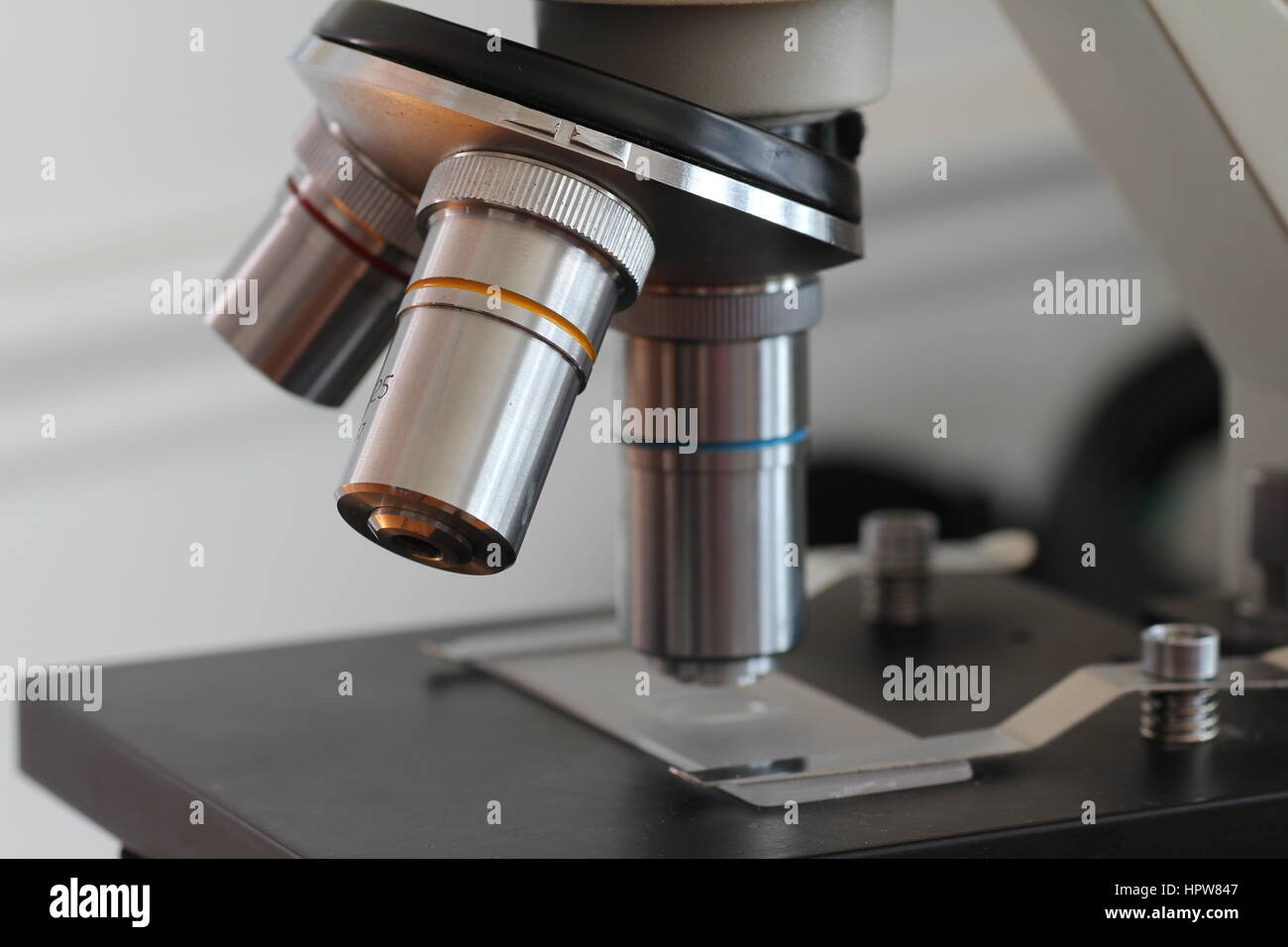
The 40x objective is where things get really exciting! This is a high-power lens that reveals astonishing detail. You're getting deep into the microscopic world now, seeing individual cells or intricate patterns.
And the 100x objective? That’s the ultimate power lens! This one often requires a special type of oil to get the clearest image. It’s like a super-duper zoom, revealing the tiniest secrets of your sample.
When you use a microscope, you usually start with the lowest power objective. This helps you find your subject and get it roughly in focus. It’s the best way to avoid frustration.
Then, you slowly rotate the revolving nosepiece, which holds all these different objective lenses. As you switch to a higher power lens, the image becomes much larger.
It’s like a treasure hunt, but the treasure is an entire universe you never knew existed. And the objective lenses are your map and your magnifying glass all rolled into one!
These lenses aren't just about making things bigger. They're about making them clearer. A good objective lens will produce a sharp, bright image with minimal distortion. That’s crucial for truly appreciating the microscopic.
Think about what you can see: the delicate veins on a butterfly wing, the amazing structures of a pollen grain, or the vibrant colors inside a single-celled organism. All of that is thanks to the objective lens doing its job.
The quality of the objective lens really matters. Better lenses are made with superior glass and more precise manufacturing. This means a sharper, more detailed, and more enjoyable viewing experience.

It’s almost like having a secret code that allows you to read the book of nature at its most fundamental level. And the objective lenses are the key to unlocking that code.
Sometimes, you’ll hear about different types of objective lenses. For example, there are achromatic and apochromatic objectives. Don't let the fancy names scare you! They just refer to how well the lens corrects for color distortions.
Achromatic lenses are good and provide a clear image. Apochromatic lenses are even better, correcting for more colors and giving you a truly stunning, true-color image. They're often considered the top-tier for serious microscopy enthusiasts.
Another important feature is the working distance. This is the space between the objective lens and your sample when it's in focus. Longer working distances are useful for certain types of samples or techniques.
But for most general curiosity, the standard objectives that come with a typical compound microscope are fantastic. They’ll open up a world of wonder.
The entertainment value of objective lenses is immense. It’s the thrill of discovery, the joy of seeing something new and incredible every time you look. It never gets old!
You can look at a strand of your hair and be amazed by its structure. You can look at a tiny piece of fabric and see the weaving in astonishing detail. The possibilities are endless!
It’s like having a personal portal to a hidden dimension. A dimension filled with beauty, complexity, and a whole lot of tiny life forms going about their business.

The objective lens is where the primary magnification happens. It takes the light that passes through or reflects off your sample and bends it to create a larger, virtual image.
This first magnified image is then further magnified by another lens, usually in the eyepiece (the part you look through). But the objective lens does the heavy lifting for the initial zoom.
So, next time you see a microscope, remember those little cylindrical objects sticking out from the nosepiece. Those are your objective lenses, the unsung heroes of the microscopic world.
They are the reason you can explore the intricate beauty of a snowflake, the tiny pores on a leaf, or the amazing shapes of bacteria. They are the magic makers!
The sheer entertainment comes from the constant surprise. You think you know what something looks like, and then you put it under the microscope, and bam! You see an entirely new level of detail and wonder.
It sparks curiosity in a way few things can. It makes you ask questions: "What is that?" "How does it work?" "What else is out there?"
So, if you ever get the chance to peer through a microscope, pay special attention to those objective lenses. They are the tiny titans of magnification, and they hold the keys to some of the most astonishing sights imaginable.
They transform the mundane into the magnificent. They turn the ordinary into the extraordinary. They are, quite simply, spectacular!

You'll find yourself mesmerized by the sheer detail. It's a constant reminder of how much more there is to see, even in the smallest things around us.
The objective lenses are the gatekeepers to this hidden universe. They’re the first step on your journey into the incredible world of the microscopic, and they make that journey absolutely unforgettable.
So, go ahead, get curious! Grab a sample, pop it on a slide, and let those objective lenses work their magic. You might just be amazed at what you discover!
It’s an adventure waiting to happen, a peek behind the curtain of reality that’s both educational and incredibly fun. And it all starts with those hardworking, wonderful objective lenses.
They are the real stars of the show when it comes to seeing the unseen. They are what make microscopy such a captivating hobby and a powerful scientific tool.
Don't underestimate their power. These humble cylinders of glass are the engines of discovery, the creators of awe, and the providers of endless fascination.
So, embrace the small, and let the objective lenses guide your exploration. You'll find that the universe is far more intricate and beautiful than you ever imagined.
They are the eyes of the microscope, and they invite you to see the world anew. It’s an invitation you won’t want to refuse!