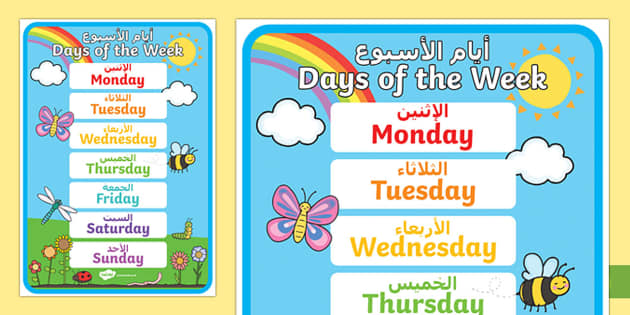
The Days Of The Week In Arabic

Alright, gather ‘round, folks! Grab your imaginary mint tea, because we’re about to embark on a linguistic adventure. Forget boring old Monday, Tuesday, Wednesday – we’re diving headfirst into the wonderfully weird and surprisingly musical world of the days of the week in Arabic. Think of it as a seven-day rollercoaster, but instead of screaming, you’re probably going to be muttering “Subhan Allah” a lot.
Now, before you picture me with a headscarf and a mystical scroll, let me assure you, I’m just your average Joe who stumbled upon this linguistic goldmine. And let me tell you, learning these days is more fun than trying to fold a fitted sheet. Seriously. It’s like unlocking a secret code, and suddenly, you can impress your friends by knowing what day it really is in, say, Cairo or Damascus. Pretty cool, right?
The Foundation: Saturday and Sunday, The OG’s
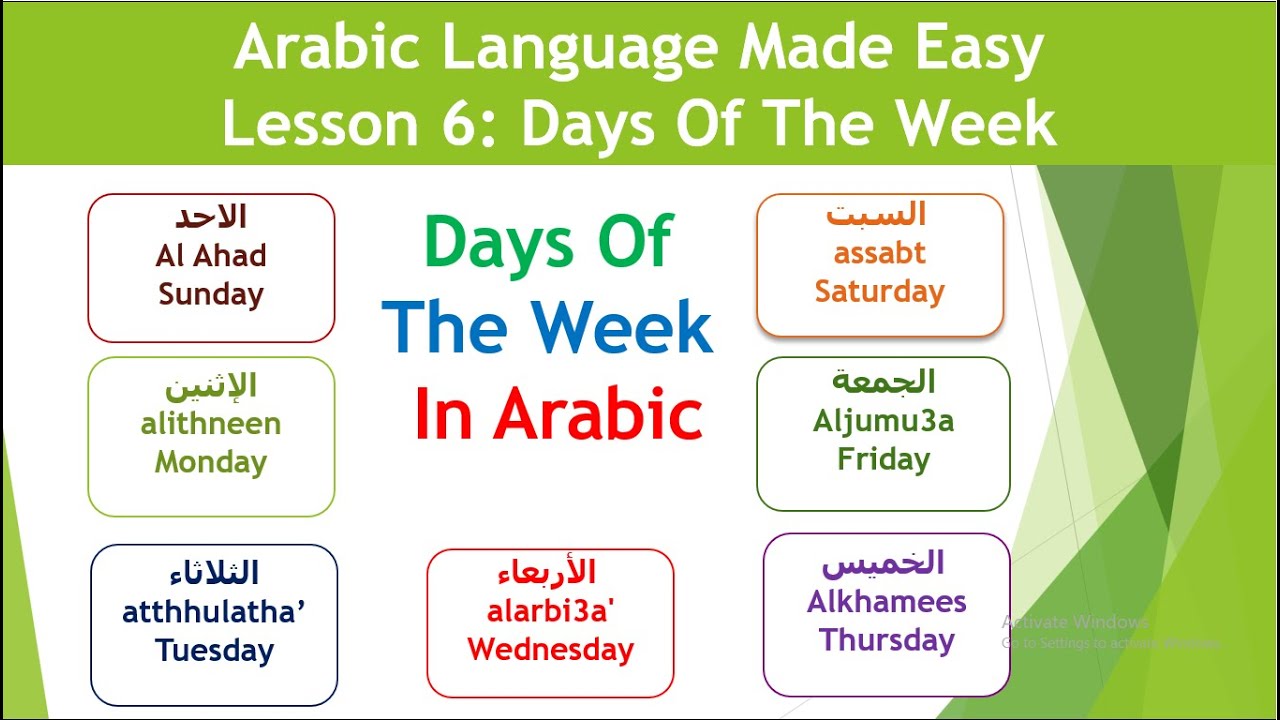
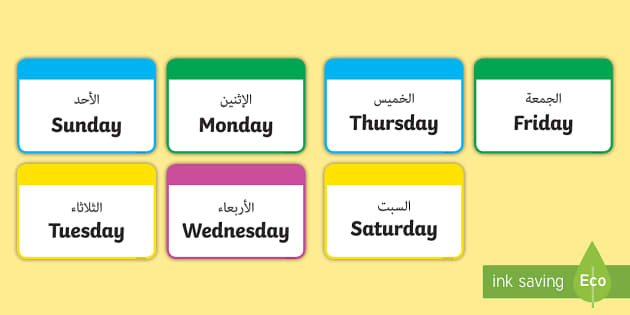
We start our journey on Saturday, which in Arabic is Al-Sabt (السبت). Now, this one’s a bit of a linguistic cousin to the Hebrew word for Sabbath. Makes sense, right? A day of rest, of chilling, of contemplating the universe and whether you’ve got enough snacks for the week. Think of it as the chillest day, the one where you’re allowed to wear your comfiest pajamas without judgment.
Must Read
Then comes Sunday, or Al-Ahad (الأحد). Now, this is where things get interesting. Al-Ahad literally means “the first.” Yep, you heard me. In many Arab cultures, Sunday is considered the start of the week. Mind. Blown. So, for all you Monday-morning-grumps out there, imagine a world where your weekend officially ends and your week of awesome begins on what you might call… a Sunday. Talk about a mood shift! It’s like finding out your birthday is actually the day after you thought it was. A double celebration!
So, picture it: Saturday is the gentle sigh of the weekend, and Sunday is the ambitious leap into a brand new week. It’s a bit like starting a race. Saturday is stretching, and Sunday is the starting pistol!
The Middle Ground: Monday to Wednesday, The Hustle
Now, let’s get into the thick of it. Monday is Al-Ithnayn (الاثنين). Any guesses what that means? Drumroll please… it means “the second.” You’re seeing a pattern here, aren’t you? It’s like the Arabic calendar is a super-organized librarian, carefully cataloging each day. So, Monday is simply the second day in this grand, organized scheme. Still feels like the first day of the work week for many, but hey, at least it’s got a fancy name.
Moving on to Tuesday, which is Al-Thulatha’ (الثلاثاء). And you guessed it, that translates to “the third.” So, Monday is the second, Tuesday is the third. It’s a logical progression, like steps on a staircase. No quirky twists or turns here, just pure, unadulterated order. You could argue it's almost too sensible. Where’s the drama? Where’s the day named after a grumpy badger or a particularly strong cup of coffee?
Then we hit Wednesday, Al-Arbi’a’ (الأربعاء). And yes, you’re absolutely right, it means “the fourth.” So, by the time Wednesday rolls around, you’re pretty much a seasoned pro at this numbering system. It's the middle of the week, the hump day. In Arabic, it's just… the fourth day. No wonder some people say Wednesdays are the most draining. You’ve gone through second, third, and now you’re facing the fourth. It’s like a mini-marathon of numbers!
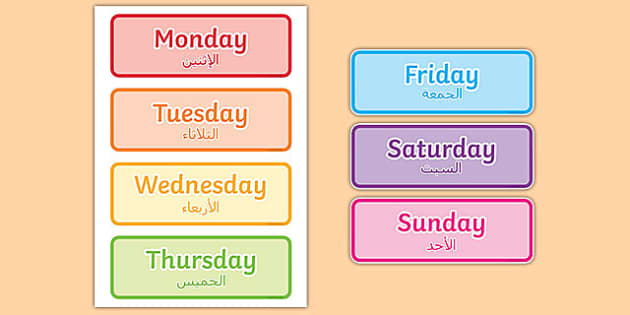
These middle days are the workhorses of the week. They’re the ones that get things done. They’re not as sluggish as Sunday might be in some cultures, nor are they the exhilarating weekend rush. They’re just… moving. Purposefully. Like a well-oiled machine, or a particularly determined ant carrying a crumb.
The Home Stretch: Thursday to Friday, The Countdown and The Celebration
Now, things start to get a little more exciting. Thursday is Al-Khamees (الخميس). And guess what? That means “the fifth.” We’re on a roll! Thursday, in many parts of the world, is that glorious day where the weekend feels tantalizingly close. It’s the day you start planning your escape from the work week, the day you mentally check out about three hours before you physically do. In Arabic, it’s simply the fifth step in the week’s grand design.
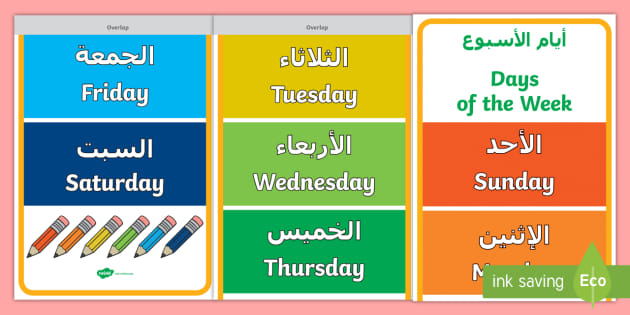
And then, the grand finale, the pièce de résistance, the day everyone’s been waiting for: Friday! In Arabic, it’s Al-Jumu’ah (الجمعة). Now, this one is special. It doesn’t just mean “the sixth.” It’s a word derived from the root meaning “to gather.” Why? Because Friday is a day of communal prayer and a significant day for Muslims. It’s a day of congregation, of reflection, and often, of a truly epic meal with family and friends. So, while other languages might just call it the sixth day, Arabic gives it a name that speaks of connection and community. It’s the day where everyone comes together, like a giant, happy family reunion, but with more reverence and maybe better food.
Think about it: after a week of numbering, of pure progression, Friday arrives with a purpose, a sense of gathering. It’s the reward for surviving the numerical climb. It’s the day that feels like a warm hug after a long, cold week. It’s the Arabic equivalent of a collective sigh of relief and a cheer of “We made it!”
A Little Extra Spice: The Surprising Origins
So, there you have it: Saturday, Sunday (the first), Monday (the second), Tuesday (the third), Wednesday (the fourth), Thursday (the fifth), and Friday (the gathering). It’s a beautifully logical system, isn't it? Almost… too logical. But here’s a fun tidbit: this numerical naming convention isn’t unique to Arabic. Some scholars believe it might have its roots in ancient practices, possibly related to astrological cycles or early calendar systems. So, when you’re saying Al-Ithnayn, you’re unknowingly tapping into a linguistic heritage that stretches back millennia!
It’s also worth noting that in some very traditional contexts, the week was sometimes considered to start on Sunday, making Saturday the seventh day. But the prevalent modern understanding, and the one most people learn, follows the numbering from Sunday as the first. It’s like trying to figure out the “official” start of your cheat day. Does it begin at midnight on Friday, or whenever you decide you’ve earned it?
Learning these days isn’t just about memorizing words. It’s about peeking into another culture’s rhythm, understanding their perception of time and community. It’s about realizing that the way we name things shapes how we experience them. So next time you’re planning your week, try saying it in Arabic. You might find yourself looking forward to Al-Jumu’ah just a little bit more!
And there you have it, my friends. The Arabic days of the week. Not so intimidating now, are they? They’re a little bit logical, a little bit historical, and a whole lot more interesting than just “another Tuesday.” Now go forth and impress someone. Or at least, impress yourself. You’ve just conquered the Arabic week!