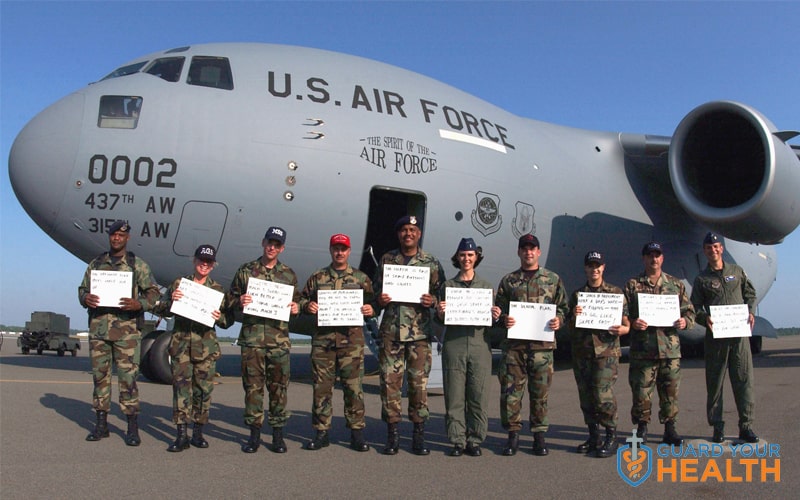
Ever wondered about the different branches of the U.S. military? They’re all about serving the country, but they definitely have their own unique flavors. And if you've ever chatted with someone who’s joined up, or even just seen a movie, you might have heard the question pop up: is the Air Force the easiest branch? It’s a question that sparks a lot of curiosity, and honestly, it's a pretty fun one to explore. It’s not about slacking off, of course, but about understanding the different roles, training, and lifestyles each service offers. Think of it like comparing different kinds of epic adventures – they’re all challenging, but in their own special ways!
The U.S. Air Force is one of the six branches of the U.S. Armed Forces, and its primary mission is to provide air and space superiority for the United States. This means they are responsible for conducting air and space warfare, flying everything from sleek fighter jets and massive cargo planes to sophisticated satellites and drones. Beyond the high-flying action, the Air Force also plays a crucial role in global logistics, intelligence gathering, cyber warfare, and even space exploration. They are the guardians of the skies and the frontier of space, ensuring national security and projecting power around the globe. It’s a massive operation that requires incredible precision, advanced technology, and dedicated personnel working together seamlessly.
So, why does the Air Force often get labeled as the "easiest"? Well, it’s often a perception born from a few key differences in their training and day-to-day operations compared to some of the other branches. For starters, the stereotype often paints a picture of less physically grueling boot camp. While all military training is tough, Air Force basic training, or "boot camp", at places like Lackland Air Force Base in Texas, tends to focus more on academic learning, discipline, and military bearing, with a slightly less emphasis on the intense, constant physical conditioning that might be found in, say, the Marine Corps. Think of it as a different kind of challenge – still demanding, but perhaps with a different primary focus.
Furthermore, many Air Force jobs, known as Air Force Specialty Codes (AFSCs), are highly technical and involve roles that are often performed in controlled environments. You won't typically find Air Force personnel conducting amphibious assaults or performing long-range patrols on foot through challenging terrain, which are staples for branches like the Army and Marine Corps. Instead, you’re more likely to find Airmen working as pilots, air traffic controllers, cyber operators, aircraft mechanics, intelligence analysts, or in administrative and logistical support roles. These jobs require sharp minds, technical aptitude, and a dedication to detail, but they generally don't involve the same level of sustained, high-intensity physical exertion in extreme environments that other branches might demand.
“It's less about the 'easy' and more about the 'different.' The Air Force has a unique focus on technology and airpower, which shapes its training and career paths.”
PNB inaugurates Air Force Station Palam Branch
The benefits of joining the Air Force are substantial, no matter which branch you choose. For starters, there's the incredible opportunity for job training and skill development. The Air Force invests heavily in its people, offering world-class training in a vast array of technical fields. Whether you’re interested in becoming a pilot, a cybersecurity expert, an engineer, or a medical technician, the Air Force provides the education and experience to turn those interests into a fulfilling career. This specialized training often translates into highly marketable skills after your service, giving you a significant advantage in the civilian job market. "Skill-building" is a massive draw for many recruits.
Then there’s the matter of career advancement and stability. Joining the Air Force offers a clear path for progression, with opportunities for promotion based on merit, experience, and further education. You'll also benefit from a stable income, comprehensive healthcare, housing allowances, and a generous retirement plan. This sense of security and the prospect of a long-term career are significant draws for many individuals and families. It's about building a solid foundation for your future. The "GI Bill" is another huge benefit, allowing for further education after service.
Air Force Branch Logo
And let's not forget the sense of purpose and pride that comes with serving your country. The Air Force plays a vital role in national defense and global operations, and being a part of that mission can be incredibly rewarding. You’ll be part of a team, working towards a common goal, and contributing to something bigger than yourself. The camaraderie and the shared experience of service are often cited as some of the most cherished aspects of military life. It’s a way to make a real difference in the world.
However, it’s crucial to dispel the myth that the Air Force is an "easy" ride. While the physical demands might differ, the mental and emotional challenges are just as real. Airmen are expected to maintain the highest standards of professionalism, discipline, and operational readiness. They are deployed to various locations around the world, sometimes in austere and dangerous conditions, to support critical missions. The responsibility that comes with operating advanced aircraft and sophisticated technology is immense. Think about the pressure of being an air traffic controller guiding dozens of planes through crowded skies, or a pilot navigating through hostile territory. These aren't "easy" tasks by any stretch of the imagination.
5 Easiest Air Force Jobs To Get - Insider Monkey
The Air Force also has a strong emphasis on education and continuous learning. Airmen are encouraged to pursue higher education and professional development throughout their careers. This commitment to lifelong learning means that even after basic training, the intellectual challenges don't stop. You'll be constantly learning new technologies, procedures, and strategies to stay ahead in a rapidly evolving world. It requires a dedicated and sharp mind, always ready to adapt and grow. The pursuit of "knowledge" is a constant.
Ultimately, the question of whether the Air Force is the "easiest" branch is a bit of a simplification. Each branch offers a unique set of challenges and rewards. The Air Force's focus on air and space power, advanced technology, and technical expertise shapes its training and career paths differently. It's a path for those who are technically inclined, disciplined, and seeking a career with significant intellectual stimulation and opportunities for growth. It’s about finding the right fit for your skills and aspirations. Whether it’s “easy” or not, it’s definitely a path of honor, service, and incredible accomplishment.