
How To Tell The Sex Of A Cat

So, you've got a new feline friend gracing your home, or maybe you've always wondered about that fluffy enigma you share your sofa with. Cats! They're mysterious, majestic, and let's be honest, sometimes a little bit aloof. One of life's great (okay, maybe not great great, but still!) little mysteries for many a cat parent is simply figuring out if you've got a Sir or a Madam purring on your lap. Fear not, intrepid cat enthusiast! Determining your kitty's sex is far less complicated than decoding their midnight zoomies or why they suddenly decide your clean laundry is the perfect place for a nap. Let's dive into the wonderfully low-stakes world of cat sex determination, with a sprinkle of practical advice and maybe a chuckle or two.
The Big Reveal: It's All in the Anatomy (Don't Be Shy!)
Alright, deep breaths. We're going to get a little… intimate. But in the most professional, cat-loving way possible, of course! The most reliable way to tell a male cat from a female cat is by examining their nether regions. Think of it as a discreet anatomical detective mission. Grab your cat, preferably when they're feeling particularly chill and amenable to a cuddle (a good grooming session can sometimes provide the perfect, relaxed opportunity).
The Female Feline: A Closer Look
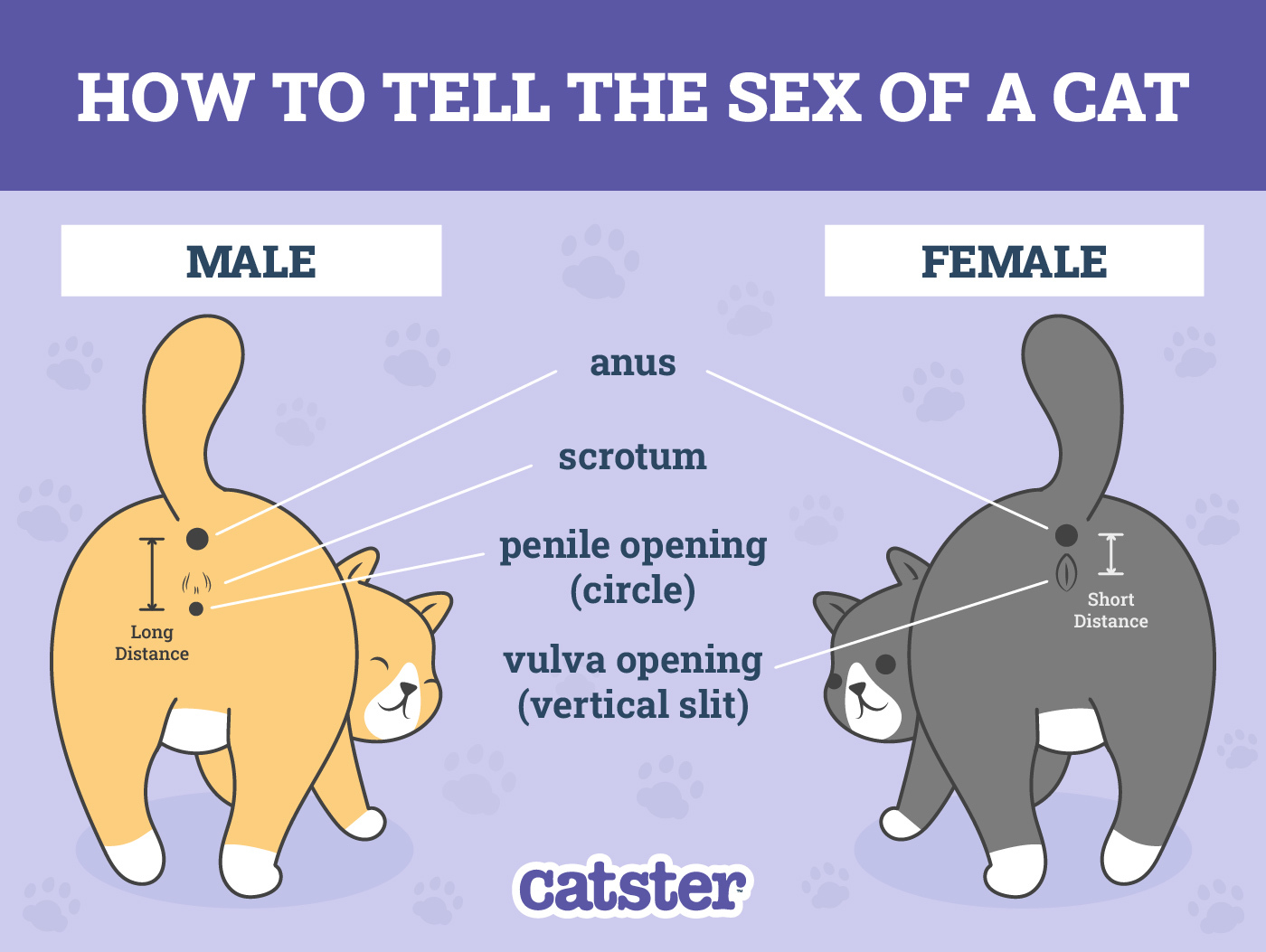
When you're ready to investigate our dainty divas, look for two distinct openings. The first, and the one you'll likely see first, is the anus. It's usually higher up, closer to the tail. Now, the crucial part: directly below the anus, you'll find the vulva. It will appear as a vertical slit. Think of it as a tiny, delicate little comma.
Must Read
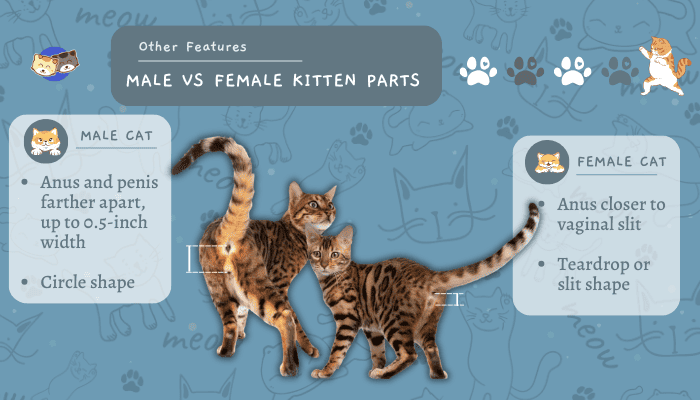
The key takeaway here is the distance between these two openings. In female cats, the space between the anus and the vulva is quite small, typically less than half an inch (or about 1.3 cm) in kittens, and it doesn't expand dramatically with age. This compact arrangement is your primary clue. No need for a ruler, just a good visual assessment will do!
The Male Cat: A Different Configuration
Now, let's turn our attention to the gentlemen of the cat world. Male cats also have an anus, located in the same general area. However, the difference becomes apparent when you look for the second opening. Below the anus, you'll find the prepuce, which contains the penis. Unlike the female's vertical slit, the male's prepuce usually appears as a circular opening. And here's the big differentiator: there's a significant gap between the anus and this circular opening.
This gap is usually about an inch (around 2.5 cm) or more in adult male cats, and it can be even more pronounced in larger breeds. This wider spacing is a pretty definitive sign that you're dealing with a boy. You might even be able to glimpse the penile opening as a little dot within the foreskin if your cat is relaxed enough. So, the rule of thumb for males is "anus, then a good-sized gap, then the penis opening."
The "Colon vs. Semi-Colon" Analogy
Here's a fun little mnemonic to help you remember: Think of the female's anatomy as resembling a colon (:), with the anus and vulva positioned closely together. The male's anatomy, with that larger space, is more like a semi-colon (;), with a distinct pause between the anus and the penile opening. Easy, right? It's like a punctuation mark for your pet's plumbing!
Beyond the Basics: Other (Less Reliable) Clues
While the direct anatomical examination is the gold standard, there are a few other observations that might lend a clue, though these are far from foolproof. Think of these as fun trivia points rather than definitive diagnostic tools. We're talking about things that can be influenced by personality, hormones, and even breed.
The "Tom Cat" Temperament
Often, people associate certain behaviors with male cats, particularly unneutered ones. These "tom cats" can sometimes be more prone to roaming, fighting, and marking their territory with spray. If your cat is particularly vocal, territorial, or has a penchant for "broadcasting" their presence around the neighborhood, it could lean towards male. However, many female cats are also vocal and territorial, especially if they're not spayed or if they're feeling particularly protective.
Conversely, female cats are sometimes stereotyped as being more affectionate and nurturing. Again, this is a generalization and not a hard rule. Plenty of male cats are incredibly cuddly, and many female cats can be independent and a bit of a lone wolf. So, while a cat's personality might offer a slight hint, it's definitely not something to bet your house on!

The Color Factor: A Myth or a Method?
You might have heard whispers about cat coat colors and their relation to sex. This is where we delve into some fascinating genetics! For the most part, the gene for orange and black coloring is located on the X chromosome. Since females have two X chromosomes (XX) and males have one X and one Y chromosome (XY), this has some interesting implications.
Orange cats are overwhelmingly male. This is because a male cat only needs one X chromosome with the orange gene to be orange. A female cat needs two X chromosomes, each carrying the orange gene, to be orange. It's much rarer for a female to inherit this combination, making it a bit of a genetic lottery. So, if you have a fiery ginger cat, chances are high that you've got a handsome boy.
Tortoiseshell and Calico cats are almost exclusively female. These beautiful, marbled cats get their distinctive coloring from a phenomenon where one of their X chromosomes is randomly inactivated. If one X chromosome has the gene for orange and the other has the gene for black, the inactivation process results in patches of both colors. Since females have two X chromosomes, they have the necessary genetic makeup for this to occur. Male cats, with their XY chromosomes, generally cannot be tortoiseshell or calico.

Black cats, grey cats, white cats, and other solid colors can be male or female. Their sex is not tied to their coat color in the same way.
Important Caveat: While these colorations are strong indicators, nature does sometimes throw us curveballs. Very rarely, a male cat can be born with XXY chromosomes (Klinefelter syndrome), which can result in him being tortoiseshell or calico. Likewise, a genetic anomaly can sometimes lead to an orange female. So, while color is a fun clue, it's still not as definitive as a peek at their anatomy.
The Size and Build Argument
Another common observation is that male cats tend to be larger and more muscular than female cats. This is generally true, especially in unneutered cats where male hormones contribute to greater muscle mass and bone density. However, this is heavily influenced by breed, diet, and overall health. A petite Siamese male might be smaller than a robust Maine Coon female. So, while it's a general trend, it's not a reliable indicator for individual cats.
When to Seek Expert Help (Or Just Trust Your Vet)
If you're still scratching your head, or if your cat is a particularly wriggly subject (which, let's face it, most are!), don't hesitate to enlist the help of a professional. Your veterinarian or a veterinary technician is an expert in all things feline anatomy and can tell you with absolute certainty. It's often done during a routine check-up or when getting your kitten vaccinated.
If you're getting a kitten from a breeder or a shelter, they will almost certainly have already determined the sex for you. If you're rescuing a cat, the shelter staff will usually be able to tell you. And if you're just curious about your long-time companion, a quick vet visit can resolve any lingering questions.
Why Does It Matter Anyway?
Honestly, for most of us, knowing your cat's sex is more about satisfying curiosity and perhaps giving them the right name (though, let's be real, "Mittens" works for anyone!). However, there are a few practical reasons why it's good to know:
- Reproductive Health: Knowing the sex helps in understanding their reproductive capabilities. If you're not planning on breeding, this knowledge underscores the importance of spaying (females) and neutering (males) to prevent unwanted litters and associated health and behavioral issues.
- Behavioral Differences (Subtle): While not absolute, there can be subtle behavioral patterns that emerge, especially in unspayed/unneutered cats, related to their sex.
- Veterinary Care: While most veterinary care is universal, understanding reproductive anatomy is part of a comprehensive health assessment.
A Final Purr-spective
In the grand tapestry of life, knowing whether your cat is a he or a she might seem like a small detail. But just like remembering to refill their food bowl or giving them that perfect chin scratch, it's part of the quiet joy of understanding and caring for these incredible creatures. Whether you're gazing at a fluffy orange tabby and confidently declaring, "Yep, that's a boy!" or observing the neat arrangement of a female's anatomy, there's a certain satisfaction in knowing just a little bit more about your whiskered roommate.
This little anatomical exploration reminds us that even in the simplest of things, there's a unique story unfolding. It's about paying attention, observing the small details, and appreciating the diversity of life around us. So next time your cat is draped languidly across your lap, take a moment, embrace your inner detective, and perhaps, just perhaps, you'll unlock one more delightful secret of your feline overlord. And if all else fails, the vet has the final word, and a good laugh is guaranteed either way!
![How To Tell the Sex of a Kitten : The Complete Guide [Video]](https://welovecatsandkittens.com/wp-content/uploads/2020/05/how-to-tell-if-kittens-are-male-or-female.jpg)
