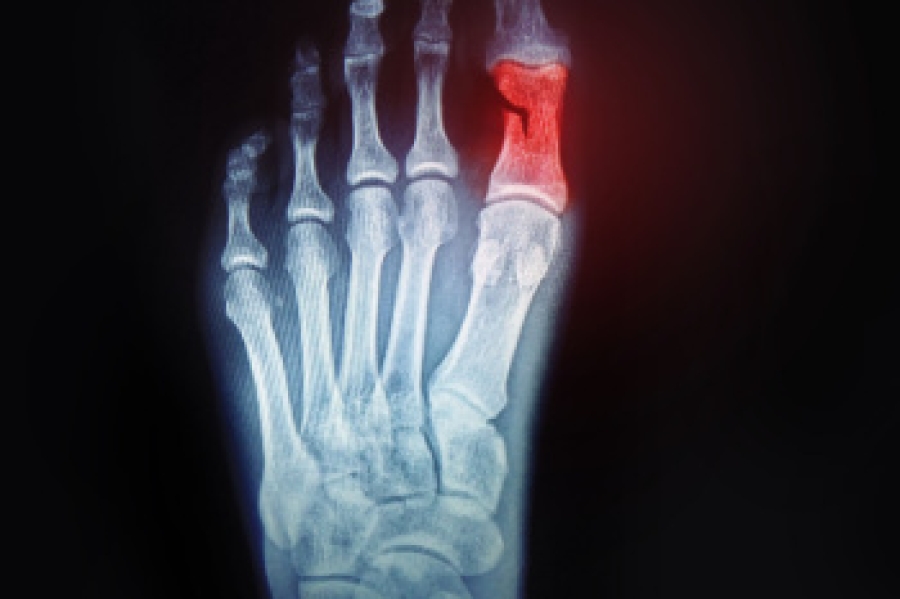
How To Tell If A Toe Is Broken
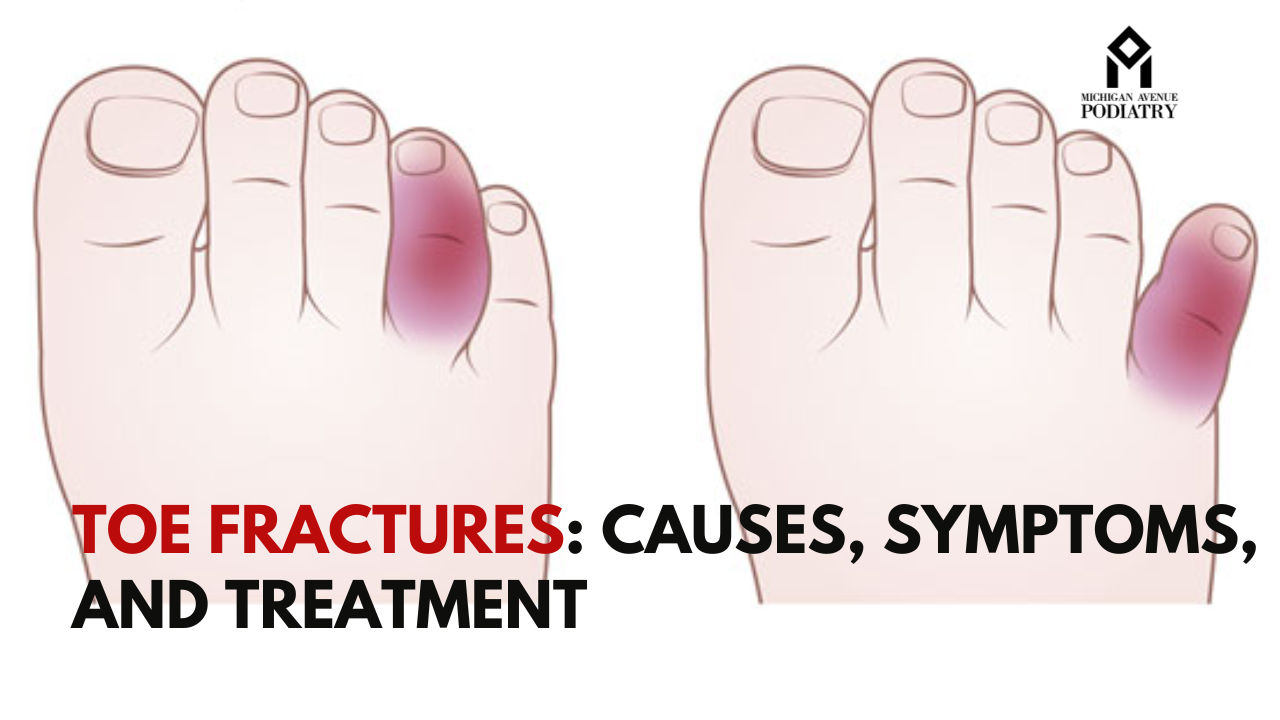
So, picture this: it's a perfectly normal Tuesday, right? I'm just minding my own business, making my famous (infamous?) banana bread, when suddenly, BAM! My little toe decides it wants to join the party a little too aggressively. I'd been trying to reach for a stray raisin that had escaped the batter, and well, let's just say my foot miscalculated the spatial dimensions of the kitchen counter. The sound? A rather unceremonious crack. Immediately, a wave of what felt like… well, everything shot up my leg. My immediate thought wasn't "Oh no, I've broken my toe!" It was more along the lines of, "Did I just invent a new dance move involving floor acrobatics and a banana bread ingredient retrieval mission?"
Turns out, my little toe wasn't auditioning for "So You Think You Can Dance." It was staging a full-blown rebellion. And that, my friends, is how I found myself staring down at my throbbing appendage, wondering if it was a sprain, a bruise, or a bona fide fracture. You know, the kind of existential toe crisis that can derail your entire day. Or week. Or, let's be honest, your ability to wear anything other than fluffy slippers for the foreseeable future.
This little toe incident, as dramatic as it was for my culinary endeavors, got me thinking. We all have those moments, don't we? Those clumsy encounters with furniture, those misjudged steps, those sudden "oops" moments. And more often than not, our toes bear the brunt of it. So, how do you tell if that throbbing, potentially discolored toe is just a little bit grumpy, or if it’s genuinely calling for a doctor's attention?
Must Read
Is It a Broken Toe or Just a Really Sore Toe?
This is the million-dollar question, isn't it? Because let's face it, when you're in pain, your brain tends to go a little fuzzy. You're not exactly conducting a scientific experiment on your own foot. But understanding the signs can save you a lot of unnecessary worry (or a trip to the ER for something that will heal on its own).
Think of it like this: a sprained toe is like a minor fender bender for your foot's ligaments. A broken toe? That's more like the axle snapping. Both hurt, but the severity and the potential for long-term damage are different. So, let's break down the tell-tale signs. And by "break down," I mean without actually breaking anything else, hopefully.
The Immediate Aftermath: What's Happening Right Now?
The first clue is usually the instantaneous pain. And I'm not talking about a dull ache. I mean a sharp, intense, "I regret all my life choices that led me to this point" kind of pain. It's a pain that grabs your attention and doesn't let go. If you can walk on it without significant discomfort immediately after the incident, it's less likely to be a break, but not impossible. Keep that in mind!
Then there’s the sound. Remember my banana bread debacle? That crack or snap? That's a pretty strong indicator. While not every break makes a noise, a distinct popping or cracking sound is definitely a red flag waving furiously. If you heard it, pay attention.
Swelling is another big one. Now, bruising and swelling can happen with a good ol' sprain too, but with a fracture, the swelling can be quite rapid and pronounced. It's like your toe is trying to impersonate a tiny, angry balloon. It might also feel warm to the touch, which is your body's inflammatory response kicking into high gear.
And speaking of discoloration, bruising. This usually appears a little while after the initial injury, sometimes within hours, sometimes within a day or two. If you see a significant bruise, especially one that seems to spread or deepen, it's another piece of evidence in the "is it broken?" puzzle. The color can range from deep purple to black, and sometimes even a bit of red or blue.
The Physical Examination (aka, What Your Toe is Telling You)
This is where things get a little more hands-on, and potentially a little more painful. So, take a deep breath.
Tenderness to touch: This is a no-brainer, really. If even the slightest pressure on the toe sends jolts of pain through you, that's a pretty strong sign. Try to gently press along the length of the toe. Can you pinpoint a specific spot that's excruciating? That's a key indicator of where the damage might be.
Deformity: This is often the most obvious sign of a broken bone. If your toe looks out of place, bent at an odd angle, or noticeably crooked compared to its pre-injury state, it’s highly likely to be broken. This is not a subtle hint; it’s your toe shouting for help. It might look shorter, twisted, or just… wrong. Trust your gut if something looks visibly abnormal.

Difficulty moving the toe: Try to wiggle your toe. Can you move it at all? Is the movement severely restricted? Is moving it causing unbearable pain? A broken bone can make it very difficult, if not impossible, to move the affected digit without significant pain. If it feels stuck or like trying to bend a piece of solid metal, that's a bad sign.
Numbness or tingling: Sometimes, a fracture can affect the nerves around the broken bone, leading to a pins-and-needles sensation or even complete numbness. This is less common for simple toe fractures, but it's definitely something to watch out for, especially if it persists.
When to Seriously Consider a Doctor's Visit (Spoiler Alert: Probably Sooner Rather Than Later)
Okay, so you've checked off a few of those boxes. Your toe is throbbing, it’s starting to look like a tiny eggplant, and you can’t even think about walking without wincing. When does it officially move from "ouch, that hurt" to "I need professional help"?
Here’s the general rule of thumb: if you suspect a break, it’s always best to get it checked out. Seriously. It’s better to be safe than sorry, especially when it comes to your feet. They carry you everywhere, after all!

However, there are some specific situations where you should absolutely seek medical attention:
- Visible deformity: As mentioned, if your toe looks crooked, bent, or out of shape, go see a doctor. They can properly set the bone and ensure it heals correctly.
- Open wound: If the skin is broken, and you can see the bone or if there's bleeding that won't stop, that's a medical emergency. You're at risk of infection, and the bone needs immediate attention.
- Severe pain and inability to bear weight: If the pain is so intense that you can't put any weight on your foot, it's a strong indicator of a significant injury, likely a fracture.
- Numbness or tingling that doesn't go away: This could indicate nerve damage, which needs to be assessed by a medical professional.
- Signs of infection: If the area becomes increasingly red, warm, swollen, and you develop a fever, get to a doctor immediately.
- You have diabetes or poor circulation: If you have underlying health conditions that affect your feet, it's crucial to get any suspected injury checked by a doctor to prevent complications.
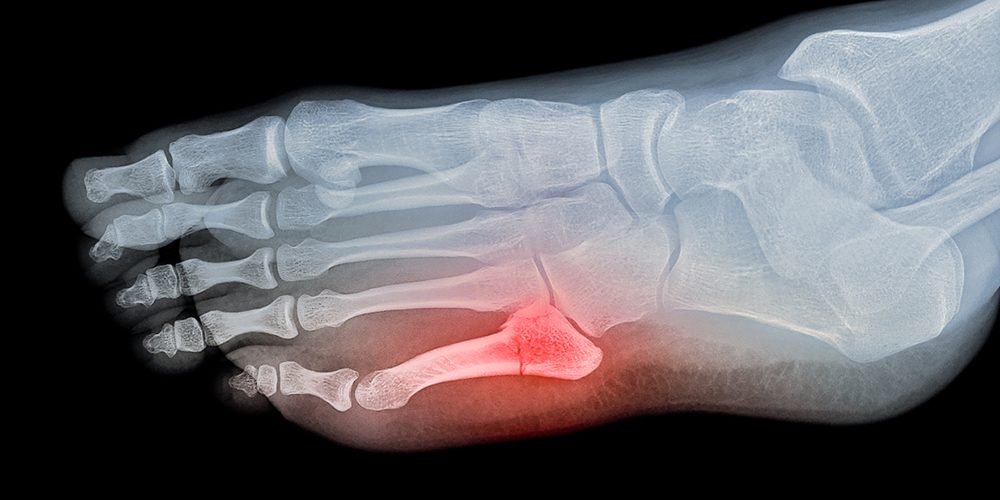
A doctor will likely perform a physical examination and may order an X-ray to confirm if the toe is broken. Don't be embarrassed if they ask you to wiggle it; it's all part of the diagnostic process! And trust me, they've seen far weirder things than a bruised toe from a rogue raisin retrieval mission.
What Happens If It Is Broken? (The Not-So-Fun Part)
If your toe is indeed fractured, the good news is that most toe breaks are treated conservatively. This means you probably won't need surgery. Hooray for less invasive interventions!
The most common treatment is called buddy taping. This is where they tape your injured toe to the adjacent, uninjured toe. It acts as a natural splint, providing support and stability. It might feel a little weird at first, like you and your toe are suddenly in a permanent hug, but it’s super effective. You'll likely need to wear a stiff-soled shoe or a special boot to help protect the toe and keep you from accidentally bumping it.

Pain management is also key. Over-the-counter pain relievers like ibuprofen or acetaminophen can help manage the discomfort and reduce inflammation. Your doctor might also recommend elevating your foot to help with swelling.
Recovery time varies depending on the severity of the fracture and which toe is involved. The little toe might take a bit longer because it’s the furthest from the main blood supply. You're looking at anywhere from a few weeks to a couple of months for full healing. During this time, it's important to follow your doctor's advice and avoid activities that put too much stress on your foot. So, no impromptu salsa dancing or extreme gardening for a while. Sigh.
What if It's Just a Sprain? (The Slightly Less Bad News)
If it turns out to be a sprain, the treatment is often similar: rest, ice, compression, and elevation (RICE). You might still need to tape it, but the pain and swelling are usually less severe. The recovery time is generally shorter for a sprain than for a fracture.
Regardless of whether it's a sprain or a break, listen to your body. Don't try to push through pain. Your toes are important, and giving them the time they need to heal will prevent further issues down the line. And who knows, maybe you'll become an expert at navigating your kitchen with a little more grace (or at least, a better understanding of counter-based raisin retrieval strategies).
So, the next time you experience that sudden, sharp pain in your digit, take a moment. Assess the situation. Don't panic (easier said than done, I know). And remember, a little bit of caution and a quick trip to the doctor if you're unsure can save you a lot of future toe-related woes. Now, if you'll excuse me, I have some slightly less precarious banana bread to bake.