
How To See If An Id Is Fake
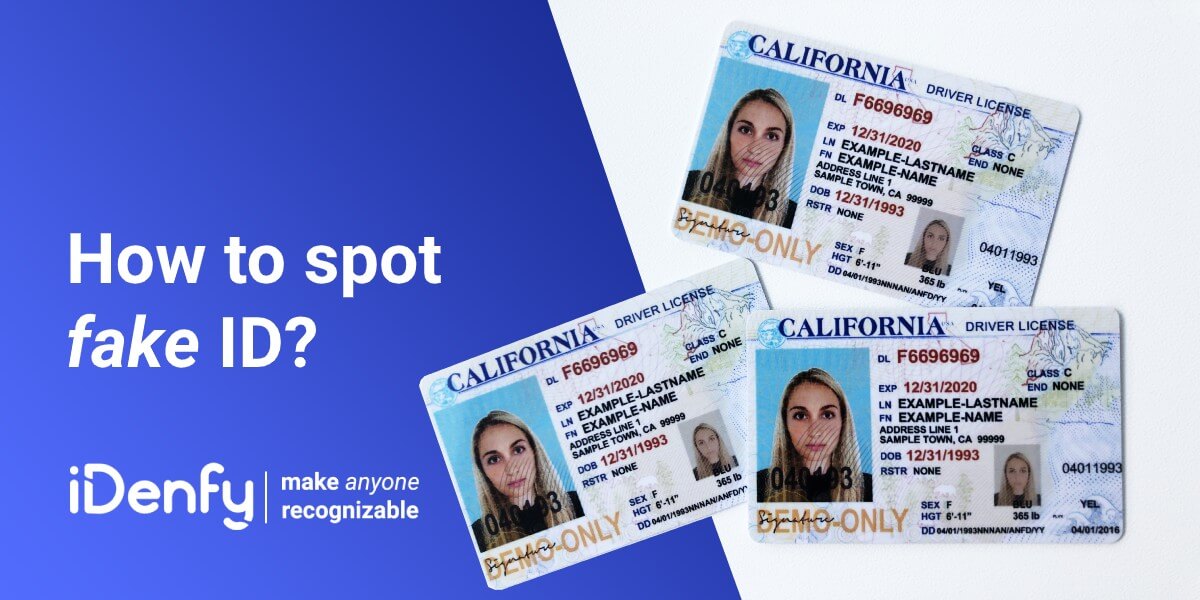
Ever found yourself staring at an ID, a little voice in your head whispering, "Hmm, is this legit?" You're not alone! It's like a mini-detective mission. And honestly, it's kinda fun. Think of yourself as a super-spy, just for a sec.
We're not talking about stopping international crime here. Mostly just avoiding that awkward "nope, sorry" at the bar or when you're trying to buy those fancy age-restricted chocolates. You know the ones. The ones that demand you prove you've lived long enough to appreciate artisanal cocoa.
So, how do we crack the code? Is there a secret handshake? A magic word? Not quite, but there are definitely some sneaky giveaways. Let's dive in, shall we?
Must Read
The All-Seeing Eye: Look and Feel
First things first: touch it. Seriously. Real IDs have a certain feel. They're usually made of thick, sturdy plastic. Like a credit card, but maybe a bit more… official. Fakes? Sometimes they feel flimsy. Like a business card that got lost in the rain.
Hold it up to the light. Is there a ghost image? That's usually a super cool security feature. Like a hidden celebrity in your photo, but printed inside the plastic. If it's just a regular photo stuck on, it's a red flag. A big, honking, "Uh oh!" red flag.
And what about the holograms? Oh, the holograms. These are like tiny, shiny disco balls embedded in the card. They shimmer and change as you tilt it. Real ones are complex, with intricate designs. Fakes might have a blurry, sticker-like hologram. Or, gasp, no hologram at all!
Think of it like this: a real ID is a work of art. A fake is a hurried sketch. You can usually tell the difference.

The Devil's in the Details: Microprint and More
Now, let's get really nerdy. Have you ever noticed those tiny, almost invisible words printed on the card? That's called microprint. It's so small, you can barely see it with the naked eye. You might need a magnifying glass. Or, you know, just your phone's zoom function. Shhh, we won't tell.
Real IDs have microprint that's crisp and clear, even when magnified. Fakes? The microprint might be smudged, blurry, or just plain missing. It's like trying to read a secret message that's been scribbled with a crayon. Not exactly top-secret stuff.
Another fun detail? The texture. Some IDs have raised lettering or a slightly embossed feel. Run your finger over the name, the date of birth. Does it feel… flat? That's another potential clue.
And don't forget the photo. Is it a perfect, passport-style photo? Or does it look like it was taken at a birthday party with questionable lighting? Sometimes the photo on a fake ID looks a bit… off. Maybe the resolution is too low, or the colors are weird. It’s like they printed a picture from a really old social media profile.

The Data Dance: Dates and Numbers
Okay, let's talk about the numbers. Every ID has a bunch of them, right? Date of birth, expiration date, driver's license number. It's a symphony of digits.
Does the expiration date seem… convenient? Like, it expired yesterday? Or it’s valid for an absurdly long time? That can be a red flag. Official IDs usually have a sensible expiration timeline.
And the date of birth. Does it really match the person holding the ID? Sometimes, when people are trying to pass off a fake, they pick a DOB that's just slightly off. Or, you know, wildly wrong. It’s like trying to remember your grandma's birthday after a few too many glasses of punch.
Look at the fonts. Real government agencies tend to stick to consistent, official-looking fonts. If the font looks like it came straight out of a wacky internet meme generator, you might have a problem. Or, at least, a very amusing ID.

The Quirky and the Obvious: When Things Go Wrong
Sometimes, fakes have the most hilarious mistakes. Like a typo in the state name. Or a bizarrely spelled middle name. It’s like the person creating it was in a massive rush, fueled by caffeine and questionable life choices.
What about the security features that are just… missing? Does the ID have a barcode? A magnetic stripe? If a real ID from that state is supposed to have them, and this one doesn't, it's a pretty good sign it's not the real deal.
And, let's be honest, the overall printing quality. Is it faded? Smudged? Does it look like it was printed on a home inkjet printer that's running out of ink? That's a big no-no for official documents.
Think about that one time you saw a t-shirt with a really weird slogan. It had that same vibe. Not quite right. Not quite… legitimate.

The Fun Part: Being a (Temporary) Savvy Observer
Honestly, most of the time, people aren't trying to pass off elaborate fakes. They're usually pretty basic. And that makes spotting them even more fun. It's like a game of "I Spy," but with potentially less delightful consequences if you get it wrong.
The best advice? If you're ever unsure, and it matters, politely ask for another form of ID. Or just… trust your gut. Your gut is often surprisingly good at sniffing out the fake stuff.
It’s not about being suspicious all the time. It’s about being aware. And maybe, just maybe, having a little chuckle at the creative (or not-so-creative) attempts at deception. It’s all part of the human experience, right? The good, the bad, and the hilariously fake IDs.
So go forth, be observant, and remember: a little bit of scrutiny can be a lot of fun. Just don't get too carried away. We're not auditioning for the next James Bond movie. Yet.

