How To Say God Bless In Arabic

Ever find yourself wanting to sprinkle a little bit of divine goodwill into your conversations, but are stuck on how to do it in Arabic? Whether you're chatting with a new friend from a far-off land, planning a trip to a vibrant bazaar, or simply want to add a touch of warmth to your everyday interactions, knowing how to say "God bless you" is a fantastic little linguistic gem. It’s more than just a phrase; it’s a way to connect, to offer comfort, and to share a moment of shared humanity. So, let’s dive into the beautiful world of Arabic blessings, with a relaxed vibe and a sprinkle of fun!
The Sweet Sound of Arabic Blessings
Arabic, a language spoken by millions across diverse cultures and continents, is rich with expressions of faith and well-wishes. When it comes to blessings, there are a few go-to phrases that are both widely understood and deeply ingrained in daily life. Think of them as the linguistic equivalent of a warm hug or a comforting smile.
The most common and versatile way to say "God bless you" in Arabic is "Allah yebarak feek" (for a male) and "Allah yebarak feeki" (for a female). It’s straightforward, elegant, and carries a beautiful sentiment. Let’s break it down:
Must Read
- Allah: This is the Arabic word for God. Simple, direct, and universally recognized.
- Yebarak: This verb comes from the root "barakah," which means blessing, abundance, or prosperity. So, "yebarak" essentially means "He blesses."
- Feek/Feeki: This is a prepositional phrase meaning "in you" or "upon you."
Put it all together, and you have a heartfelt "May God bless you" or "May God bestow his blessings upon you." It’s a phrase that can be used in so many situations – after someone sneezes (more on that in a sec!), when you're expressing gratitude, or when you're simply wishing someone well. It's the linguistic equivalent of a gentle nod of approval and a heartfelt "all the best."
Beyond the Sneeze: When to Deploy Your Arabic Blessing
While in many Western cultures, "bless you" is primarily reserved for sneezes, the Arabic equivalent is far more expansive. This is where the fun really begins, as you can weave these blessings into the fabric of your conversations with a natural ease.
The Sneeze Saga: A Global Tradition
Let's start with the classic: the sneeze. You've probably heard "Gesundheit" in German, "Salud" in Spanish, or "À tes souhaits" in French. In Arabic, the tradition is also alive and well. When someone sneezes, the immediate response is:
"Alhamdulillah" (الحمد لله). This means "Praise be to God." It’s a profound statement of gratitude for being healthy and alive.
The sneezer, in return, often replies with "Yarhamuk Allah" (يرحمك الله), meaning "May God have mercy on you."
And to complete the polite exchange, the original sneezer might respond with "Yahdeekum Allah wa yuslih balakum" (يهديكم الله و يصلح بالكم), which translates to "May God guide you and set your affairs in order."
See? It’s a mini-blessing exchange! It’s a beautiful reminder that even the smallest bodily functions can be an opportunity for spiritual reflection and mutual well-wishes. Imagine the gentle flow of these phrases in a bustling market or a quiet family gathering – it adds a layer of unspoken connection.
Everyday Enchantments: Weaving Blessings into Life
But don't limit your Arabic blessings to just sneezes! This is where the real magic happens. Think of these phrases as versatile tools to enrich your interactions.

- Expressing Gratitude: When someone does something kind for you, instead of just a simple "thank you," you can elevate it. "Shukran, Allah yebarak feek/feeki" (Thank you, may God bless you) is a wonderfully sincere way to show your appreciation. It implies that you acknowledge their kindness and are asking for divine favor upon them in return.
- Congratulating Someone: Whether it's a new job, a wedding, or a graduation, a congratulatory "Mabrouk!" (Congratulations!) is standard. But adding a blessing takes it to another level. "Mabrouk! Allah yebarak feek/feeki" is a powerful way to share in their joy and wish them continued success and happiness.
- Wishing Someone Well on a Journey: Embarking on a trip? A simple "Safe travels" is good, but "Allah yebarak feek/feeki fi safaruk" (May God bless you on your journey) adds a spiritual dimension, asking for divine protection and a smooth, rewarding experience.
- Responding to Good News: Heard something wonderful about a friend or family member? Responding with "Allah yebarak feek/feeki" shows you're genuinely happy for them and sharing in their good fortune.
- Offering Comfort: In times of difficulty, even a simple phrase can offer solace. While specific condolences have their own phrases, in general moments of shared struggle, a heartfelt "Allah yebarak feek/feeki" can be a gentle reminder that they are not alone and that there is a higher power wishing them strength.
It's important to remember that Arabic has many dialects, and pronunciation can vary. However, "Allah yebarak feek/feeki" is understood across the board. Think of it as the standard dialect of blessing – universally recognized and appreciated.
A Little Cultural Immersion: The Concept of Barakah
The concept of "barakah" (بركة) is central to many Arabic-speaking cultures. It’s not just about material wealth; it’s about a divine blessing that brings with it growth, increase, and well-being in all aspects of life – spiritual, material, and social. When you say "Allah yebarak feek," you’re essentially invoking this idea of divine abundance into someone’s life.
This concept is so ingrained that you'll often hear it in everyday contexts. For instance, when someone is praised for their delicious cooking, you might hear, "Mashallah, tabkhuk fee barakah!" (Mashallah, your cooking has barakah!). Or when a shopkeeper hands you your change, they might say, "Allah yebarak feek." It’s a constant, gentle hum of positive energy and divine acknowledgment.
Fun Fact Alert!
Did you know that the word "barakah" is also related to the word for lightning (barq)? Some scholars suggest a connection, perhaps implying the swiftness and power of a divine blessing. Pretty cool, right?

Another interesting tidbit is that the initial greeting in many Arabic-speaking countries is often "As-salamu alaykum" (السلام عليكم), meaning "Peace be upon you." This itself is a profound blessing, setting a tone of tranquility and goodwill before any other words are exchanged. The response is "Wa alaykum as-salam" (وعليكم السلام), meaning "And upon you be peace." So, you're already in a blessèd space!
Navigating Pronunciation: Keep it Chill!
Now, let's talk about pronunciation. Don't stress about getting it absolutely perfect on your first try. The effort and the intention behind the words are what truly matter. Arabic has some sounds that might be new to your tongue, but with a little practice, you'll get there.
For "Allah yebarak feek/feeki":
- Allah: Pronounce it like you would "Al-laah," with a slightly deeper 'a' sound at the end.
- Yebarak: Think "Yeh-ba-rak." The 'y' is like in "yes," and the 'a' sounds are generally short and crisp.
- Feek/Feeki: This is where the guttural 'k' sound comes in. It’s similar to the 'ch' in "loch," but softer. For "feek," the 'ee' sound is like in "see." For "feeki," it’s the same but with a slight 'ee' at the end for the feminine form.
If you’re feeling adventurous, you can listen to native speakers online or use language learning apps. But honestly, even a slightly off pronunciation with a genuine smile will be met with warmth and appreciation.
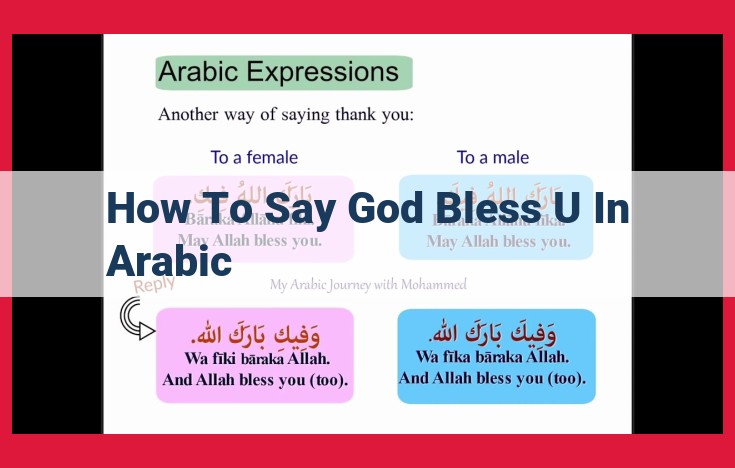
Here’s a little cheat sheet for you:
- To a male: Allah yebarak feek (الله يبارك فيك)
- To a female: Allah yebarak feeki (الله يبارك فيكي)
- To a group: Allah yebarak feekum (الله يبارك فيكم)
Remember, the intention is key. When you say these words with a sincere heart, the recipient will feel it. It’s about sending positive energy and showing respect, and that transcends perfect grammar.
A Daily Dose of Divine Goodness
Integrating these simple Arabic blessings into your daily life can be a subtle yet powerful way to enhance your connections and bring a touch of mindfulness to your interactions. It’s about recognizing the shared human experience and offering a little bit of spiritual grace wherever you go.
Think about it: the next time a friend shares a small victory, instead of just a "That's great!", imagine saying, "Allah yebarak feeki!" You’ve just added a layer of warmth, goodwill, and a touch of divine acknowledgment. It’s a small act, but these small acts of kindness and well-wishing are what weave the beautiful tapestry of our relationships.
So, go ahead, practice saying "Allah yebarak feek/feeki." Try it out on your friends, your family, or even just to yourself in the mirror. You might find that the simple act of wishing well, in any language, has a way of blessing you right back. It's a gentle reminder that in a world that can sometimes feel chaotic, there's always room for a little bit of peace, a lot of goodwill, and a whole lot of blessings.