
How To Put A Door Handle On

Hey there, friend! So, you've got a naked door, huh? Just a gaping hole where a handle should be. Don't worry, it happens to the best of us. Maybe your old handle kicked the bucket, or perhaps you're just building your dream fort and it needs some proper entrances. Whatever the reason, you've landed here, and I'm here to guide you through the wild and wonderful world of putting a door handle on. Think of me as your handy-dandy (and slightly caffeinated) co-pilot for this little DIY adventure.
First things first, let's talk tools. You don't need a whole workshop, promise! We're talking basic stuff. You'll definitely want a screwdriver. Usually, a Phillips head is your best friend here, but it's good to have a flathead lurking around too, just in case. You might also need a measuring tape, though sometimes eyeballing it works just fine if you're feeling brave. Oh, and a pencil is a must-have. For… well, for making marks. Revolutionary, I know.
Now, about the handle itself. There are a million and one types out there, aren't there? From fancy-pants knobs to sleek levers. The most common type, the one you're probably dealing with, is the passage door knob. These are the ones that don't lock, perfect for closets or just, you know, getting into rooms. If you're going for a locking one, a privacy knob, the process is pretty similar, just with a few extra bits and bobs. But for today, we're keeping it simple, sunshine.
Must Read
Okay, let's get our hands dirty. Or at least, our hands ready to get a little grubby. Your new door handle kit, bless its little packaging, usually comes with all the main players: the two handles themselves, the latch mechanism (that's the part that actually does the latching), and a bunch of screws. Read those instructions, even if they look like ancient hieroglyphs. Sometimes, they actually have helpful pictures!
The first thing you'll likely encounter is the latch mechanism. This is the metal doohickey that sticks out the side of the door. You need to get this bad boy installed first. Most new latches are adjustable, which is a lifesaver. You'll see a little plate on the end. Sometimes, it's a round plate, sometimes it's a square-ish one. Whatever shape it is, you'll want to see if it can slide or twist to fit the hole you already have in the edge of the door. It's like a puzzle, but with less crying and more metal.
If your door doesn't have a hole for the latch, well, that's a slightly different kettle of fish. We're talking about a door knob installation from scratch. That's a bit more involved and might require a hole saw and some serious bravery. But let's assume, for our coffee chat, that your door already has a hole for the latch, and a bigger hole for the knob itself. Phew! We're already halfway there!

So, back to the latch. You'll probably have two screws that go into the side of the door to secure it. Line up the latch with the hole, making sure the beveled edge is facing the direction the door closes. This is important! If you get it backward, your door won't latch properly, and you'll be left with a door that just… swings open mockingly. So, bevel forward, remember that. Screw it in until it's snug. Don't overtighten, you don't want to strip the wood, do you? We're aiming for firm, not "I'm trying to win a prize for most torque."
Now for the fun part: the handles themselves! Your kit will have two handles, one for each side of the door. They usually have a spindle that runs through them, a long metal rod. This spindle is the secret handshake of the door knob world. It's what connects the two handles and allows them to operate the latch. Think of it as the spine of your new door handle.
You'll notice that one of the handles might have a little slot or a hole on the side. This is usually where the spindle will go through and connect to the other handle. Some handles have a more integrated spindle system, where it's already attached. Either way, the goal is to get that spindle aligned with the latch mechanism you just installed.

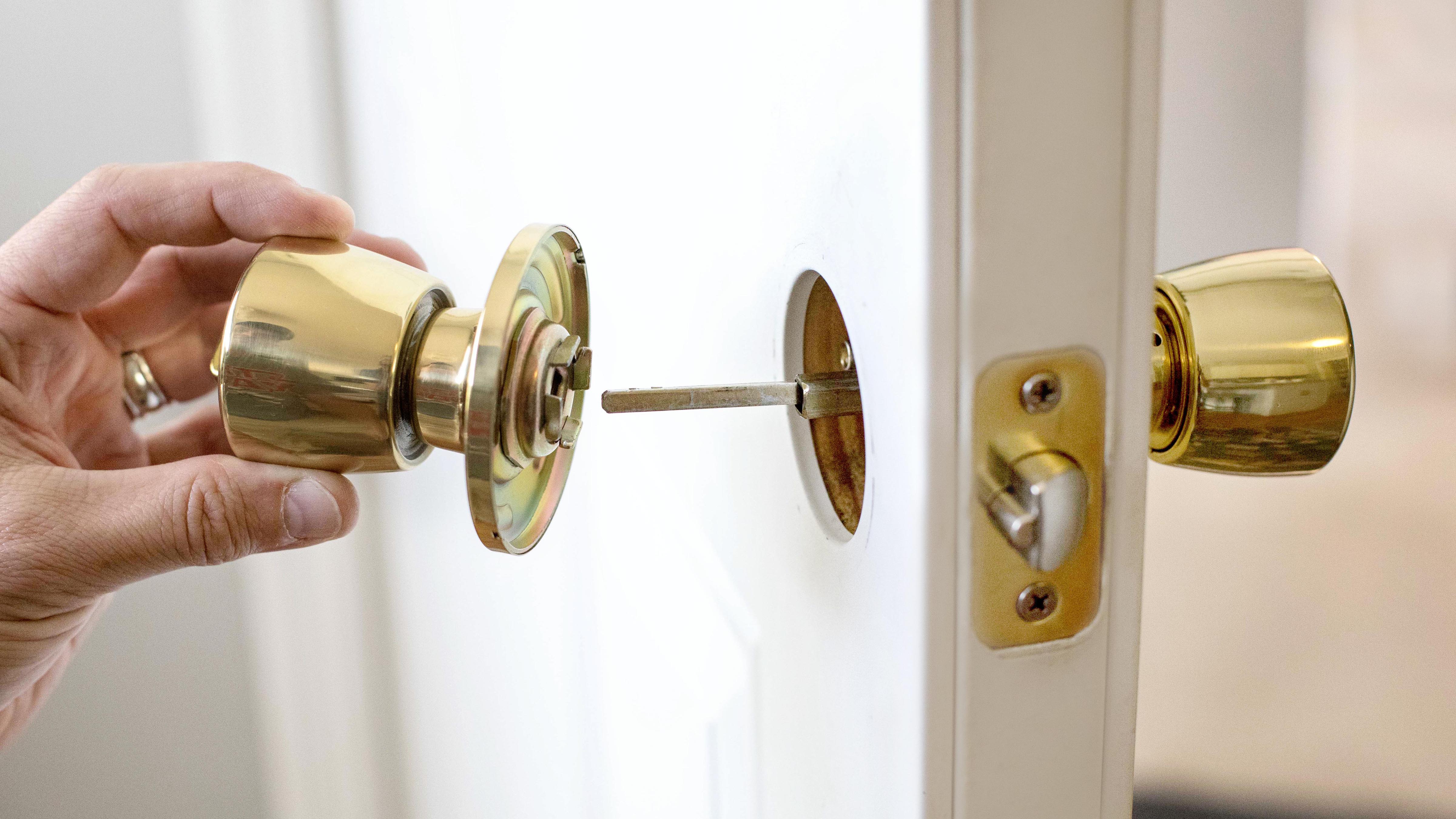
Start with one side. Slide the handle onto the door, making sure the spindle goes through the hole in the latch mechanism. It might take a little wiggling. Don't force it! If it's not going in, re-check your alignment. Is the spindle straight? Is the latch hole clear? Patience, grasshopper. You'll get there.
Once one handle is on, and the spindle is through the latch, it's time for the second handle. This one usually just slides onto the other end of the spindle. Again, a little wiggling might be needed. Some handles have screws on the side that you tighten to secure them to the spindle. Others might have a rose, which is that decorative plate that sits against the door. You might need to attach the rose first, then screw the handle onto it.
This is where those little screws from your kit come in. You'll usually see two small screws that go through the rose (or directly through the handle if there's no rose) and into the spindle. These are the screws that hold the whole shebang together. Tighten them up evenly, alternating between the two screws. This will pull the handles together and secure them in place.
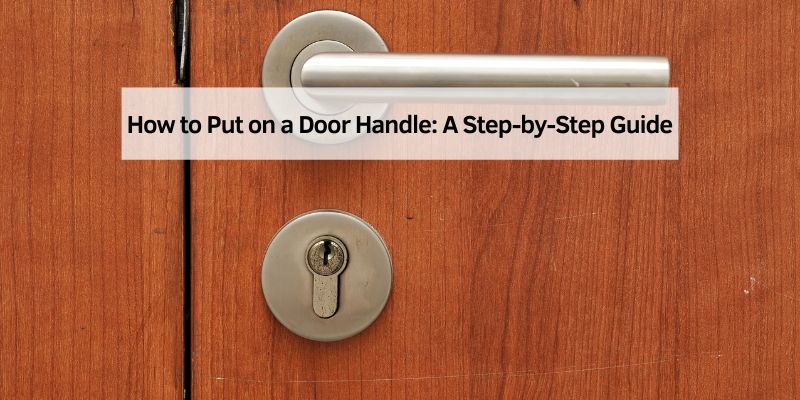
Now, for the moment of truth! Give your new handle a good twist. Does it move smoothly? Does it operate the latch? Try opening and closing the door. Does it latch correctly? Does it feel sturdy? If it feels loose, go back and tighten those screws a bit more. If it's stiff, maybe a screw is a little too tight, or something isn't quite aligned. A little jiggle and re-tightening often does the trick.
What if your door handle kit is a bit different? Some modern handles have a quick-release mechanism. You might just push a small button or clip on the rose to slide the handle off. For these, you usually install the base plate first, then slide the handle on and it clicks into place. Again, those instructions are your best friend. They’ll be specific to your particular handle's quirky personality.
Let's talk about the strike plate. That's the metal piece on the door frame that the latch goes into. Usually, your door already has one. If it doesn't, or if it's worn out, you'll need to install or replace it. The latch should line up perfectly with the hole in the strike plate when the door is closed. If it's a bit off, you might need to use a screwdriver or a small chisel to slightly widen the hole in the strike plate. It's all about making sure that satisfying click happens when you close the door.
And what if you're feeling super ambitious and want to install a brand new lock? Like, a real, actual lock? For a bedroom, maybe? Or a fort that requires a key? Well, that's a whole other adventure! You'll likely need to drill a larger hole through the door, and then you'll have a separate bolt mechanism to install. That’s a topic for another coffee chat, perhaps with stronger coffee!
But for this simple passage handle, you're probably golden. Take a step back. Admire your handiwork. You just put a door handle on! You're practically a DIY guru now. Imagine the possibilities! You can now open and close this door with a certain panache. You've conquered the metal, the screws, and the general mystery of how these things work. High five!
Remember, practice makes perfect. If your first attempt isn't perfectly smooth, don't despair. You can always take it apart and try again. It's just a door handle, not a rocket ship. And hey, even if it's a little wobbly, it's still functional. It's your functional, friend-installed door handle. That's something to be proud of.
So, what's next? Are you going to tackle another door? Perhaps that squeaky cabinet door? The world of home improvement is your oyster, my friend. Just remember your trusty screwdriver and your can-do attitude. And maybe a little bit of coffee for courage. You’ve got this!
:max_bytes(150000):strip_icc()/GettyImages-1553836702-c9153816be05422fbabcf4cfbeb671c8.jpg)