Where To Find Website Content Within Exported Wordpress Zip
So, you’ve managed to export your WordPress website into a lovely little zip file. High five! You’re probably thinking, "Okay, where's all my stuff?" You know, the words, the pictures, the whole shebang that makes your website yours. It’s like unwrapping a present, but instead of a new gadget, you’ve got a digital treasure chest. And sometimes, that treasure chest can feel a little… confusing.
Don’t sweat it, my friend! Finding your website content within that exported zip file is totally doable. Think of me as your friendly neighborhood guide, armed with a virtual flashlight and a knack for sniffing out digital goodies. We’re going to navigate this digital jungle together, and you’ll be a pro at this in no time. Plus, we’ll sprinkle in some laughs along the way, because who said extracting website content had to be drier than a week-old biscuit?
Unzipping Your Digital Dreams
First things first, let’s get that zip file open. If you’re on Windows, you usually just double-click it, and it’ll pop open like a startled hamster. On a Mac, it’s pretty much the same deal – a gentle double-click does the trick. If you’re feeling fancy or have a super-duper old version of an operating system (you brave soul!), you might need a little program like 7-Zip or WinRAR. But for most of us, the built-in stuff is perfectly adequate. It's like having a built-in pizza cutter; you don't need a fancy gadget for basic slicing!
Must Read
Once it’s unzipped, you’ll see a bunch of folders and files. Now, this is where the adventure truly begins! Don’t let the sheer number of them intimidate you. It’s like walking into a library for the first time – a little overwhelming, but packed with stories waiting to be discovered.
The Big Kahuna: Your Database
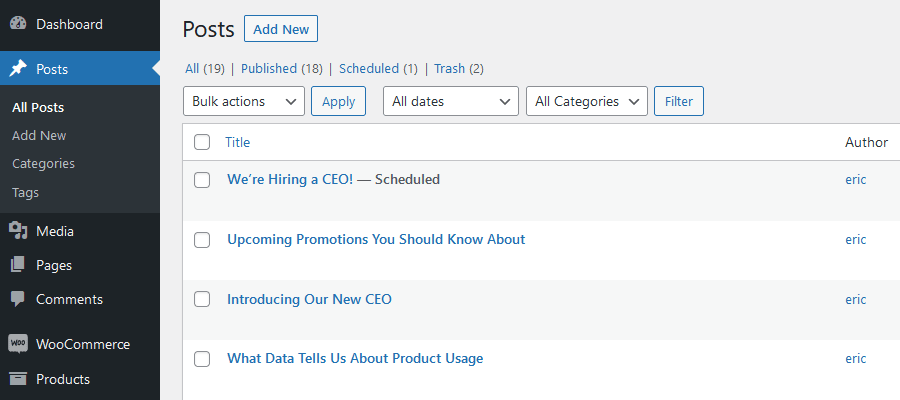
The most important piece of content, the brain of your entire operation, is usually hidden within your database. WordPress uses a database to store all your posts, pages, comments, user information, and settings. It’s the engine that makes your website hum. When you do a typical WordPress export (often through the `Tools > Export` menu in your WordPress dashboard), what you’re primarily getting is an XML file containing your content. It’s not the entire website, mind you, but the juicy bits: your words and images.
You’ll likely find a file with a name that sounds something like `wordpress.xml` or `yourwebsite-export-date.xml`. This is your golden ticket! This file holds all your published posts, your draft scribbles, your categories, tags, and even your comments. It's the novelist's manuscript, the artist's portfolio, all rolled into one.
Now, this `.xml` file isn't something you can just open in Notepad and magically read like a novel. It’s a structured format. Think of it as a secret code, but a really useful one. If you try to open it in a plain text editor, you’ll see a lot of tags that look like `

What’s Inside That XML File?
So, what are you actually looking for inside this XML file? Well, you’re looking for the meat and potatoes of your website. The main things you’ll find are:
- Posts: This is where your blog articles, your news updates, your epic rants live. Each post will have its title, its content (all those lovely words you typed!), its author, its publication date, and its categories and tags.
- Pages: These are your static pages, like your "About Us," "Contact," or "Services" pages. They’ll be structured similarly to posts, with titles and content.
- Comments: All those delightful (or sometimes, let’s be honest, spammy) comments your visitors have left will be in here too.
- Categories and Tags: These are the organizational tools that make your website easy to navigate. They’ll be listed out, ready to be re-applied to your content if you import it elsewhere.
- Custom Post Types: If you use any plugins that create custom post types (like "Products," "Events," or "Portfolio Items"), those will be in here too, often with their own specific structures within the XML.
It’s like finding a meticulously organized filing cabinet, where each drawer is a category and each file folder is a piece of content. It’s designed to be imported into another WordPress site, or sometimes into other platforms that can understand this specific format. It’s not meant for casual reading like your morning newspaper, unless you really enjoy deciphering code!
The Media Library: Where Your Pictures Hang Out
Okay, so the XML file has your words, but what about your fabulous photos, your engaging videos, your witty GIFs? These are usually stored separately in your media library. When you export your WordPress site using the built-in tools, the XML file usually just contains references to your media files, not the files themselves. Think of it as a playlist that tells you the song titles and artists, but doesn’t include the actual audio files.
To get your actual media files, you typically need to do a couple of things. The most common way to get your media is through a separate export/import process, often involving a plugin. However, if you have access to your website's files via FTP or your hosting control panel (like cPanel or Plesk), you can directly access your media files.

The path you're looking for is usually something like: wp-content/uploads/. This is where WordPress keeps everything you've ever uploaded – images, documents, videos, you name it! It’s all organized into year and month folders, which is super helpful for keeping things tidy. It's like a digital attic, but way more organized.
Navigating the Uploads Folder
When you’re poking around in your `wp-content/uploads/` folder, you’ll likely see a bunch of subfolders. These are usually structured by year and then by month. So, you might see folders like:
2023/2024/2023/10/(for October 2023)2024/01/(for January 2024)
Inside these monthly folders, you'll find your actual media files – the `.jpg`s, `.png`s, `.mp4`s, and so on. It’s a treasure trove of your website’s visual assets! If you’re looking for a specific image, knowing the approximate date you uploaded it can be a real time-saver. It’s like having a well-labeled photo album, but for your website.
Pro Tip: If you're migrating your site or backing it up, you'll want to grab both the database export (the XML file) and the entire `wp-content/uploads/` folder. This ensures you have all your content and all your media. It’s the digital equivalent of getting both the recipe and the ingredients!

Beyond the Basics: Themes and Plugins
Now, what about your theme? That’s the design, the look and feel of your website. And what about your plugins? Those are the handy tools that add extra functionality, like contact forms, SEO boosters, or e-commerce features. When you do a standard WordPress export via the dashboard, you don't get your theme files or your plugin files. Those are separate entities.
If you've exported your site via a hosting control panel's backup feature or a dedicated backup plugin, you might find folders for `wp-content/themes/` and `wp-content/plugins/`. These folders will contain the actual code and files for your activated theme and all your installed plugins. It's like getting the blueprints for your house and all the specialized tools the contractors used.
However, if you’re just looking for your content – your words and images – the XML file and the uploads folder are your primary targets. The themes and plugins are more about the structure and functionality of the site, rather than the user-generated content itself. Think of it this way: the XML is the story, the uploads folder is the illustrations, and the themes/plugins are the book cover and binding.
When Things Get Tricky
Sometimes, finding your content can feel like a digital scavenger hunt. If the standard export didn't yield exactly what you expected, or if you’re dealing with a more complex site structure, here are a few things to keep in mind:
- Backup Plugins: Many excellent backup plugins (like UpdraftPlus, BackupBuddy, etc.) offer more comprehensive backups that can include your entire WordPress installation, not just the content. If you used one of these, you'll likely find your site files, including themes and plugins, neatly zipped up.
- Hosting Backups: Your web host almost certainly provides backup services. These can be lifesavers! They usually back up your entire site, including files and databases. You’ll typically access these through your hosting control panel.
- Understanding WordPress Structure: The key to navigating WordPress files is understanding the `wp-content` directory. This is where almost all your site’s custom content and customizations live. Everything else is usually part of the core WordPress installation.
- Manual Exports: In some cases, if you only need specific pieces of content (like a particular set of posts), you might be able to export them directly from your WordPress dashboard using plugins designed for more granular exports.
Don't be afraid to poke around! It’s through exploration that we learn. Just remember to tread lightly if you’re not entirely sure what you’re doing, especially if you’re looking at files on a live site. Think of it as exploring a new city – you wouldn’t start redecorating buildings on your first day, right?
Putting It All Together: The Joy of Discovery
So, there you have it! The primary places to find your website content within an exported WordPress zip file are:
- The `.xml` file (usually `wordpress.xml` or similar) for your posts, pages, comments, and other text-based content.
- The `wp-content/uploads/` folder for all your images, videos, and other media files.
Finding your website content in an exported zip file isn't about magic, it's about understanding a little bit about how WordPress organizes its digital treasures. It’s about knowing where to look for the story, where to find the illustrations, and appreciating that the whole package makes your website unique.
Whether you’re migrating to a new platform, creating a backup, or just curious about what makes your digital home tick, this knowledge is incredibly empowering. You’ve taken a step towards understanding your website on a deeper level, and that’s a pretty awesome thing. So, give yourself a pat on the back. You’ve successfully navigated the digital archives, and you’ve found your precious content. Now go forth and create, update, or rebuild with confidence!