How To Know If Pearls Are Real
My Aunt Carol, bless her sparkly heart, was convinced she’d stumbled upon a treasure trove. It was a sweltering Saturday afternoon, the kind where the air hangs heavy like a damp blanket, and we were rummaging through her attic. Suddenly, she let out a triumphant squeal, brandishing a velvet-lined jewelry box. Inside, nestled amongst tarnished silver and forgotten brooches, lay a strand of what looked like perfectly matched, lustrous pearls. “These,” she declared, her eyes wide with excitement, “are probably worth a fortune! My grandmother said they were heirlooms!”
Now, Aunt Carol has a… let’s call it an enthusiastic approach to antiques. She once tried to convince me a chipped ceramic cat was a Ming Dynasty artifact. So, while I admired the gleam, a tiny voice in the back of my head whispered, “Hold on a sec, Auntie.” The thought of identifying real pearls versus fakes, especially when they’re staring you in the face with such convincing allure, is something I think a lot of us have pondered, right? Whether you’re eyeing a vintage necklace at a flea market, inheriting something from a distant relative, or just admiring a friend’s dazzling baubles, the question inevitably pops up: are these the real deal?
And let’s be honest, the world of pearls can be a bit of a minefield. There are so many convincing imitations out there, manufactured to look almost identical to the genuine article. But don’t worry, we’re not going to need a fancy gemological lab to figure this out. With a few simple, down-to-earth tests, you can become a pearl detective yourself. So, grab a cuppa, settle in, and let’s dive into the wonderfully iridescent world of pearls and how to tell the fakes from the fabulous.
Must Read
The Skin Test: A Simple, Yet Revealing Touch
This is probably the easiest and most accessible test you can do. Real pearls, whether they’re saltwater or freshwater, have a natural, slightly gritty texture. Think of it like very, very fine sandpaper. Imitation pearls, on the other hand, are typically made of glass or plastic, and they tend to be incredibly smooth. They feel almost too perfect, if that makes sense.
So, how do you perform this vital test? Just gently rub a pearl against the tip of your nose or the back of your hand. You should feel a subtle resistance, a slight friction. It’s not an unpleasant sensation, just a distinct textural difference. If it feels slick and smooth, like polished glass, you’re likely looking at a fake. Imagine the difference between rubbing your finger on a smooth, polished stone versus a piece of coarse sand – that’s the kind of contrast we’re talking about.
Now, a word of caution. This test works best on loose pearls or on pearls with a visible surface you can access. If the pearls are set in a very intricate piece of jewelry, or if the setting is a bit… aggressive, you might not get a clear reading. And if your skin is particularly dry, you might feel a bit more friction even on a fake. So, consider it a starting point, a good first sniff test, if you will.
The Tooth Test: A Controversial, But Effective Method
Okay, this one sounds a little… unhygienic, I know. And some jewelers might wince at the thought of you gnawing on their merchandise. But for centuries, this has been a common and surprisingly effective way to distinguish real pearls. The idea is that when you gently tap a real pearl against your front teeth, you’ll feel that characteristic grit. Again, it's not like you're going to be scraping off enamel, just a light, almost imperceptible brush.
Real pearls have a natural, layered structure. As nacre (that’s the shiny stuff pearls are made of) builds up layer by layer around a nucleus, it creates these microscopic imperfections that translate to a slightly rough feel. Fake pearls, being a solid material like glass or plastic coated with a pearlized substance, will feel uniformly smooth. They'll glide over your teeth like a piece of polished candy.

Here’s the crucial part: be gentle. You’re not trying to crack the pearl or damage your teeth. Just a light touch is enough. And honestly, if you're at a reputable jeweler's, they might not be too thrilled with this. But if you’re at a flea market, or examining something you’ve inherited, and you want a more definitive answer after the skin test, this can be a good second step. Just maybe rinse your mouth out afterwards, okay? We’re going for pearl detective, not contestant on a bizarre eating challenge.
The Weight Test: The Hefty Truth of Real Pearls
This is another one where you don't need any special equipment, just your hands. Real pearls generally feel heavier than their imitation counterparts. This is due to the density of the nacre. Think of it this way: a solid, natural material is going to have more heft than a hollow plastic bead or a glass bead coated in a thin layer of pearl essence.
Pick up a pearl from the strand you’re examining, and if you have a known real pearl (perhaps from a trusted source), compare the two. Do they feel noticeably different in weight? If the pearls feel surprisingly light, like they might be hollow or made of a flimsy material, that’s a red flag. Conversely, if they have a satisfying, almost substantial feel in your palm, it’s a good sign.
This test is most effective when comparing similar-sized pearls. A large imitation might feel heavier than a tiny real pearl, so keep that in mind. It’s more about the density you perceive. Imagine picking up a solid gold coin versus a chocolate coin that looks the same – the real gold has a distinct, heavier feel. That’s the kind of sensation you’re looking for.
The Luster Test: That Irresistible Glow
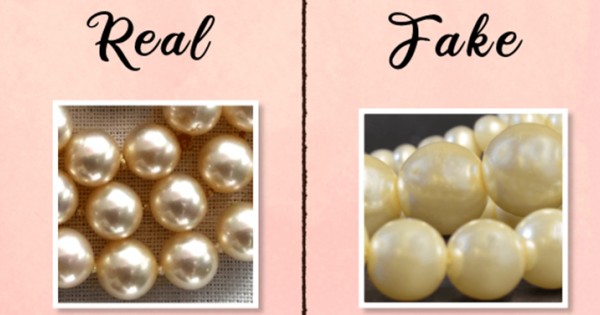
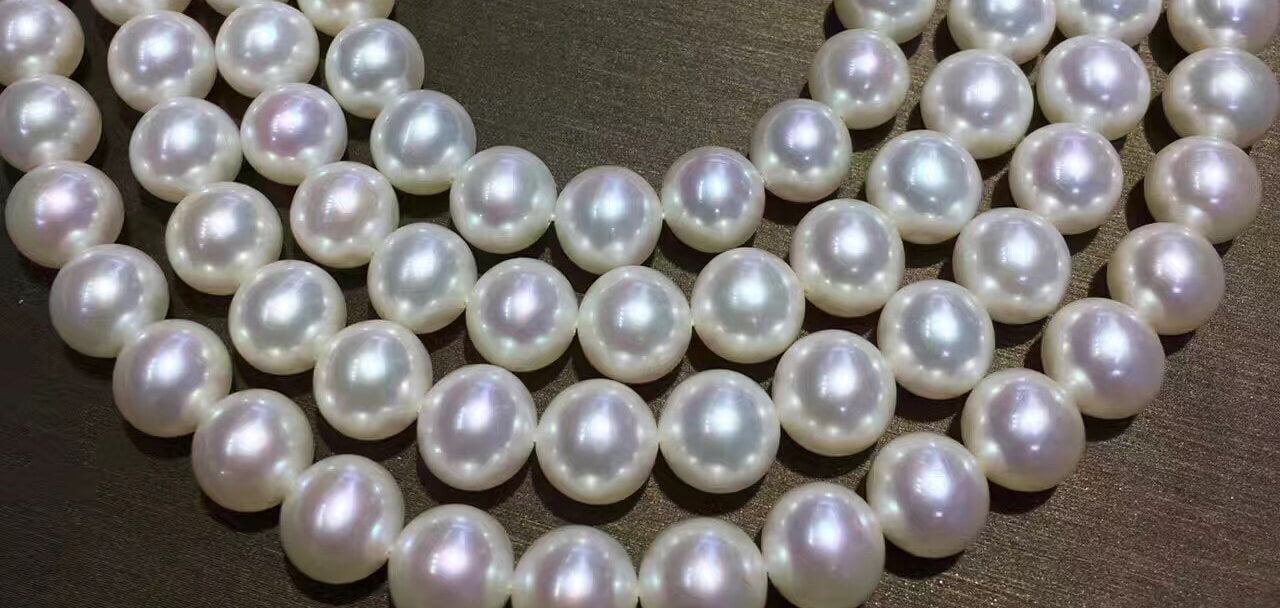
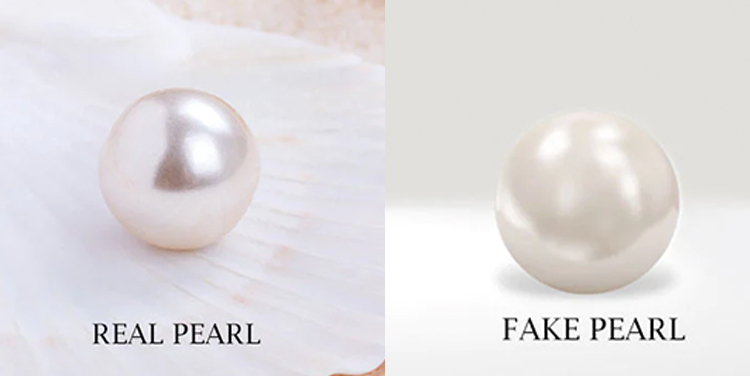
Ah, luster. This is what gives pearls their magic. Real pearls have a deep, rich luster that seems to emanate from within the pearl. It’s not just a surface shine; it’s a glow that has depth and complexity. Imitation pearls often have a surface shine that can look a bit flat, like a painted finish. It’s more of a glare than a glow.
When you look at a real pearl under good light, you should see a soft, subtle iridescence, a play of light that seems to dance across its surface. The reflections should be well-defined but not harsh. If the shine looks almost too perfect, like a disco ball, or if it seems to wear off easily, it’s likely not real.
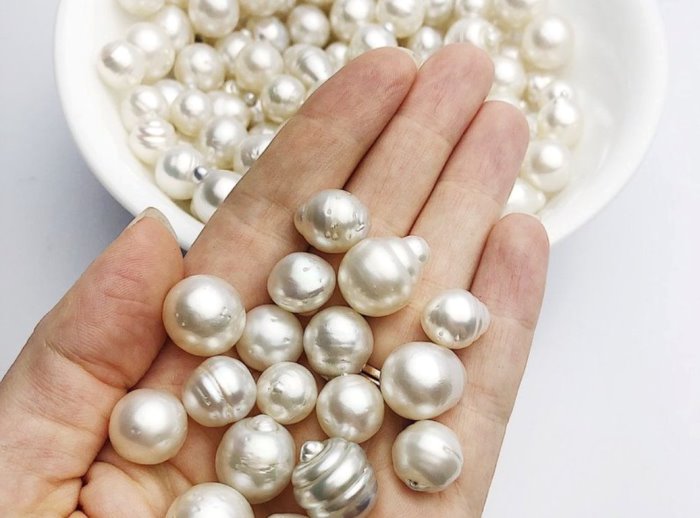
Try holding a pearl up to a light source and turning it slowly. Do you see a gentle shimmer? Does the light reflect beautifully, creating that characteristic glow? If the reflection is too sharp, too flat, or seems to be just sitting on the surface, it’s a good indicator of a fake. This is where you might want to compare it to a pearl you know is real. The difference in luminosity can be quite striking.
The Shape and Surface Imperfection Test: The Beauty of Imperfection
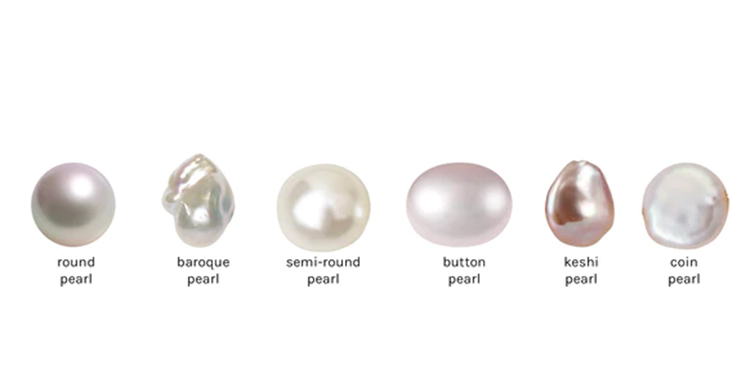
This is where we embrace the idea that perfectly perfect is often a sign of not perfect at all. Real pearls, especially those formed naturally, are rarely perfectly round. They often have slight irregularities in their shape – a little ovalness, a subtle bump, or a tiny flattening. These imperfections are part of their unique charm and a strong indicator of authenticity.
If you have a strand of pearls that are all exactly the same size, shape, and perfectly spherical, be suspicious. While perfectly round cultured pearls can be found, and they are indeed valuable, a string of identical, flawless spheres is a bit of a giveaway for modern, mass-produced imitations.
Look closely at the surface of the pearl. Does it have any subtle bumps, lines, or small blemishes? These are not necessarily flaws; they are often signs of natural formation. Of course, extremely valuable pearls are polished to minimize these, but a completely smooth, uniform surface across an entire strand of perfectly round pearls is unusual. Imitations are often manufactured to be perfectly uniform, so if they look too good to be true, they probably are.
The Drill Hole Inspection: A Peek Behind the Curtain
If you can examine the drill hole of the pearl (where the string goes through), this can also provide clues. In real pearls, the drill hole should be clean and well-defined. If it’s a coated imitation, you might see a rough edge or even a hint of the underlying material peeking through. Sometimes, with plastic pearls, you might even see a little bit of the plastic “flash” around the hole.
With cultured pearls, you might sometimes see a very faint ring of different color around the drill hole, which is where the nacre has been scraped away slightly. This is normal and actually a good sign. If the hole looks too perfect, too uniform, or has a slightly chipped appearance like painted glass, it’s a sign that it might be a fake.
This is a more detailed test, so it’s best if you can get a good look with a magnifying glass. If the drill hole looks like it was drilled through solid glass or plastic, that’s a pretty strong indicator that the pearl isn’t real.
The Temperature Test: Cool to the Touch
This is another sensory test that can be quite revealing. Real pearls tend to feel cool to the touch. This is because they are natural organic gems that absorb the ambient temperature. When you pick them up, they’ll feel cool against your skin, and they’ll slowly warm up as they absorb your body heat.
Imitation pearls, especially those made of plastic, will often feel warmer to begin with. They’re less dense and don’t have that same thermal conductivity. So, if a pearl feels warm right away, or if it doesn’t seem to cool down, it’s a good clue that it might not be genuine.
Again, this is a test that’s more effective when you can compare it to a pearl you know is real. But if you have a whole strand that feels surprisingly warm, or that doesn’t have that characteristic initial coolness, it’s worth being a bit skeptical.
The X-ray Test: For the Truly Curious (and Well-Equipped)
Okay, this one is a bit over the top for your average pearl shopper, but it’s worth mentioning because it’s a definitive test. X-rays can reveal the internal structure of a pearl. Real pearls will show a nucleus (for cultured pearls) or a concentric growth pattern (for natural pearls). Imitations, being solid materials, will have a uniform internal structure, or if they are hollow, they’ll show as such.
This isn’t something you can do at home, obviously! But if you’re dealing with a potentially very valuable piece and want absolute certainty, an experienced jeweler or gemologist can perform this test. For most of us, though, the simpler tests will suffice.
The Pearl Drop Test: A Risky Business
This is a test that’s sometimes mentioned, but I’d strongly advise against it unless you’re dealing with obviously worthless fakes. The idea is to drop a pearl from a certain height onto a hard surface. A real pearl is said to bounce slightly and not chip or crack. An imitation, being more brittle, might shatter or chip.
Why is this risky? Because a real pearl, especially if it’s valuable, could still be damaged by such a test. Even if it doesn’t shatter, it could get a micro-scratch that diminishes its value. So, unless you’re willing to risk damaging the pearl, I’d steer clear of this one. We’re trying to confirm authenticity, not test its resilience in a destructive way.
The “Pearls of Wisdom” Summary: What to Look For
So, let’s recap, shall we? You’re Aunt Carol with a box of shiny treasures, or you’re browsing a vintage shop, or maybe you just found something in your grandma’s drawer. What are the key takeaways?
- Feel: Does it feel slightly gritty on your teeth or skin? Smooth is suspicious.
- Weight: Does it feel substantial, or surprisingly light? Heavier is usually better.
- Luster: Is there a deep, soft glow, or a harsh, flat shine? Depth of luster is key.
- Shape & Surface: Are they perfectly identical spheres, or do they have natural variations and subtle imperfections? A little imperfection is perfect.
- Drill Hole: Does it look clean and well-formed, or rough and indicative of coating? A clean hole is a good sign.
- Temperature: Does it feel cool to the touch initially? Coolness is a good indicator.
Remember, no single test is foolproof. It’s the combination of these observations that will give you the best idea. If a pearl passes multiple of these tests, especially the feel and luster, you’re likely looking at the real deal. If it fails on several, or feels suspiciously perfect, it’s probably an imitation.
And honestly? Even if they aren’t “real” in the strictest sense, if they bring you joy, if they spark a memory, or if they just make you feel fabulous when you wear them, then they have their own kind of authenticity, don’t they? Pearls are about elegance, grace, and a touch of timeless beauty. Whether they’re from the ocean depths or a clever craftsman’s workshop, as long as they make you feel special, that’s what truly matters. But hey, knowing you’ve got the genuine article? That’s a pretty good feeling too!