How To Know If Jade Is Real

Okay, so picture this: I was browsing this charming little antique shop, the kind where dust motes dance in sunbeams and every object has a whispered story. Tucked away on a velvet cushion was this stunning bracelet. It was a deep, almost luminous green, intricately carved into little lotus flowers. My heart did a little jig. I love jade. I immediately imagined myself looking effortlessly chic, channeling some ancient empress vibe.
The shopkeeper, a kindly woman with spectacles perched on her nose, saw me admiring it. "Oh, that's a lovely piece," she chirped. "Genuine jade, of course. Very old." My inner magpie was doing cartwheels. But then, a tiny, nagging voice in the back of my brain whispered, "Hold up, is it really?" And that, my friends, is how we get to the nitty-gritty of figuring out if that gorgeous green trinket you're eyeing is the real deal, or just a really convincing imposter.
Because let's be honest, the world of gemstones can feel like a minefield. There are so many beautiful fakes out there, designed to fool the unsuspecting. And jade, with its rich history and mystical allure, is a prime target for imitation. So, how do you avoid getting bamboozled? Grab yourself a cuppa, get comfy, and let's dive in!
Must Read
The Great Jade Deception: What's the Real Deal?
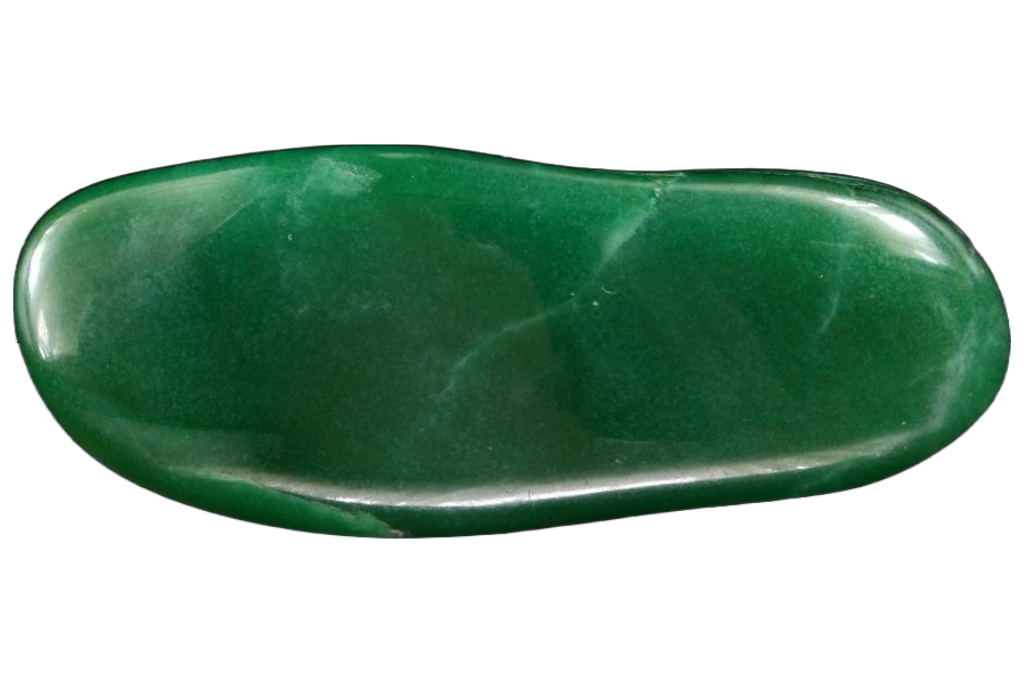
First things first, what is jade, anyway? It's not just one thing, you see. There are actually two distinct minerals that are both commonly referred to as jade: nephrite and jadeite. Both are incredibly tough and beautiful, but jadeite is generally considered the more precious and sought-after. Think of it like diamonds – you have different cuts and qualities, but they're all still diamonds. Same with jade, sort of.
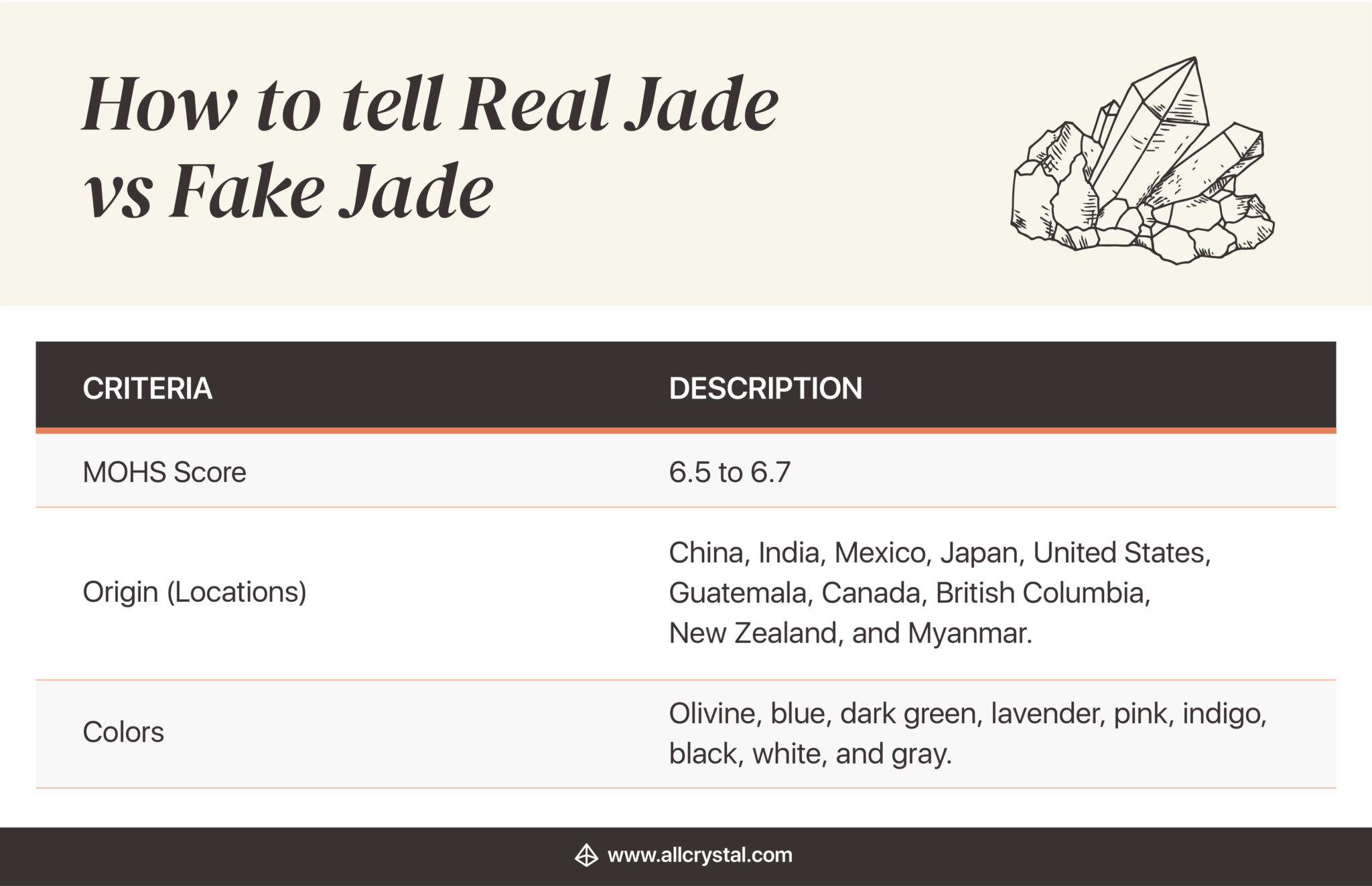
Nephrite is typically found in softer greens, whites, and browns. Jadeite, on the other hand, boasts those vibrant, vibrant greens, as well as lavender, white, black, and even red hues. The most prized color in jadeite is an intense, emerald-like green known as "imperial jade." Ooooh, fancy!
Now, why all this background? Because understanding the types of jade can give you clues about authenticity. Imposters often try to mimic the most valuable types, so knowing what to look for is key.
The Touch Test: It's All About the Feel
This is where things get a bit hands-on, and I have to admit, it's one of my favorite methods. Real jade, both nephrite and jadeite, has this incredible coolness to it. Even if it's been sitting in a warm room, it will feel cool to the touch. It's a dense, heavy mineral, and it takes a while to warm up to your body temperature.
So, if you pick up that piece of jewelry and it feels strangely warm or, dare I say, plasticky, that's a big red flag. It’s like when you pick up a genuine antique versus a cheap replica – the weight and the feel just tell you something.
Pro tip: If you can, try to compare it to something you know is real jade. That way, you get a direct feel for the difference. It's like learning to distinguish a real designer handbag from a knock-off – once you've felt the genuine article, the fakes become a lot more obvious.
The Sound of Authenticity: A Clink, Not a Thud
This one is a bit more subtle, and you need to be careful not to damage anything, obviously! But if you have a couple of genuine jade pieces, or if you're in a reputable shop where they're okay with a gentle tap, listen to the sound.
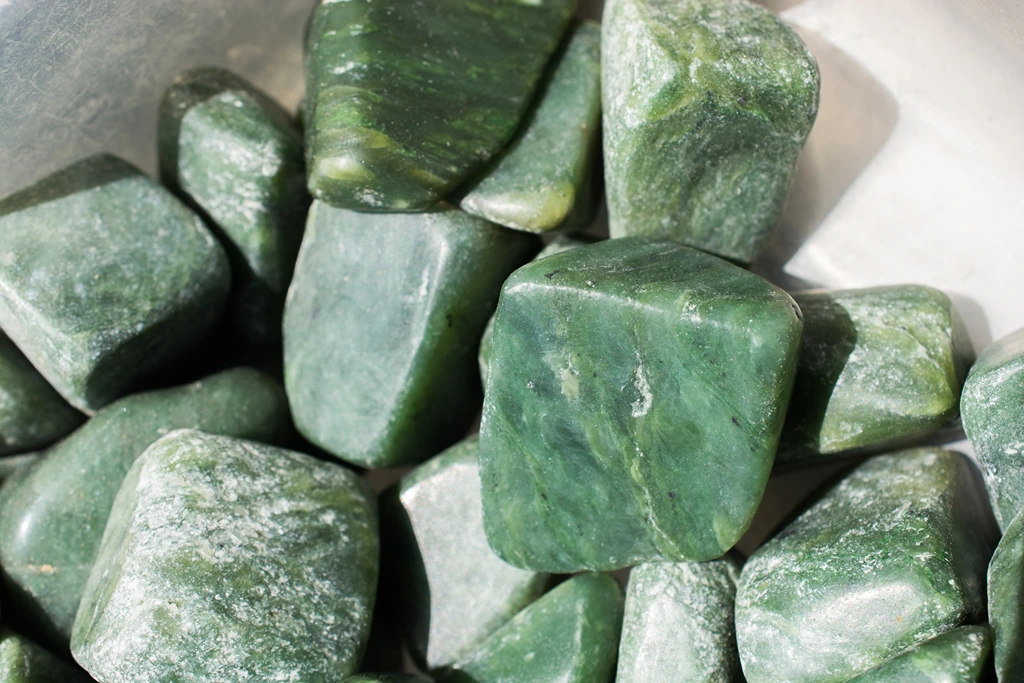
When two pieces of genuine jade (especially jadeite) are gently tapped together, they produce a clear, resonant clinking sound. It's almost musical. Think of striking two fine china cups together – that crisp, clear tone. Now, if you tap two pieces of glass or plastic together, you'll get a duller, more muffled sound, a sort of thud.
Disclaimer: Don't go around banging precious artifacts together! This is more for when you're inspecting a loose bead or a piece that the seller is comfortable with you testing. And again, gentle is the operative word. We're not trying to start a percussion band here.
The Scratch Test: Delicate, But Revealing
Okay, this is where we get into territory where you need to be extra cautious. Jade is a very hard stone. Nephrite has a Mohs hardness of about 6.0-6.5, and jadeite is even harder, clocking in at 6.5-7.0. What does that mean in plain English? It means it's pretty darn difficult to scratch.
A common trick for testing hardness is to use something that is known to scratch it. For example, a steel knife blade or a piece of quartz (which has a Mohs hardness of 7). If you can easily scratch a stone with a steel knife, it's almost certainly not real jade.
However, and this is a HUGE HOWEVER, I do not recommend doing this on a piece you're considering buying unless the seller explicitly gives you permission and you're prepared for the potential consequences. A scratch on a valuable piece can significantly devalue it. This is more of a principle to understand. If a seller is resistant to even a gentle pressure test, that's also a sign to be wary.
Instead, a safer alternative might be to look for existing signs of wear. Real jade, over time, will develop a beautiful patina and might show very minor surface abrasions if it's been worn, but it won't have deep gouges from everyday objects.
The Light Test: Seeing Through the Hues
This is where you bring out your trusty flashlight. Real jade tends to have a translucency to it. When you shine a light through it, you should be able to see the light penetrating the stone, and you might even see a subtle diffusion or glow. The color might appear brighter or more vibrant when lit from behind.
Different types of jade will transmit light differently. Nephrite is often more opaque, while high-quality jadeite can be quite translucent. But the key is that the light does pass through to some extent.
What about the fakes? Often, dyed stones or glass will appear uniformly opaque or have an unnatural, harsh glow. If the light just hits a solid wall of color, or if it looks like it's being blocked entirely, that's a sign it might not be genuine.
Think about it: Imagine holding a stained-glass window up to the light versus holding a solid piece of painted wood. The light behaves completely differently, right? Jade is more like the stained glass.
The Color Test: Nature's Palette vs. a Dye Job
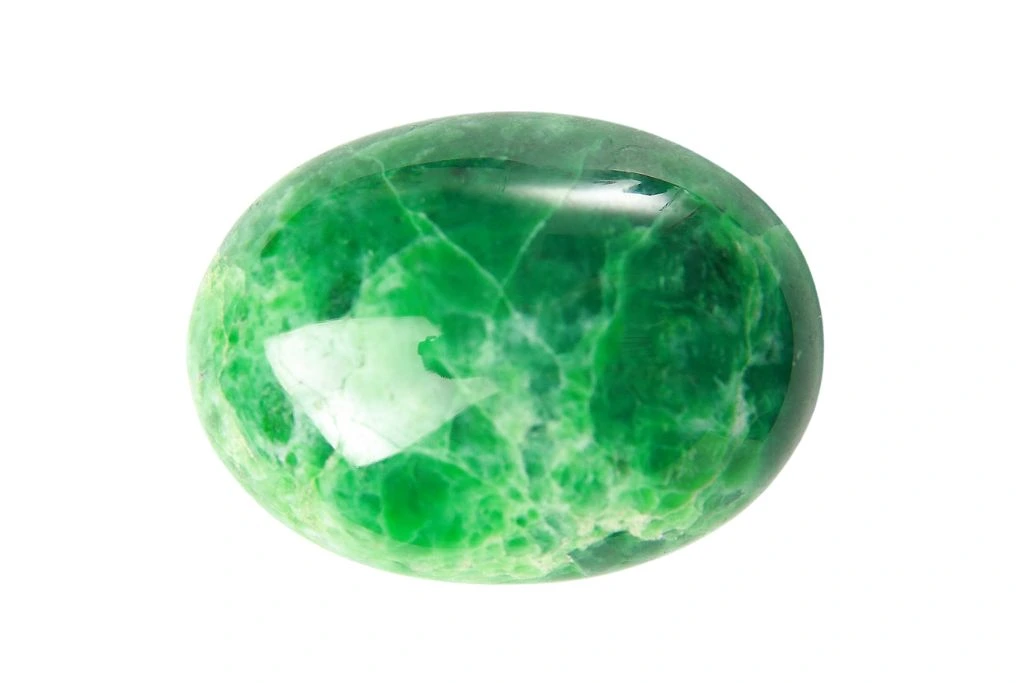
Color is a huge part of jade's appeal. But natural jade color is rarely perfectly uniform. You'll often see subtle variations, veins, or mottling within the stone. Think of the beautiful imperfections in a leaf – that's often what you see in real jade.
Dyed jade, on the other hand, often has an almost too perfect color. The dye can seep into fissures or create an unnatural saturation. Sometimes, you can even see the dye concentrated in these tiny cracks or inclusions.
Now, jade can be treated (bleached and impregnated with polymer resin, often called "B jade"), which can improve its appearance and durability but also makes it less valuable. Treated jade can still look beautiful, but it’s not as natural as untreated, "A jade." And then there's imitation jade, made from other stones or glass, which is a whole other ball game.
If a color looks incredibly vibrant and uniform, especially in those sought-after imperial green shades, be a little extra skeptical. Do your research on what natural color variations look like for the type of jade you're interested in.
The Weight of Evidence: Density Matters
As I mentioned earlier, jade is a dense stone. This means it feels heavier than its size would suggest. If you're comparing two similar-sized objects, and one feels significantly lighter than the other, that's a clue.
Glass and some plastics are much less dense than jade. So, if that beautiful green pendant feels surprisingly light, it might be a tell-tale sign of an imposter. Trust your gut feeling about the weight – it's a subtle but important indicator.
It's like the difference between holding a solid marble statue and a hollow plastic one. The heft is a fundamental characteristic.
The Surface Texture: Smoothness with a Story
Real jade, especially when polished, has a beautiful, smooth feel. However, it's not always perfectly, unnaturally smooth. As I mentioned with color, look for subtle variations and natural textures.
Glass or plastic imitations might feel too slick, almost greasy. Some might even have tiny air bubbles within them, which you can sometimes spot under magnification. These are usually absent in genuine jade.
And then there's that subtle coolness again! Even if the surface feels smooth, if it warms up instantly to your touch, it's probably not jade.
The Inclusions and Imperfections: The Beauty of the Natural
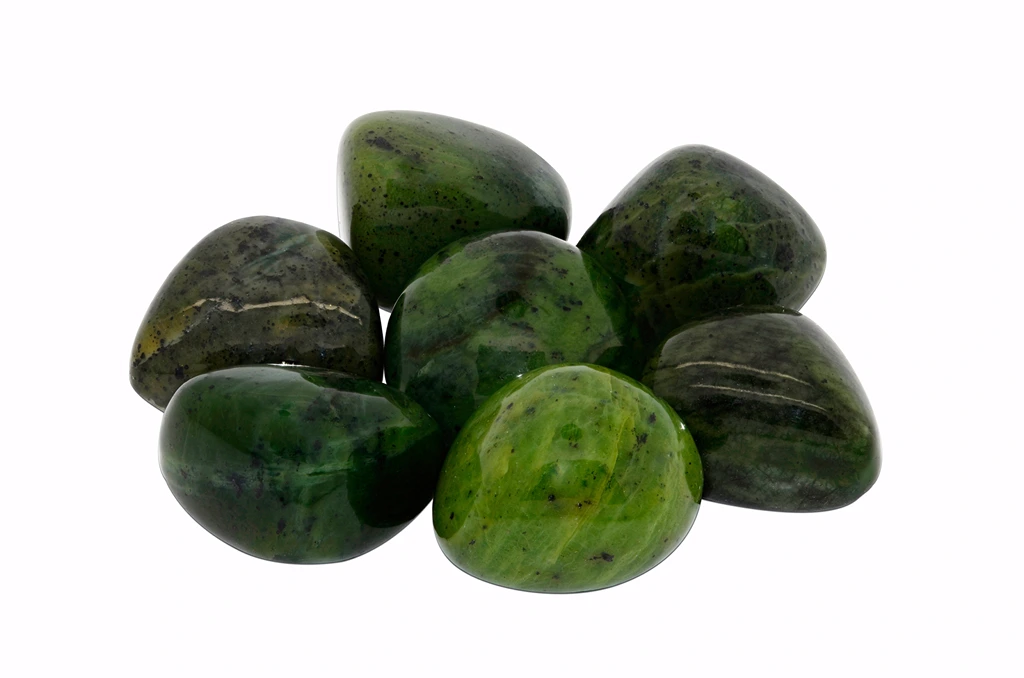
This is where the imperfections become your best friends. Genuine jade, especially if it's of a good quality and hasn't been heavily treated, will often have natural inclusions. These can look like tiny mineral specks, feathery lines, or subtle color variations within the stone.
These aren't flaws; they are markers of authenticity! They show that the stone grew naturally and wasn't manufactured in a lab. Fakes often lack these natural inclusions, or they might have inclusions that look too perfect, too uniform, or like they've been deliberately placed there.
Looking at jade under a loupe (a small magnifying glass) can be incredibly helpful for spotting these tiny details. It's like an archaeologist looking for subtle clues at a dig site.
The Price Tag: If it Seems Too Good to Be True...
You know the saying: if it seems too good to be true, it probably is. This is especially true in the world of gemstones. Rare, high-quality jadeite, particularly imperial jade, can be incredibly expensive. We're talking thousands, even tens of thousands, of dollars for a single piece.
So, if you find a large, flawless, intensely colored jade piece for a ridiculously low price, your alarm bells should be ringing. While there are always bargains to be found, a price that's wildly out of sync with market value is a major red flag.
It's worth doing a bit of research on the general price range for different types and qualities of jade before you go shopping. This will give you a baseline for what to expect.
The Expert Opinion: When in Doubt, Ask!
Honestly, for anything of significant value, the best advice I can give you is to get it appraised by a reputable gemologist. They have the tools, the knowledge, and the experience to definitively tell you what you've got.
Many jewelers can offer this service, or you can find independent gemological labs. It might cost a little upfront, but it could save you a lot of money and disappointment in the long run.
And for those smaller, everyday pieces? If you're buying from a reputable dealer who offers a certificate of authenticity, that's a good start. Always buy from someone you trust.
The Verdict: Be a Savvy Shopper
So, to recap, when you're eyeing that beautiful green treasure, remember to:
- Feel the coolness and density.
- Listen for that clear clink (gently!).
- Consider the weight.
- Shine a light through it and check the translucency.
- Look for natural variations in color and inclusions.
- Be wary of prices that seem too low.
- And when in doubt, consult an expert!
Learning to distinguish real jade from fakes is a skill that develops over time and with practice. It’s a bit like becoming a wine connoisseur – you start with the basics, and then you develop a more refined palate. Don't be discouraged if you’re not an expert overnight. The important thing is to be informed and to approach your purchases with a curious and critical eye.
The world of gemstones is fascinating, and jade holds a special place in many hearts (and jewelry boxes!). By arming yourself with a little knowledge, you can ensure that the beautiful pieces you acquire are truly treasures to be cherished. Happy jade hunting!