How Much Concrete Do I Need Uk

So, you've got a grand vision. Maybe it's the patio of your dreams, the sturdy base for a shed that’s seen better days, or perhaps even a quirky little garden pond shaped like a giant teacup. Whatever your project, there's one grey, solid hero that's likely to be your main man: concrete. And as any seasoned DIYer (or anyone who's ever tried to guess) will tell you, figuring out exactly how much concrete you need is a bit like predicting the British weather – you can be almost certain it’ll be slightly off!
But fear not, aspiring builders and garden gurus! We're here to demystify the great concrete equation, UK style. Forget your trigonometry textbooks and dusty engineering manuals. We're talking about getting your hands dirty, not your brain fried. Think of it as a culinary adventure, but instead of flour and sugar, we're measuring in cubic metres. Yes, that sounds a bit sci-fi, but it's really just a fancy way of saying a box one metre by one metre by one metre. Simple!
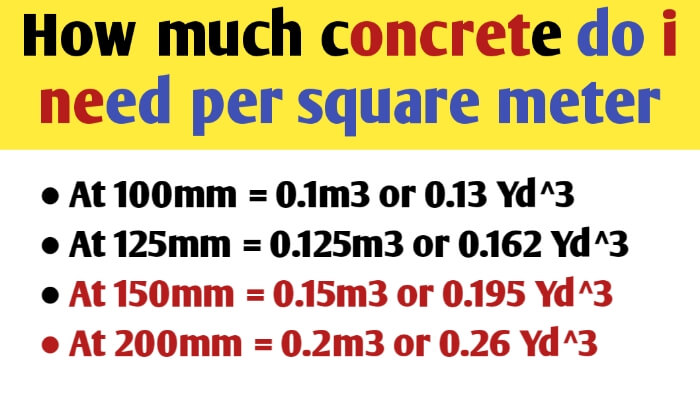
Now, the first thing you'll want to do, before you even think about ordering, is grab a trusty tape measure. Get friendly with your project area. Measure its length, its width, and – this is the crucial bit – its depth. Imagine you're tucking your project into bed; how deep do you want its concrete duvet to be? Most common garden jobs, like a patio or path, might need a depth of around 100mm (that's about four inches, for those who prefer imperial measurements or have a sudden craving for a thick slice of cake). For anything a bit more substantial, like a shed base or a driveway, you might be looking at 150mm or even more. Think of it as giving your project a solid foundation, like a really good breakfast before a long day.
Must Read
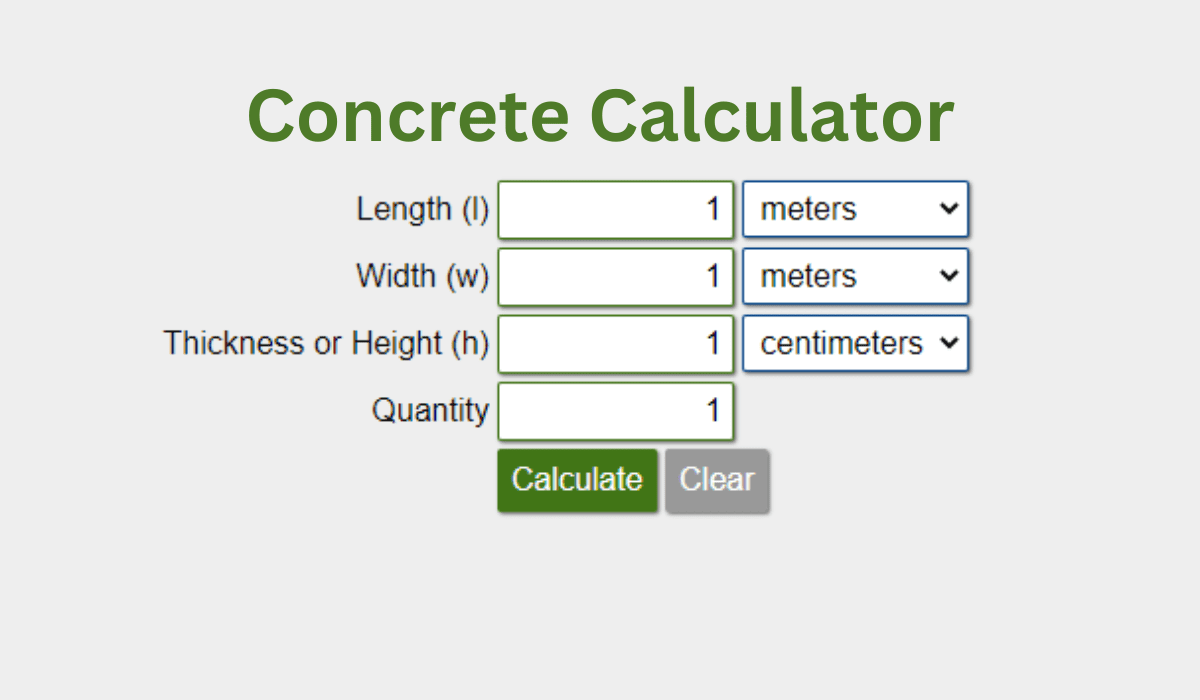
Once you've got your three measurements (length, width, and depth), it's time for a little bit of mental arithmetic. Don't worry, we’re not talking about calculus here. It’s just a simple multiplication: Length x Width x Depth. Now, here’s where a tiny bit of UK-specific magic happens. If you’ve measured in metres, your answer will be in cubic metres – perfect! If, however, you've been measuring in centimetres (because, let's face it, sometimes that's easier), you'll need to do a quick conversion. Divide your centimetre depth by 100. So, if your depth was 10cm, divide by 100 to get 0.1 metres. Easy peasy, lemon squeezy!
Let’s say you’re building a patio that’s 3 metres long, 2 metres wide, and you want it 0.1 metres deep. Your calculation would be: 3 x 2 x 0.1 = 0.6 cubic metres. See? Not so scary. But here’s where the fun really begins, and also where the mild panic can set in. Ordering exactly 0.6 cubic metres is a bit like asking for precisely 3.5 biscuits. It’s not usually an option, and you’ll likely end up with a bit too much or, heaven forbid, a bit too little.
And nobody, absolutely nobody, wants to be left staring at a half-finished concrete project, desperately trying to remember if they can just pop down to the local hardware store for a single bag of cement the size of a pea. Trust us, it doesn't work like that.
This is where the secret ingredient comes in: the "oops factor". It's a universally acknowledged truth that DIY projects, especially those involving concrete, are prone to slight… variations. You might dig a bit deeper than you intended in one corner, a rogue stone might throw off your measurements, or you might just get a bit carried away with that trowel and smooth out a section a little too enthusiastically. So, the wise people of the UK (and probably many other places too) have a little trick up their sleeve. They add a buffer. A little bit extra. Think of it as your concrete insurance policy.
For most DIY jobs, adding an extra 10% to your calculated amount is a good rule of thumb. So, for our 0.6 cubic metre patio, we'd add 10% of 0.6, which is 0.06 cubic metres. That brings your total to 0.66 cubic metres. Now, when you go to order, you'll likely be ordering in standard bag sizes or pre-mixed loads. Most people find it easiest to round up to the nearest convenient quantity. So, 0.66 cubic metres might mean you order 0.75 cubic metres or perhaps two slightly larger bags.
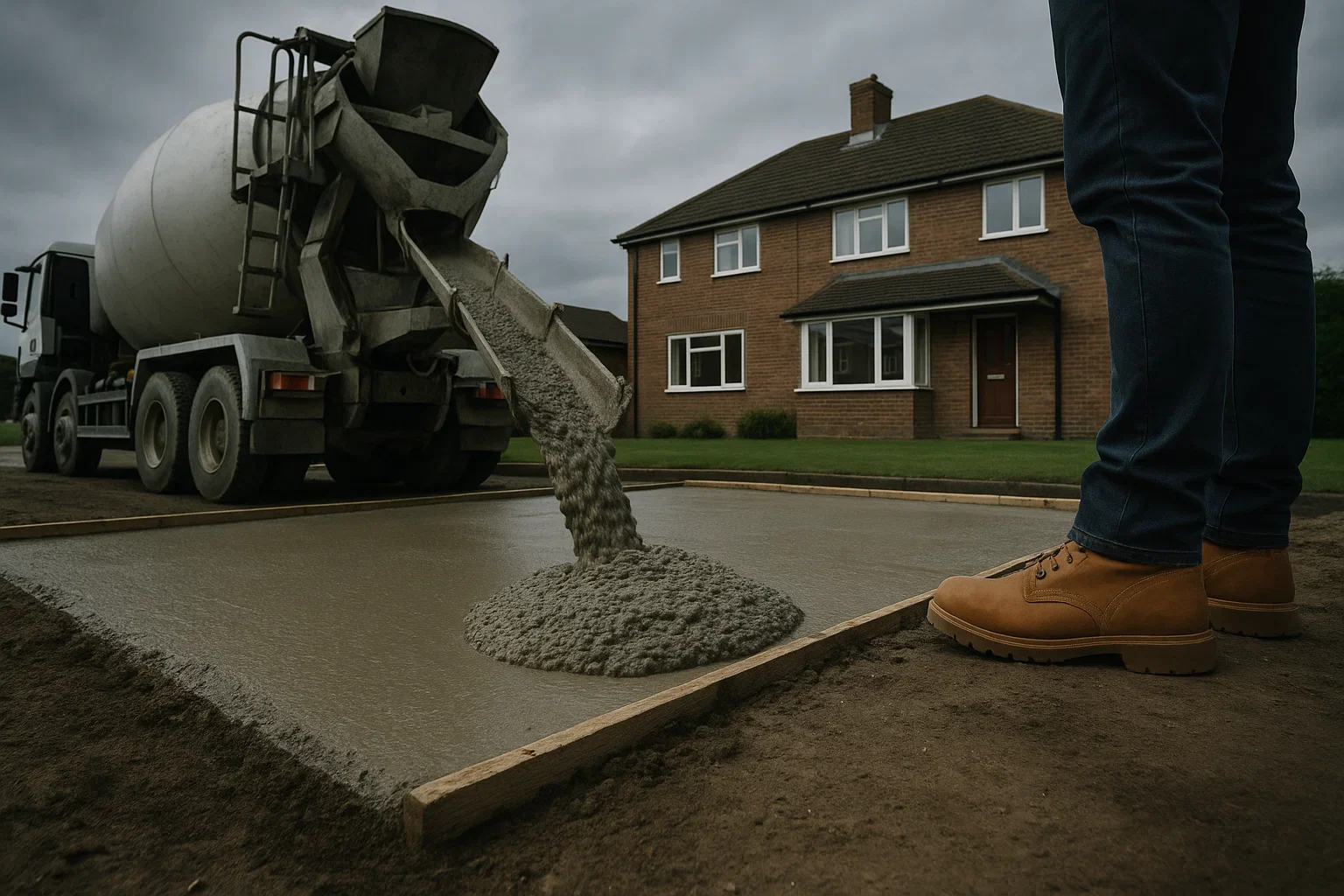
Where do you get this magical grey stuff? Well, for smaller jobs, you can buy pre-mixed bags from your local builders' merchant or even some larger DIY stores. These are brilliant because they already have the cement, sand, and aggregate (the gravelly bits) mixed together. You just add water. It's like making instant cake mix, but for foundations. For bigger projects, though, you might want to consider a ready-mix concrete delivery. This is where a big truck arrives with your concrete already mixed and ready to pour. It’s a bit like getting a pizza delivered – convenient, but you need to be sure of your order!
And here's a little heartwarming thought: every time you pour concrete, you're not just building something; you're creating a lasting legacy. That patio will be the stage for countless summer barbecues, that shed base will protect years of beloved tools, and that teacup pond… well, it’ll be a talking point for generations! So, next time you're eyeing up a project, don't let the thought of concrete quantities fill you with dread. Grab your tape measure, add a bit of the "oops factor," and get ready to lay down some seriously solid foundations for your dreams. Happy building!
:max_bytes(150000):strip_icc()/How-much-concrete-do-i-need-5223064_final-90c756158eed4fc5b6c8fb5304123e88.png)