How Many Pints Of Beer In A Keg
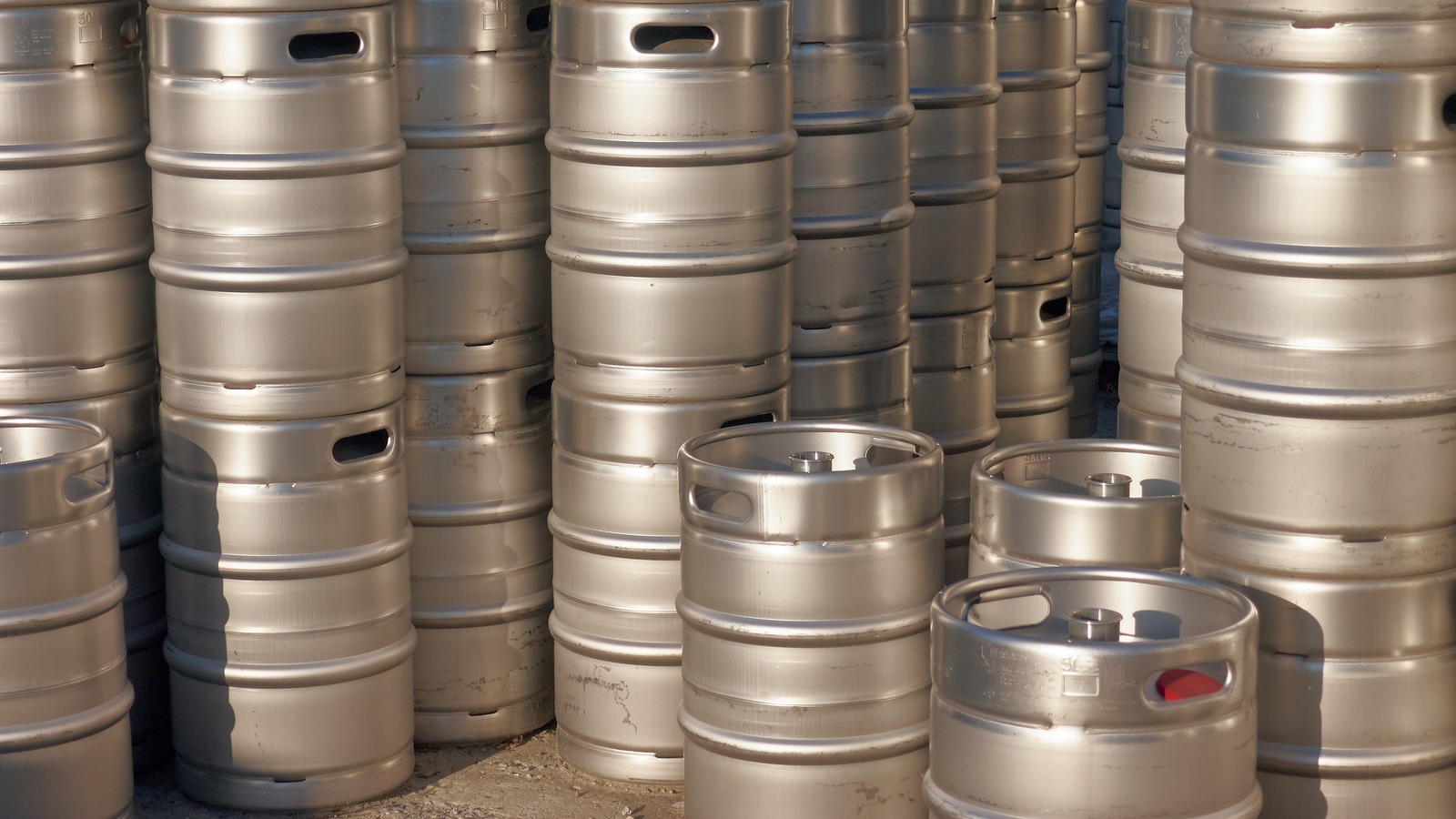
So, you're at a party, maybe a barbecue with friends, or even just settling in for a relaxed evening at home. The conversation is flowing, the snacks are plentiful, and then someone brings out the keg. Ah, the keg. It's a promise of good times, a communal vessel of cheer. But have you ever found yourself wondering, staring at that shiny metal cylinder, "Just how many pints of delicious beer are actually in there?" It's a question that pops into our heads, usually after a pint or two, right?
Don't worry, you're not alone. It's not exactly a piece of trivia you learn in school, but it's surprisingly useful knowledge, especially if you're the one tasked with the buying or serving. Think of it like knowing how many cookies are in a batch – you want to make sure you have enough for everyone, and maybe a couple of extra for yourself (no judgment here!).
Let's break it down, nice and easy. The most common size you'll see for a keg, especially at parties and events, is the half-barrel keg. This is the workhorse of the beer world. Imagine a perfectly good-sized cooler. A half-barrel keg is roughly the size of a sturdy, large cooler. It holds about 15.5 gallons of glorious beer.
Must Read
Now, gallons are great for, well, gallons. But most of us are more familiar with the humble pint. A pint, in the UK and the US (though slightly different measurements historically, for beer purposes, we're talking about the standard serving), is generally considered to be 16 fluid ounces. Think of your favorite pint glass. That's a pint.
So, how do we get from 15.5 gallons to pints? It's a bit of simple math, but let's make it fun. We need to convert gallons to ounces first. There are 128 fluid ounces in one US gallon. So, for our 15.5-gallon half-barrel keg, we do a little multiplication: 15.5 gallons * 128 ounces/gallon = 1984 ounces.
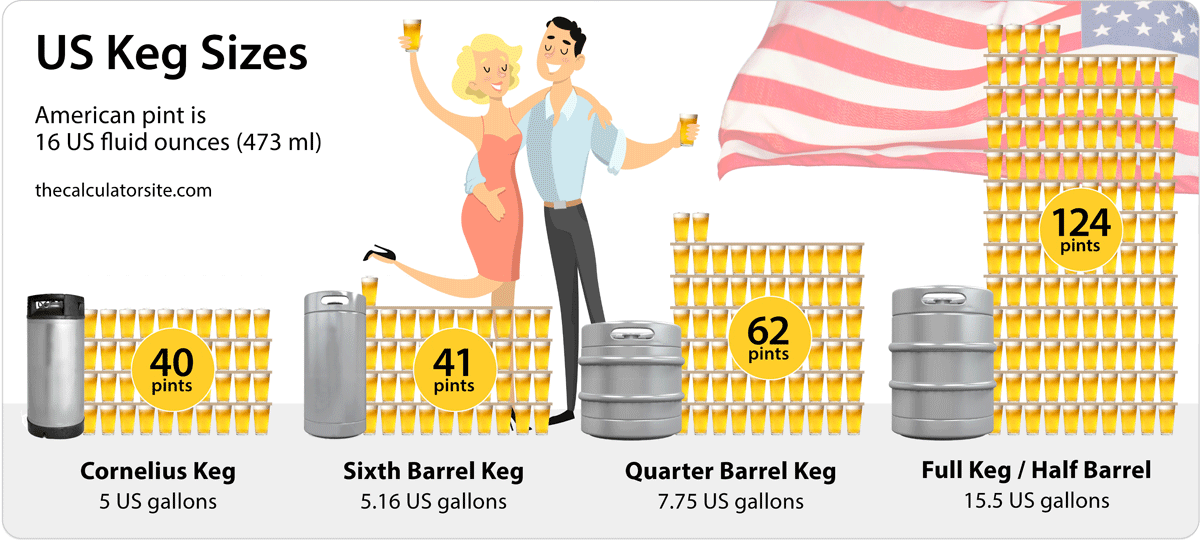
See? We're halfway there! Now, we take that grand total of 1984 ounces and divide it by the number of ounces in a pint (16). 1984 ounces / 16 ounces/pint = 124 pints. So, a standard half-barrel keg will give you approximately 124 pints of beer.
Let's put that into perspective. Imagine you're hosting a small gathering, say about 20 people. If everyone has, let's be generous, about 4-5 pints over the course of the evening, you're looking at around 80-100 pints. So, one half-barrel keg should comfortably cover your crew, with a little left over for the dedicated beer enthusiast who wants one more before calling it a night. It’s like having a really, really big pitcher that keeps refilling itself!
Why Should You Care?
You might be thinking, "Okay, that's a number. Why does it matter to me?" Well, knowing this little nugget of information can save you a lot of hassle and, dare I say, disappointment. Let's say you're planning that epic summer barbecue or your best friend's birthday bash. You need to figure out how much beer to buy. If you just guess, you might end up with a keg that’s empty by 8 PM, leaving your guests thirsty and you scrambling. Or, worse, you might over-buy and be stuck with a massive leftover keg and a hefty bill.
It’s also about making sure everyone gets a fair go. If you’re serving, and you know you’ve got about 124 pours in that keg, you can manage expectations. You can say, "We've got plenty to go around!" instead of nervously watching the beer level drop. It’s the difference between a relaxed host and a stressed-out one.
Think about it like ordering pizza. If you order a small, you know it's for a few people. If you order a few larges, you're ready for a crowd. Knowing the "pint count" of your keg is like knowing the serving size of your pizza. It helps you plan and execute your event like a pro, even if your only real qualification is a love for good company and good beer.
Other Keg Sizes (Just for Fun!)
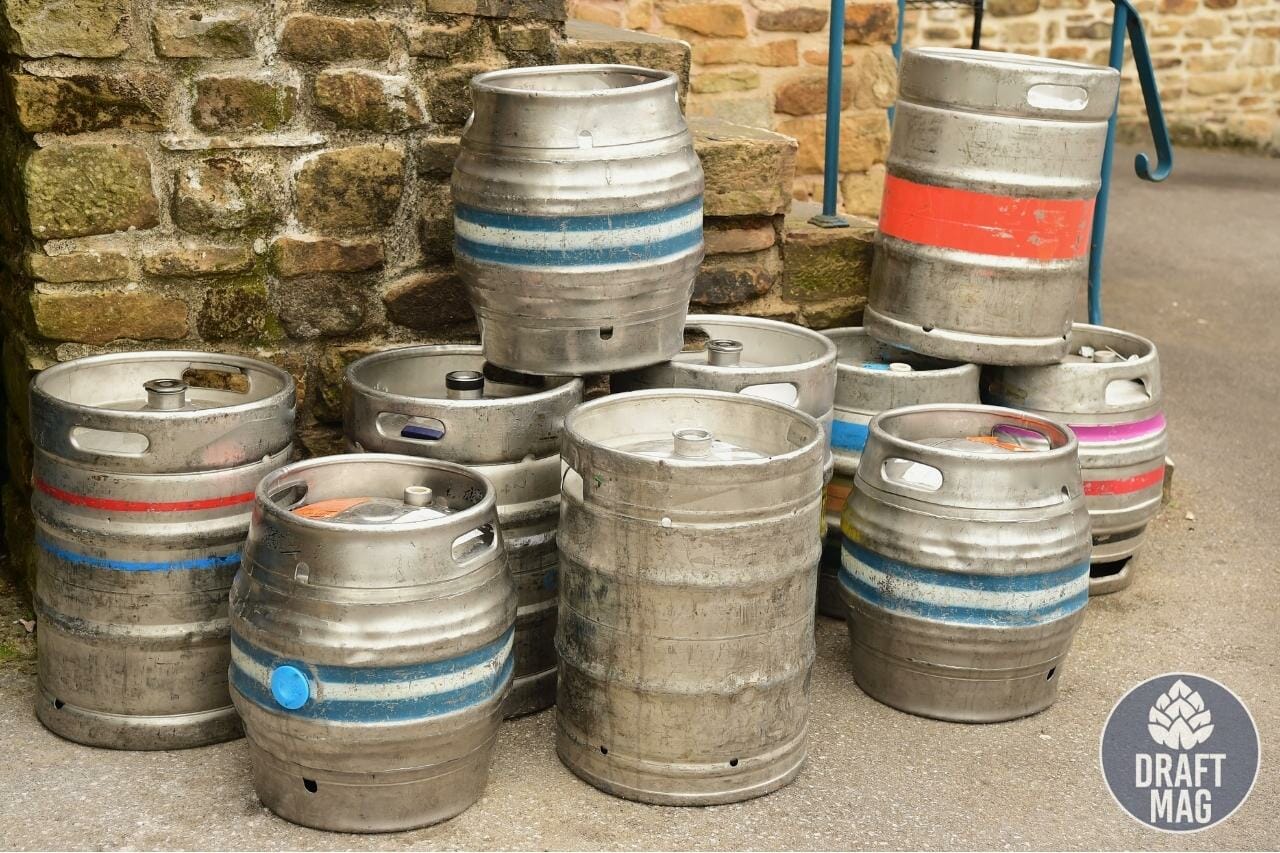
While the half-barrel is the most common, there are other sizes out there. You might encounter a quarter-barrel keg. These are essentially half the size of a half-barrel. So, if a half-barrel gives you 124 pints, a quarter-barrel will give you about 62 pints. This is great for smaller gatherings or if you want to offer a couple of different beer options without committing to two full half-barrels.
Then there's the mighty full-barrel keg, though these are much less common for casual events. They are twice the size of a half-barrel, holding around 31 gallons. That translates to a whopping 248 pints! You’d need a seriously big party to get through one of those. Imagine trying to carry that thing – it’s like wrestling a small bear made of metal!

There are also smaller kegs, often called "sixtels" or "corny kegs" (especially in the homebrewing world), which hold around 5 gallons. These would give you about 40-50 pints. These are perfect for trying out a new craft beer or for a very intimate get-together.
The key takeaway is this: a half-barrel keg is your benchmark. It’s the standard. When someone says "keg," they're usually thinking of that 15.5-gallon, 124-pint beauty. It’s a magic number, really. It’s the magic number that keeps the good times flowing and ensures your guests are happy and hydrated with their favorite brews.
So, the next time you see a keg, don't just see a big metal cylinder. See the potential for laughter, for stories shared, for memories made. And remember, behind that shiny exterior lies a treasure trove of about 124 perfectly poured pints, ready to bring smiles to faces. It’s a little bit of knowledge that makes planning your next gathering just that much easier, and that much more enjoyable. Cheers to that!