How Many Calories Are In A Pear

Hey there, wellness wanderer! Ever find yourself in the produce aisle, eyes widening at the sheer variety, and then a little voice whispers, "But how many calories are in that?" Yeah, we’ve all been there. Today, we’re diving deep into a question that’s as refreshing as the fruit itself: how many calories are in a pear?
Let’s get one thing straight from the get-go: pears are pretty darn awesome. They’re sweet, juicy, and come in a delightful array of varieties, each with its own personality. Think of them as the underappreciated superstars of the fruit bowl, always there, always dependable, and surprisingly good for you. And when we talk about calories, we’re not talking about some sort of calorie counting bootcamp. We’re talking about understanding our bodies, making informed choices, and enjoying the deliciousness that nature offers.
The Humble Pear: A Calorie Breakdown
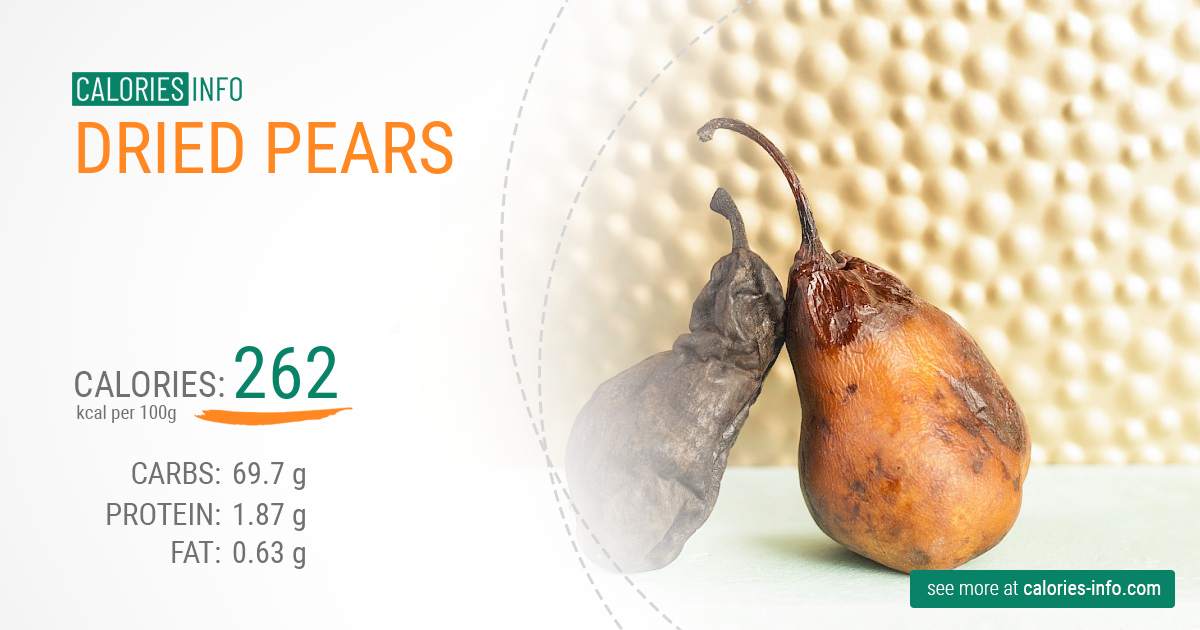
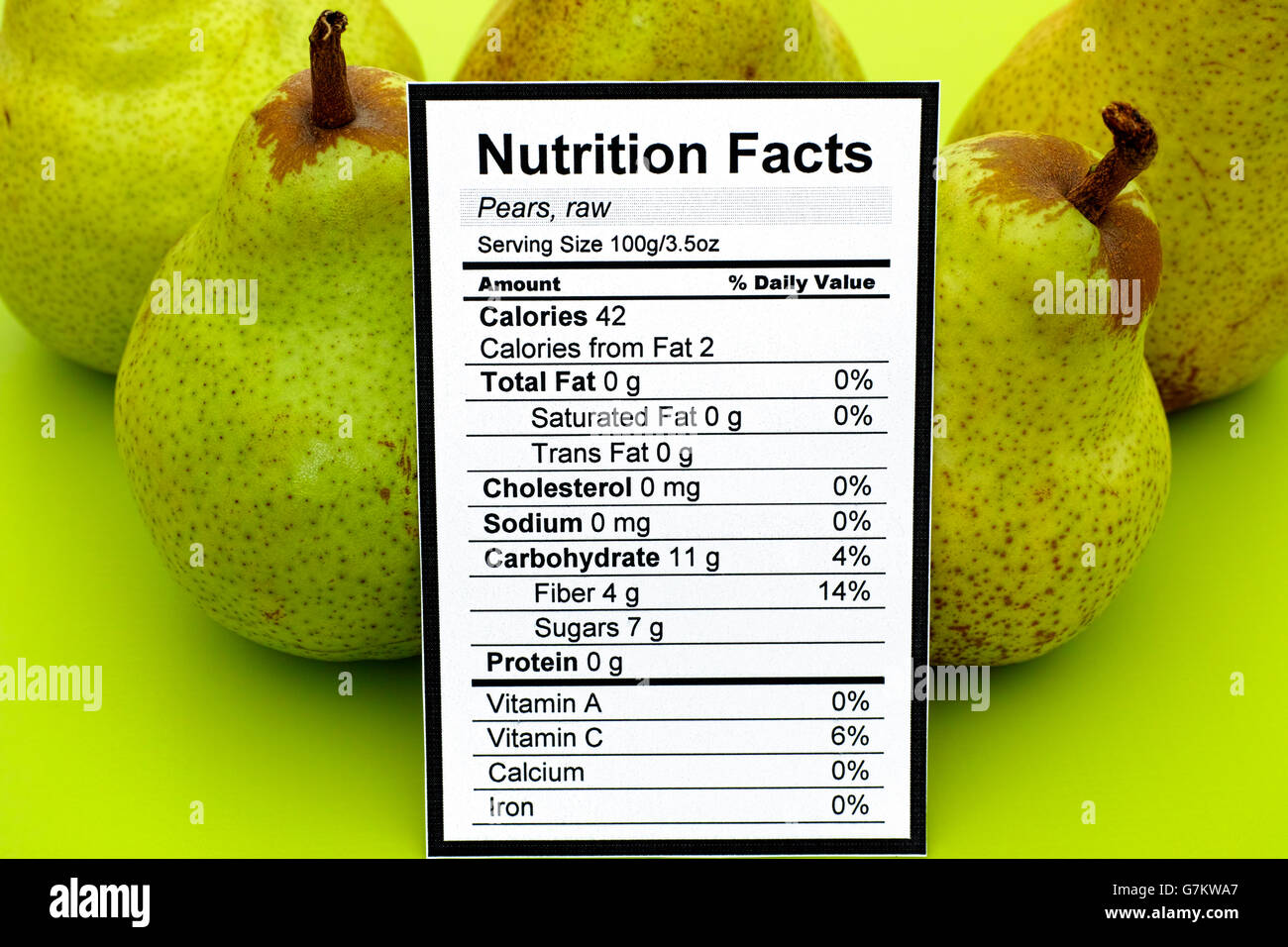
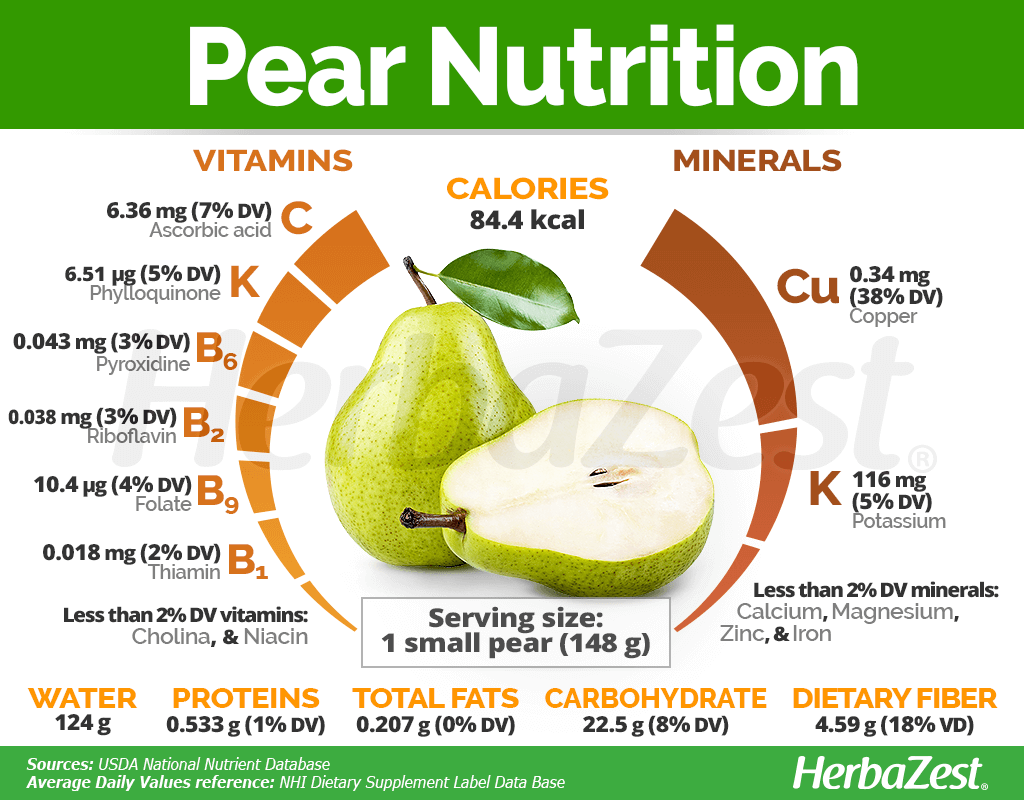
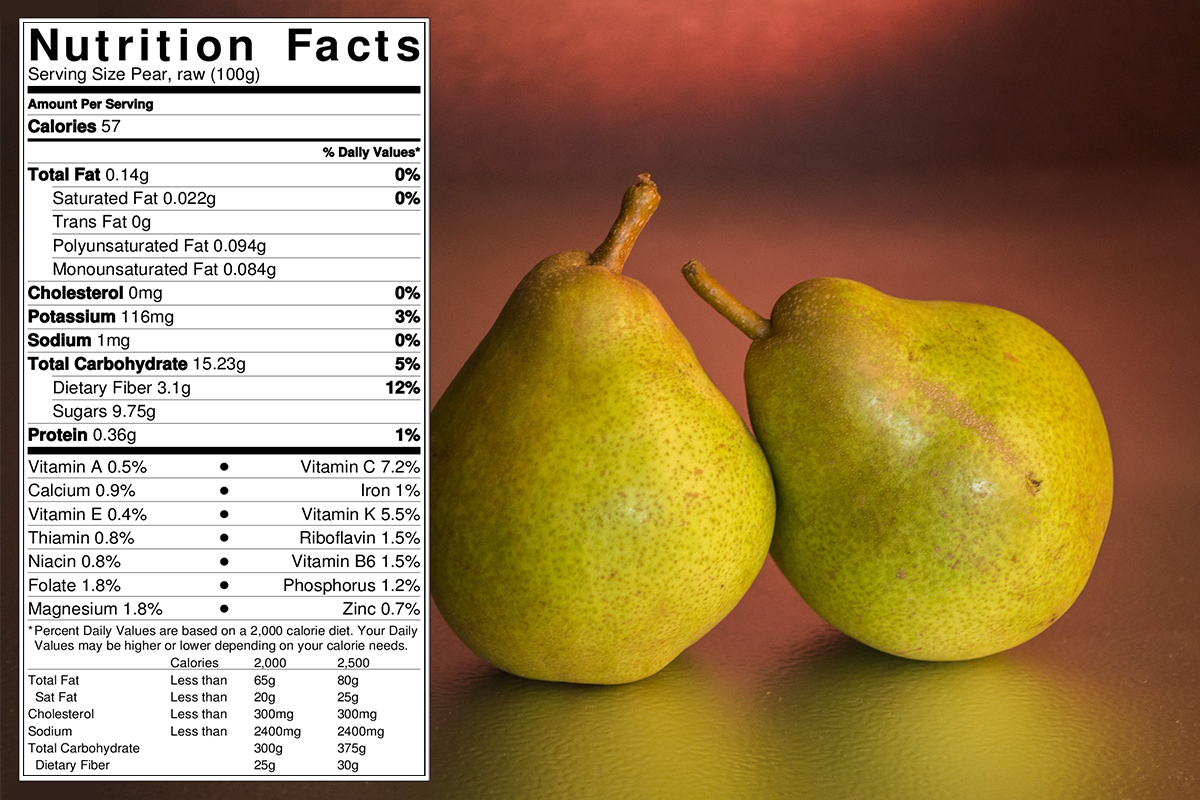
So, let’s cut to the chase. A medium-sized pear, that's roughly the size of a baseball and weighs about 178 grams, clocks in at around 100 calories. Pretty neat, right? It’s not exactly a calorie bomb, but it’s not an empty promise either. It’s a solid, satisfying snack that brings a lot more to the table than just its calorie count.
Must Read
Now, this is just an average, of course. Different pear varieties might have slight variations. For instance, a Bartlett pear might be a touch different from a Bosc or an Anjou. But honestly, the difference is usually negligible in the grand scheme of things. We’re talking a few calories here and there, nothing to lose sleep over.
What's more important is what else you're getting with those 100 calories. Pears are bursting with fiber. We’re talking about soluble and insoluble fiber, the dynamic duo that keeps your digestive system humming along happily. This fiber is also what helps you feel full and satisfied, making that pear a fantastic choice if you’re looking to avoid those mid-afternoon snack attacks that usually involve less-than-ideal options.
Beyond the Calorie Count: The Nutritional Powerhouse
But hold on, it gets even better. Those 100 calories aren't just empty promises. Pears also pack a punch with essential vitamins and minerals. You'll find a decent amount of Vitamin C, a known immune booster, and Vitamin K, which is important for bone health and blood clotting. Plus, they offer a good dose of potassium, which is crucial for maintaining healthy blood pressure.
And let's not forget the antioxidants. Pears are a source of phytonutrients, including flavonoids, which are like tiny bodyguards for your cells, protecting them from damage. So, when you’re enjoying that sweet, crisp bite, you’re not just indulging; you’re nourishing.
Pear Varieties: A World of Flavor and Subtle Differences
The world of pears is surprisingly diverse. Have you ever tried a Comice pear? They’re often called the "dessert pear" for a reason – incredibly sweet and juicy. Or maybe a firm, crisp Anjou, perfect for salads? Then there’s the elegant Bosc, with its russet skin and slightly spicy flavor, often found gracing cheese boards.
While the calorie count for each might vary by a few units, their flavor profiles are worlds apart. This variety means you can choose a pear that suits your mood and your meal. A softer pear might be perfect for a smoothie or a quick snack, while a firmer one can hold its own in a baked dish or a hearty salad.
Consider the Asian pear, also known as the apple-pear. These guys are round, crisp, and have a delightful, almost watery crunch. They’re like a refreshing sip on a hot day. And guess what? Their calorie count is pretty similar to their European cousins, hovering around that familiar 100-calorie mark for a medium fruit.
Making Pears Part of Your Easy-Going Lifestyle
So, how do we weave these delightful, calorie-conscious fruits into our daily lives without turning it into a chore? It’s all about simplicity, my friends.
Snack Attack Savior: This is the most straightforward way. Grab a pear, wash it, and enjoy. It’s portable, requires no prep, and it’s infinitely more satisfying than reaching for a bag of chips. Think of it as your personal portable pleasure pack.
Salad Sensation: Thinly sliced pears can elevate any salad. They add a touch of sweetness and a lovely textural contrast. Try them with walnuts, goat cheese, and a light vinaigrette. It’s a sophisticated yet effortlessly chic addition to your lunch.
Breakfast Buddy: Chop up a pear and add it to your oatmeal or yogurt. It’s a natural sweetener that also adds fiber. A dollop of Greek yogurt, some chopped pears, and a sprinkle of cinnamon? That’s a breakfast that’ll make you feel like you’ve got your life together, even if it’s only 9 AM.
Baking Bliss: Pear tarts, pear crumbles, baked pears with a drizzle of honey and a sprinkle of nutmeg – the possibilities are endless. When you bake with pears, you’re often reducing the need for added sugars, as the fruit itself provides plenty of sweetness.
Smoothie Star: A ripe pear can add a wonderful creamy texture and natural sweetness to your smoothies. Combine it with spinach, banana, and almond milk for a nutritious and delicious blend.
/pears_annotated-4da77519226943998d05ff387129a34b.jpg)
Fun Facts and Cultural Whispers
Did you know that pears have been cultivated for thousands of years? They were enjoyed by the ancient Greeks and Romans, who appreciated their delicate flavor and versatility. Imagine enjoying a pear while watching gladiators, or perhaps sipping wine at a Roman feast. Talk about a timeless treat!
In Chinese culture, the pear is often associated with immortality and prosperity. However, there's also a superstition about sharing a pear, as it can symbolize separation. So, if you're offering a pear to a friend, maybe just eat yours first!
And here’s a little something to impress your friends: the word "pear" comes from the Old French word "poire," which itself is derived from the Latin word "pirum." It’s a lineage that stretches back through the ages, a testament to this enduring fruit.
The Ripening Game: A Matter of Patience
One of the joys (and sometimes frustrations) of pears is their ripening process. Unlike most fruits, pears are usually picked when they’re mature but not yet ripe. This allows them to be transported without bruising easily. To ripen a pear, leave it on the counter at room temperature. You can tell it’s ripe when the neck near the stem yields to gentle pressure.
This also means you can buy slightly firmer pears and let them ripen at your own pace, controlling your pear destiny! It’s a little lesson in patience, and the reward is a perfectly sweet, tender fruit.
Portion Control? More Like Pleasure Control
When we talk about calories, it’s not about deprivation. It’s about awareness. Knowing that a pear offers about 100 calories, with all those nutritional benefits, is empowering. It allows you to make a choice that feels good, both for your taste buds and for your body.
Instead of fixating on numbers, focus on the experience. The crisp bite, the sweet juice, the satisfying feeling of nourishment. A pear is a simple pleasure, a little gift from nature. And in our busy lives, sometimes the simplest gifts are the most profound.
So, the next time you’re contemplating a snack, remember the humble pear. It’s more than just a fruit; it’s a miniature powerhouse of flavor, fiber, and essential nutrients, all wrapped up in a delightful package of around 100 calories. It’s a gentle reminder that healthy choices can also be incredibly delicious and effortlessly integrated into our everyday moments.
And that's the beauty of it, isn't it? That in the grand tapestry of our daily lives, the simple act of choosing a pear can be a small victory for well-being, a moment of mindful indulgence, and a sweet, juicy punctuation mark to our day. No complicated rules, no extreme diets, just the pure, unadulterated joy of a perfectly ripe pear. Now go forth and enjoy!