How Long Is Life Sentence In Uk
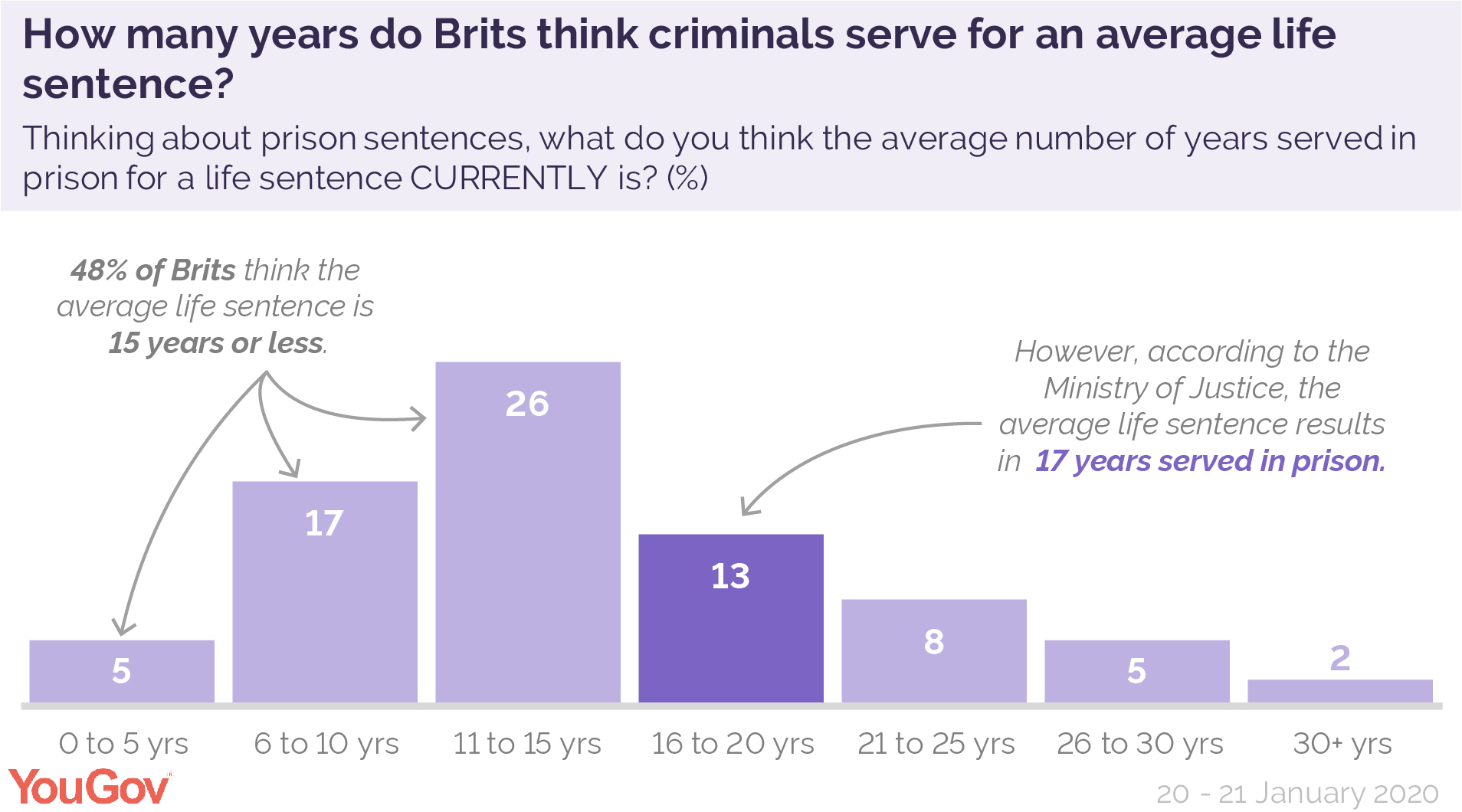
I was flicking through some old news articles the other day, you know, the kind that really make you pause and think. One of them was about a chap who'd been released after serving what felt like an eternity in prison. He'd been convicted of a particularly nasty crime decades ago, and the sentence handed down was… well, let's just say it wasn't a "see you next Tuesday" kind of deal. It got me wondering, as these things often do, about the nitty-gritty of life sentences here in the UK. What does "life" actually mean when you're talking about the legal system?
It’s a question that pops up a lot, doesn't it? You hear it in movies, in casual conversations, and it always carries this weighty, almost biblical finality. But dig a little deeper, and the reality is a bit more… nuanced. It's not quite as straightforward as "you're in there until you're… well, not." So, buckle up, because we're about to unpack the mystery of the life sentence in the UK, and trust me, there are more twists and turns than you might expect.
So, What Exactly Is a Life Sentence?
Alright, let's get down to brass tacks. When a judge in the UK sentences someone to life imprisonment, it doesn't automatically mean they'll spend the rest of their natural days behind bars. Shocking, I know! It’s more like a maximum penalty. Think of it as the ultimate punishment for the most serious offences, like murder.
Must Read
The crucial thing to understand is that a life sentence is not a fixed term. It's a sentence of indeterminate length. This is where the confusion often kicks in. It’s not like a 20-year sentence where you know, more or less, when you'll be eligible for release. With a life sentence, release is not guaranteed, and it depends entirely on a decision made by the Parole Board.
Now, this is where things get really interesting, and perhaps a little bit unsettling for some. There are actually different types of life sentences, and they have significant implications for how long someone might actually serve.
The Two Main Flavours: Whole Life Orders and Standard Life Sentences
This is where we start to differentiate. Imagine you're ordering a special blend of coffee; the basic idea is coffee, but the details make all the difference. It’s similar here.
The "You're Not Getting Out" Life Sentence: Whole Life Orders
Let's start with the big one, the one that truly strikes fear into the hearts of even the most hardened criminals. This is the Whole Life Order (WLO). As the name suggests, this is intended for the most heinous crimes. Think particularly brutal murders, or cases involving terrorism where the public safety is deemed to be at extreme risk.
If you receive a Whole Life Order, it means that, in theory, you will spend the rest of your life in prison. There's no automatic eligibility for parole. The only way out would be through an exceptional release on compassionate grounds, which is incredibly rare. So, for those serving a WLO, "life sentence" really does mean life.
This isn't a common sentence, mind you. It's reserved for a very small number of the most serious offenders. It’s the judicial equivalent of saying, "We simply cannot take the risk of you ever being free again." And honestly, when you read about the crimes that warrant such a sentence, it’s hard to argue with that logic, albeit grimly.

The "We'll See" Life Sentence: Standard Life Sentences
Then you have the more common type, often just referred to as a standard life sentence. This is where the "indeterminate length" really comes into play. While the sentence is "life," it usually comes with a minimum term that the judge must specify. This minimum term is often called the "tariff."
So, for example, a judge might sentence someone to life imprisonment with a minimum term of 15 years. This means the offender must serve at least 15 years before they can even be considered for release by the Parole Board. It’s not a guarantee of release after 15 years; it’s just the earliest point at which they can apply.
The judge will set this minimum term based on the severity of the crime, the offender's culpability, and any aggravating or mitigating factors. It’s a pretty complex calculation, and it’s designed to reflect the seriousness of the offence while still offering a possibility of rehabilitation and eventual release.
Now, even after the minimum term has been served, the decision to release still rests with the Parole Board. They will assess whether the offender poses a risk to the public and if they are genuinely rehabilitated. If they don't believe the risk is manageable, the offender will remain in prison, even beyond their minimum term.
The Role of the Parole Board: The Gatekeepers of Freedom
This is a critical piece of the puzzle. The Parole Board for England and Wales (and similar bodies in Scotland and Northern Ireland) are the ultimate arbiters of release for those serving standard life sentences. They are independent bodies, and their decisions are based on rigorous assessments.
When an offender reaches the end of their minimum term, they can apply for parole. The Parole Board will then conduct a thorough review. This review will consider:
- The offender's behaviour in prison.
- Any courses or rehabilitation programmes they've completed.
- Reports from prison psychologists and staff.
- The potential risk they might pose to the public if released.
- Whether they have a suitable release plan (e.g., accommodation, support network).
It’s a serious process, and it’s designed to protect the public. If the Parole Board isn't convinced that the risk can be managed, they will refuse parole, and the offender will remain in prison. They can then reapply at a later date, but there's no set timetable for this.

This is why a life sentence can end up being served for far longer than the minimum term. Sometimes, offenders spend decades in prison beyond their tariff because the Parole Board continues to deem them too high a risk.
The "Tariff" and the Court of Appeal
So, what happens if an offender, or indeed the prosecution, disagrees with the minimum term set by the judge? Well, that's where the Court of Appeal comes in. The minimum term set by a judge is known as the "tariff." Both the defence and the prosecution can appeal the tariff.
The prosecution might argue that the tariff is too low, reflecting the seriousness of the crime. The defence might argue it's too high, considering mitigating factors. The Court of Appeal can then review the judge's decision and set a new tariff, which could be higher or lower.
This process can add further complexity and potential length to the time an offender spends behind bars before they can even be considered for release. It's a safeguard to ensure that the tariffs are appropriate for the crimes committed.
Mandatory Life Sentences vs. Discretionary Life Sentences
This is another important distinction that often gets overlooked. For certain offences, the law dictates that a life sentence must be imposed. These are known as mandatory life sentences.
The most prominent example is murder. If you are convicted of murder, the judge has no discretion; they must impose a life sentence. The only discretion they have is in setting the minimum term (the tariff) that the offender must serve before being eligible for parole.

Then there are discretionary life sentences. For these offences, the judge has the option to impose a life sentence if they believe it's appropriate. This is often for very serious offences that aren't murder, such as rape or robbery, where the crime is particularly grave or involves significant violence.
In these cases, the judge will weigh up all the circumstances and decide whether a life sentence is the most fitting punishment, or if a fixed-term sentence would be more appropriate. This is where the judge's individual judgment plays a significant role.
The Impact and the Realities
Thinking about life sentences, even standard ones, conjures up images of a life confined. It’s a stark reminder of the consequences of committing certain crimes. For the offenders themselves, the prospect of spending potentially decades in prison, with release dependent on the judgment of others, must be an incredibly difficult reality to face.
And for the victims and their families, a life sentence, even if it doesn't mean literally dying in prison, can offer a sense of justice and finality. It signifies that the person who caused them immense pain will not be walking free in society again. That, I imagine, is a significant comfort.
It’s also worth noting that the landscape of sentencing, including life sentences, can change over time. Governments review laws, and public opinion can shift. What might have been the norm a few decades ago could be different today, and vice-versa.
Are Life Sentences Actually Getting Longer?
This is a question that often gets debated. There's a general perception that sentencing is becoming tougher, and for life sentences, this can translate into longer minimum terms being set by judges, and potentially more refusals of parole by the Parole Board.
The emphasis on public protection is paramount, and rightly so. This can lead to a more cautious approach when considering release, which, in turn, can mean individuals serving longer periods than in previous decades. The public rightly expects that serious offenders will be dealt with severely.

The "Life Means Life" Campaign
You might have heard of the "Life Means Life" campaign. This movement advocates for Whole Life Orders to be applied more broadly, or for standard life sentences to effectively mean serving the rest of one's natural life in prison. It's driven by a desire for the harshest possible punishment for the most appalling crimes.
While the sentiment behind such campaigns is understandable, the legal framework in the UK aims to balance punishment with the possibility of rehabilitation and to reserve the most extreme penalties for the most extreme circumstances. It’s a constant tension, I suppose.
In Summary: It's Not Always "Forever"
So, to circle back to our initial musings, a life sentence in the UK is far from a simple "you're in until you're dead."
For those serving a Whole Life Order, yes, it effectively means the rest of their days will be spent incarcerated. This is the absolute pinnacle of punishment for the gravest of crimes.
For those serving a standard life sentence, it means they are sentenced to an indeterminate period of imprisonment. They will have a minimum term (tariff) set, after which they can apply for parole. However, release is not guaranteed and depends on the Parole Board's assessment of their risk to the public.
The actual time served can therefore vary significantly. It can be just the minimum term, or it can be many, many years beyond it. It’s a system designed to reflect the severity of offences while also allowing for the possibility of rehabilitation and eventual, supervised release when it's deemed safe to do so.
It's a complex, often grim, but necessary part of our justice system. And hopefully, after this little deep dive, you feel a bit more informed about what "life sentence" really means behind the headlines and the drama.