How Hot Is Too Hot To Walk Dog

Ah, the great outdoors. Fresh air, sunshine, and a happy pup with their tongue lolling out, ready for an adventure. Sounds idyllic, right? Well, until that sunshine decides to crank up the dial from "pleasant warmth" to "personal sauna with a side of melted pavement." We've all been there, haven't we? You step outside, expecting a breezy stroll, and BAM! It hits you like a surprise humidity hug from a grumpy giant. And then you look down at your furry best friend, whose tail is still wagging like a metronome gone wild, blissfully unaware that their paws might be auditioning for the role of "little toasted marshmallows."
It's a question that plagues dog parents everywhere when the mercury starts to climb: how hot is too hot to walk the dog? It's not just about your own comfort, though let's be honest, nobody wants to feel like they're walking through soup. It's about those precious pads on your dog's feet. They're not exactly built for Arctic exploration, and they're definitely not designed to be flash-fried on a summer sidewalk. Think of it this way: if you wouldn't walk barefoot on that surface, your dog probably shouldn't either. It's that simple, really, but also hilariously complicated when your dog is giving you those "let's gooooo!" puppy-dog eyes.
We’ve all seen them. Those dogs whose owners are out there, rain or shine, scorching heat or blizzard, pushing them along. And sometimes, we secretly judge. Seriously, Brenda, is Fido enjoying his sauna session? Then, a few years later, we find ourselves being Brenda. The guilt is real, folks. The fear of missing out on that much-needed exercise for our canine companions battles with the primal instinct of self-preservation (and preventing our dog from ending up with blistered paws). It’s a delicate dance, a summer tightrope walk.
Must Read
So, what's the magic number? When does a pleasant summer day turn into a canine paw-burn alert? The generally accepted wisdom, the golden rule whispered by seasoned dog walkers and veterinarians alike, is to check the pavement temperature with the back of your hand. It's the classic "seven-second rule." Place the back of your hand on the surface for a full seven seconds. If it feels too hot for you to comfortably keep your hand there, then it's definitely too hot for your dog's delicate paws. Seven seconds. That’s it. It's shorter than it takes to scroll through your Instagram feed, shorter than that awkward pause in a conversation. Yet, it's the most crucial seven seconds of your dog-walking life on a hot day.
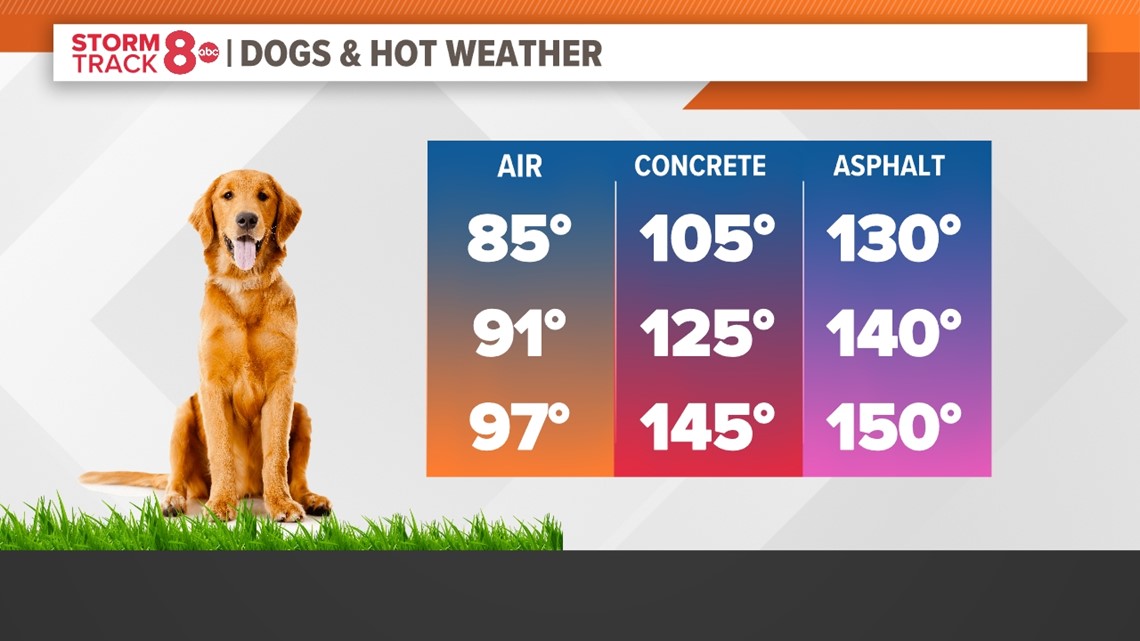
Imagine this: you’re at a barbecue. The grill is sizzling, and someone places a juicy burger right on the hot grates. Now, imagine that burger is your dog's paw. Not ideal, right? That's essentially what you're doing by walking them on super-heated asphalt or concrete. These surfaces can reach temperatures well over 130°F (54°C) on a sunny day, which is hot enough to cause second-degree burns in as little as 60 seconds. Sixty seconds! That's faster than you can say "Oh my dog, this is bad!"

And it's not just about the visible burns. Even if you don't see immediate blistering, prolonged exposure to extreme heat can cause significant damage. Think of it like cooking a steak. You can sear it on the outside without completely cooking the inside right away. But keep it on that heat, and eventually, it's going to be well-done, and not in a good way for your dog's feet. The paw pads are designed for traction and protection, but they're still made of flesh and tissue, susceptible to heat damage just like any other part of their body.
So, what are the tell-tale signs that your dog is not having a good time on a scorching sidewalk? One of the most obvious is excessive panting. Dogs pant to regulate their body temperature, and on a hot day, they'll pant more. But if they're panting like they just ran a marathon after a five-minute stroll, it's a red flag. Another sign is slowing down or refusing to walk. Your usually enthusiastic pup suddenly decides that sniffing a single blade of grass for an eternity is the most exciting activity in the world? They might be trying to tell you something. Limping or lifting their paws is a pretty clear indicator that things are getting uncomfortable, if not downright painful. And if you're really unlucky (and I mean, really unlucky, and I sincerely hope you never are), you might see redness, blistering, or even peeling of the paw pads. That's the equivalent of your dog holding up a giant, furry neon sign that says, "HELP ME!"

Now, let's talk about those "walkies" enthusiasts. You know the ones. Their dogs need their two-hour hikes, no matter what. I get it. A tired dog is a good dog, and a bored dog can be a destructive dog. But there are ways to adapt. It's about being a smart dog parent, not a negligent one. Think of it like this: if your favorite pizza place starts serving their pies at 500°F instead of a manageable 400°F, you don't just dive in, do you? You wait for it to cool down a bit, or you learn to eat it with a fork and a very cautious approach. Dogs need that same consideration.
One of the simplest strategies is to adjust your walking times. Early morning and late evening are your best friends when the sun is playing hide-and-seek with the thermometer. That pavement that felt like a frying pan at noon might be perfectly cool and pleasant at 6 AM or 8 PM. It requires a little bit of a schedule shift, I know. Maybe you have to get up before your alarm, or maybe your evening routine involves a twilight stroll instead of a Netflix binge. But trust me, your dog's paws (and your own peace of mind) will thank you.
And if you can't avoid the midday sun altogether? Seek out the shade. Parks with lots of trees can be a lifesaver. Even walking on the grass instead of the sidewalk can make a world of difference. Grass is a much better insulator than asphalt, so while it might still be warm, it’s generally not going to reach those dangerously high temperatures. Think of grass as the plush carpet of the outdoor world, and asphalt as a blistering hot oven mitt.

What about those cute little doggy booties? Yes, they exist! And for some dogs, they can be a godsend. They provide a physical barrier between those sensitive paws and the scorching hot ground. However, they're not always a perfect solution. Some dogs absolutely hate wearing them, and trying to get them on can turn a simple walk into a wrestling match. Plus, even with booties, you need to be mindful of overheating. The booties themselves can absorb heat, and if your dog is prone to heatstroke, they're still at risk. So, while they’re an option, they're not always the magic bullet.
Let's talk about the breeds. Some dogs are just built for the heat. Think of your lean, short-coated hounds with a good amount of skin exposed. They might be more tolerant of warmer temperatures than, say, a fluffy Siberian Husky whose fur is designed for snow. But even those heat-tolerant breeds can suffer. It’s not just about their fur; it’s about their overall ability to regulate body temperature. A thick-coated dog might be uncomfortable, but a brachycephalic (flat-faced) breed like a pug or a bulldog can have a much harder time breathing in the heat, regardless of what's on their feet.
And then there are the days when it’s just too much. The kind of days where even the birds are panting. On these days, it's okay to say, "Nope. Not today." Your dog might give you those sad, droopy eyes, but a little bit of indoor playtime or a quick trip to a doggy daycare with air conditioning is a far better option than risking heatstroke or burned paws. Think of it as a spa day for your furry friend. They’ll still get their stimulation and exercise, just in a more comfortable (and safe!) environment.
The goal here isn't to become a prisoner in your own home during the summer months. It’s about being informed and responsible. It’s about understanding that your dog's physiology is different from yours, and what might be a minor inconvenience for you could be a serious health risk for them. So, next time you're gearing up for a walk and the sun is beaming down with the intensity of a thousand tiny suns, remember the seven-second rule. Do the hand test. If it’s too hot for you, it’s definitely too hot for them. Your dog trusts you to make the right decisions for their well-being, and in the case of hot pavement, that decision might be to postpone walkies until the sun decides to take a siesta.
It's the little things, you know? The extra check of the pavement, the earlier wake-up call, the decision to skip the long trek and opt for a shorter, shadier route. These are the acts of love that make you a super-dog-parent. So, let's keep those tails wagging and those paws protected. Happy, safe, and cool walking, everyone!