Immediate Resignation Letters

Ever had one of those days? You know, the kind where your coffee tastes like despair, your inbox is a digital abyss, and your boss's voice sounds suspiciously like a kazoo solo gone wrong? Yeah, we've all been there. And in those moments, the siren song of the immediate resignation letter can be incredibly tempting. It whispers sweet nothings of freedom, of slamming the door on that soul-crushing gig and embracing a life of... well, something else. Anything else.
But before you channel your inner Beyoncé and dramatically toss your employee ID across the room (though, points for style!), let's have a little chat about this whole "quit on the spot" phenomenon. It's a bit like impulse buying a designer handbag – looks fabulous in the moment, but might lead to some interesting financial and professional repercussions down the line.
The Allure of the Instant Exit
The idea of an immediate resignation is, frankly, a fantasy for many. Think of all those workplace comedies where the protagonist finally snaps, delivers a scathing but hilarious mic-drop speech, and sails off into the sunset. It’s the stuff of dreams, right? No more awkward goodbyes, no more tedious handover meetings, just poof – you're out.
Must Read
This desire is fueled by a culture that often glorifies rebellion and celebrates the "break free" narrative. We see it in movies, we hear it in songs. It’s the ultimate act of self-preservation when a job has truly become a drain on your spirit. It feels powerful, like reclaiming your narrative from a story that’s no longer serving you.
And let's be honest, sometimes the situation is so dire, so toxic, that staying even for a two-week notice feels like willingly signing up for another round of root canals. In those extreme cases, an immediate departure might be less about drama and more about survival. We’re talking about environments that actively harm your mental or physical well-being. That’s a whole different ballgame.
When "Now" Feels Like "Yesterday"
So, what constitutes a "dire" situation? It’s subjective, of course, but generally, it involves:
- Harassment or discrimination: This is non-negotiable. If you're experiencing any form of unlawful treatment, your safety and well-being come first.
- Unsafe working conditions: If your workplace is a literal or figurative fire hazard, a prompt exit might be the only sensible option.
- Severe mental or physical health impact: If your job is literally making you sick, or sending you spiraling into anxiety or depression, it’s time to re-evaluate.
In these scenarios, the concept of a "professional exit" can feel a bit like asking someone to calmly tidy up their belongings while their house is on fire. It’s understandable that the instinct is to just… run.
The Not-So-Glamorous Reality of Burning Bridges
Here’s where we inject a dose of pragmatic reality, the kind that doesn’t make for a dramatic movie scene but is crucial for your actual life. While the idea of an immediate resignation is tempting, it’s often not the wisest move for your career's long-term health. Think of it as your professional reputation’s immune system. You don’t want to compromise it unnecessarily.
When you leave a job with immediate effect, you're essentially burning bridges. And in today's interconnected world, those bridges can be surprisingly short. You never know when a former colleague might be a hiring manager at your dream company, or when you might need a reference from someone you left behind.
Consider the ripple effect. A sudden departure can leave your team scrambling, potentially creating resentment. This can translate into less-than-glowing references, or worse, a reputation for being unreliable or difficult to work with. It’s like leaving a party without saying goodbye – it’s awkward for everyone involved, and people might talk.

The Two-Week Notice: More Than Just a Courtesy
The traditional two-week notice period isn't just some outdated corporate formality. It serves several practical purposes:
- Smooth transition: It gives your employer time to find a replacement or reassign your duties, minimizing disruption. This is where you get to be the hero, even if you're leaving!
- Professionalism: It demonstrates your commitment and respect for the company, even as you move on. It’s about leaving with dignity.
- Future references: A clean break with notice makes it much easier to secure positive references down the line. This is your professional golden ticket.
- Potential for re-hiring: While it might sound counterintuitive, leaving on good terms can sometimes open doors for future opportunities with the same company. People come and go, and it's nice to be able to say "it was nice knowing you" without the dramatic exit music.
Think of it as the professional equivalent of a polite exit at a dinner party. You don't just bolt for the door. You thank your hosts, say your goodbyes, and leave on a pleasant note. It’s about maintaining your social capital, in this case, your professional capital.
Crafting Your "Escape Pod" (Even If It's Not Immediate)
Okay, so you’ve decided that an immediate exit isn’t the best path for your future career prospects. But you still want to make your departure as smooth and painless as possible. What’s the best way to craft that resignation letter, even if it’s not an immediate one?
First off, keep it simple and professional. You don't need to pen an epic poem detailing your grievances. A standard resignation letter typically includes:
- Your intent to resign.
- Your last day of employment.
- A brief expression of gratitude (optional, but recommended).
- An offer to assist with the transition.
For example, something like:
Dear [Manager's Name],
Please accept this letter as formal notification that I am resigning from my position as [Your Position] at [Company Name]. My last day of employment will be [Your Last Day].

I would like to thank you for the opportunities I have been given during my time at [Company Name]. I wish you and the company all the best for the future.
I am committed to ensuring a smooth transition during my remaining time here and am happy to assist in training my replacement or completing any outstanding tasks.
Sincerely,
[Your Name]
Notice the absence of drama? That’s the goal. This is your professional swan song, not your Oscar-winning performance of righteous indignation. And remember, this letter is usually delivered after you’ve had a conversation with your manager. The letter is the formal documentation; the conversation is the human element.
The "Escape Hatch" Letter: When You Really Need Out
Now, what if the situation is truly dire, and you’ve consulted with HR or legal counsel and determined an immediate departure is necessary? Even then, the "immediate resignation letter" can be worded to convey necessity without being overly dramatic or accusatory, unless that's strategically advisable (and again, seek professional advice for that).
In such cases, your letter might be shorter, and you might opt to not offer assistance with the transition if the circumstances make it impossible or unsafe. Focus on stating the facts clearly:

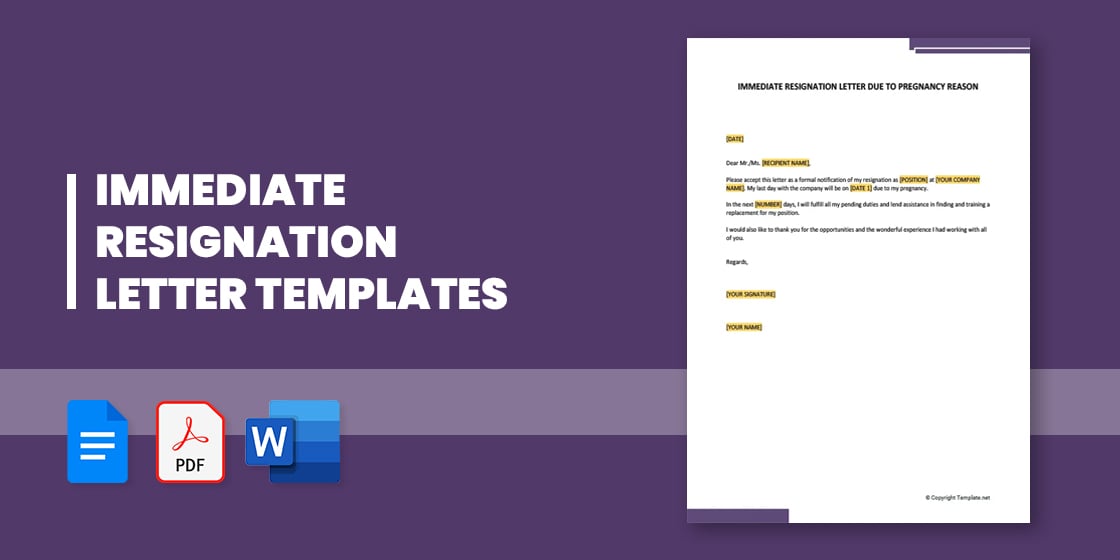
Dear [Manager's Name],
Please accept this letter as formal notification that I am resigning from my position as [Your Position] at [Company Name], effective immediately.
Due to [briefly and factually state the reason, e.g., unforeseen personal circumstances, or a situation that necessitates immediate departure], I am unable to provide a notice period.
I apologize for any inconvenience this may cause.
Sincerely,
[Your Name]
This is a delicate dance. The key is to be firm but not inflammatory. It’s about protecting yourself while minimizing unnecessary professional fallout.
The "What Ifs" and "Should I Have" Moments
We’ve all had those "what if" moments, especially when it comes to big decisions like leaving a job. If you’ve ever quit immediately and then regretted it, you’re not alone. The immediate relief can be intoxicating, but the long-term consequences can be… less so.
Think of it like that diet you started on a whim. You feel great for a week, but then you realize you haven't eaten pizza in seven days, and the novelty wears off. Job changes are similar. The initial freedom can be exhilarating, but then you have to navigate the reality of finding a new role, explaining the gap in your resume, and potentially dealing with the consequences of a less-than-ideal exit.
A fun fact: The concept of a formal resignation letter is relatively modern. In earlier times, leaving a job might have been more informal, perhaps a handshake and a promise to return if things didn't work out. The standardization of employment practices has brought with it the expectation of formal notice. It's a testament to how much our working lives have evolved.
Another cultural reference: Remember that iconic scene in Office Space where Peter Gibbons finally tells off his bosses? It’s cathartic to watch, but in reality, such an outburst rarely leads to a happy ending. Most employers, while perhaps amused in theory, aren't keen on hiring someone who’s just detonated their previous workplace.
Beyond the Letter: The Power of Your Network
Regardless of how you choose to leave, your network is your ultimate safety net. Cultivating strong relationships with colleagues, mentors, and even former managers can be incredibly valuable. These are the people who can vouch for your skills, offer advice, and perhaps even alert you to new opportunities.
So, even if you’re planning a graceful exit with a two-week notice, make sure you’re still being a good team player. Help with the handover, share your knowledge, and leave on positive terms. It’s an investment in your future self. It’s like planting seeds for a future harvest, even if you’re currently enjoying a bounty.
A Daily Reflection
Thinking about resignation letters, immediate or otherwise, is a stark reminder that our daily professional lives are a series of choices. Each interaction, each decision, builds a narrative. Do we want that narrative to be one of impulsive reactions or considered action? Of burning bridges or carefully building them? In the grand scheme of things, even the most mundane work tasks contribute to the larger picture of who we are as professionals. So, the next time you’re staring down your inbox or contemplating a dramatic exit, take a deep breath. Sometimes, the bravest act isn't the loudest one, but the most strategically considered. It’s about choosing the path that serves your long-term well-being and aspirations, not just the immediate urge for escape. And sometimes, that means a polite, professional letter, delivered with a steady hand and a forward-looking gaze.