
How Do You Test Gold At Home
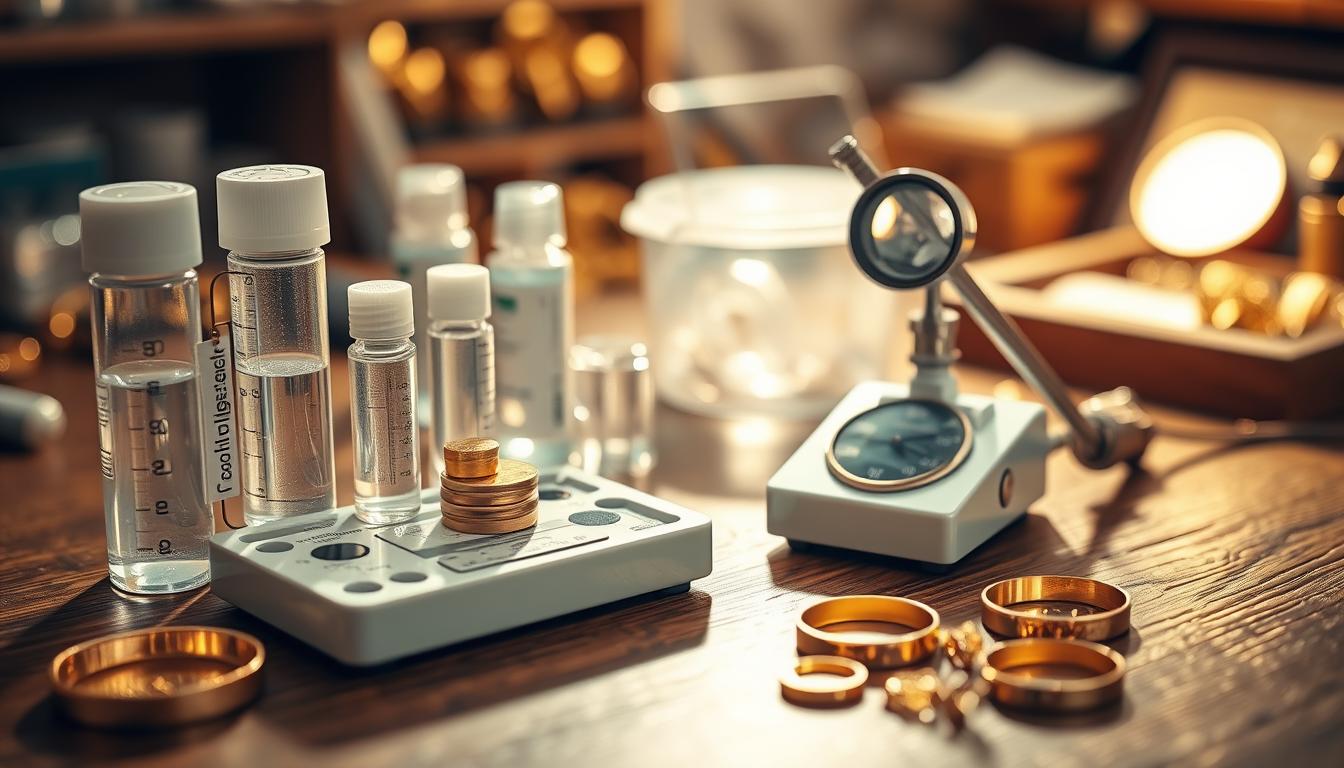
So, you've found a shiny trinket. Maybe it's Aunt Mildred's suspiciously heavy locket, or that "antique" bracelet you snagged at a flea market for a steal (or, let's be honest, probably a slight overpay). Whatever the case, a little voice in your head whispers, "Could this be... gold?" Before you start planning your retirement on a private island populated by very polite corgis, let's talk about how to do some basic gold testing at home. Think of me as your slightly unhinged, caffeine-fueled alchemist sidekick. No beakers, no ancient runes, just common sense and a healthy dose of skepticism.
First things first, let's address the elephant in the room. Are you going to perform the same rigorous tests as a professional jeweler with a magnifying loupe the size of a dinner plate and a PhD in metallurgy? Probably not. But can you get a pretty good idea if you're holding onto a precious metal or just a really convincing piece of brass painted yellow? Absolutely! Think of these home tests as a pre-screening, like asking someone if they enjoy long walks on the beach before inviting them to your yacht party. It's a good first filter.
Now, some of you might be picturing a full-blown science experiment. Don't worry, we're not about to start brewing acid in the kitchen sink. Though, I can't guarantee what happens after a few glasses of wine and an internet rabbit hole. The goal here is to use methods that are safe, relatively easy, and won't involve calling the fire department. Unless, of course, you decide to test your gold with a blowtorch. Please, for the love of all that is shiny, do not test your gold with a blowtorch. Unless you have a very understanding landlord and a robust insurance policy. And even then, probably not.
Must Read
The Visual Vibe Check: It's All About What You See (and Don't See)
Our first line of defense is good ol' observation. Hold that suspect item up to the light. Does it look too... perfect? Real gold, especially older pieces, can have a bit of character. Look for any discoloration, especially in high-wear areas like the edges or clasps. If you see a different color peeking through, like a dull gray or greenish hue, that's a big red flag. It's like finding out your "organic, free-range" chicken actually spent its life in a tiny box. Suspicious!
Also, check for any stamps or hallmarks. These are like tiny little fingerprints left by the manufacturer. You might see numbers like "10K," "14K," or "18K," indicating the karat purity. Or you might see "925" (which is for sterling silver, so put that idea of a solid gold yacht on hold) or other maker's marks. If there are absolutely no markings on a piece that looks like it should have them, it's worth a second glance. It's the jewelry equivalent of a person showing up to a black-tie event in sweatpants – a little off.

The Magnet Test: The Ultimate Gold Snob
Gold, my friends, is not magnetic. This is a crucial, easy-peasy test. Grab a reasonably strong magnet – a fridge magnet might not cut it, you need something with a bit of oomph. Think of the ones you use to hold up your kid's questionable artwork. Now, hold the magnet near your item. If it sticks or feels like it's being pulled towards the magnet, congratulations! You've likely got yourself some fancy-pants pyrite (fool's gold) or, even worse, a plated piece of something else entirely. Gold doesn't play that game. It's too cool for school. It's the aloof rockstar of metals.
If it doesn't budge, that's a good sign! But, and there's always a 'but' when dealing with potential riches, this test isn't foolproof. Some metals that look like gold, like brass or copper (which are often used in fake jewelry), are also not magnetic. So, a pass on the magnet test is like saying, "Okay, you're not a total fraud." We still need to dig a little deeper.
The Float Test (Or Lack Thereof): Gold's Dense Personality
This one’s a bit more dramatic, but still safe. You’re going to need a bowl of water. Gold is a very dense metal. It's heavier than most other metals that might be used to imitate it. So, if you place your gold item in the water, it should sink. Like, sink fast and decisively. Think of it as gold being a bit of a diva – it doesn't float around aimlessly; it has important business to attend to at the bottom of the bowl.

If your item floats, or sinks really slowly, it's probably not solid gold. Again, this isn't a definitive test for higher karats if the piece is hollow, but for solid pieces, it's a good indicator. If it floats, it's time to re-evaluate your life choices that led you to believe this was gold. Maybe it's just really good costume jewelry. And that's okay! Sometimes, sparkle is all we need. Unless you're trying to buy that corgi island. Then, it’s not okay.
The Ceramic Scratch Test: A Little Roughhousing
This test requires a bit of a sacrifice – and by sacrifice, I mean you're going to gently scratch a hidden part of your item on an unglazed ceramic surface. Think the bottom of a coffee mug or a ceramic tile that hasn't been polished to a mirror finish. Find a spot that won't be visible if you decide to keep the item. A tiny scratch is all we're looking for here.
Now, here's the science bit:
- Real Gold: Will leave a gold streak. It's like leaving its calling card.
- Brass or Pyrite: Will leave a black or grayish streak. Not as glamorous, is it?
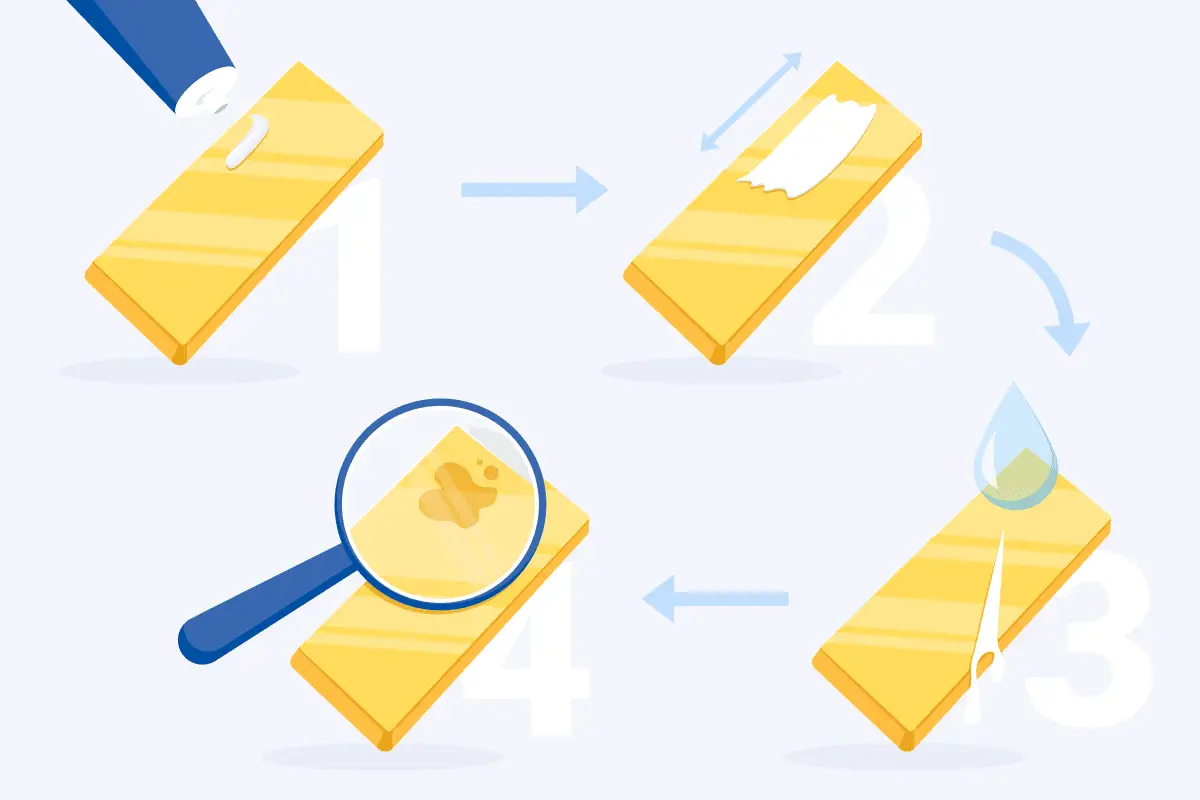
Important Note: Be gentle! You don't want to gouge your potential treasure. Just a light drag to see what color comes off. If the item is plated, the plating might scratch off, revealing a different metal underneath. That's also a good indicator that it's not solid gold.
The Acid Test: Proceed with Extreme Caution (or Just Skip It)
Okay, this is where things get a little more serious, and frankly, for most home testers, it's probably best to skip this one. Acid testing involves using actual nitric acid. Yes, the stuff that sounds like it belongs in a mad scientist's laboratory. You can buy gold testing kits online, which come with different strengths of acid for different karats. You apply a tiny bit of acid to a small scratch you've made on the item (again, in an inconspicuous spot).
The reaction (or lack thereof) tells you the purity. However, this stuff is dangerous. It can burn your skin, damage surfaces, and generally make your house smell like a science experiment gone wrong. If you're not comfortable with chemicals, or don't have proper ventilation, just say no to the acid test. Seriously. There are plenty of other ways to get a good idea, and a trip to the ER is not a good way to monetize your newfound "gold."
The Bottom Line: When in Doubt, Get It Appraised!
Look, these home tests are great for a general idea. They can help you weed out the obvious fakes and get a feel for what you might be holding. But if you have something that you suspect is genuinely valuable, the absolute best thing you can do is take it to a reputable jeweler or appraiser. They have the tools, the knowledge, and the professional equipment to give you a definitive answer.
Think of it this way: these home tests are like taking your temperature when you feel a bit off. An appraisal is like going to the doctor for a full diagnostic workup. You wouldn't rely on a forehead thermometer to diagnose a complex illness, would you? (Unless you're one of those people who believes essential oils can cure the plague. We're not talking to you right now.)
So, go forth and test your treasures! Just remember to have fun, be safe, and manage your expectations. You might uncover a hidden fortune, or you might just confirm that Aunt Mildred had a penchant for really convincing costume jewelry. Either way, it's a story worth telling over a cup of coffee. And who knows, maybe that slightly-less-than-solid-gold bracelet will still look fabulous with your new corgi-themed pajamas.

