
How Do You Decline A Job Offer
Let's face it, getting a job offer is pretty fantastic! It means your skills, experience, and personality impressed someone enough to want you on their team. But sometimes, the stars just don't align, or a more exciting opportunity pops up, or maybe that dream job you interviewed for with the free snacks and a foosball table finally called. Whatever the reason, you've found yourself on the other side of the offer letter, needing to gracefully bow out. Declining a job offer might sound like a tricky dance, but it's actually a surprisingly fun and incredibly useful skill to master. Think of it as a little career superpower!
Why is this a fun topic? Because it's about navigating positive professional interactions with grace and strategic thinking. It's not about saying "no" and slamming the door; it's about saying "thank you, but not this time" while keeping doors open and relationships intact. And in today's interconnected world, you never know when that hiring manager or recruiter might be the key to your next big break. So, let's dive into the art of the polite professional rejection!
The Power of the Polite "No"
The primary purpose of declining a job offer is, obviously, to inform the company that you won't be accepting their offer. But the benefits go far beyond a simple notification. Done well, declining an offer can:
Must Read
- Maintain Professional Relationships: The hiring manager, recruiter, and even potential future colleagues you met will remember how you handled this. A respectful decline can leave a positive lasting impression, making them more receptive to you in the future. You might even cross paths again down the line, perhaps for a different role that's a better fit.
- Build Your Reputation: Acting with integrity and professionalism, even when it's not in your immediate favor, builds your reputation as a reliable and courteous individual. This is invaluable in any career.
- Provide Valuable Feedback (Optional but Appreciated): If you choose to, offering brief, constructive feedback can be incredibly helpful to the company. This isn't about airing grievances; it's about providing insights that might help them improve their recruitment process or even the role itself.
- Keep Future Doors Open: The business world can be smaller than you think. Burning bridges is never a good idea. A well-handled decline ensures you can always consider future opportunities with that company, or even be a referral for someone else.
- Boost Your Confidence: Successfully navigating a potentially awkward situation can be a real confidence booster. You've handled a professional negotiation and decision-making process with poise and skill.
Crafting Your Polite Decline: The 'How-To'
So, how do you actually do it? It's simpler than you might think, and it usually boils down to a few key elements:
1. Promptness is Key!
As soon as you've made your decision, let them know. Don't drag your feet. Companies have timelines, and they'll want to move on to other candidates. Sending your decline within a day or two of making your decision is ideal.
:max_bytes(150000):strip_icc()/how-to-decline-a-job-offer-2059772-Final-edit-627ce78b48054aa7b804c9369eef9ca9.jpg)
2. Choose Your Medium Wisely
Email is generally the most appropriate method for declining a job offer. It provides a written record and gives you the space to craft your message carefully. If you've had a very personal connection with the hiring manager and they extended the offer over the phone, a quick follow-up call followed by an email is a nice touch, but email alone is usually sufficient.
3. Start with Gratitude
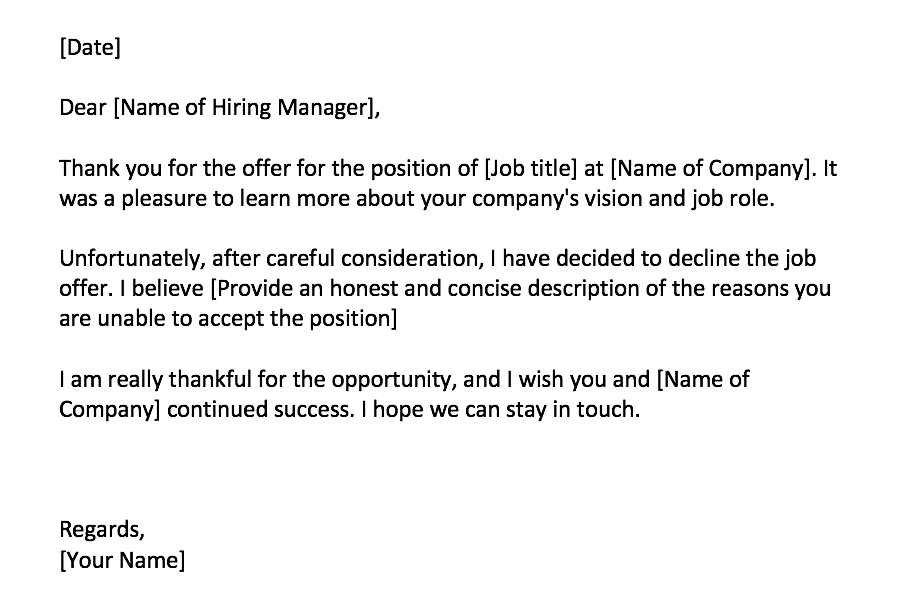
Always begin by expressing your sincere appreciation for the offer. Acknowledge the time and effort they invested in you. Something like, "Thank you so much for offering me the position of [Job Title] at [Company Name]. I truly appreciate you taking the time to interview me and for extending this generous offer."

4. State Your Decline Clearly and Concisely
Be direct but polite. Avoid ambiguity. You don't need to over-explain or apologize profusely. A simple statement like, "After careful consideration, I have decided not to accept this offer at this time," is perfectly fine.
5. Briefly State Your Reason (Optional, but Recommended)
This is where you can add a little more context, if you feel comfortable doing so. Keep it brief and positive.
"This was a difficult decision, as I was very impressed with [mention something specific you liked, e.g., the team's energy, the company's mission]. However, I've decided to pursue an opportunity that aligns more closely with my long-term career goals."
Or, if you received another offer:
"I have accepted another position that better suits my immediate career objectives."
Avoid negativity. Don't criticize the salary, the benefits, or the company culture. If the reason is something like the commute is too long, or the role isn't quite the right fit for your skillset, you can mention that very subtly. The key is to be truthful without being hurtful.

6. Reiterate Appreciation and Express Well Wishes
End on a positive note. Thank them again for their time and consideration. You can also wish them luck in their search for the right candidate.
"Thank you again for your time and consideration. I wish you and [Company Name] all the best in finding a suitable candidate for this role."
7. Proofread!
Before hitting send, give your email a good once-over. Check for typos, grammatical errors, and ensure the tone is appropriate.
Declining a job offer is an art, not a science. By being prompt, polite, and professional, you can turn a potentially awkward situation into an opportunity to strengthen your professional network and leave a positive mark. So, go forth and decline with confidence and flair!

![How to Decline a Job Offer [+ Examples]](https://www.findmyprofession.com/wp-content/uploads/2023/05/How-to-Decline-a-Job-Offer.png?x68227)