How Do I Put On A Guitar Strap

There it sits. Your beautiful guitar. Gleaming, inviting, ready to unleash its sonic magic. But before you can serenade your cat, conquer a campfire singalong, or just rock out in your living room like no one's watching (even if they totally are), there's a tiny, yet crucial, step: the guitar strap. It might seem like just a piece of fabric or leather, but oh, the adventures this humble accessory has seen! Think of it as the trusty steed for your six-stringed noble steed.
Let's imagine you've just unwrapped your brand-new strap. It smells faintly of new leather or that wonderfully synthetic "new strap" scent. It’s probably still a bit stiff, like a new pair of hiking boots. Don't worry, it'll break in nicely. Now, where do these little doodads go? You'll notice two holes on the strap itself, looking for a home. On your guitar, you'll find two little knobs. These are your strap buttons. They're usually made of metal, solid and dependable. Some guitars have them in slightly different spots, like a sneaky guitarist trying to hide a rogue note. But generally, they're at the bottom and near the top of the guitar's body.
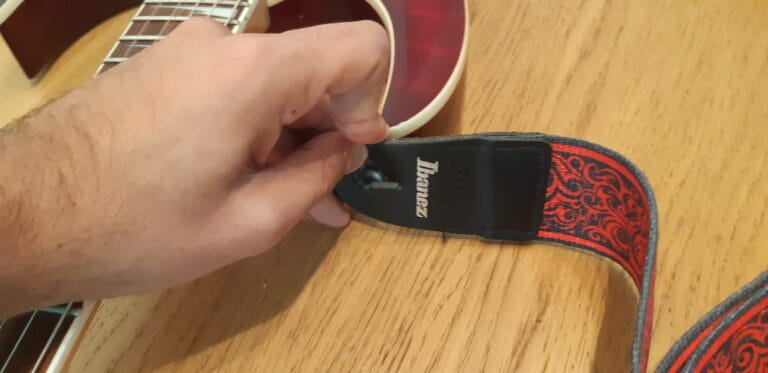
The first one is usually pretty straightforward. Take one of the holes on your strap and gently, but firmly, push it over one of the strap buttons. It might feel a bit snug, and that's a good thing. You want it to feel secure, like a hug that's not too tight. Imagine the strap is a brave explorer, and the button is its first outpost. It's a successful landing! Congratulations, you've just initiated a vital connection. This usually happens at the bottom of the guitar, where gravity is pulling things down, so this first attachment is like securing your anchor.
Must Read
Now for the slightly more adventurous part: the second button. This one is typically found higher up on the guitar, often near where the neck meets the body. This is where things get a little more interesting. Some straps have a simple hole for this button, while others have a clever little clasp or buckle. If yours has a simple hole, it's much like the first one. You'll want to guide it over the top strap button. This might require a little wiggling, a gentle twist, or perhaps even a quiet plea to the guitar gods for cooperation. Sometimes, this button is a bit more exposed, and the strap hole needs to fit snugly to prevent accidental detaching. We wouldn't want our precious instrument making an unscheduled descent to the floor, would we? That's a story nobody wants to tell!
Think of it like dressing your favorite teddy bear. You want everything to be just right, cozy and secure, so it can go on all sorts of imaginary adventures with you.
Other straps, the ones with a bit more engineering flair, might have a little leather or plastic tab that you thread through a slot and then secure. This is like giving your guitar a high-five with a built-in security system. It’s designed to be extra safe, so even if you're doing some particularly enthusiastic strumming, or if your dog decides the strap is a new chew toy (we've all been there), your guitar will stay put. Some folks even add little rubber washers, sometimes called "Grolsch washers" after the beer bottle tops they resemble, around the strap buttons to give that extra bit of grip. It's like putting little non-slip socks on the guitar's feet!

Once both ends of the strap are firmly attached, you can then adjust the length. Most straps have a buckle or a slider mechanism that lets you make it longer or shorter. This is where personalization comes in. Do you like to play standing up with your guitar hanging low, giving you that classic rockstar silhouette? Or do you prefer it a bit higher, making it feel more like an extension of your arms, allowing for intricate fingerwork without feeling like you're wrestling an alligator? This adjustment is your moment to sculpt your playing posture. It’s like tuning your posture for optimal musical performance.
The truly heartwarming part of this process isn't just the physical act of attaching the strap. It's the anticipation. As the strap settles into place, your guitar transforms from an object of desire into a partner in creativity. It’s ready. It’s waiting. It’s that feeling you get when you’ve laced up your running shoes, or packed your picnic basket – the moment before the adventure truly begins. This simple step is the bridge between potential and performance, between silent wood and singing strings. It’s the quiet promise of music yet to be made, of songs waiting to be born. So next time you attach your strap, take a moment to appreciate this little ritual. It's more than just mechanics; it's the prelude to pure joy.