
Can You Die From A Broken Femur
Hey there, curious minds! Ever wondered about those massive bones in our legs, the ones that help us do everything from sprinting to just standing there? We're talking about the femur, that absolute giant of our skeletal system. It’s basically our thigh bone, running all the way from our hip to our knee. Pretty impressive, right?
So, the big question that might have popped into your head, perhaps while you were watching an action movie or maybe just contemplating the fragility of life over a cup of coffee, is: Can you actually die from a broken femur? It’s a pretty dramatic thought, isn't it? Like, "Whoa, can that really happen?"
Let’s dive into it, in a super chill, no-stress kind of way. Think of this as a friendly chat, not a lecture. We're here to explore the fascinating, and sometimes surprising, world of our bodies.
Must Read
The Mighty Femur: A True Legend
First off, let's give some props to the femur. This bone is a beast! It's the longest, strongest, and heaviest bone in the human body. Imagine it as the main support beam in a skyscraper. Without it, everything else would just… well, it wouldn't work. It's designed to handle incredible forces. We're talking about taking your body weight, plus all the extra oomph you generate when you're jumping, running, or even just walking up stairs.
It’s like the chassis of a really sturdy truck, built to endure a lot. And for the most part, it does its job without us even thinking about it. Amazing, when you really stop and consider it!
So, What Happens When This Legend Breaks?
Now, for the million-dollar question. A broken femur, also known as a femoral fracture, sounds pretty serious. And yeah, it is. These breaks usually happen from really significant trauma. Think car accidents, serious falls from a height, or direct, powerful blows. It’s not typically something that happens from a little stumble. Your femur is tough stuff!
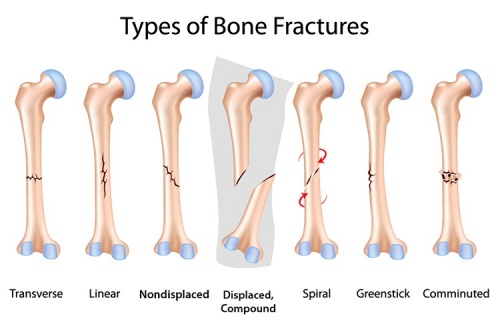
When it breaks, it's often a complex fracture. We’re not just talking about a tiny crack. It can shatter, splinter, or break into multiple pieces. And because it’s so big and surrounded by big muscles, the potential for bleeding can be substantial. That’s a key point to remember.

The Direct Danger: Is It Fatal on Its Own?
Let’s get straight to it. Can the broken bone itself, the jagged edges of the femur, directly cause death? In most cases, no. If you just have a cleanly broken femur and nothing else goes wrong, you're not going to die from the bone itself. It's a devastating injury, requiring surgery and a long recovery, but the bone break itself isn't usually the killer.
It’s like having a massive crack in that skyscraper's support beam. The beam is damaged, the building is compromised, but the crack itself isn't going to instantly make the whole structure collapse. The consequences of that crack, however, are where things get tricky.
The Indirect Threats: Where the Real Risks Lie
So, if the bone isn't usually the direct culprit, what's going on? Well, it's the complications that can arise from such a severe injury that pose a threat. And these are the things doctors and emergency services are most concerned about.
1. Massive Blood Loss (Hemorrhage)
This is probably the biggest immediate danger. Remember those big muscles surrounding the femur? They’re packed with blood vessels. When the bone breaks, especially if it’s a displaced or comminuted fracture (that’s a fancy word for shattered!), these vessels can be severely damaged. This can lead to rapid and significant internal bleeding.

Imagine a burst water main. The water doesn't just leak; it gushes out. That's kind of what can happen with the blood in your leg. If enough blood is lost very quickly, it can lead to hypovolemic shock. Your body suddenly doesn’t have enough blood circulating to deliver oxygen to your vital organs. This is a medical emergency, and if not managed quickly, it can be fatal.
It's like a car's fuel tank springing a massive leak. The engine (your body's organs) will eventually sputter and stop if it doesn't get any more fuel (oxygen delivered by blood).
2. Fat Embolism Syndrome
This sounds a bit scary, and it can be. When the bone marrow inside the femur is damaged during the break, tiny droplets of fat can be released into the bloodstream. Normally, your body can handle a small amount of this. But with a significant fracture, a larger amount of fat can enter the circulation.
These fat globules can travel through your bloodstream and can eventually block small blood vessels. If they reach your lungs, heart, or brain, they can cause serious problems. In the lungs, it can impair breathing. If it reaches the brain, it can cause neurological symptoms like confusion, coma, or seizures. This is called Fat Embolism Syndrome (FES), and it’s a rare but potentially life-threatening complication.
Think of it like tiny little grease particles getting into your engine's fuel lines. If enough of them clog things up, the engine won't run properly.

3. Infection
Anytime the skin is broken during a severe injury (an open or compound fracture), there's a risk of infection. Bacteria can enter the wound and get into the bone or surrounding tissues. If an infection takes hold, it can spread and become very serious, potentially leading to sepsis, which is a life-threatening bloodstream infection.
This is why immediate medical attention and proper wound care are so crucial after a bad break. It's like leaving a door wide open for unwanted guests to come in and cause trouble.
4. Other Traumas
Often, a broken femur doesn’t happen in isolation. The kind of accident that breaks a femur is usually violent, and there might be other severe injuries happening at the same time. Think head injuries, internal organ damage, or other bone fractures. It's the combination of these injuries that can be overwhelming for the body.
So, while the broken femur might be the most obvious injury, it might be one piece of a much larger, more dangerous puzzle.

The Role of Modern Medicine
Now, here’s the reassuring part. Thanks to incredible advancements in medicine, the chances of dying from a broken femur are significantly lower than they used to be. Doctors are superheroes in their own right!
When someone sustains a broken femur, the immediate priority is to stop the bleeding, stabilize the patient, and get them to a hospital. Once there, surgeons can operate to repair the bone, often using metal plates, screws, or rods to hold it together. This helps to control bleeding, reduce pain, and start the healing process.
Blood transfusions are common to replace lost blood, and antibiotics are used to prevent or treat infections. The medical team works tirelessly to manage all the potential complications.
In Conclusion: A Serious Injury, But Usually Not a Death Sentence
So, to circle back to our initial question: Can you die from a broken femur? The answer is, it's highly unlikely to die directly from the broken bone itself. However, it is a very serious injury that carries significant risks of potentially fatal complications like massive blood loss, fat embolism, and infection.
It's a stark reminder of how our bodies, while incredibly resilient, can be vulnerable to severe trauma. The femur is a testament to our physical strength, and when it breaks, it’s a clear signal that something major has happened. But with prompt and expert medical care, the odds are overwhelmingly in favor of recovery. Pretty neat, huh? Stay curious, and stay safe!

