Why Do We Need Day And Night

Alright, gather 'round, folks, and let me tell you a little story. You ever wake up, squinting at the sun like it’s personally offended you, and think, "What’s the deal with this whole day-night circus?" Yeah, me too. It’s one of those things we just accept, like gravity or the fact that socks mysteriously vanish in the laundry. But trust me, there’s some seriously cool science behind why the world flips between "bright and cheery" and "dark and possibly full of questionable noises." It’s not just for dramatic effect, though it does make for some killer Instagram lighting at dawn.
So, why day and night? It all boils down to our friendly neighborhood star, the Sun. This giant ball of fiery plasma is the ultimate cosmic spotlight. And guess what? The Earth, our humble abode, is constantly doing this thing called spinning. Like a dizzy toddler who’s had one too many juice boxes. It spins on its axis, an imaginary line going right through the North and South Poles. Think of it as Earth's personal merry-go-round, except instead of cheesy music, we get the sweet sounds of chirping birds and distant sirens.
As the Earth spins, different parts of it get a front-row seat to the Sun's dazzling performance. When your part of the planet is facing the Sun, BAM! It’s day. You get to see your coffee mug, your questionable fashion choices in the mirror, and all those emails you've been trying to ignore. The Sun’s rays are giving your face a big, warm hug – or, in some cases, a rather aggressive sunburn if you’re not careful. This is when we’re productive, when we’re out and about, living our best sun-kissed lives.
Must Read
But here’s the kicker: as the Earth keeps on twirling, your spot eventually turns away from the Sun. And what happens then? Poof! Darkness descends. It’s night. Suddenly, the world gets a whole lot more mysterious. Shadows stretch, stars start to twinkle (which, by the way, are just distant suns that are way too far away to give us a tan), and your cat suddenly becomes a ninja with glowing eyes. This is the time for chilling, for recharging, for contemplating the existential dread of whether you really need that third cookie. It's nature's way of telling us to hit the snooze button.
Imagine if we only had day. We'd be a planet of perpetually exhausted, caffeine-addicted zombies. No time to sleep, no time to dream of flying pigs or winning the lottery. Our bodies would probably revolt. We’d be like those unfortunate souls in movies who can’t sleep and start seeing things. Except, instead of seeing things, we’d probably just become things – like piles of dust, because we’d never have a chance to clean. The sheer amount of laundry we’d produce without night would be enough to clog the Panama Canal.
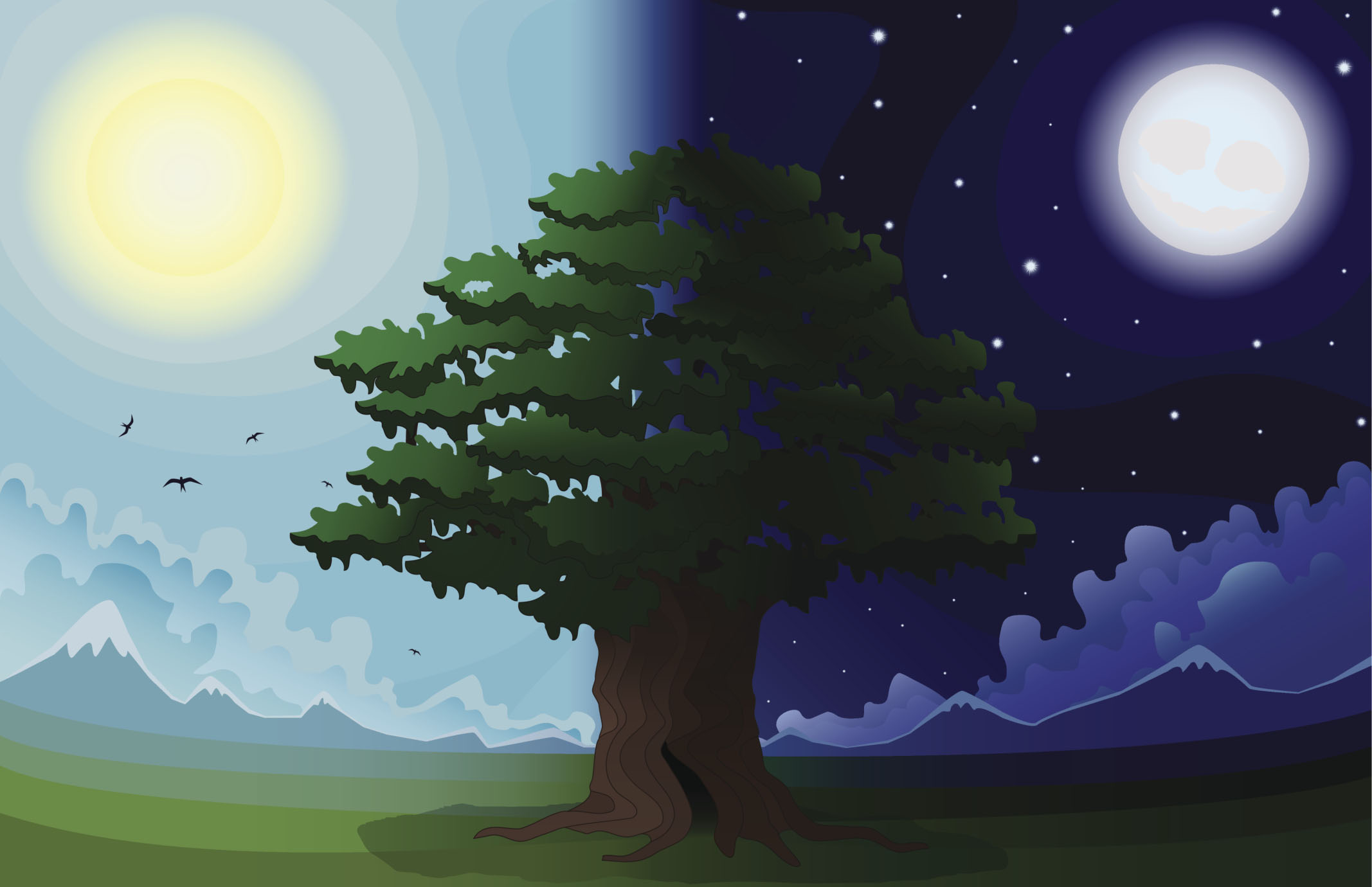
And what about night? Imagine a world that was always dark. Forget about those killer sunrise photos. It would be like living inside a giant, slightly damp cave, forever. We’d constantly be bumping into things, tripping over invisible furniture, and generally having a terrible time. Our sense of direction would be shot. We’d probably all develop sonar, like bats, just to navigate to the fridge. And dating? Forget it. "Hey there, you look… dimly lit. Is that you?" Not exactly romantic, is it?
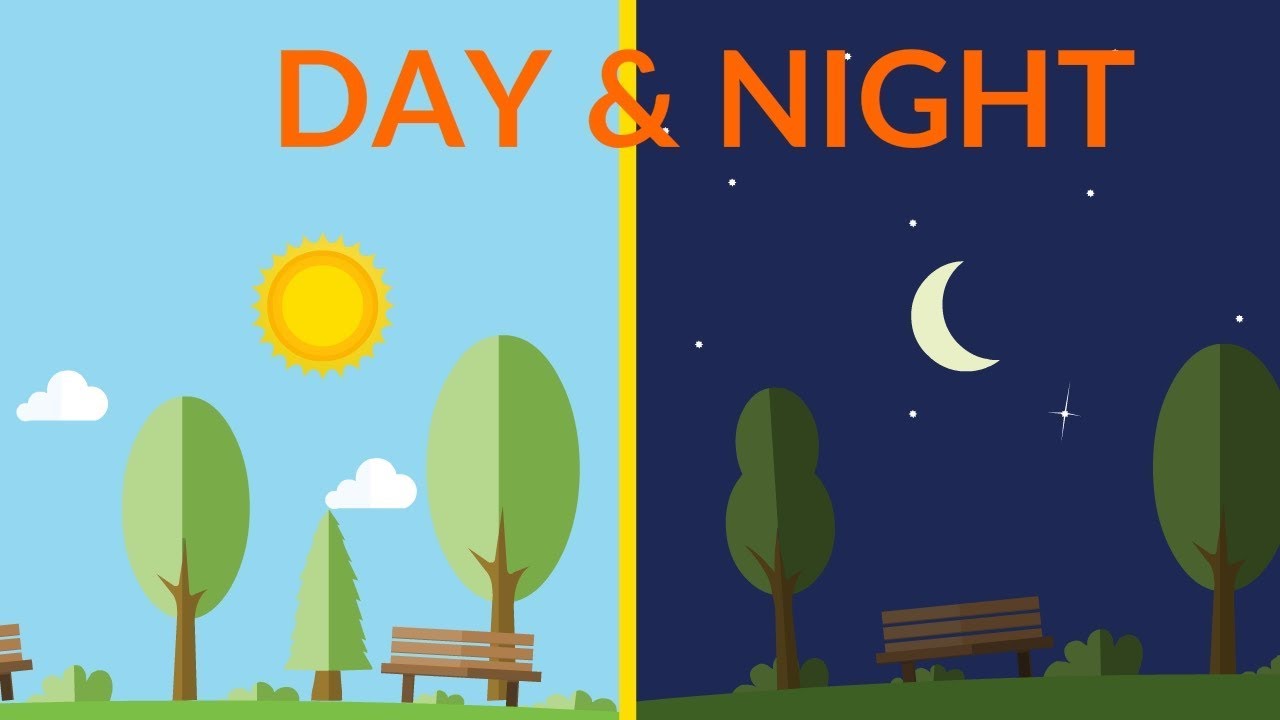
So, day and night are basically Earth’s cosmic rhythm section. They're the yin and yang of our planet's existence. Day is for doing, for seeing, for being visible. Night is for resting, for dreaming, for being hidden. It’s a perfectly balanced act, orchestrated by the Sun’s relentless gaze and the Earth’s perpetual pirouette.
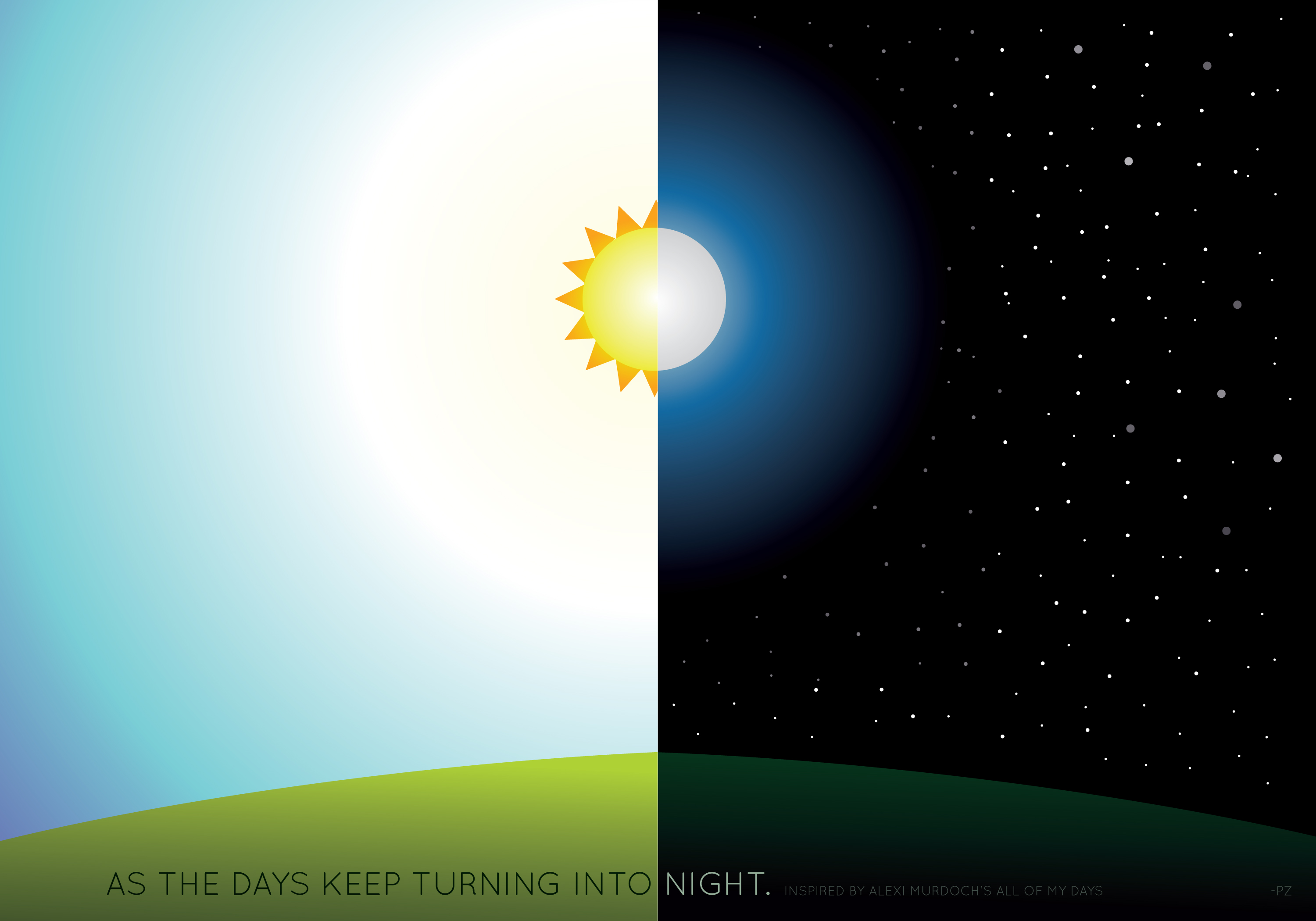
Our bodies have actually evolved to sync up with this rhythm. It’s called our circadian rhythm, and it’s like an internal clock that tells us when to be awake and when to be asleep. When that bright, beautiful sunlight hits our eyes, it sends signals to our brain saying, "Hey, wakey-wakey! Time to conquer the world!" Then, as it gets dark, our brains start producing melatonin, the sleep hormone. It's like a gentle lullaby from the universe, whispering, "Shhh, time for sweet dreams, little Earthling." Pretty neat, right? It’s why that jet lag feels so brutal – we’re messing with our internal clock when we jump across time zones. Our bodies are screaming, "But it’s midnight here! I need my PJs and a cup of cocoa!"
Think about all the incredible things that happen because of this cycle. Plants need sunlight for photosynthesis – they’re basically solar-powered food factories. Without day, they’d be toast. And nocturnal animals? They’re the rockstars of the night. Owls, bats, those weird little fennec foxes with their giant ears – they thrive in the darkness, hunting and foraging when we’re all tucked up in bed. If it was always day, they’d be squinting, disoriented, and probably really grumpy. Imagine a bat trying to navigate by sunlight. It would be like trying to find a needle in a haystack, if the haystack was on fire and very, very bright.
The Unexpected Perks of the Day-Night Dichotomy
Beyond just basic survival, day and night offer some seriously cool benefits. Take the idea of temperature regulation. The Sun’s energy heats up the Earth during the day, but as it turns away, the heat radiates back into space. This daily cycle helps prevent our planet from becoming a scorching inferno or a frozen wasteland. It’s like the Earth has a built-in thermostat, and day and night are its settings.
And what about inspiration? So many poets have penned odes to the moonlit sky, and artists have captured the magic of sunsets. The contrast between light and shadow fuels our creativity. Can you imagine a world where everything was just… evenly lit, all the time? It would be incredibly boring. We’d have no dramatic entrances, no mysterious figures lurking in the alleyways (okay, maybe that's a good thing sometimes), no romantic moonlit strolls. The drama! The romance! It all hinges on this simple rotation.

Then there are the practicalities. Daylight hours are when most of our infrastructure works best. Traffic lights, streetlights (ironically, they work because it gets dark), even our work schedules are built around the availability of light. Imagine trying to build a skyscraper in perpetual darkness. You’d need a headlamp the size of a small car. And don’t even get me started on trying to find your car keys in the morning if it was always night.
Plus, let's not forget the sheer joy of a good night's sleep. That deep, restorative slumber is crucial for our physical and mental health. It’s when our bodies repair themselves, our brains consolidate memories, and we get to escape the daily grind for a few precious hours. If we never had night, we’d all be walking around with the concentration span of a goldfish and the memory of a sieve.
The Grand Finale: A Cosmic Ballet
So, the next time you’re grumbling about the alarm clock or wishing the sun would just set already, take a moment to appreciate this magnificent cosmic ballet. The Earth’s spin, the Sun’s steady glow – it’s a perfectly timed performance that keeps our planet alive, our bodies functioning, and our imaginations soaring. It’s a fundamental rhythm that has shaped life as we know it. Without day and night, we wouldn't be here, spinning around in this beautiful, predictable chaos. And honestly, that’s something to wake up – and go to sleep – for.