Why Do Cats Bite Then Lick You
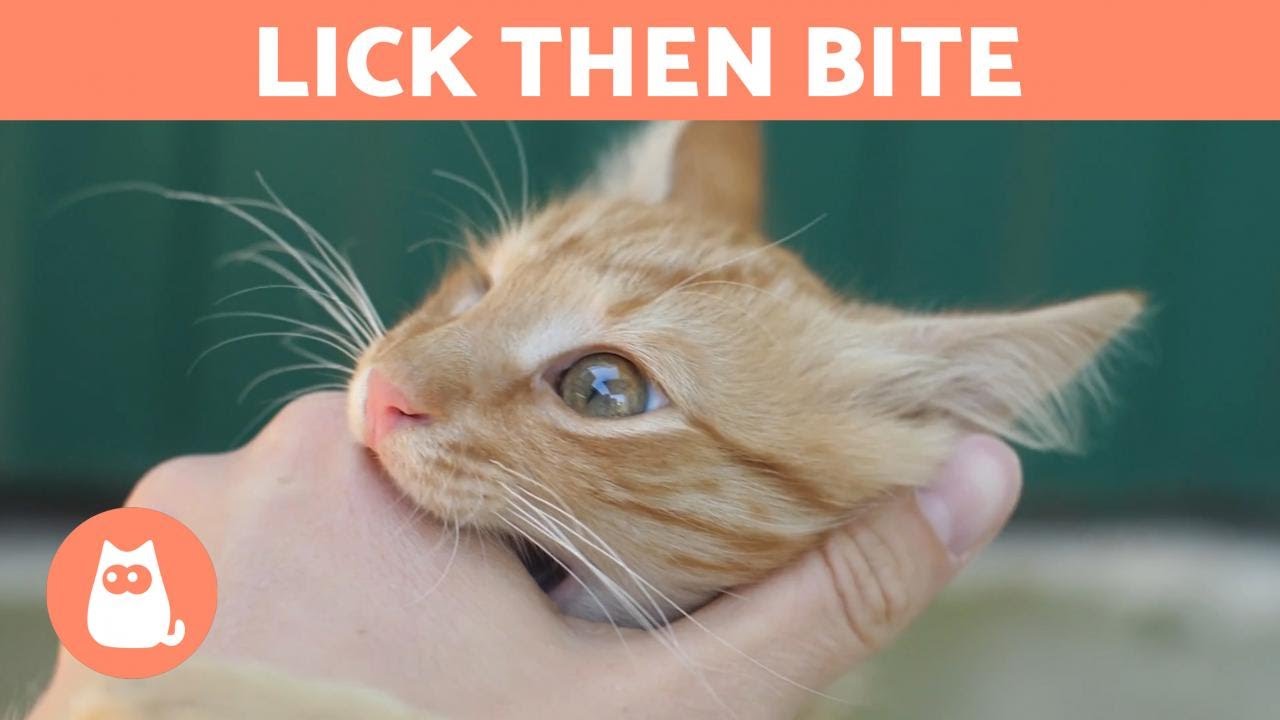
Ah, the cat. That furry enigma, that purring paradox. You’re sitting there, basking in the glow of your feline overlord’s presence, maybe even daring to gasp give them a gentle head scratch. And then it happens. That moment of blissful interspecies connection… is shattered by a sudden, sharp nip followed by a bewildering lick. What in the name of catnip just happened?
It’s a scenario as old as time, or at least as old as humans domesticated those tiny, adorable dictators. You’re minding your own business, enjoying a snuggle sesh, and BAM! Your hand becomes the latest victim of the “love bite.” And then, just when you’re bracing for impact number two, your furry friend decides to wash the evidence away with a series of tiny, sandpaper-tongue kisses. It’s enough to make you question your sanity, or at least your understanding of basic animal behavior. Are they happy? Are they angry? Are they plotting your demise with a side of salmon?
Let’s be honest, cats are masters of the cryptic. They can stare at a blank wall for ten minutes straight like they’re deciphering ancient hieroglyphs, or knock your prized possession off the shelf with the grace of a ninja and the disdain of a disgruntled monarch. This bite-then-lick maneuver is just another chapter in their ongoing “Cat 101: Advanced Subtlety” course. And you, my friend, are enrolled whether you like it or not.
Must Read
The Case of the Love Nibble (and Why It’s Not Actually Love)
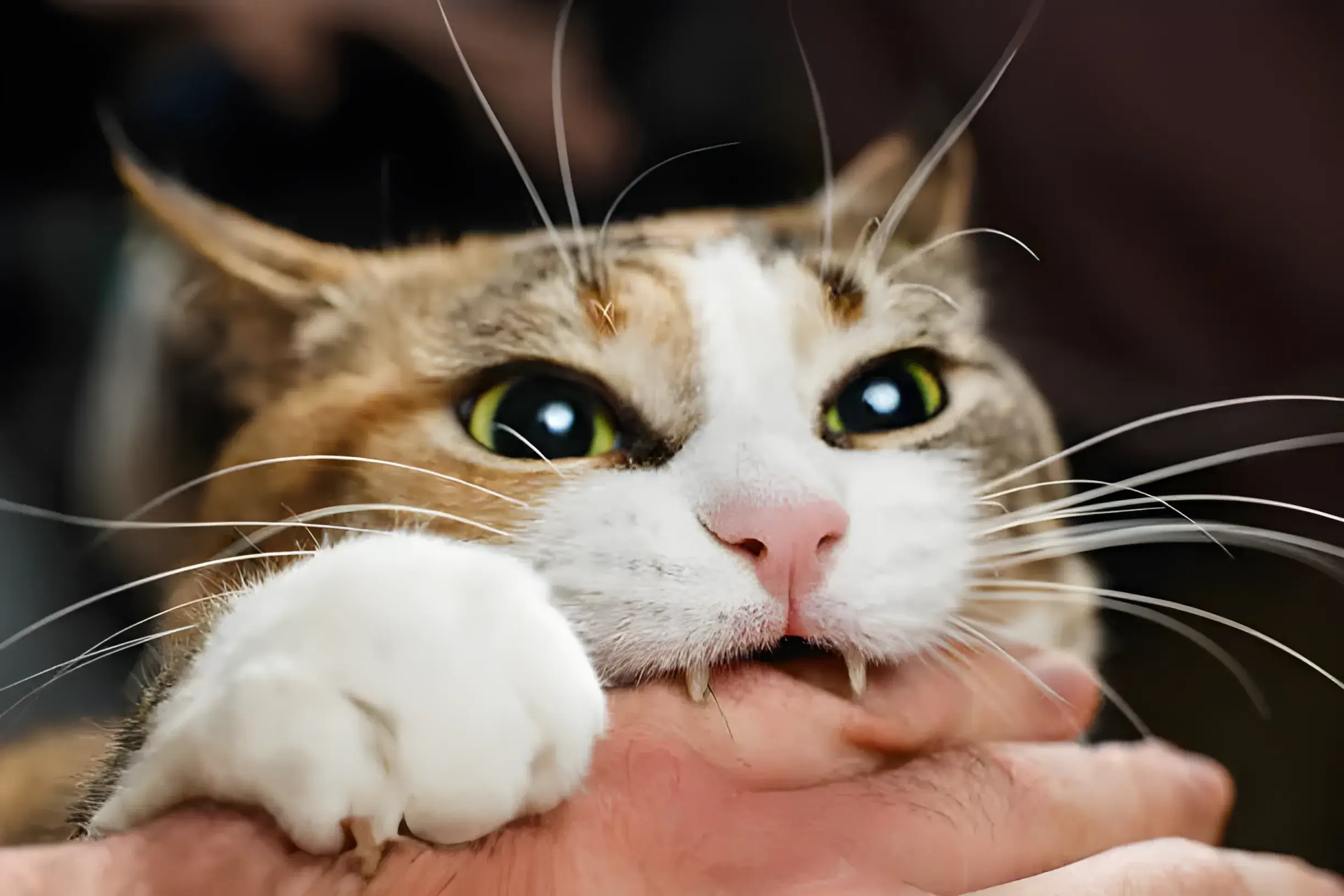
First, let’s tackle the bite. That little “ouchie” you just received? It’s rarely a sign of aggression, despite what your primal brain might be screaming. Think of it more as a very firm, albeit misguided, suggestion. Your cat is trying to tell you something, and for some reason, their communication skills are about as refined as a toddler with a juice box.
Often, this bite is a remnant of kittenhood. Kittens play-fight with their littermates, and when things get a little too rough, they’ll yelp and pull back. This is how they learn bite inhibition. Your hand, in their eyes, might be their giant, warm, fuzzy littermate. And when you’re petting them a little too long, or perhaps in a spot they’re not totally keen on, they might give you a gentle reminder: “Hey, pal, ease up!”

It's like when your friend is telling a really long, boring story, and you subtly nudge them to wrap it up. Except your cat’s nudge involves a few teeth. It’s a gentle, “Okay, that’s enough petting for now, human. My personal space bubble is about to implode.” It’s not malice, it’s just… feline boundaries. And these boundaries can be as shifting and unpredictable as the weather in a bad rom-com.
Another possibility? Overstimulation. You’re petting your cat, things are going swimmingly, and then suddenly, their nervous system is like a supercomputer overloaded with too much data. Too much touch, too much of a good thing, can actually become a bad thing for a cat. That bite is their way of saying, “WHOA NELLY! My sensory overload alarm is blaring!” Imagine being tickled for an hour straight. You’d eventually resort to something drastic, right? Your cat is just doing its best to avoid a full-blown feline meltdown.

The “I Still Love You, Promise!” Lick
Now for the confusing part: the lick. After the mild trauma of the bite, your cat then proceeds to groom your hand as if you’ve just saved them from a burning building. This is where the real mystery unfolds, and it’s frankly adorable, if not a little jarring.
One of the most popular theories is that the lick is a form of apology. Think of it as their furry way of saying, “Oops, sorry about that! My bad. I didn’t really mean to bite you, I was just… feeling myself. Here, let me make it better.” It’s like they’re trying to soothe the very wound they just inflicted. It’s the ultimate passive-aggressive, yet utterly charming, move. “I hurt you, but now I’m going to fix it with my tongue. You’re welcome.”
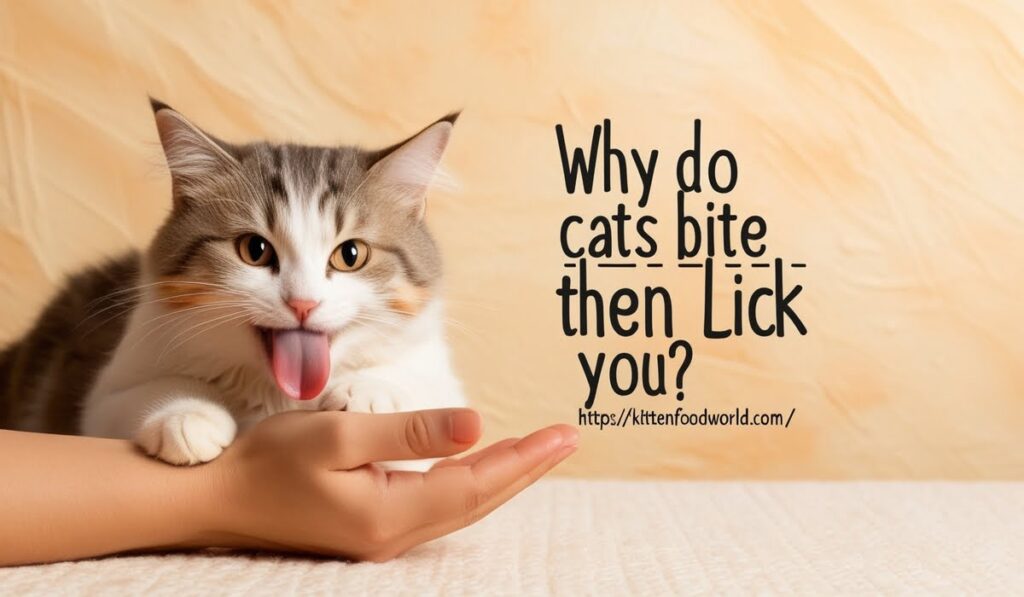
This licking behavior also stems from their social grooming habits. Cats groom each other to bond and establish social hierarchies. When a cat licks you, especially after a bite, they might be re-establishing that bond. They’re saying, “We’re still pals. We’re part of the same clowder (that’s a group of cats, for those of you not fluent in feline demographics). We’re family.” It’s their way of saying, “Even though I just asserted my dominance with a nip, I still accept you as part of my inner circle.”
Another intriguing idea is that the lick is a way to transfer their scent. Cats have scent glands all over their bodies, and licking is a primary way they mark their territory and individuals. By licking you after a bite, they might be reinforcing their claim on you, saying, “You’re mine, and even though you’re a bit clumsy and sometimes overstimulate me, I still consider you part of my territory.” It’s like a little saliva-based security camera tag.

When to Worry (and When to Just Laugh It Off)
Now, let’s not get too relaxed. While most cat bites and licks are harmless displays of feline quirks, there are times when you should pay attention. If the bite is hard, breaks the skin, and is accompanied by hissing, growling, or flattened ears, that’s a sign of genuine aggression. In that case, it’s time to back off, assess the situation, and maybe invest in some serious-grade cat gloves. We’re talking Kevlar, people.
But for those playful nips and subsequent soothing licks? That’s just your cat being a cat. It’s a complex dance of affection, boundaries, and perhaps a touch of bewildered entitlement. It’s a reminder that while we humans might think we’re in charge, we’re really just living in a world curated by creatures who can sleep for 16 hours a day and still manage to look impossibly regal.
So, the next time your feline friend delivers a one-two punch of bite-and-lick, try not to overthink it. They’re not trying to send you a coded message that will unlock the secrets of the universe. They’re probably just a little over-aroused, trying to tell you they love you in their own peculiar, slightly pointy way. Embrace the chaos, laugh it off, and remember that a cat’s love, much like their judgment, is a wonderfully bewildering thing.