What's The Measurements For A Dart Board

Ever found yourself at a pub, maybe after a long day, and seen a dartboard hanging on the wall? It’s kind of a classic pub fixture, isn't it? You might have even grabbed a few darts, fumbled around, and wondered, "How exactly is this thing set up?" It’s not just a random circle of metal and wire, you know. There’s a whole system to it, and honestly, it’s pretty neat once you dig into the details.
So, what are the measurements for a dartboard? Let's break it down in a way that’s less like a geometry textbook and more like figuring out the best spot for your favourite armchair. Because understanding the dimensions isn't just about following rules; it's about appreciating the precision that makes the game of darts so fair and, well, challenging!
The Sweet Spot: Where the Board Hangs
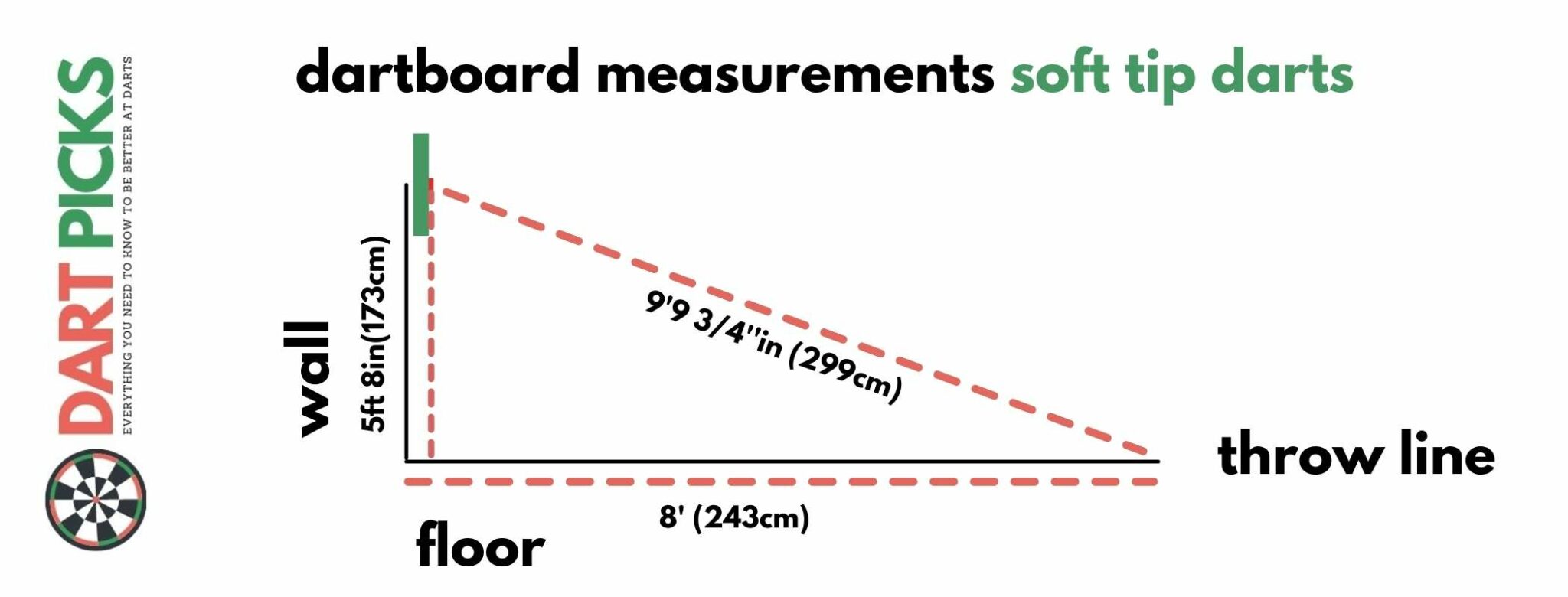
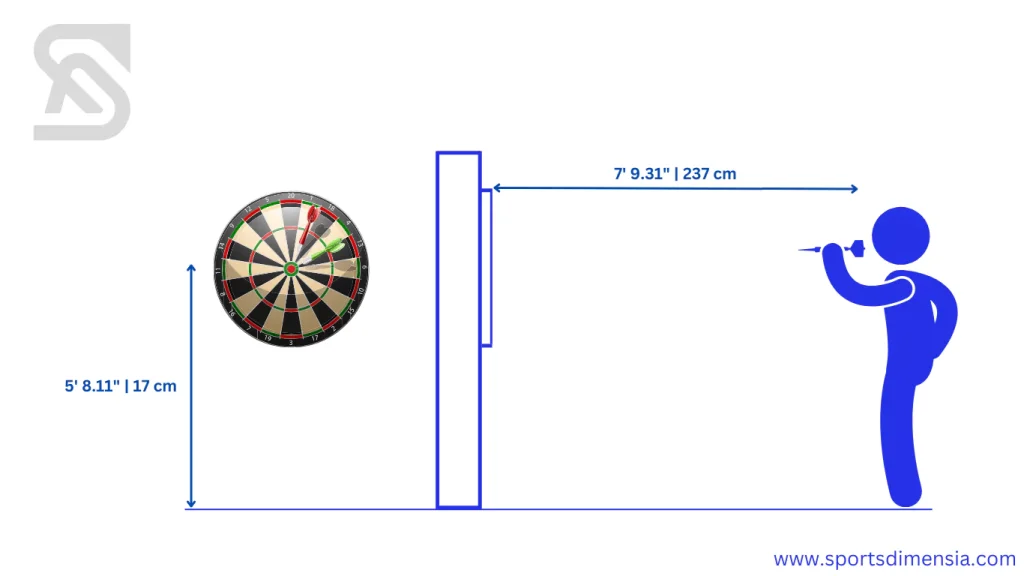
First off, let's talk about height. You don't just whack the board up anywhere, do you? Nope. There's a specific height for the center of the dartboard. We're talking about 5 feet 8 inches (1.73 meters) from the floor. Think of it as eye-level for a lot of folks, giving everyone a pretty fair shot. It’s not so high that you feel like you're aiming for the ceiling, and not so low that you feel like you're playing a carnival game.
Must Read
Why this height, you ask? Well, it’s a standard that’s been around for ages, and it creates a consistent challenge. Imagine if everyone had their board at a different height – it would be a total chaos, right? No two games would ever be the same, and it would be hard to compare scores or celebrate those epic bullseyes. So, 5'8" is the magic number.
The Throwing Line: Stepping Up to the Challenge
Now, it's not just about the board itself, but where you stand to throw. This is where the oche or throwing line comes in. This is the line you absolutely cannot cross when you release your dart. And guess what? It's a pretty specific distance away from the face of the dartboard. It's 7 feet 9 ¼ inches (2.37 meters).

Seven feet, nine and a quarter inches. That’s a good chunk of space, isn’t it? It’s not so close that you can just flick your wrist and expect a bullseye, and it’s not so far that you’d need the strength of a professional baseball pitcher. It’s a distance that requires a good balance of power and finesse. It's like finding that perfect distance for skipping stones on a lake – too close and they just plop, too far and they just sink. This distance lets you really build up a bit of momentum and get a smooth throw.
The Diagonal Distance: A Little Extra Clarity
Sometimes, you'll hear about a diagonal measurement. This is from the center of the bullseye to the front of the throwing line. And for the keen beans out there, it’s 9 feet 7 ½ inches (2.93 meters). This measurement is basically a handy way to make sure your setup is perfect. If you measure the straight distance from the throwing line to the board and the height of the board from the floor, this diagonal measurement is the hypotenuse of that imaginary triangle. It's like a triple-check to make sure everything is aligned just right.

The Dartboard Itself: A World of Numbers
Alright, let's zoom in on the board. These aren't just random circles and wedges. Each section has a specific value, and the way the board is divided is a work of art, really. The standard dartboard is a 17 ¾ inch (45.1 cm) diameter circle. That’s a pretty good size, about the size of a dinner plate, give or take. It's big enough to aim at, but small enough to make you sweat a little!
Within that circle, you've got the famous scoring sections: the single number areas, the double ring, the triple ring, and the bullseye. The bullseye itself is split into two: the outer bull (or "hazel") which is worth 25 points, and the inner bull (or "double bull") which is worth a whopping 50 points. Getting that inner bull is like hitting the jackpot on a slot machine – pure glory!
The rest of the board is divided into 20 numbered segments. These numbers aren't arranged randomly, oh no. They're placed strategically. You’ve got high numbers like 20 right next to low numbers like 1. This is designed to punish mistakes. If you're aiming for a 20 and your dart veers off a bit, you might land in the 1, which is a big difference! It keeps you on your toes, and it’s why some players can be incredibly accurate, hitting those small targets consistently.

The Rings of Power: Doubles and Triples
And then there are the rings! The thin outer ring is the double ring. If your dart lands here, you double the value of the segment you're in. So, a double 20 is 40 points – that’s a big chunk of your score! Then there’s the thin inner ring, the triple ring. Land a dart in here, and you triple the value of the segment. A triple 20? That’s a massive 60 points! That’s how you can rack up scores incredibly fast and turn a game around.
These rings are actually quite narrow. The double and triple rings are only 8mm (0.31 inches) wide. Imagine trying to hit something that small when you're under pressure! It’s a testament to the skill involved in professional darts. It’s like threading a needle while riding a roller coaster – sounds impossible, but some people make it look effortless.
Why These Numbers Matter
So, why go through all this detail about measurements? Because it’s all about fairness and challenge. If these numbers were different everywhere, the game would be completely unpredictable. Pros wouldn't be able to hone their skills to such a fine degree because the target would always be shifting. It would be like trying to set a world record in a sport where the finish line keeps moving!
These precise measurements create a universal standard. It means that a dart player in a tiny pub in England is playing by the exact same rules and on a board set up in the exact same way as a player in a massive arena in Las Vegas. It’s this consistency that allows for real skill to shine through. It’s not about luck; it’s about practice, precision, and a bit of mental fortitude.
Next time you’re near a dartboard, maybe take a moment to appreciate the engineering behind it. It's not just a game; it's a carefully calibrated challenge, designed to test your aim and your nerve. And who knows, maybe understanding the measurements will give you a new found respect for the players who can hit that triple 20 consistently. It’s pretty cool when you think about it, isn't it?