What To Say When A Muslim Dies

Okay, so let's talk about something that's, well, a bit heavy. We're diving into what to say when a Muslim friend or acquaintance passes away. Now, I know this might feel a little nerve-wracking, like you're walking on eggshells. But honestly, it's way less complicated than you might think, and a little bit of sincerity goes a long way. Think of it like learning a new dance step – a few basic moves and you're good to go!
First off, take a deep breath. Nobody expects you to be a walking encyclopedia of Islamic funerary etiquette. Your genuine sympathy and support are what truly matter. Seriously, that's the golden ticket right there. Forget the fancy phrases for a second; focus on the feeling behind them.
The Essentials: Simple & Sincere
So, what are some of the go-to phrases? Well, the most common and universally understood one is: "Inna lillahi wa inna ilayhi raji'un." Now, I know that sounds like a mouthful, right? It's Arabic, and it basically means, "To Allah we belong and to Him we return." It's a profound statement of faith, acknowledging that life is a gift from God and that death is a return to Him. Even if you can't pronounce it perfectly (and trust me, most of us stumble a bit!), your attempt will be appreciated.
Must Read
Think of it as saying, "I understand this is a difficult time, and I acknowledge the religious significance of this passing." It's a way of showing respect for their faith and their understanding of life and death. Don't stress about getting the vowels exactly right. It’s the sentiment that counts!
Another really beautiful and commonly used phrase is: "Allah yirhamuh" (for a male) or "Allah yerhamha" (for a female). This translates to "May Allah have mercy on him/her." This is a heartfelt prayer for the deceased, asking for God's forgiveness and compassion. Again, don't worry about the perfect pronunciation. A genuine attempt is like a warm hug for their soul.
These two phrases are like the dynamic duo of condolence in the Muslim community. They're respectful, they're culturally relevant, and they convey a deep sense of shared understanding during a sad time.
Beyond the Arabic: What Else Can You Say?
Now, what if you're feeling a little shy about the Arabic, or you just want to add a personal touch? Totally understandable! You can absolutely mix in your own comforting words. Here are a few ideas:
"I'm so sorry for your loss." – This is a classic for a reason. It's direct, it's empathetic, and it's always appropriate. No need to overthink it!
"My deepest condolences." – A bit more formal, but still very sincere. If you're not super close to the family, this might be a good option.

"Thinking of you and your family during this difficult time." – This shows you're offering your support and prayers, even if you're not saying specific religious phrases.
"He/She was a wonderful person. I'll always remember [a specific positive memory]." – This is where you can inject your personal connection. Did they have a great sense of humor? Were they incredibly kind? Sharing a positive anecdote can be incredibly comforting to the grieving family. It’s like sharing a little ray of sunshine on a cloudy day.
"Please let me know if there's anything at all I can do to help." – This is HUGE. And I mean, seriously HUGE. Grieving families are often overwhelmed. Offering practical help, like bringing over food, running errands, or just being a listening ear, is more valuable than a thousand flowery words. Don't just say it; be ready to follow through!
A Little Cultural Context (No Stress Required!)
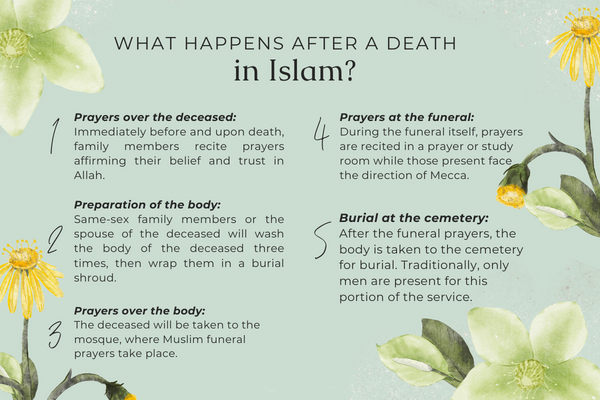
So, what happens after someone passes away in Islam? There's a focus on quick burial. This is because the belief is that the soul is in a state of transition, and it's best to return the body to the earth as soon as possible. You might hear about the funeral prayers (Salatul Janazah) happening very soon after the passing.
There's also a period of mourning, often referred to as "iddah" for women, but for general condolences, the focus is on supporting the family.
Something else you might notice is that crying is seen as a natural and acceptable expression of grief. It's not about putting on a brave face and pretending everything is fine. It's okay to be sad, and it's okay for others to see that sadness. It's a sign of love and connection.

And here's a little side note: You'll probably notice that people don't typically send flowers to Muslim funerals. This is because of the emphasis on simplicity and the focus on the spiritual aspect. So, if you're wondering what to bring, think food, or offer your time and support. Your presence is more valuable than a bouquet!
What NOT To Say: The Gentle Reminders
Just like in any situation, there are a few things it's probably best to avoid. We’re not trying to create a "don't say this" list that makes you hyperventilate, but a few gentle pointers:
"I know how you feel." – Even with the best intentions, you probably don't. Everyone grieves differently. It's better to acknowledge their unique pain.
"Everything happens for a reason." – While this might be a comforting thought for some, for a grieving person, it can sound dismissive of their pain. Let them come to that understanding in their own time.
"You need to move on." – Oh, dear. This is a big no-no. Grief is a process, and there's no timeline. Let them mourn at their own pace.
"At least they lived a long life." – Again, even with good intentions, this can minimize their current pain. Focus on the loss they are experiencing now.
"Don't cry." – As we mentioned, crying is a natural part of grieving. Telling someone not to cry is like telling a river to stop flowing. It's not helpful!
Remember, the goal is to offer comfort and support, not to try and fix their grief. You're there to be a listening ear and a steady presence.
The Post-Funeral Support: It Doesn't End There
Condolences don't just stop at the funeral. The grieving process can be long and winding. So, after the initial shock wears off, consider reaching out again.
A simple text message saying, "Just checking in. Hope you're doing okay," can mean the world. It shows you haven't forgotten them and that you continue to care.
If you knew the deceased well, consider offering to share more memories or stories about them with the family. This can be a beautiful way to keep their spirit alive and to help the family feel their loved one is still remembered.
And if you're invited to their home after the funeral for a meal or gathering, it's generally a good idea to attend if you can. These gatherings are often about offering support and comfort to the immediate family.

A Little Laughter and Lightness (Yes, Really!)
Now, I know we’ve been talking about heavy stuff, but here’s a little secret: even in times of sorrow, there can be moments of shared humanity and, dare I say, a little bit of lightheartedness. It’s not about being flippant, but about finding comfort in shared experiences and remembering the joy the person brought.
For example, if you’re at a gathering and someone shares a funny, but appropriate, anecdote about the deceased, a gentle chuckle is perfectly fine. It’s a reminder that this person lived a full life, filled with moments of happiness and laughter. It’s about celebrating their life, not just mourning their death. Think of it as a little sprinkle of stardust on a sad day.
And when it comes to offering help? Don't be afraid to be specific! Instead of saying, "Let me know if you need anything," try, "Can I bring over dinner on Tuesday?" or "I'm going to the grocery store, what can I pick up for you?" This takes the burden off the grieving person to figure out what they need and ask for it. It's like being their personal concierge of comfort!
The Uplifting Conclusion: A Shared Journey
Ultimately, when a Muslim passes away, and you’re wondering what to say, remember this: your sincerity, your compassion, and your willingness to show up are the most important things. You don't need to be an expert. You just need to be a kind human being.
The phrases "Inna lillahi wa inna ilayhi raji'un" and "Allah yirhamuh/yerhamha" are beautiful anchors of faith and comfort. But your own words of empathy and offers of practical support are equally, if not more, valuable. Think of it as building a bridge of understanding and kindness. You're not just offering condolences; you're offering a piece of your heart.
And in the grand tapestry of life, where every thread matters, your simple act of kindness in a time of grief is a thread of pure gold. It strengthens the community, it offers solace, and it reminds everyone that even in loss, we are not alone. So go forth, be kind, be present, and let your compassion shine. It’s a beautiful thing, and it will always be remembered. And who knows, maybe your genuine smile and kind words will be the little spark that helps someone’s heart begin to heal, one gentle step at a time. You’ve got this!