What Is An Objective Lens
You know, I remember the first time I ever really looked through a microscope. I was maybe seven or eight, and my dad had this old, clunky thing in his study. It smelled faintly of old paper and something vaguely chemical – probably the slide preparation stuff. He’d set up a tiny bit of pond water, swarming with what looked like microscopic water monsters. And then, he guided my eye to the eyepiece.
It was like opening a secret door. Suddenly, the mundane drop of water transformed into a bustling metropolis of tiny, wriggling, and utterly bizarre creatures. There were these little comma-shaped things darting about, and others that looked like tiny, translucent jellyfish. I was absolutely mesmerized. I think I stayed there for an hour, just utterly lost in this miniature universe. And all of that… all of that incredible detail, all of that life, was thanks to this one, unassuming part of the microscope. The objective lens.
So, what exactly is this magical little component that unlocks entire worlds invisible to the naked eye? Let's dive in, shall we? Because honestly, understanding it is way less intimidating than you might think, and it's pretty darn cool.
Must Read
The Unsung Hero of Magnification
Think of it this way: a microscope is basically a system designed to make tiny things look big. It’s not rocket science, right? But how does it actually do it? There are a few key players, but the star of the show, the one that gets the party started, is the objective lens.
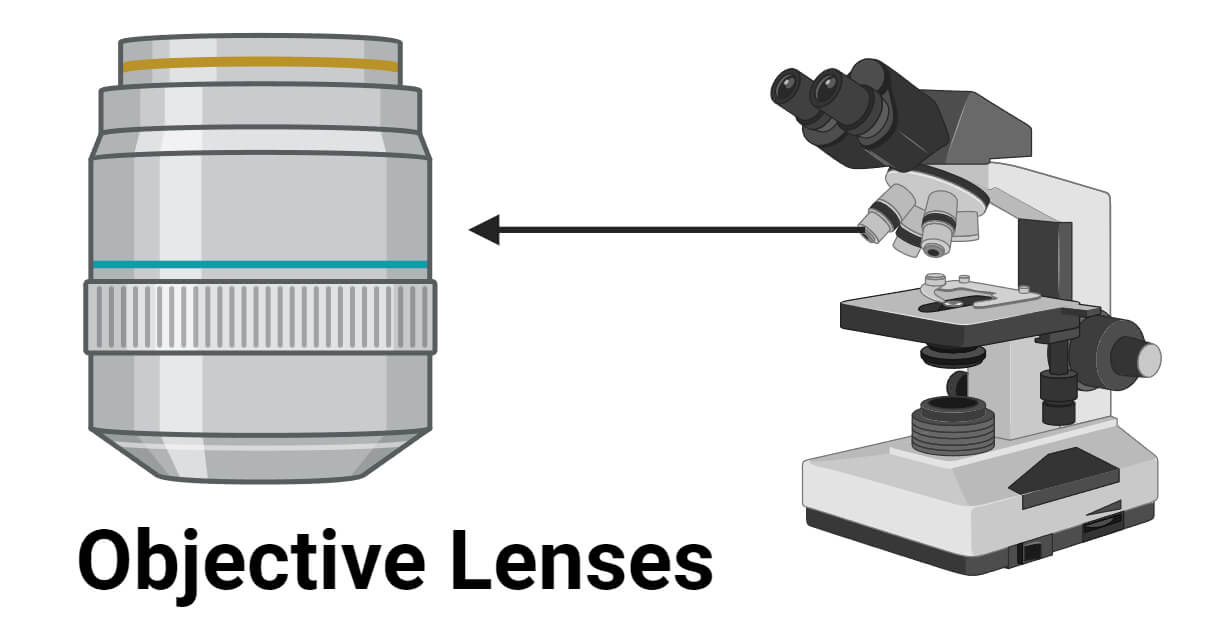
You see these lenses? They’re usually clustered together, sort of like a little metallic carousel, right above where you put your slide. They come in different strengths, and you can literally rotate them to switch between magnifications. Pretty neat, huh? It's like having a zoom dial for the microscopic world.
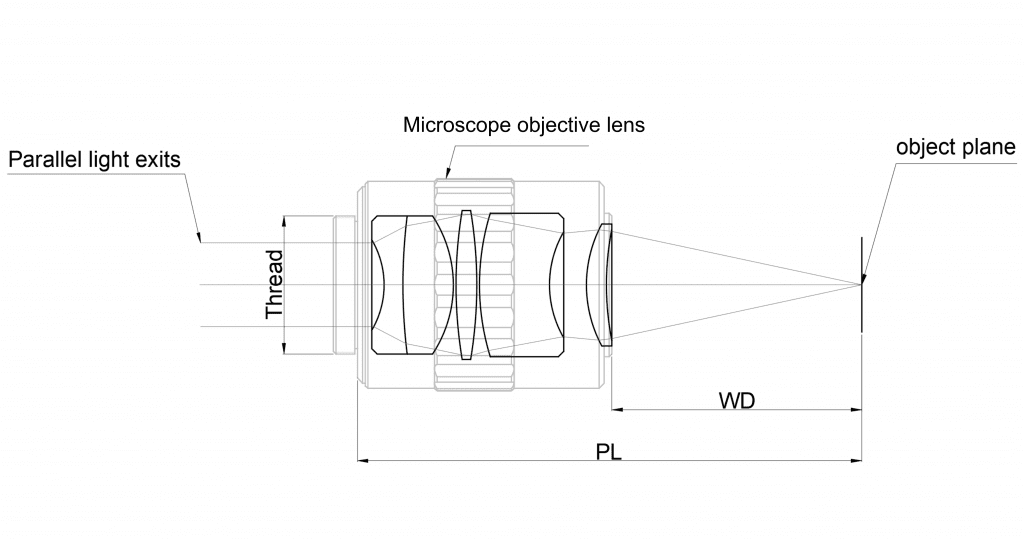
The objective lens is the one that’s closest to your specimen. This is a crucial detail, so keep it in mind. It’s the first point of contact, so to speak, with the world you’re trying to explore. And its primary job? To gather light and produce the initial magnified image of whatever it’s pointed at.
It's All About the Magnification
Let’s get a little technical, but don’t worry, we’re keeping it light. The "magnification" you see on a microscope, like 4x, 10x, 40x, or even 100x, is usually a combination of the objective lens and the eyepiece lens (the one you look through). But the objective lens contributes the lion's share of that initial magnification.
So, if you have a 10x objective lens and a 10x eyepiece, you get a total magnification of 100x (10 x 10 = 100). See? Simple multiplication. But the objective lens is the one doing the heavy lifting for that first step. It takes a tiny, almost invisible object and makes it look, well, bigger.
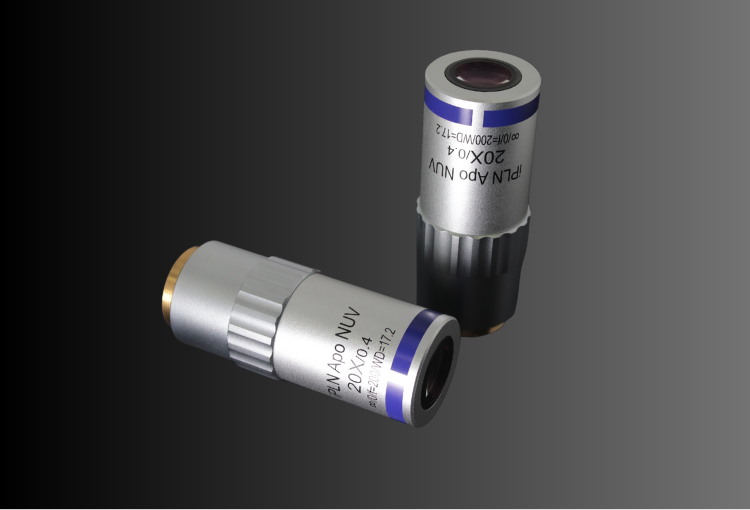
It's like a chef preparing a really delicate ingredient. The objective lens is the one doing the initial, precise slicing and dicing. The eyepiece then takes that perfectly prepared slice and makes it look like a whole gourmet meal on your plate.
More Than Just Magnification: The Resolution Game
Now, here's where things get really interesting, and honestly, where the true magic happens. Just being able to make something look bigger isn't enough, is it? If you just blew up a blurry picture, it would still be blurry, just a really, really big blurry picture. Yawn.
The objective lens isn’t just about making things look bigger; it’s about making them look sharper and revealing finer details. This is where the concept of resolution comes in. Think of resolution as the microscope's ability to distinguish between two very close points.
A lens with high resolution can show you two separate dots even if they’re incredibly close together. A lens with low resolution will just see them as one blob. And guess which lens is primarily responsible for that crucial quality? You got it – the objective lens.
This is why different objective lenses have different powers, and it’s not just about how much they magnify. Higher magnification objective lenses, for instance, typically have better resolution. They’re designed to capture those minuscule structures that make up cells, bacteria, and all sorts of other microscopic wonders.
The Numerical Aperture (NA) - Don't Run Away!
Okay, I know. Numbers and technical terms can make your eyes glaze over. But this one is important, and it’s directly related to resolution. It’s called the Numerical Aperture (NA).

Basically, the NA tells you how much light the lens can gather and how well it can resolve detail. A higher NA means more light gathering and better resolution. It’s a crucial specification printed right on the side of the objective lens, usually next to its magnification.
So, when you see a number like "0.65" or "1.25" next to "40x," that's the NA. Higher NA lenses are generally more expensive and require better quality optics and often specialized illumination techniques (like immersion oil, which we'll touch on briefly later – don't worry!).
It's like a lens's "appetite" for light and detail. A higher NA lens is hungrier, and it can "digest" more information from your specimen.
Types of Objective Lenses: A Little More About the Crew
When you look at a microscope, you’ll notice those objective lenses aren’t all identical, even if they’re on the same turret. They have different magnifications, as we’ve discussed. But there are also different types of objective lenses, each designed for specific purposes.
Achromatic Objectives
These are your workhorses, the most common type you’ll find on basic to intermediate microscopes. They’re designed to correct for two primary colors (red and blue) and bring them into focus at the same plane. This means you’ll get decent color correction and relatively sharp images. They're good for general observation and are usually more affordable. Think of them as the reliable family sedan of objective lenses.
Plan Achromatic Objectives
Building on the achromatic design, these lenses go a step further. They correct for chromatic aberration (color fringing) across a wider range of wavelengths and also for spherical aberration (blurring due to the curvature of the lens). The big advantage? They provide a flat field of view. This means the image is sharp and in focus all the way to the edges, not just in the center. This is super important when you're trying to scan across a slide or capture images. No more frustrating fuzzy edges!
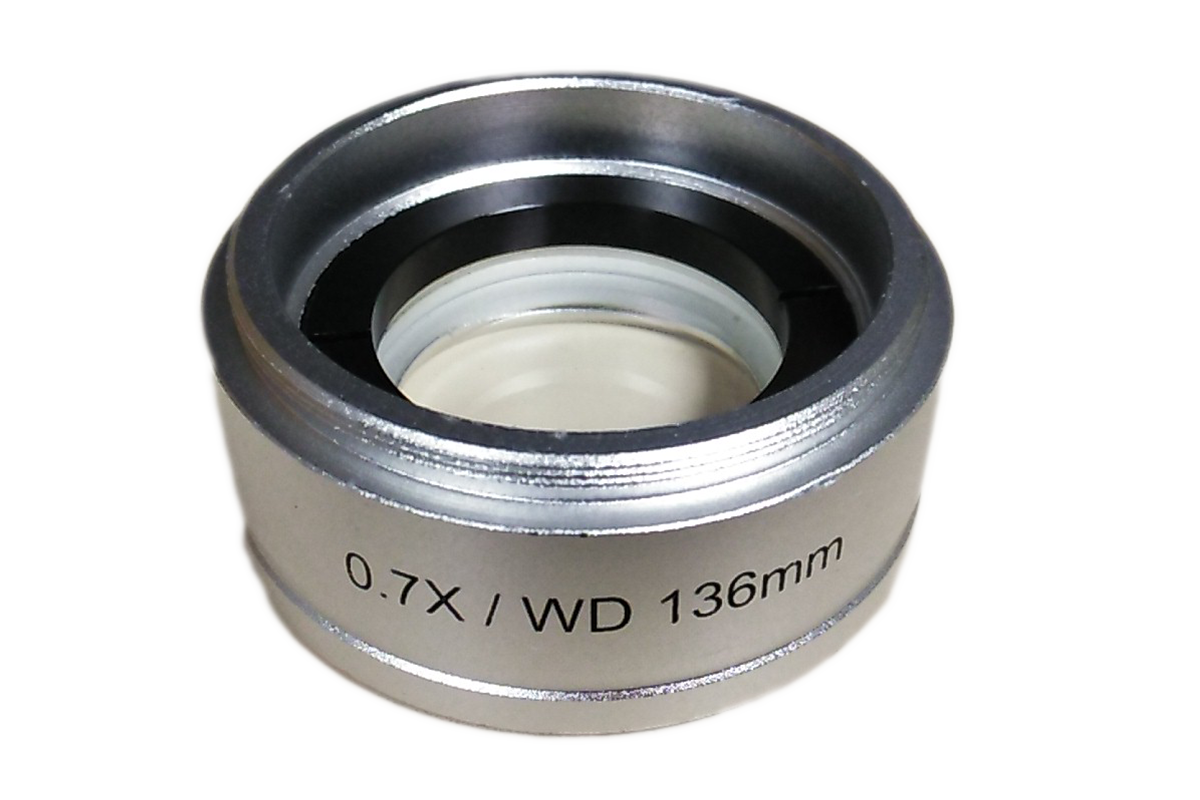
Semi-Plan Objectives
These are a bit of a middle ground. They offer better flatness of field than standard achromats but not quite as good as plan objectives. A good compromise if you don't need absolute perfection at the edges but want something better than basic. They’re like the sporty crossover version of objective lenses.
Apochromatic Objectives
Now we're talking high-end! Apochromatic (or Apo) objectives are the crème de la crème. They correct for three primary colors (red, green, and blue) and also have much better correction for spherical aberration. The result? Superb color rendition and incredibly sharp, detailed images. These are the lenses you'll find on high-end research microscopes and are essential for applications where color accuracy and fine detail are paramount, like in specialized microscopy techniques or advanced scientific imaging.
These are the performance sports cars of objective lenses – fast, precise, and designed for the most demanding tasks. Of course, they come with a price tag to match!
The "Immersion" Lenses – Getting Up Close and Personal
We mentioned immersion oil earlier, and it’s worth a brief detour because it’s directly related to the objective lens. For the highest magnifications, particularly the 100x objective, you often need to use a special type of lens called an oil immersion objective.
The problem with air is that it refracts (bends) light. As light passes from the specimen, through the slide, and into the air, some of it scatters, and you lose resolution. An oil immersion lens has a very high Numerical Aperture (NA), and when you place a drop of immersion oil between the objective lens and the slide, it creates a continuous optical medium.
This oil has a refractive index very similar to glass, so light passes through with much less bending and scattering. This allows the lens to gather more light and achieve a significantly higher resolution, letting you see even finer details at those extreme magnifications. It’s like creating a smooth, uninterrupted highway for light to travel on, instead of a bumpy, winding road.
Using oil immersion is a bit more involved (you have to clean the oil off afterward), but the payoff in terms of image quality is immense for those super-high power views.
Why Does This Matter to You?
Okay, so we've covered what an objective lens is, its role in magnification and resolution, and the different types. But why should you care about all this when you’re just trying to look at, say, a sample of your own cheek cells?
Because understanding the objective lens helps you appreciate the science behind what you're seeing. It explains why some images are sharper than others, why some microscopes cost a fortune, and why using the right lens for the job is so important.
If you're using a beginner microscope, you'll likely have achromats or maybe semi-plans. They're great for getting started! But if you're using a more advanced one, or if you're ever tempted to splurge on a better microscope, knowing about plan and apochromatic objectives can guide your purchase. You’ll know that investing in better objective lenses means investing in clearer, more detailed images.
It also means you’ll stop thinking of those little spinning lenses as just "the thingy that makes it bigger" and start seeing them for what they truly are: the gatekeepers of the microscopic world. They are the crucial first step in translating the invisible into the visible, the tiny into the discernible. Without them, our understanding of biology, medicine, materials science, and so much more would be severely limited.
So, the next time you peer through a microscope, take a moment to acknowledge the unsung hero, the objective lens. It’s working hard, right there at the forefront, to show you a universe you’d otherwise never know existed. It's pretty amazing when you stop and think about it, isn't it? The sheer power and detail that can be packed into such a small piece of glass. Truly remarkable.