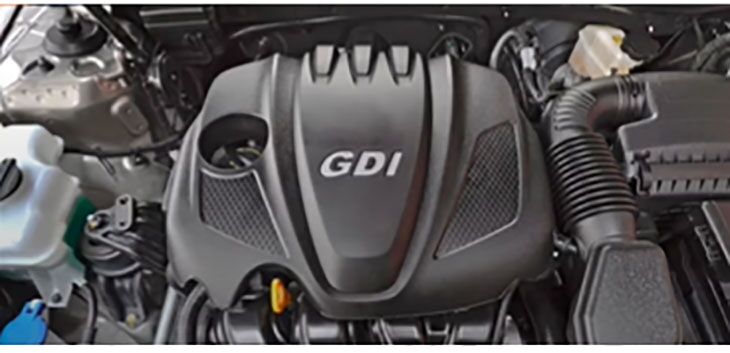
What Does Gdi Mean On A Car

Ever been cruising along, feeling pretty smug about your ride, when suddenly you see it? That little badge, that tiny inscription on the back of a car that makes you pause and think, "Huh, what does that mean?" Today, we're diving into one of those slightly mysterious but actually pretty neat car acronyms: GDI. So, grab a coffee, settle in, and let's unravel the secrets behind this automotive jargon.
You've probably seen it on a few different cars, right? Maybe a sleek sedan, a sporty hatchback, or even a sturdy SUV. It's not a brand, it's not a model name. It's a technology. And honestly, it’s one of those things that makes modern cars a lot more efficient and a bit more fun to drive. Pretty cool, huh?
So, what's the big deal with GDI? Well, it stands for Gasoline Direct Injection. Break that down, and you start to get a clearer picture. We all know about gasoline, our car's fuel. And injection, well, that's how the fuel gets into the engine, right? But the "Direct" part is where the magic happens.
Must Read
Think of your engine like a super-powered stomach. It needs fuel to run. In older cars, the fuel and air would mix before entering the cylinder – kind of like mixing your ingredients in a bowl before you bake. This was done with something called a "port injector" or even a carburetor back in the day. The fuel would get sprayed into the intake manifold, and then it would get sucked into the cylinder along with the air.
But with GDI, things get a whole lot more precise. Instead of mixing the fuel and air before they enter the cylinder, GDI injects the gasoline directly into the combustion chamber itself. It's like a tiny, high-pressure squirt gun, delivering fuel right where the action is happening. Pretty nifty, wouldn't you say?
Why is this such a big deal? Let’s think about it. Imagine you're trying to paint a wall. Would you spray the paint into the air and hope it lands on the wall, or would you aim your sprayer directly at the surface you want to cover? GDI is like that precise aiming. It allows the engine's computer to control exactly how much fuel is injected and precisely when, leading to some awesome benefits.

The Superpowers of GDI
So, what are these "awesome benefits" we're talking about? Let's break down the superpowers of GDI technology.
1. Fuel Efficiency: Making Every Drop Count
One of the biggest advantages of GDI is its superb fuel efficiency. Because the fuel is injected directly into the cylinder, it can be mixed with air in a much more controlled way. This means the engine can burn fuel more completely and efficiently. It's like having a chef who knows exactly how much spice to add to a dish to make it perfect – no waste, just pure flavour. For you, the driver, this translates to better mileage, meaning fewer trips to the gas station and more money in your pocket. Who doesn't love that?
Think about it from an environmental perspective too. Less wasted fuel means fewer emissions. So, while you're enjoying that extra mileage, you're also doing a little bit of good for the planet. It's a win-win situation, really.

2. Power and Performance: A Punchier Engine
It’s not just about saving fuel; GDI also brings more power and better performance to the table. How? Well, when fuel is injected directly into the cylinder, it actually has a cooling effect. This might sound a bit counterintuitive, but hear me out. As the fuel vaporizes, it absorbs heat from the air inside the cylinder. This lower temperature allows for a higher compression ratio within the engine.
What does a higher compression ratio mean? Essentially, it means the engine can pack more "oomph" into each combustion cycle. It's like squeezing a spring tighter before you let it go – you get a more powerful release. This results in quicker acceleration, a more responsive throttle, and a generally punchier feel when you're driving. So, that GDI badge might just be a sign of a car that feels a bit more alive on the road.
3. Reduced Emissions: A Cleaner Burn
We touched on this briefly, but it’s worth reiterating. The precise control over fuel injection offered by GDI leads to a cleaner combustion process. By injecting fuel at the exact moment and in the exact amount needed, the engine can burn the gasoline more thoroughly. This minimizes the formation of harmful pollutants. It’s like having a perfectly tuned orchestra, where every instrument plays its part flawlessly, creating a beautiful and clean sound, rather than a chaotic mess.

Modern cars are constantly evolving to be more environmentally friendly, and GDI technology is a significant part of that evolution. So, when you see that GDI badge, you can be pretty sure that car is working hard to be a good steward of the air we all breathe.
Is GDI Something to Worry About?
Now, with any new technology, there's sometimes a little bit of apprehension. You might wonder if GDI engines are more complicated, more expensive to fix, or prone to specific issues. And the honest answer is, like any engine, they have their nuances.
Because GDI systems operate at much higher fuel pressures, the injectors themselves are more sophisticated. This can sometimes mean that specialized knowledge or tools might be needed for repairs. Also, in some older GDI engines, you might have heard about something called "carbon buildup." This is where, because the fuel isn't washing over the intake valves like it used to, carbon deposits can accumulate on them over time.

However, manufacturers are constantly refining these systems. Newer GDI engines have often incorporated solutions to mitigate carbon buildup, such as advanced fuel injection strategies or even a secondary port injection system on some models. It's a bit like how smartphones have evolved; they get more powerful and capable, and while there might be initial learning curves, the benefits usually far outweigh the challenges.
For the average driver, the most important thing is that GDI technology is here to stay, and it's a sign of progress. It means your car is designed to be more efficient, more powerful, and cleaner. It’s a testament to the ongoing innovation in the automotive world.
So, What's the Takeaway?
Next time you see that little GDI badge on the back of a car, you'll know it's not just some random letters. It's a marker of a sophisticated piece of engineering that's making cars better. It’s the technology that allows your engine to be more fuel-efficient, more powerful, and cleaner.
It’s like a secret handshake between your car and the road, a subtle nod to the smart design under the hood. So, you can drive on, a little more informed, a little more appreciative of the technology that makes your journey smoother, more economical, and more enjoyable. Pretty neat, right? Keep an eye out for those badges – they’re a little peek into the future of driving, happening right now!