What Does Cyl Mean On Eye Test

Ever been to the eye doctor and stared at that big, blurry chart with all the letters? You know, the one where you squint and tilt your head like a confused owl trying to read a secret message? And then, there it is, that word that sounds like it belongs in a fancy science lab: "CYL". What on earth is it doing there? Is it some kind of secret code for "you need stronger glasses, my friend"? Well, buckle up, because that little "CYL" is more interesting, and maybe even a little more heartwarming, than you think.
Imagine your eye is like a perfectly round bouncy ball. When light comes in, it hits all parts of that ball evenly and focuses beautifully on the back, giving you a crystal-clear picture of the world. Easy peasy. But sometimes, our eyes aren't quite as perfectly round as we'd like. They might be a little more like a rugby ball, or maybe even a lumpy potato. This isn't your fault! It's just how you're built, and honestly, it adds a certain je ne sais quoi to your unique vision.
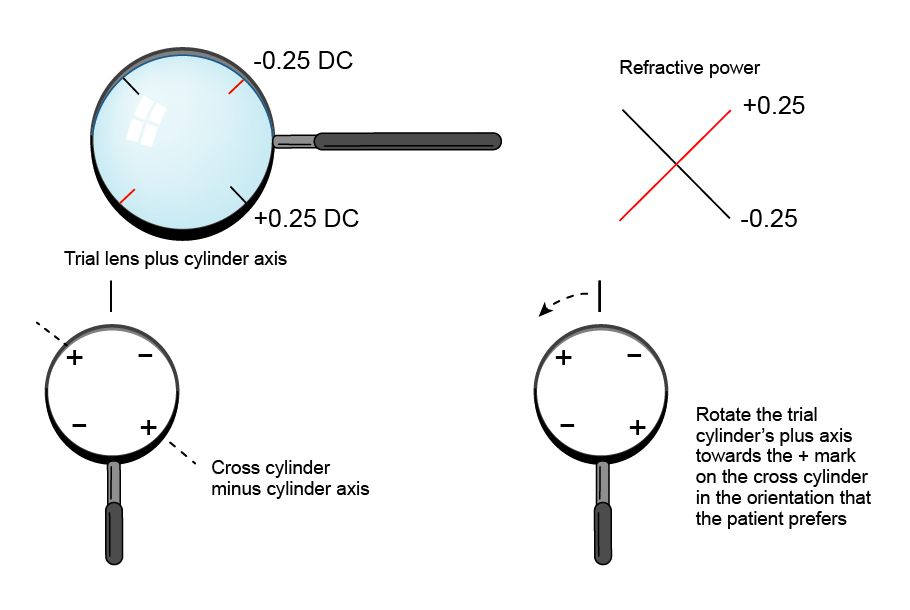
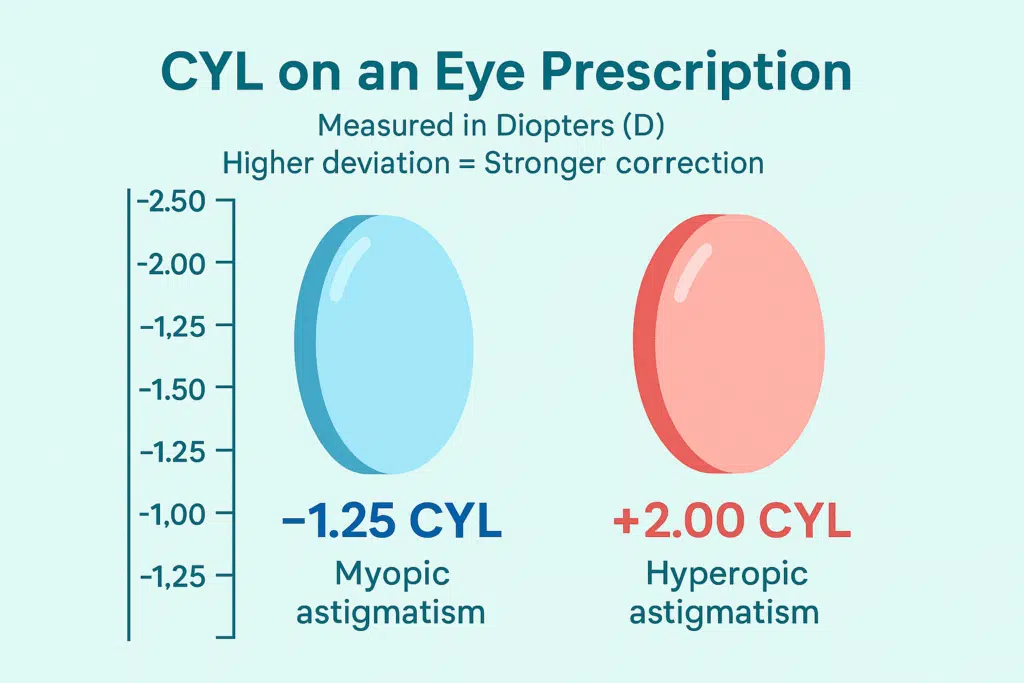
This is where "CYL", short for "Cylinder", comes into play. It's not a diagnosis of doom, or a sign that your eyes are plotting a rebellion. Instead, it's a way for your eye doctor to say, "Hey, your eye is a little bit shaped differently in one direction, and we can help you see better because of it!" Think of it as a special detail, like the unique grain on a piece of wood, or the way a specific cloud forms a funny shape. Your eye's shape is just... you.
Must Read
"CYL" is like a tiny, gentle nudge to your prescription, helping your lenses do a little extra work to smooth out those delightfully imperfect curves of your eye.
The "CYL" number on your prescription isn't about making things sharper in a general sense, like boosting the contrast on a photograph. It's more about correcting for a specific kind of blur that happens because of that slightly oval shape. This condition is called astigmatism. Now, doesn't astigmatism sound a bit dramatic? Like something a villain in a superhero movie would have? But in reality, it's incredibly common. So common, in fact, that it's almost more surprising if someone doesn't have a little bit of it!
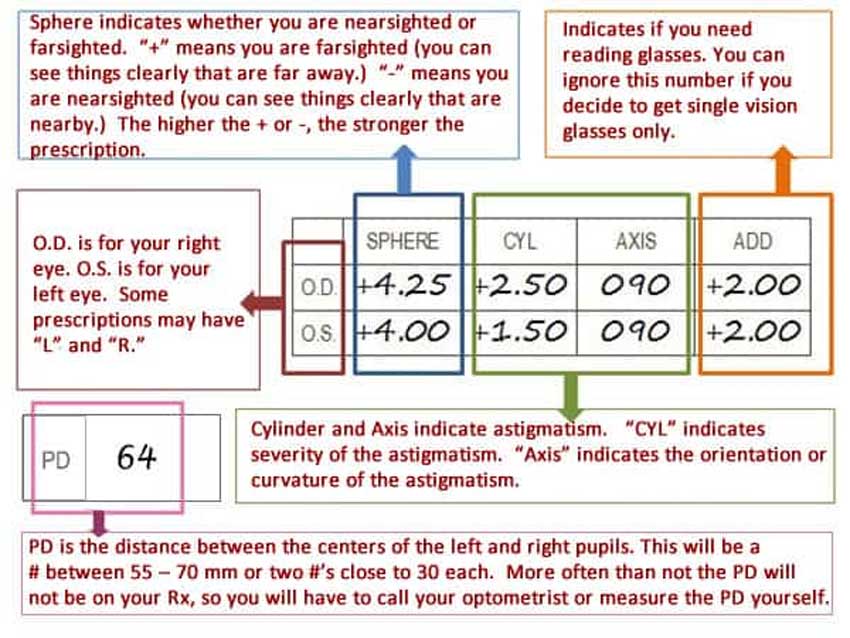
When you have astigmatism, light doesn't focus at a single point on your retina. Instead, it focuses at multiple points, which can lead to blurry or distorted vision at all distances. Imagine trying to watch a movie where the picture keeps wiggling and shaking – that's a bit like what your brain is trying to process without the "CYL" correction. It’s like trying to drink a smoothie through a straw that’s been squashed a bit; the flow isn’t quite right. The "CYL" correction, along with another number usually found next to it called the "Axis" (which tells the doctor which way that oval shape is pointing), works like a magical, perfectly shaped straw, allowing the light to flow smoothly and focus correctly.
The surprising part? Many people with mild astigmatism don't even realize they have it! Their brains are so clever that they've learned to compensate. They might just get a bit more tired than usual after reading or doing close-up work, or notice things are a tiny bit fuzzier at night. It's like having a constant, low-level hum in the background that you've gotten used to, but once it's gone, you realize how much more peaceful it is.
Think about artists. Many artists have a keen eye for detail, and some might have slight astigmatism. Does it hinder their creativity? Absolutely not! In fact, some argue that this subtle difference in their vision might even contribute to their unique perspective and appreciation for texture and form. It's a reminder that imperfections aren't always flaws; they can be features that add depth and character. Your "CYL" is part of the unique way you perceive the world, and the prescription is simply fine-tuning that perception so you can enjoy it to its fullest.
So, the next time you're at the eye doctor, and you see that little "CYL" peeking out from your prescription, don't sigh. Instead, give a little nod of appreciation. It's a testament to the incredible complexity and ingenuity of your own body. It's a little piece of the puzzle that allows you to see the vibrant colours of a sunset, the intricate details of a loved one's face, or the funny little twitch of your pet's ear. That "CYL" isn't just a number; it's a tiny, but mighty, contributor to the beautiful, clear vision you experience every single day. It’s a whispered promise from your eye doctor: "We've got your back, and your unique eye shape, covered."