What Are The Frets On A Guitar

Ever looked at a guitar and wondered about those little metal strips running across the neck? You know, the ones your fingers get all tangled up on when you're first trying to strum a chord? Yep, we're talking about the frets! And guess what? Understanding these nifty little things can unlock a whole new world of musical joy. Seriously, it's not as complicated as it looks, and it's definitely more fun than trying to assemble IKEA furniture, right?
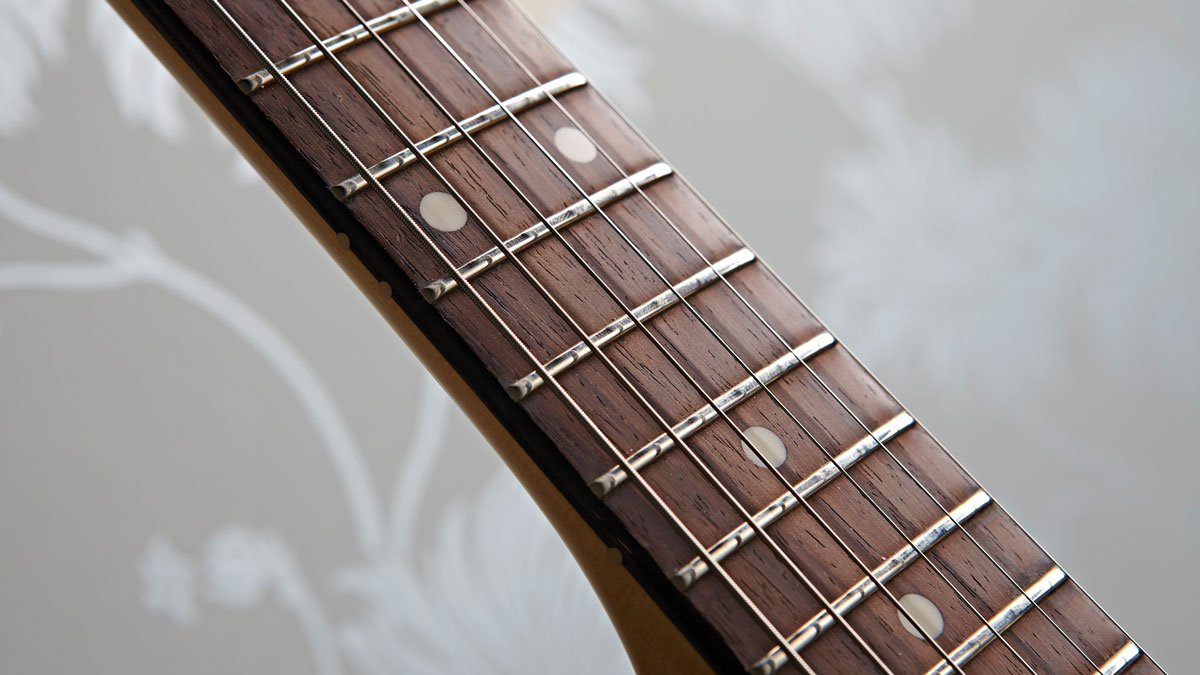
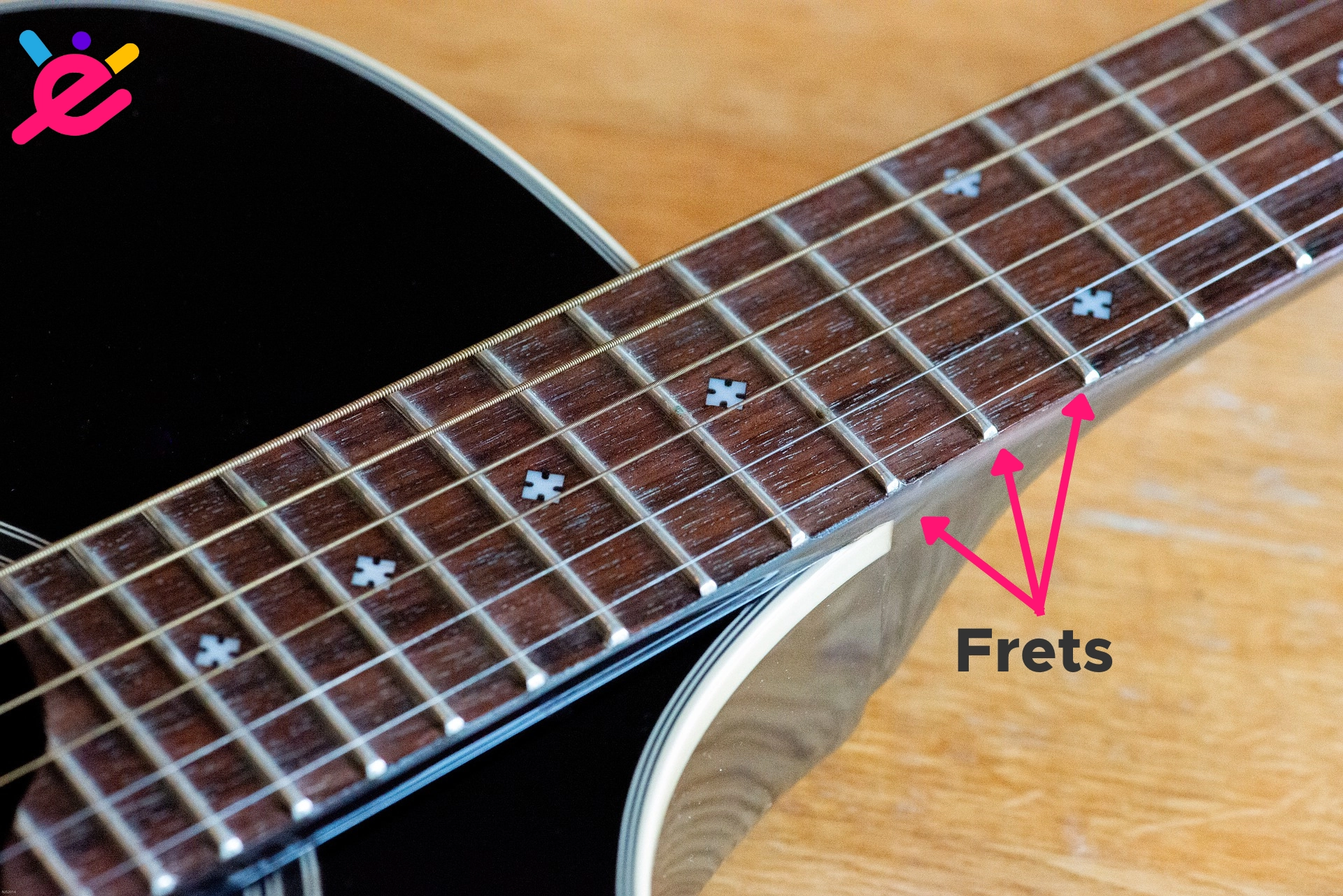
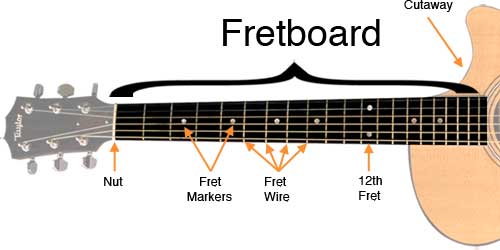
So, what exactly are these frets? Think of them as your guitar's built-in recipe book for making different notes. They're those thin, raised bars of metal (usually nickel-silver or stainless steel) that are pressed right into the fretboard. When you press a guitar string down behind a fret and pluck it, the string vibrates at a specific length. This, my friends, is what creates a particular pitch, a distinct musical note. Pretty cool, huh?
The Magic of the Fretboard
Imagine the fretboard as a long, skinny staircase. Each fret is like a step. As you move up the neck (towards the body of the guitar), each fret represents a higher note. It’s like climbing a ladder towards the sky, but instead of reaching the clouds, you're reaching for those sweet, sweet melodies! The distance between each fret is precisely calculated, and that's the genius of it. They're not just randomly placed; they're scientifically positioned to give you the tempered scale. Don't let that fancy term scare you; it just means the notes are tuned so they sound good together, creating harmony. It’s like the universe’s way of saying, "Hey, make some beautiful noise!"
Must Read
Why is this so important? Because without frets, playing in tune would be an absolute nightmare! You'd have to guess where to put your fingers to get the right note, and let's be honest, most of us aren't born with perfect pitch. Frets give you a physical reference point. They guide your fingers, making it so much easier to hit the right notes and play songs that actually sound like songs, not just a cat walking across a piano. And for beginners, that's a huge confidence booster!
Counting Those Clues
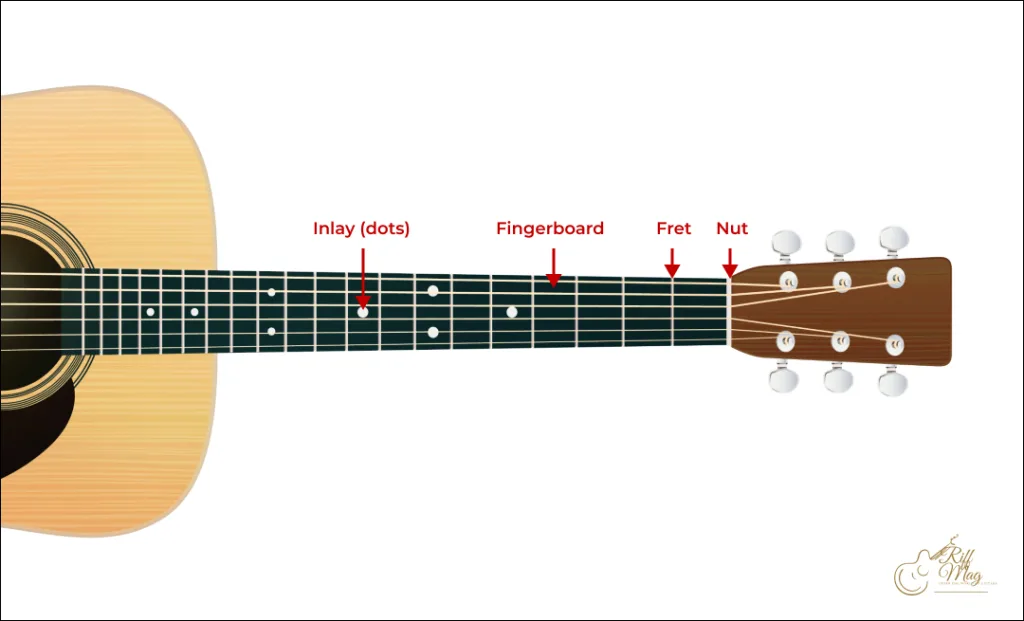
You might be wondering, how many frets does a guitar usually have? Well, it varies! Most acoustic and electric guitars have around 20 to 24 frets. The standard is often 22 frets, but you'll find variations. Each fret is numbered, starting from the one closest to the headstock (the tuning part of the guitar). This is called the first fret. Then comes the second, third, and so on. These numbers are your cheat sheet! When someone tells you to play a "G chord on the third fret," you know exactly where to go. It’s like having a secret decoder ring for music!
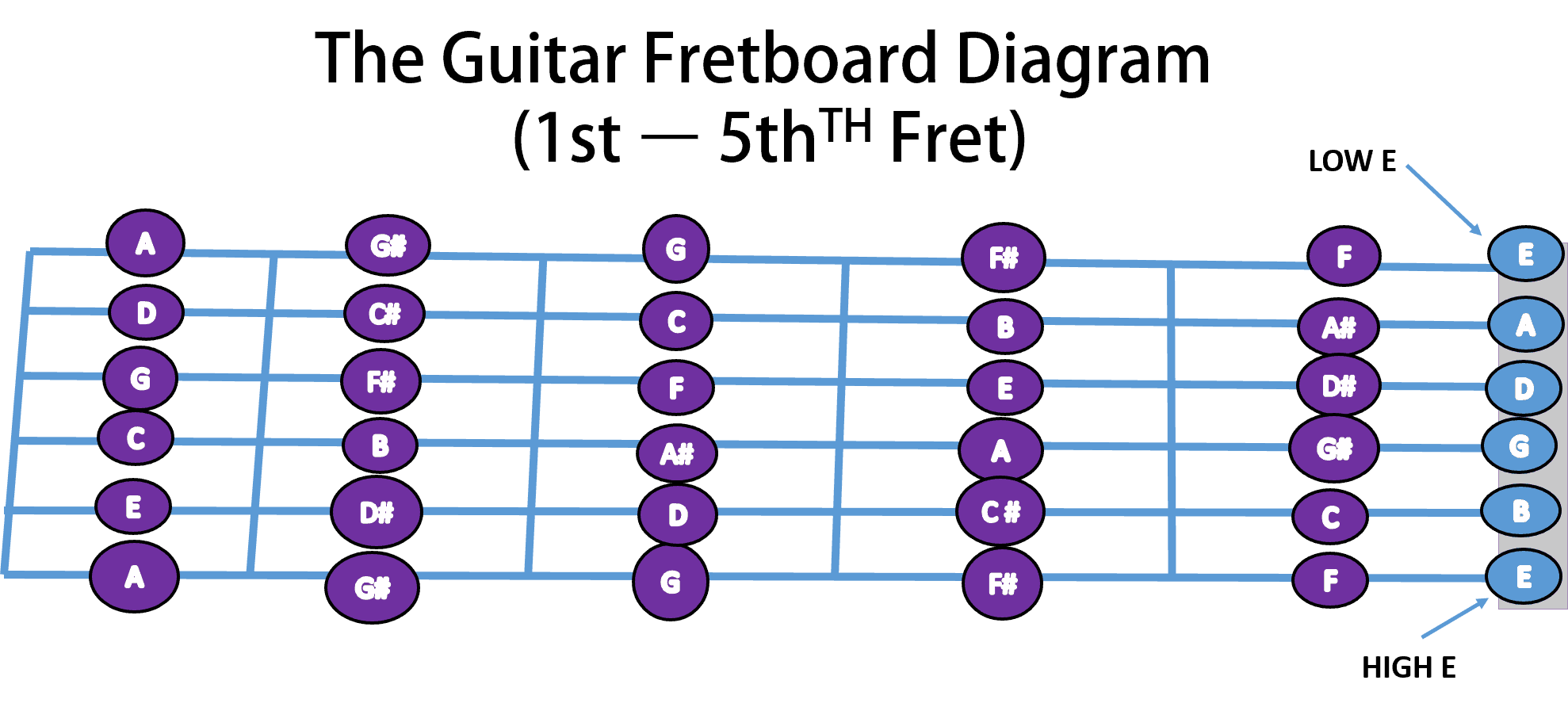
Think about it: when you learn to play a few basic chords – like C, G, D, and E minor – you’re essentially learning a few key positions on those frets. Each position unlocks a whole new set of musical possibilities. It’s like collecting Pokémon, but instead of catching creatures, you’re collecting sounds! And the more frets you explore, the more sounds you unlock.
More Than Just Metal Bars
The frets aren't just about making sounds; they also influence how the guitar feels and plays. The height of the frets, called fret height, can affect how much pressure you need to apply to your strings. Lower frets might require a lighter touch, which can be great for fast playing. Higher frets, sometimes called "jumbo frets," can make it easier to bend strings and give your fingers a bit more room. It’s like choosing the right shoes for your feet – the right frets can make your playing experience so much more comfortable and expressive!
And what about those different materials we mentioned? Nickel-silver frets are super common and affordable. Stainless steel frets, on the other hand, are known for being incredibly durable and resistant to wear. They also have a slightly smoother feel, which some players absolutely love. It’s a subtle difference, but for a dedicated musician, these little details can make a big impact on their playing journey. It's all part of the personalization of your instrument, making it truly yours.
The Journey of a Thousand Songs
So, why should you care about frets? Because they are the gatekeepers of melody! They are the building blocks of every song you've ever loved. From the simple strumming of a campfire song to the intricate solos of your favorite rock stars, those little metal strips are doing all the heavy lifting. They translate your physical effort into beautiful music.
Learning to navigate the frets is like learning a new language – the language of music. And the more you practice, the more fluent you become. You start to feel the neck of the guitar, you instinctively know where to place your fingers, and soon, you're not just playing notes; you're telling stories. You're expressing yourself. You're adding your own unique voice to the world.
Don't be intimidated by the fretboard. Embrace it! Think of each fret as an invitation to explore, to experiment, and to discover. Every press of a string behind a fret is a step on your musical adventure. And the amazing thing is, this adventure has no end. There's always a new chord to learn, a new melody to discover, a new song to write. So, the next time you pick up a guitar, take a moment to appreciate those humble frets. They're the unsung heroes of your musical journey, ready to help you create something truly special.
Ready to make some noise? The frets are waiting! Go on, give it a strum. You might just surprise yourself with the magic you can create. The world is your oyster, and the fretboard is your pearl!