School Leaving Age

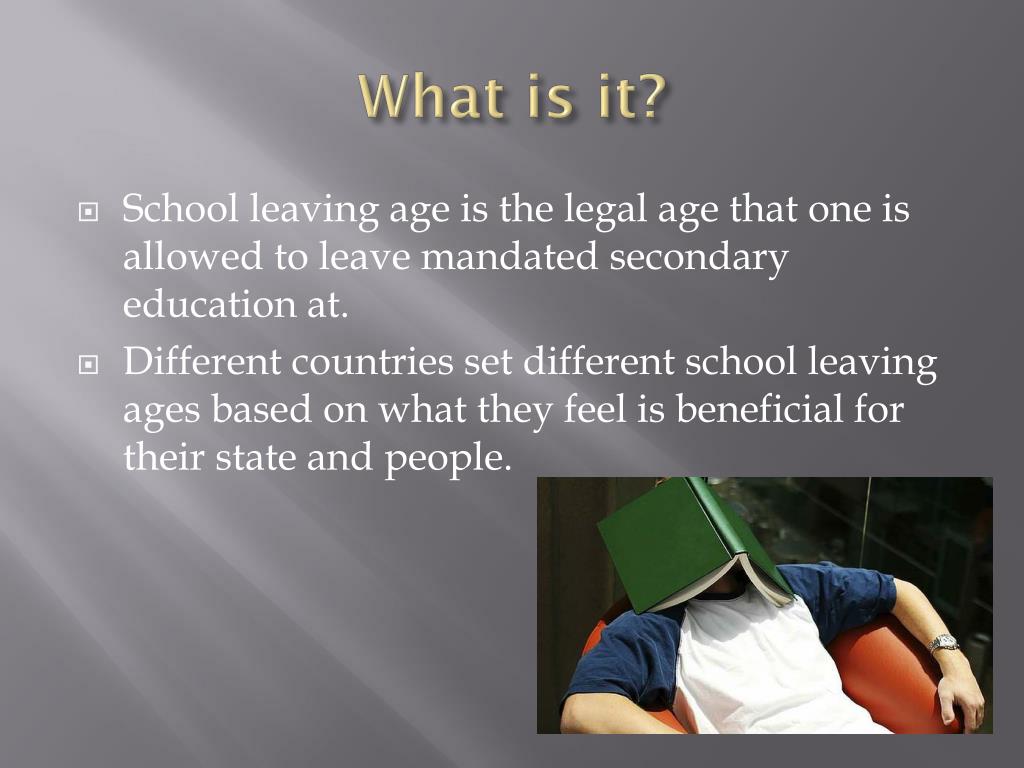
So, let's chat about something that feels both super personal and also a big deal for society: the school leaving age. It's one of those topics that can spark lively debates over brunch or, you know, during a particularly tedious faculty meeting. But honestly, when you strip away the policy jargon, it's really about figuring out the best time for young people to… well, leave the structured world of education and step into whatever comes next. It's a rite of passage, a pivot point, a moment that can feel like both a grand opening and a slightly terrifying closing of a chapter.
Here in the UK, the current situation is that young people have to stay in some form of education or training until they're 18. This could be full-time schooling, an apprenticeship, or traineeship, or even part-time education alongside work or volunteering. It’s a pretty robust framework designed to give everyone a solid foundation before they fully launch themselves into the adult world. But it's not the same everywhere, is it? Different countries have different cut-off points, some earlier, some later, and each has its own logic and historical context.
Think about it: the idea of compulsory education itself is a relatively modern invention. For centuries, learning was far more organic, passed down through families, apprenticeships, or just… observing the world. The concept of formal schooling for everyone is a big shift, really kicked into high gear during the industrial revolution. Suddenly, you needed a workforce that could read, write, and understand basic maths, but also, you needed to keep kids out of dangerous factories! So, in a way, the school leaving age has always been a negotiation between societal needs, economic realities, and, hopefully, the well-being of the young people themselves.
Must Read
The "Why" Behind the Age
So, what’s the magic number 18? Well, it’s not really magic, more like a carefully considered point. The argument often boils down to a few key things. Firstly, there’s the cognitive development aspect. By 18, most young people have reached a certain level of maturity, both intellectually and emotionally. They’re generally better equipped to make informed decisions about their future, understand complex career paths, and navigate the responsibilities that come with adulthood.
Then there's the economic argument. Keeping young people in education or training for longer is seen as a way to boost the overall skill level of the workforce. A more educated and skilled population can lead to greater productivity, innovation, and, ideally, a stronger economy for everyone. It’s a bit like investing in a long-term asset – you put in the effort now for a better return later.
And let’s not forget the social aspect. Extended education can expose young people to a wider range of ideas, cultures, and perspectives. It provides opportunities for them to develop crucial social skills, build networks, and become more engaged citizens. It’s about shaping well-rounded individuals who can contribute positively to society, not just economically, but also culturally and civically.
A Trip Down Memory Lane (or Just, Like, History)
It’s fascinating to look back, isn't it? In the early 20th century, the school leaving age in the UK was much lower, often around 12 or 14. Think of the lives of young people then – they were expected to be working, contributing to the family income, or learning a trade from a very young age. It was a different world with different pressures. The rise of social reform movements and a growing awareness of child labour paved the way for gradual increases in the leaving age.

For instance, the Education Act of 1944 significantly raised the school leaving age to 15, and then it was further raised to 16 in 1972. Each step was a big deal, reflecting changing societal values and a belief in the importance of education. It wasn't always smooth sailing, of course. There were debates, concerns about costs, and questions about whether everyone needed that much schooling. But the trend has generally been towards extending the period of formal learning or structured training.
Interestingly, the idea of "leaving school" isn't always a clean break. For many, it’s more of a transition. Think about the apprenticeships of old – you left school, but you were still learning, just in a very different, hands-on way. Modern apprenticeships carry on this tradition, blending work experience with formal study. It’s a fantastic model that many people find much more engaging than sitting in a classroom all day.
The "What Next?" Dilemma
So, if you’re 16, or even 17, and you’re thinking about what comes after the structured school day, what are your options? Well, the world is your oyster, or at least, it’s trying to be! As mentioned, there are apprenticeships, which are seriously gaining traction. They're a great way to earn a wage while gaining qualifications and real-world experience. Imagine learning to be a chef, a software developer, a mechanic, or even a solicitor, all while being paid and mentored. Pretty sweet, right?
Then you have traineeships. These are a bit like stepping stones, designed to get you ready for an apprenticeship or a job. They usually involve a work placement and some training, giving you a taste of a particular industry and helping you build essential skills. It’s like a trial run for your career.
And of course, there’s still the option of continuing with formal education, perhaps in a sixth form college or a dedicated further education college, leading to A-levels, BTECs, or other qualifications that can then open doors to university or higher-level apprenticeships. It's all about finding the path that best suits your strengths, interests, and future aspirations.

Cultural Cues and Pop Culture References
It’s funny how often this topic pops up in our cultural consciousness. Think about films like Billy Elliot, where the protagonist’s passion for ballet clashes with the traditional expectations of his working-class community. His journey is one of defying limitations and finding his path, even if it meant leaving the familiar behind. Or consider the countless coming-of-age stories in books and TV shows where the end of formal schooling marks a significant turning point, a moment of freedom, or the beginning of a grand adventure.
Even older references, like Oliver Twist, while depicting a much harsher reality, still highlight the transition from a rigidly structured, often exploitative, upbringing to a struggle for independence and a place in the world. The narrative arc often involves characters trying to find their footing, to make something of themselves outside the confines of predefined roles. It speaks to that universal human desire for self-determination.
In a more modern context, social media is flooded with young people sharing their post-school journeys – be it an apprenticeship vlog, a university life update, or a 'day in the life of a trainee' post. It’s a digital tapestry of diverse paths, showcasing that there’s no single "right" way to do things. This constant stream of information and inspiration can be incredibly valuable for those on the cusp of making these big decisions.
The Lifelong Learning Angle
But here’s the thing that gets me really excited: the idea that "leaving school" doesn't mean "stopping learning." In this day and age, with the pace of change, lifelong learning isn't just a buzzword; it’s a necessity. The skills you learn today might be obsolete in a few years, so staying curious and adaptable is key.

Whether you’re on an apprenticeship, at university, or already in the workforce, there are so many ways to keep your brain ticking. Online courses (hello, Coursera and edX!), workshops, industry events, podcasts, books – the opportunities to expand your knowledge are endless. It’s about cultivating a mindset of continuous growth, seeing every experience as a learning opportunity.
Think about the people you admire. Often, they're not just good at one thing; they're constantly learning, evolving, and picking up new skills. It's this intellectual agility that allows them to thrive in a rapidly changing world. So, even after you’ve technically "left" formal schooling, the learning journey is far from over. It just takes on a different, perhaps more self-directed, form.
Fun Facts to Ponder
Did you know that in some parts of the world, particularly in developing nations, the school leaving age is significantly lower due to economic pressures? This highlights how global policies are often shaped by vastly different circumstances.
And here’s a quirky one: the concept of a "gap year" – taking a break between school and further education or work – has become increasingly popular, especially in countries like Australia and the UK. It’s a modern interpretation of taking time to explore, travel, and self-discover before diving into the next big commitment. It’s like hitting the pause button intentionally.
Also, consider the historical impact of unions and worker advocacy. Many of the pushes to increase the school leaving age were driven by a desire to protect young workers from dangerous conditions and exploitation. So, in a way, our current system is a legacy of social justice movements from generations past.
Navigating the Transition: Practical Tips
Okay, so if you’re a young person (or you know one!) facing this transition, what are some real-world tips?
- Self-Reflection is Key: Before you jump into anything, take some time to think about what you actually enjoy. What subjects light you up? What kind of environment do you thrive in? Don't just follow the crowd or pick the most "prestigious" option. Your gut instinct is often a good compass.
- Talk to Everyone: Seriously, pick the brains of anyone who will listen. Talk to people in careers you find interesting, ask your teachers, your parents, older siblings, friends’ parents. The more perspectives you gather, the clearer your own path might become.
- Explore Your Options (Really Explore): Don't just glance at prospectuses. Attend open days, go to careers fairs, try taster sessions if they’re available. Get a feel for the different environments and courses.
- Consider the "Why": Why are you choosing this path? Is it because you’re passionate about it? Or is it because someone else thinks you should? Understanding your motivations will help you stick with it when things get tough.
- Embrace the Learning Curve: Whatever you choose, there will be challenges. That’s normal! The key is to see them as opportunities to learn and grow, rather than insurmountable obstacles.
And for parents and educators, it’s about support, not pressure. It’s about providing guidance, opening doors, and helping young people find their own voices and their own directions. It's a delicate dance of letting go while still being a steadying presence.
A Smooth Sail or a Rough Sea?
Ultimately, the school leaving age is a framework, a guideline. Life, as we all know, rarely fits neatly into boxes. Some young people are ready to fly the nest of formal education earlier, armed with practical skills and a clear entrepreneurial spirit. Others benefit immensely from the extended academic exploration and structure that further education provides. The aim, I suppose, is to create a system that is flexible enough to accommodate these diverse needs and aspirations.
The debate about whether the leaving age should be raised or lowered is ongoing, and it’s likely to remain so. It’s a conversation that reflects our evolving understanding of childhood, adolescence, and the demands of the modern world. It's about finding that sweet spot where young people are challenged, supported, and ultimately empowered to embark on their unique life journeys.
Daily Life Reflections
Thinking about the school leaving age makes me reflect on my own journey, and perhaps it does for you too. Whether it was a dramatic leap into the unknown at 16, a more gradual transition to higher education, or even a career change later in life, there’s a common thread: the constant need to learn and adapt. Every day, we make micro-decisions that shape our path, just like young people deciding what to do after school. It’s about curiosity, about not being afraid to try new things, and about understanding that sometimes the most rewarding journeys are the ones we forge ourselves. It's a reminder that growth isn't confined to classrooms; it's woven into the fabric of our everyday lives, in the conversations we have, the experiences we embrace, and the continuous quest to become a slightly better, slightly wiser version of ourselves.