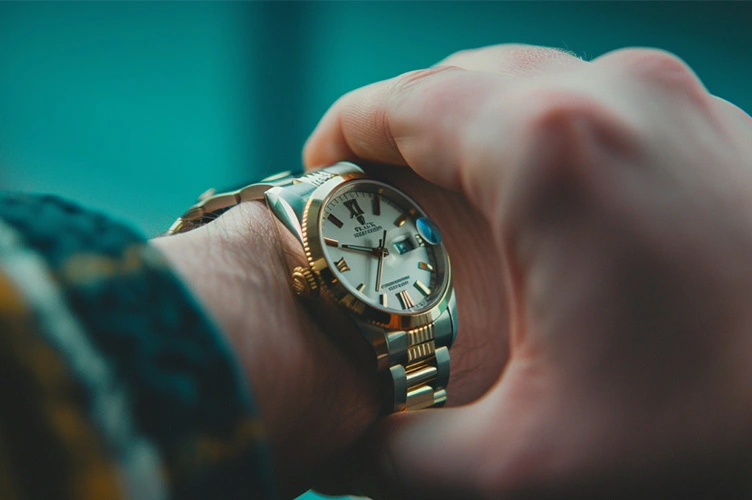
On What Hand Does A Watch Go

Hey there, time-travelers and style mavens! Ever find yourself staring at your wrist, watch in hand (pun intended!), and suddenly a wild question pops into your head: "On which hand does a watch actually go?" It’s one of those seemingly simple things, isn't it? Like, "which way does the toilet paper roll go?" (Spoiler alert: over is superior, fight me!). But with watches, it’s a little less… controversial, and a lot more about comfort and convention. Let's dive into this age-old conundrum, shall we?
So, here’s the deal: the overwhelming majority of people wear their watches on their non-dominant hand. For most of us right-handed folks, that means the left wrist. And for the lefties out there, guess what? It’s usually your right wrist. Simple, right? You'd think that would be the end of the story, but oh no, my friends. The universe, in its infinite wisdom and sometimes baffling complexity, likes to throw in a few curveballs.
Why the Non-Dominant Hand? Let’s Break It Down!
There are some pretty solid, practical reasons for this convention. Think about it: if you're right-handed, your right hand is doing most of the heavy lifting, the scribbling, the high-fiving, the general doing-of-things. Would you want a clunky watch strap or a shiny watch face getting in the way of all that important action? Probably not! It’s like trying to write a love letter with a whole pizza box strapped to your writing hand – cumbersome and frankly, a little weird.
Must Read
Wearing your watch on your non-dominant wrist means you’re less likely to:
- Scratch or damage your watch while you’re busy being awesome with your dominant hand.
- Have the watch dig into your wrist during activities that involve a lot of wrist movement (think playing sports, or, you know, aggressively gesturing during a passionate debate).
- Be constantly fiddling with it because it’s in the way. We’ve all been there, right? That annoying little tickle, that slight snag on your sleeve… it’s enough to drive a person to wear… a digital pedometer. (Shudder.)
So, for everyday comfort and practicality, the non-dominant hand wins the popularity contest. It just makes sense for the flow of life. Your dominant hand gets to be free, unburdened by the ticking tyranny of a timepiece.
But Wait, There’s More! The Case of the Dominant Hand Wearers
Now, before you get too comfortable in your non-dominant-hand-wearing bliss, let me introduce you to the rebels, the mavericks, the folks who dare to defy convention! Yes, some people actually wear their watches on their dominant hand. And you know what? That's totally okay!
Why would someone do this? Well, there are a few reasons:

Personal Preference: Sometimes, it just feels better! Maybe the crown (that little knob you use to set the time) is more comfortable on the other side, or perhaps they just like the way it feels and looks. It's their wrist, their rules, their fabulous watch!
Specific Watch Design: Some watches have crowns placed in a way that might be a bit pokey or uncomfortable on the non-dominant wrist. Or, perhaps the clasp on the bracelet is designed in a way that’s easier for them to fasten on their dominant hand. It’s all about ergonomics, baby!
Visibility and Ease of Checking: For some, especially those who need to check the time frequently, having it on their dominant hand means a quicker, more instinctive glance. They might be driving, holding something, or just on the go, and that extra fraction of a second saved could be crucial. Or, you know, it could be the difference between knowing if they’re late for a really important… nap.
Historical/Cultural Quirks: While less common for everyday wear today, there were times and situations where wearing a watch on the dominant hand might have been more prevalent due to specific tasks or even military traditions. Think of a soldier needing to check their watch quickly during a tactical maneuver. Speed and efficiency were key!

It Just Looks Cooler (Subjective, Of Course!): Let’s be honest, sometimes it’s purely an aesthetic choice. Some people feel it balances their look, or they just dig the slightly unconventional vibe. And who are we to judge? If it makes you feel like a million bucks, then rock that dominant-hand watch with pride!
The Case of the Crown: A Subtle, Yet Significant Detail
Ah, the crown! That little textured nubbin that we all know and love (or sometimes wrestle with). Where it sits can actually influence your watch-wearing hand choice. Most watches are designed with the crown positioned on the right side of the watch case. This is for the right-handed majority, allowing them to easily reach the crown with their dominant thumb while the watch is on their left wrist.
However, some watches, especially those designed with lefties in mind (or just as a stylistic choice), might have the crown on the left side. If you’re a righty wearing a watch with a left-side crown on your left wrist, that crown might be digging into your hand. In that situation, switching it to your right wrist might feel infinitely more comfortable. It’s like finding the perfect pillow after a long day – pure bliss!
Conversely, if you’re a lefty and prefer to wear your watch on your left wrist (going against the norm for lefties!), and the crown is on the right side of the watch, it might be perfectly comfortable for you to operate with your left thumb. See? It's not always a rigid rule book!

The "No Rules, Just Style" Brigade
Here’s the real tea, the absolute truth, the juicy gossip that you’ve been waiting for: there is no hard and fast, universally mandated rule that says you must wear your watch on a specific hand. This isn’t a decree from on high, etched in stone by the Timekeeping Council (though I wouldn’t be surprised if they have a secret meeting in a dimension where time flows backward). It’s a convention, a guideline, a generally accepted practice.
Think of it like this: you can wear your socks on your hands if you really want to. Will it be comfortable? Probably not. Will you look like a culinary genius attempting a very avant-garde sock puppet show? Possibly. But ultimately, it’s your sock-wearing, or in this case, your watch-wearing choice!
So, if you’ve always worn your watch on your left and it feels… well, a little off lately, try it on your right. If you’re a lefty who’s always sported your watch on the right and you’re feeling a sudden urge to experiment, give the left wrist a whirl! You might be surprised at what feels right (pun totally intended, again!).
Beyond the Wrist: A World of Timekeeping Possibilities
And let’s not forget, the wrist isn’t the only place a watch can live! Pocket watches, anyone? They’re making a fabulous comeback, adding a touch of vintage charm and old-world sophistication. Wearing a pocket watch is a whole different ballgame, a secret indulgence that only you and a select few in the know will appreciate when you pull it out to check the time with a flourish. It's like having a little piece of history peeking out from your waistcoat.

Then there are those smartwatches, which often have specific designs that might even suggest a preferred wrist based on charging ports or sensor placement. It’s like the watch itself is saying, “Hey, I’m designed for this side!”
The Verdict: It’s Your Wrist, Your Rules!
So, to wrap this whole delightful discussion up, the answer to "On what hand does a watch go?" is pretty simple: whichever hand feels most comfortable and natural to you. The convention of wearing it on the non-dominant hand is a strong one for a reason – practicality and comfort often win out. But if breaking the mold feels fantastic, or if a specific watch design dictates otherwise, then by all means, go for it!
At the end of the day, a watch is more than just a device to tell us the time. It’s a statement piece, an accessory, a little bit of engineering artistry that we carry with us. It’s a reminder of precious moments, a symbol of punctuality, or simply something that makes you feel a little bit more put-together.
So, whether it’s gracing your left wrist, your right wrist, or even nestled in a charming pocket, wear your watch with joy. Let it be a source of confidence, a conversation starter, and a constant, comforting presence. Because ultimately, the most stylish thing you can do is wear what makes you happy. Now go forth, check your watch (on whichever hand feels right), and embrace the beautiful, ticking adventure that is your day!