Nature Of Stationary Points
Ever feel like you're on a rollercoaster of emotions, or perhaps your daily routine is more of a gentle, meandering river? Well, guess what? In the grand theatre of life, and even in the subtle world of mathematics, there are moments of calm amidst the chaos, points of perfect stillness. We’re talking about stationary points, and they're not as scary as they sound. Think of them as the universe’s gentle pauses, the deep breaths before a big exhale. So, let's dive into this surprisingly relatable concept with a cup of your favorite brew, shall we?
Imagine you're hiking a mountain. You reach a summit, right? That's a peak. Then, you descend into a valley, a trough. But what about those moments when the trail flattens out, just for a little bit? Or when the path curves so smoothly it feels like you’re gliding? Those, my friends, are where the magic of stationary points often resides. They’re not necessarily the highest or the lowest points, but places where the ground, for a fleeting instant, decides to take a break from going up or down. It's a moment of perfect equilibrium, a tiny, significant pause.
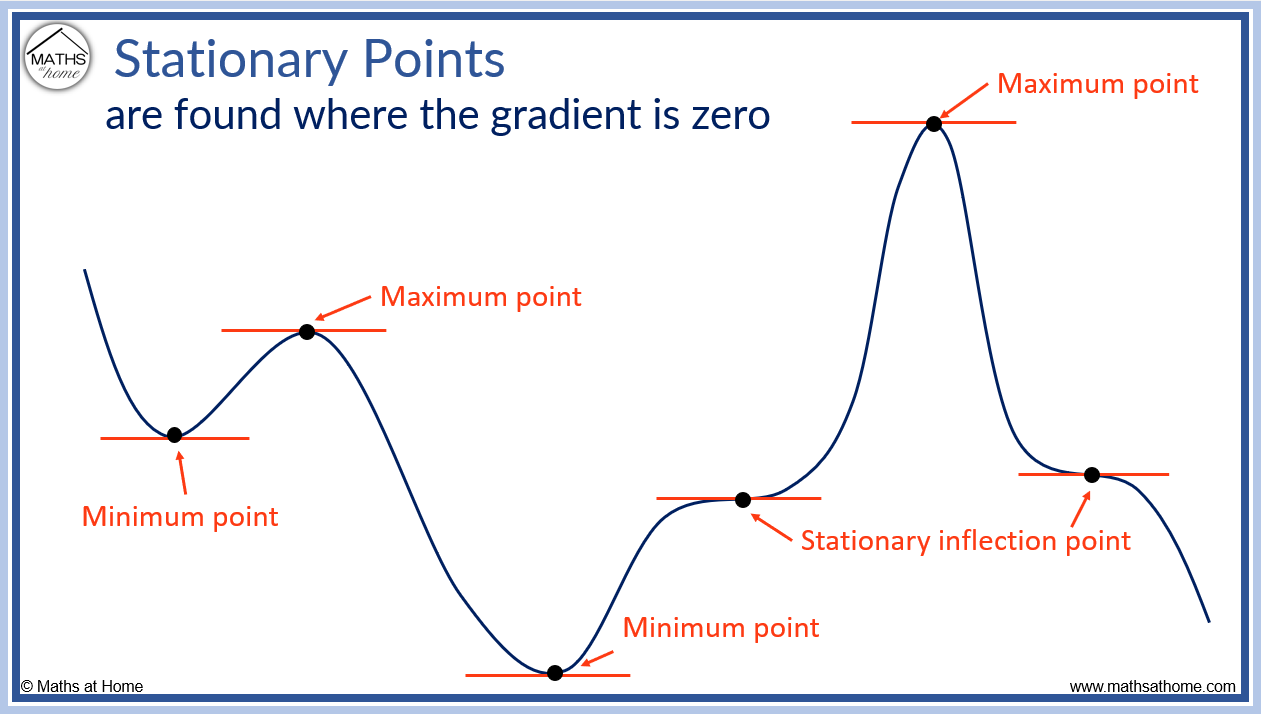
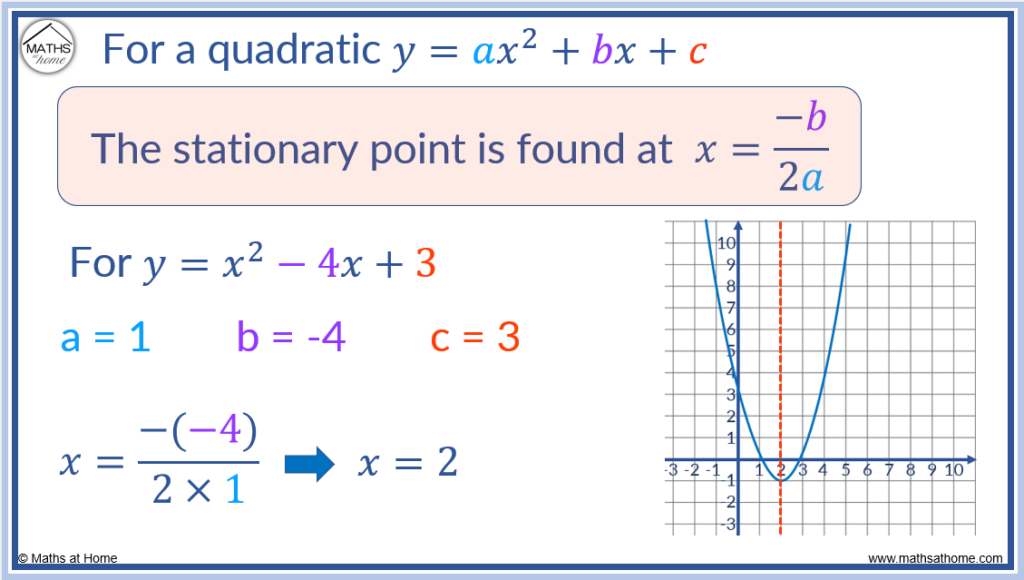
In the realm of calculus, these points are where the derivative of a function is equal to zero. Don't let that word "derivative" intimidate you! Think of it as the "slope" of a graph, telling you whether it's going uphill (positive slope), downhill (negative slope), or, you guessed it, perfectly flat (zero slope). So, a stationary point is simply a spot on the graph where the slope is zero. Easy peasy, right? It’s like finding a level patch of ground on a roller coaster track – it’s not the highest drop or the steepest climb, but a moment of serene flatness.
Must Read
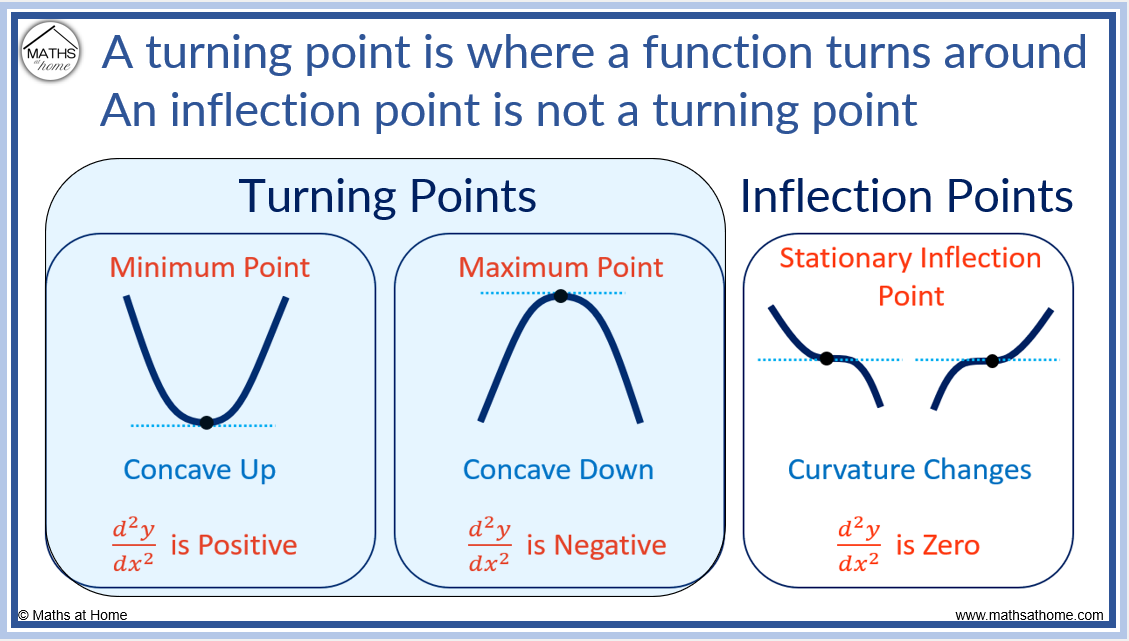
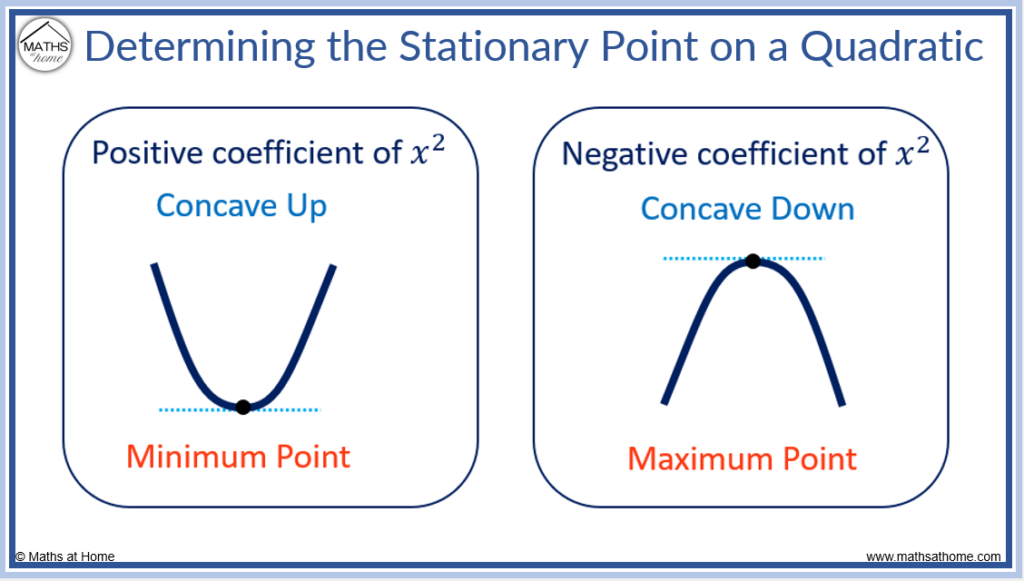
Now, these stationary points aren't all created equal. They come in a few flavors, each with its own personality. We have the local maximums, which are like the cozy, sun-drenched peaks of a small hill. Everything around them is a little lower, making them feel special and significant in their immediate vicinity. Think of finding that perfect, ripe berry on a bush – it’s the best berry right there, even if there’s a bigger, juicier one a few bushes over.
Then there are the local minimums. These are the gentle dips, the sheltered hollows in the landscape. They’re the lowest points in their immediate neighborhood, offering a sense of quiet repose. Like finding a comfortable, worn-in armchair after a long day – it’s the perfect spot to sink into, at least for a while.
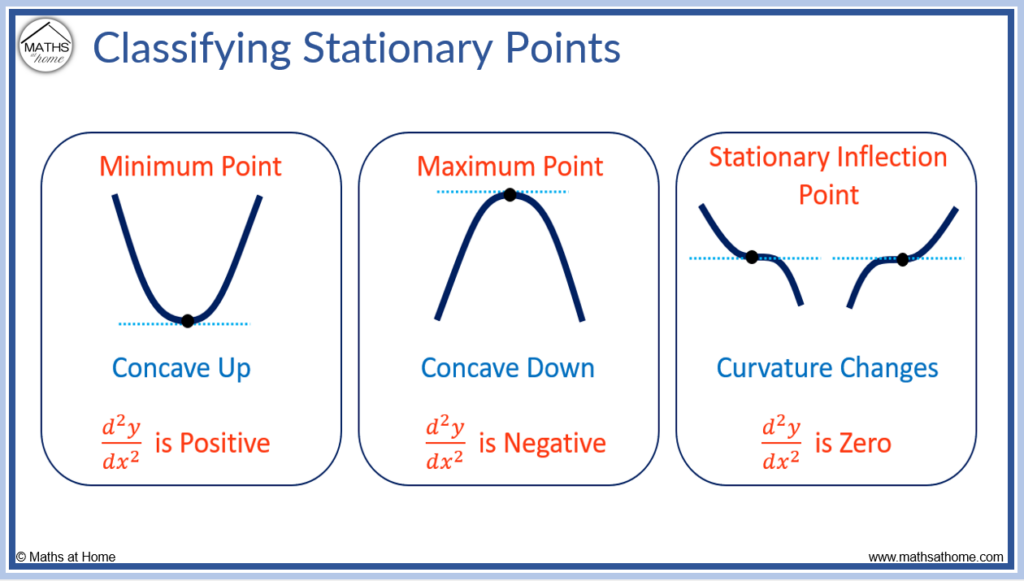
But here’s where it gets really interesting: the saddle points. These are the tricksters, the points that look like a plateau from one direction but a steep incline or decline from another. Imagine standing on a mountain pass. If you walk north or south, you might be going uphill or downhill. But if you take a step east or west, you could be on a flat ledge. It’s a point of no immediate change in every direction, but a significant change in at least one. They’re the plot twists in our mathematical narrative!
Why should we care about these points? Well, understanding stationary points is fundamental to understanding the behavior of functions. It helps us predict where things might be at their best or worst, their highest or lowest. This has real-world applications that are far cooler than you might think. Think about optimizing a factory’s production line to minimize waste (a local minimum of cost) or maximize output (a local maximum of profit). Or consider a physicist studying the energy levels of a molecule – the stable configurations are often found at minimum energy points.
Even in the arts, you can see echoes of this. A composer might use periods of harmonic stillness, where the music hangs in the air, before launching into a new melody. This "stillness" can be seen as a type of stationary point, a moment of suspension that makes the subsequent movement more impactful. Think of the dramatic pause before a crescendo in Beethoven's 5th Symphony – it’s a powerful moment of calculated calm.
Let’s get practical. If you’re a baker, you might want to find the optimal temperature and baking time for your cookies to achieve that perfect chewy center and crisp edge. Too hot, and they burn (a maximum of burntness!). Too cool, and they’re undercooked (a minimum of cookedness!). The sweet spot, the ideal stationary point, is what you’re after.
Or consider a gardener trying to find the perfect balance of sunlight and shade for a particular plant. Too much sun might scorch its leaves (a local maximum of damage), while too little might prevent it from flowering (a local minimum of bloom). The ideal location is a stationary point of plant well-being.
We can even find these concepts in our pop culture. Think about the dramatic arc of a superhero movie. There are moments of intense action (steep slopes of excitement!), followed by quieter moments of reflection (gentle slopes of introspection!), and perhaps a brief lull where the hero contemplates their next move – a stationary point before the final confrontation. It's the calm before the storm, the moment of clarity before the big decision.
A fun fact: In ancient Greece, mathematicians like Archimedes were already exploring concepts that laid the groundwork for calculus. They understood the power of examining curves and finding special points, even without the formal notation we use today. It’s a testament to humanity’s enduring fascination with patterns and optimization.
The concept of a stationary point also reminds us of the importance of recognizing and valuing stillness. In our hyper-connected, always-on world, it’s easy to feel like we always need to be moving, always be achieving. But sometimes, the most productive thing we can do is to find our own stationary point – a moment to pause, reflect, and recharge. This could be a quiet morning with a book, a mindful walk in nature, or simply a few minutes of deep breathing.
Think about the Zen gardens of Japan. They are meticulously designed to create a sense of tranquil equilibrium. The raked gravel, the strategically placed rocks – they all contribute to a feeling of stillness, of a perfect, unchanging moment. These gardens are, in a way, living embodiments of stationary points, inviting us to find our own inner calm.

In the grand scheme of things, every function, every process, has its moments of equilibrium. These aren't failures; they are fundamental characteristics. They are the points where the energy is stable, where the change momentarily ceases. They are the deep breaths the universe takes.
So, next time you’re feeling overwhelmed or like you’re constantly chasing something, remember the stationary point. Remember that there are moments of perfect balance to be found, both in the abstract world of numbers and in the tangible reality of our lives. It's not about stopping altogether, but about recognizing the value of the pauses, the moments of stillness that allow us to gather ourselves, appreciate our surroundings, and prepare for whatever comes next. These points are not an end, but a beautiful, often overlooked, part of the journey.
Think about your own daily rhythm. Are there moments where you feel most grounded, most at peace? Perhaps it’s during your morning meditation, while you’re enjoying a quiet meal, or even during a focused work session where you’re completely absorbed. These are your personal stationary points, the moments where the momentum of the day briefly stills, allowing you to connect with yourself and the present moment. Cherish them. They are the anchors in the often-turbulent sea of life, the quiet havens that allow us to truly appreciate the journey.