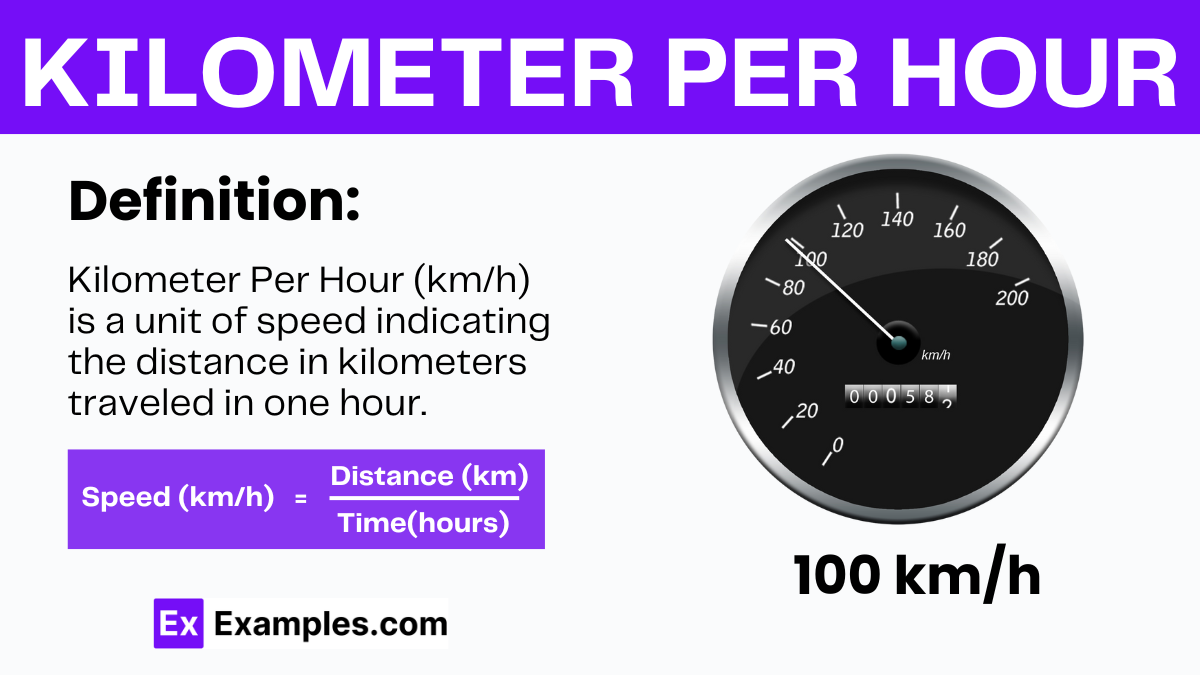
Minutes Per Km To Km Per Hour

You know, I was chatting with my friend Sarah the other day, and she was telling me about this half-marathon she’s training for. She’s all fired up, talking about her “paces” and “splits.” I, being the ever-curious (and let’s be honest, slightly lazy) runner, just nodded along, trying to decipher the lingo. But then she dropped a bomb: “My average pace is around 5:30 per kilometer.”
My brain did a little stutter. 5:30 per kilometer? What does that even mean in terms of speed? Is that fast? Is that snail-like? Is she going to be lapped by a tortoise? I realized then that while most runners might intuitively grasp this, for the uninitiated (or those of us who prefer a leisurely stroll to a lung-busting sprint), the language of running can be a bit of a foreign tongue. We’re so used to seeing speeds measured in kilometers per hour on car dashboards and in everyday conversation. But in the running world, it’s all about minutes per kilometer. It’s a bit like saying you're going to arrive “in about two hundred minutes” instead of “in about three hours and twenty minutes.” Useful, sure, but not exactly the most intuitive for quick comprehension.
This got me thinking. Why the disconnect? And more importantly, for those of us who want to bridge that gap – for the sake of understanding our speed-demon friends, or maybe even just to get a clearer picture of our own running efforts – how do we convert those mysterious minutes per kilometer into the familiar kilometers per hour? It’s a surprisingly simple conversion, really, once you get the hang of it. And honestly, it’s pretty satisfying to be able to translate between these two ways of thinking about speed. So, let’s dive in, shall we?
Must Read
The Running World's Peculiar Pace
So, the running community has this thing called "pace," and it's almost universally expressed as minutes per kilometer (or minutes per mile, for our American friends, but we'll stick to kilometers for now, because that's what Sarah was talking about). When someone says they're running a “5-minute kilometer,” it means they are completing one kilometer in exactly five minutes. Simple enough, right? When Sarah said 5:30 per kilometer, she meant it takes her five minutes and thirty seconds to cover each kilometer. Again, straightforward on its own.
But here’s where it can get a bit fuzzy for the uninitiated. If you’re used to thinking about speed in terms of how far you can travel in a set amount of time (like kilometers per hour), this “time per distance” metric can feel a bit backward. It’s like being told how long it takes you to eat a slice of pizza instead of how many slices you can devour in an hour. Both are valid, but one feels more like a measure of consumption rate, and the other… well, the other feels like speed.
I remember one time at a local parkrun. They announced the winner’s time, something like 17 minutes and change. Everyone cheered, and the guy jogged off, presumably to get a coffee. I was thinking, “Wow, 17 minutes for what? A 5k? A 10k?” It wasn't immediately clear if he was a superhero or just had a really, really short race. Turns out, parkruns are 5 kilometers. So, if he ran 5k in 17 minutes, what was his pace? And what was his actual speed in km/h? See? This is where my brain starts to knot up.
The beauty of minutes per kilometer, from a runner’s perspective, is its direct relation to effort. A lower number means you’re running faster. A 4:00/km pace is blistering. A 7:00/km pace is more of a comfortable jog. It’s an immediate, visceral understanding of how hard your body is working. But for the rest of the world, for traffic signs, for the general context of movement, kilometers per hour reigns supreme.
The Great Conversion: Unlocking the Mystery
So, how do we perform this seemingly arcane ritual of converting minutes per kilometer into kilometers per hour? Fear not, dear reader, for it’s not rocket science. In fact, it’s more like… well, simple arithmetic. The core principle is that there are 60 minutes in an hour. This is our magic number, our Rosetta Stone.
Let’s take Sarah’s pace as our example. She runs at 5 minutes and 30 seconds per kilometer. First, we need to express that in just minutes. Thirty seconds is half a minute, so 5 minutes and 30 seconds is 5.5 minutes per kilometer. Easy peasy.
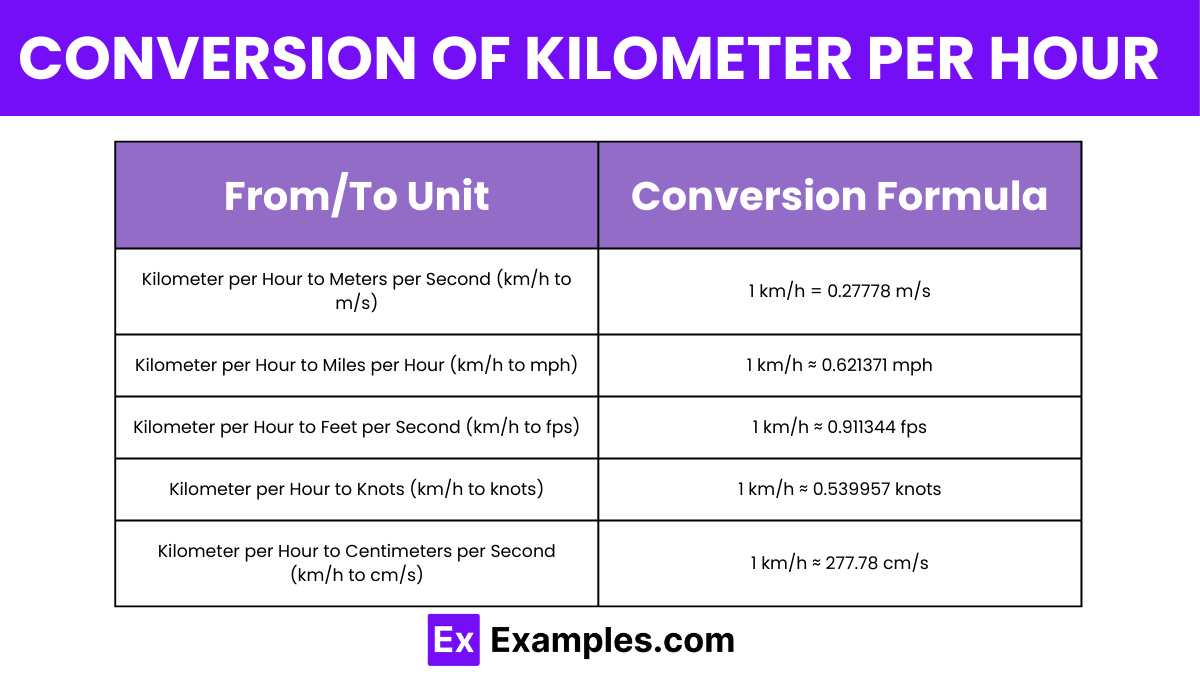
Now, if you run one kilometer in 5.5 minutes, how many kilometers would you run in 60 minutes (which is one hour)? This is where we use our magic number. We divide the total minutes in an hour (60) by the time it takes to run one kilometer (5.5 minutes).
So, the formula is:
Kilometers per Hour (km/h) = 60 minutes / Minutes per Kilometer
Applying this to Sarah’s 5.5 minutes per kilometer pace:
km/h = 60 / 5.5
And what do we get? Around 10.91 km/h. So, Sarah, when she’s hitting her 5:30/km pace, is actually traveling at a respectable speed of just under 11 kilometers per hour. That’s faster than most people can cycle leisurely, and certainly quicker than your average pedestrian!
Let’s try another one. Remember that parkrunner who finished in 17 minutes? For a 5k race, that means his average pace was 17 minutes / 5 kilometers = 3.4 minutes per kilometer. Now, to convert that to km/h:

km/h = 60 / 3.4
That works out to approximately 17.65 km/h. See? That’s a seriously fast speed! This guy was practically a blur. It makes sense now why he was the winner.
It’s almost like a secret code you’re cracking. Once you have the key (that 60 minutes in an hour thing), you can translate any pace into a speed that makes sense in the wider world. It helps you contextualize. Are you running at a speed comparable to a brisk walk (around 5-6 km/h)? A fast bike ride (15-20 km/h)? Or are you hovering around the speed limit for a golf cart?
Putting the Numbers into Perspective
Let’s play around with some common running paces to get a better feel for this. Imagine you’re out for a nice, relaxed jog. You might be running at a pace of, say, 6 minutes per kilometer. Using our formula:
km/h = 60 / 6 = 10 km/h
So, a 6:00/km pace translates to a steady 10 km/h. That feels about right. It’s a solid pace that you can maintain for a decent amount of time without feeling like you’re about to collapse.
What about a more challenging pace? Let’s say you’re trying to run a faster 5k and aim for a 4:30 per kilometer pace. So, 4.5 minutes per kilometer.

km/h = 60 / 4.5 = 13.33 km/h
Thirteen and a third kilometers per hour. That’s starting to get pretty zippy! It’s a speed that requires some serious effort and focus. You’re not going to be chatting with your running buddy at that pace, that’s for sure.
And on the other end of the spectrum, what about a very leisurely pace, perhaps a warm-up or a recovery jog? Let's say you're taking it easy at 7 minutes and 30 seconds per kilometer (7.5 minutes).
km/h = 60 / 7.5 = 8 km/h
An 8 km/h speed. That feels like a brisk walk or a very slow jog. It’s comfortable, sustainable, and good for letting your body recover.
It’s fascinating how these numbers translate, isn’t it? It gives you a tangible understanding of your effort. When you’re out there, puffing and panting, you can mentally calculate, “Okay, I’m running at about a 4:00/km pace, which means I’m moving at roughly 15 km/h. That’s pretty darn fast!” Or, on a long, slow run, “I’m at a 7:00/km pace, which is 8.5 km/h. This is exactly what I need for endurance.”
Why Bother with the Conversion?
You might be thinking, “Okay, so it’s a neat trick, but why do I really need to know this?” Well, it goes beyond just understanding your runner friends’ jargon or impressing people at parties with your knowledge of speed conversions. It’s about perspective and context.

Firstly, it helps you relate your running to the real world. When you see a speed limit sign on a road, or hear about how fast a car is going, you can now make a direct comparison. Are you running faster than a particularly slow scooter? Probably. Are you keeping up with rush hour traffic? Definitely not.
Secondly, it can be a great way to set realistic goals. If you’re aiming to run a certain distance in a specific time, knowing your target pace in minutes per kilometer and then converting that to km/h can help you visualize the speed you need to maintain. For example, if you want to run a 10k in under an hour, you need to average better than 6:00/km, which means consistently running faster than 10 km/h.
Thirdly, and this is where a touch of irony might creep in, it allows you to appreciate the sheer effort involved in running. When you see a professional marathon runner’s pace, often around 2:50-3:00 per kilometer, and convert that to km/h (60 / 2.9 ≈ 20.7 km/h), you realize these people are essentially sprinting for over two hours. It’s a feat of human endurance that is truly awe-inspiring.
Think about it: maintaining a speed of over 20 km/h requires a tremendous amount of physiological power, efficient biomechanics, and mental fortitude. It’s not just about running; it’s about how fast you can run and sustain it. The minutes per kilometer metric highlights the effort required for each segment, while km/h shows the output over time. Both are crucial pieces of the puzzle.
I used to be one of those people who just looked at their watch and thought, “Okay, I ran X kilometers in Y minutes.” That was the end of it. But once I started doing this conversion, I began to see my runs in a new light. I could see how much I was improving, not just in terms of time for a distance, but in terms of sheer speed. It added another layer of understanding and motivation to my training.
So, the next time you hear a runner mention their pace, or if you’re looking at your own running stats and want to understand them better, remember the simple magic of 60. It’s your key to unlocking the conversion and speaking the language of speed with confidence. It’s a small change, but it can make a big difference in how you perceive your own athletic endeavors.
And who knows, maybe one day you’ll be the one dropping the km/h figures in conversation, leaving your friends marveling at your newfound speed-conversion prowess. Until then, happy running (and converting)!