Meaning Of In Situ And Ex Situ
Hey there, science explorer! So, you've probably stumbled across these words, in situ and ex situ, and thought, "What in the world are those fancy Latin things?" Don't worry, you're not alone! They sound super intimidating, like something a professor would whisper mysteriously in a dimly lit lab. But honestly, they're just really chill ways of talking about where stuff happens. Think of it like this: have you ever brought your laptop to a coffee shop to work? Or maybe you prefer to buckle down at your desk at home? Same idea, just with a bit more… scientific flair.
Let's break it down, nice and easy. No need for a monocle or a tweed jacket, I promise!
So, What's the Big Deal with "In Situ"?
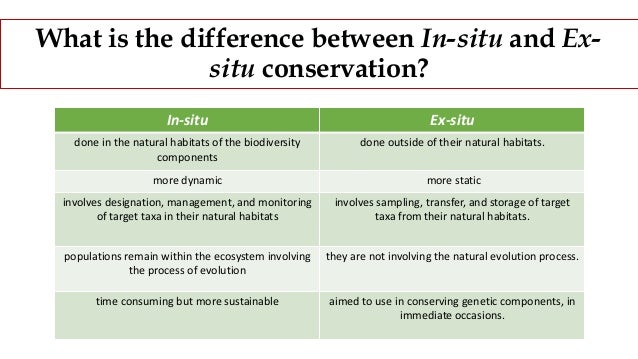
Alright, first up, we've got in situ. Now, if you were to translate that directly from Latin, it basically means "in its original place" or "on site." Easy peasy, right?
Must Read
Imagine you're a super cool botanist, and you've discovered a rare, never-before-seen wildflower. Where would be the absolute best place to study it, to understand it, to really get to know it? Well, it would be right there, in its natural habitat, wouldn't it? In the sunny meadow, nestled amongst the buzzing bees and other plants. That, my friend, is in situ conservation or research. You're studying it where it lives.
Think about it like observing a squirrel in the park. You're not grabbing it, putting it in a tiny little terrarium in your living room (though wouldn't that be a sight!), and then trying to study its nut-burying habits. Nope! You're chilling on a bench, maybe with a sneaky snack of your own, and watching it do its squirrelly thing in its own, natural environment. That's in situ!
This concept pops up in a bunch of different fields. In ecology, it's all about studying ecosystems and species in their natural homes. We’re talking about forests, oceans, deserts, you name it. It's like the ultimate field trip, but for science!
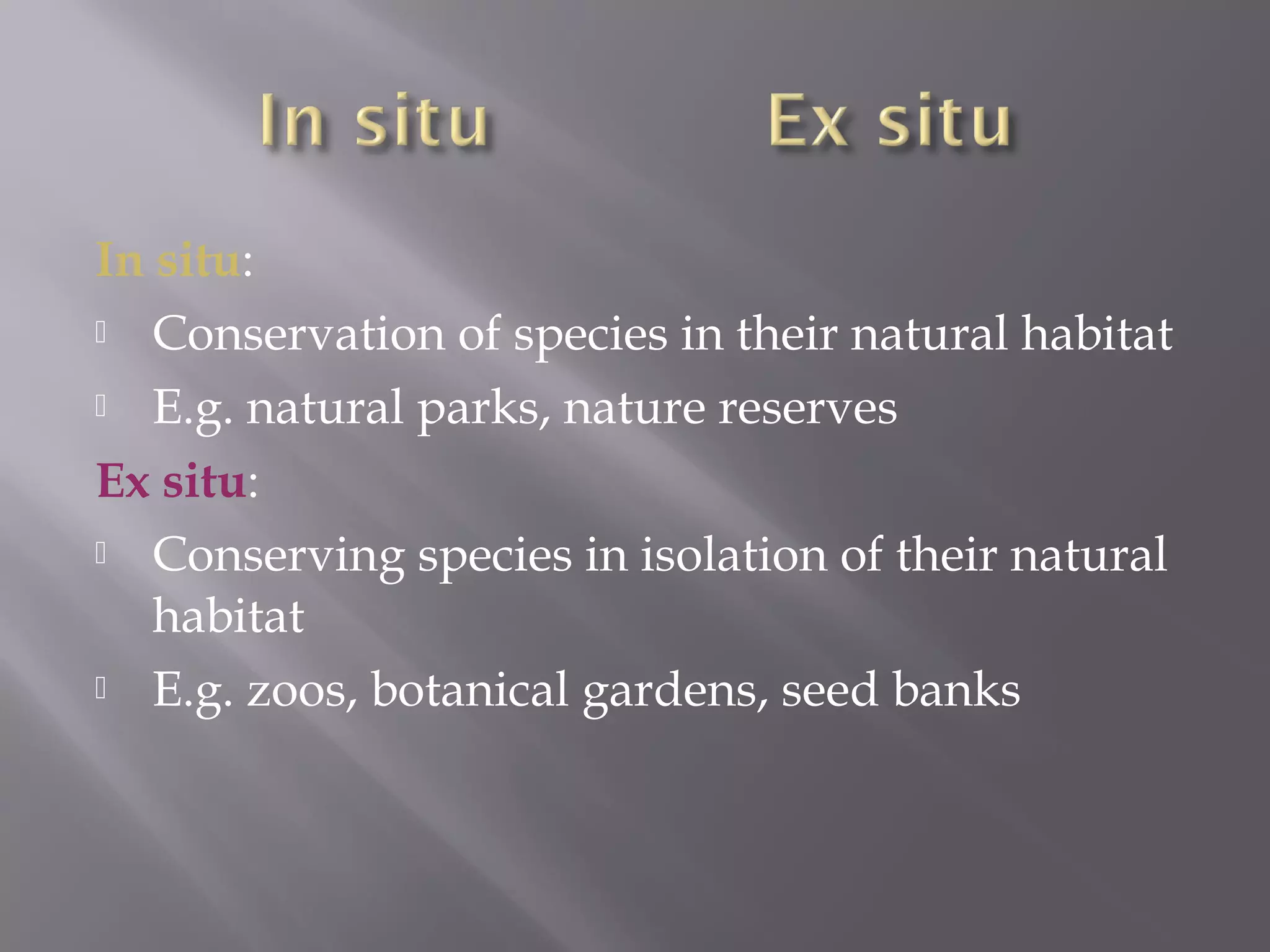
When scientists talk about in situ conservation, they're basically saying, "Let's protect these amazing plants and animals right where they are!" This could mean setting up national parks, creating wildlife reserves, or cracking down on pollution in a particular river. The goal is to keep the whole system – the animals, the plants, the soil, the water, the sunshine (or lack thereof, in some cases!) – as healthy and happy as possible, all together.
It's like trying to fix a leaky faucet without moving the whole sink. You’re working on it in place. And why is this so awesome? Because nature is incredibly complex and interconnected. When you take something out of its environment, you lose all those intricate relationships and interactions. You know, the whole "butterfly effect" thing? A tiny change can have huge ripple effects.
So, in situ is all about appreciating the whole picture, the grand, messy, beautiful mosaic that nature has put together. It's about letting things be, and understanding them in their own context. It’s like saying, "This is your stage, and you're the star, so let's keep it that way!"
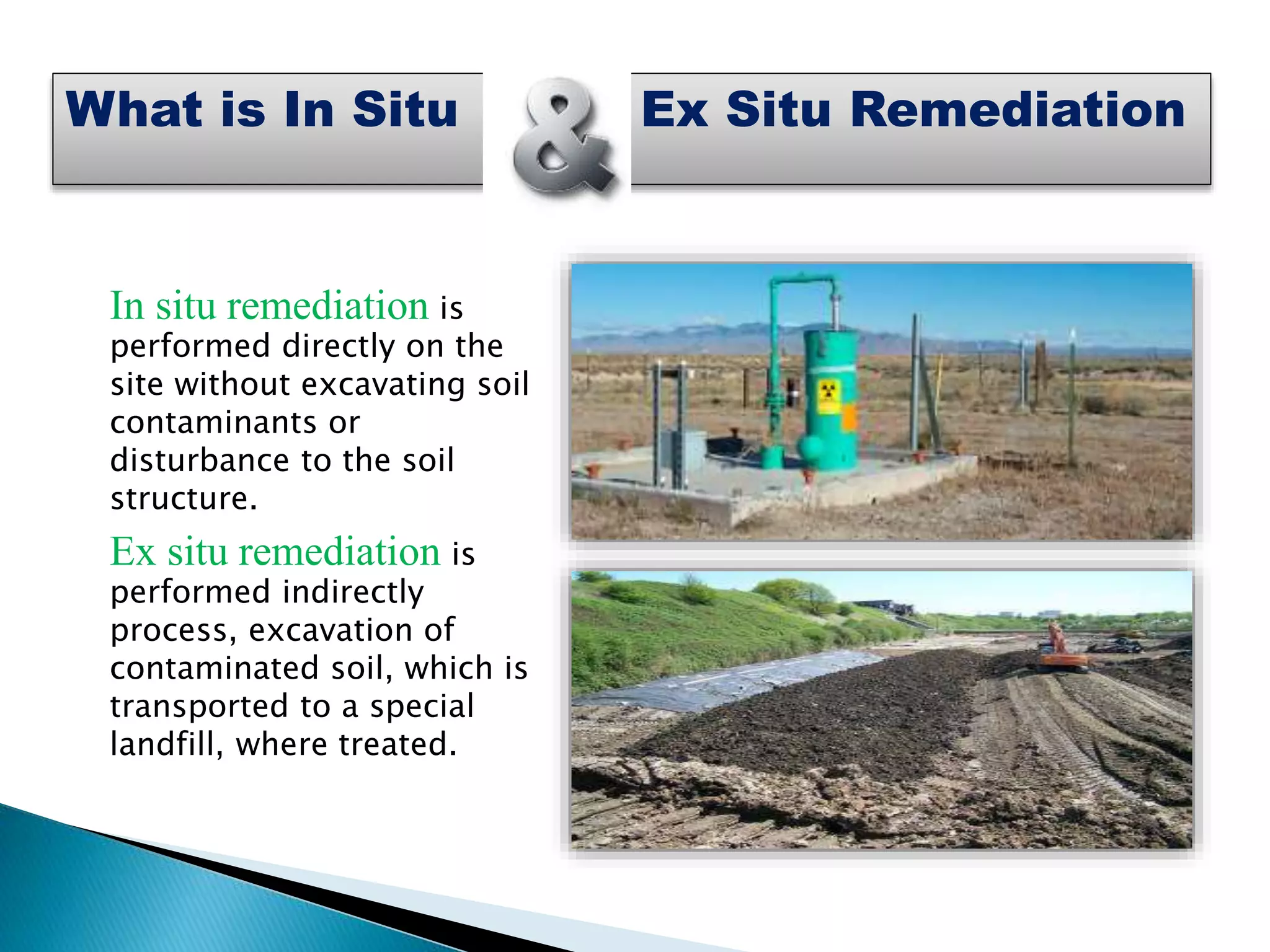
We also see in situ in other cool ways. Imagine a detective investigating a crime scene. They're not going to pack up the whole house and take it back to the precinct, are they? (Although, imagine trying to fit a whole house in a police car – that would be a hilarious news story!). No, they work in situ, examining the evidence right there at the scene. They’re gathering clues in their original location.
Or think about an archaeologist uncovering an ancient artifact. They're not going to dig it up, toss it in a backpack, and then try to figure out what it is while bouncing around on a bumpy jeep ride. They'll carefully excavate it, document its surroundings, and understand its context – all in situ. It’s about respecting the history and the story that place tells.
So, in a nutshell, in situ is about keeping it real, keeping it in its natural groove. It’s the ultimate hands-off, observe-and-understand approach. It’s about acknowledging that sometimes, the best way to learn or protect something is to just let it be, in its own glorious environment. Pretty neat, huh?
Now, Let's Talk "Ex Situ"!
Okay, so if in situ is about keeping things where they are, what do you think ex situ might be? If you guessed something like "outside of its place" or "off-site," you're a genius! Seriously, give yourself a pat on the back. You're basically fluent in Latin now. High five!
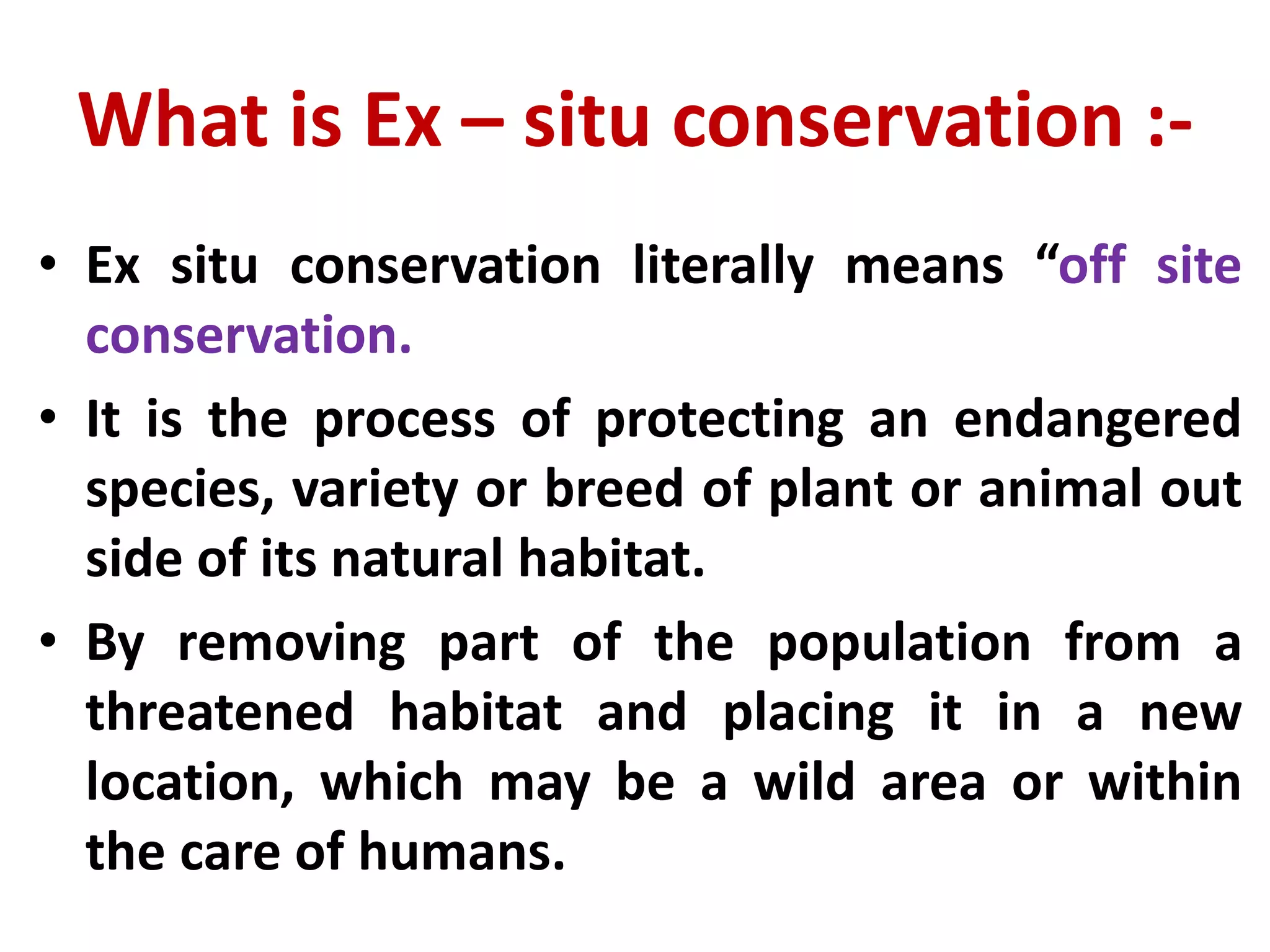
Ex situ is the complete opposite of in situ. It means taking something – a plant, an animal, a seed, even a sample of soil – and moving it away from its original location for study, conservation, or some other cool purpose.
Think back to our rare wildflower. What if the meadow it lives in is facing a serious threat? Like, maybe a super invasive weed is taking over, or a new development is going to pave over the whole thing. In that case, a smart scientist might say, "Okay, this is getting dicey for our little flower here. We need to take a few samples and bring them somewhere safe."

That "somewhere safe" could be a botanical garden, a greenhouse, or even a specialized lab. This is ex situ conservation. You’re removing the organism from its original environment to protect it.
It's like if you had a beloved, but slightly fragile, houseplant. If a hurricane was brewing, you wouldn't leave it on the porch to get battered, would you? Nope, you’d bring it inside, maybe even put it in a more controlled environment with just the right amount of light and water. You've taken it ex situ (from the porch) to a safer, more managed location (inside your house).
Zoos are a classic example of ex situ conservation. When a species is endangered in the wild, zoos can play a vital role in breeding programs. They’re essentially creating a backup plan, a little ark of sorts, to ensure the species doesn't disappear forever. They're studying and breeding these animals in a controlled environment, away from the dangers of their natural habitat.
Seed banks are another fantastic example. Imagine a massive, super-secure vault filled with countless varieties of seeds from all over the world. This is ex situ conservation at its finest! These seed banks are like a Noah's Ark for plants, preserving biodiversity for future generations. If disaster strikes and a certain crop is wiped out in the wild, we can turn to the seed bank for survival.
And it's not just about the big, charismatic animals or the pretty flowers. Ex situ methods are used for all sorts of things. Microorganisms are studied in labs, rock samples from Mars are brought back to Earth for analysis, and even archaeological fragments are meticulously preserved and studied in museums, far from where they were first unearthed. It’s all about getting those precious bits and pieces into a place where they can be carefully examined, preserved, and perhaps even reintroduced later.
The key difference, and it’s a big one, is that ex situ involves moving the subject. You're taking it out of its natural setting and bringing it to a controlled, often artificial, environment. This allows for a level of focused study and intervention that might be impossible in the wild.
For example, if a scientist wants to study the precise dietary needs of a rare insect, they can't just feed it random leaves in the jungle. They need to bring it to the lab, create a controlled diet, and observe its reactions. That’s ex situ research.
Sometimes, ex situ conservation is a stepping stone. The goal might be to breed endangered animals in captivity and then, hopefully, reintroduce them back into their natural habitats once those habitats are safe and healthy again. It's like giving them a little boost and a safe haven before they head back out into the world.
So, while in situ is about the whole system and letting nature do its thing, ex situ is about taking specific components, protecting them, studying them closely, and sometimes, giving them a second chance.
Putting It All Together: The Dynamic Duo!
Now, here's where it gets really cool. In situ and ex situ aren't enemies. They're actually best buddies! They work hand-in-hand, like a superhero duo, to protect our planet and unravel its mysteries.
Think of it like this: in situ conservation is the primary defense. It's like patching up the leaky roof of your house before it causes major damage. You're keeping things as they are, protecting the whole structure. Creating national parks and reserves is a perfect example of this. We're saying, "This is a special place, let's keep it just the way it is, with all its inhabitants and interactions intact."
But sometimes, despite our best efforts, things get a little… wobbly. A species might be on the brink of extinction, or its habitat might be severely degraded. That's where ex situ conservation swoops in to save the day! It's like having a backup generator for your house. If the main power goes out, you've got a way to keep the lights on.
Zoos and botanical gardens are fantastic for species that are in dire straits. They act as safe havens, breeding grounds, and research centers. They can help keep a species alive when its natural environment can no longer support it. And then, the dream is often to eventually reintroduce these animals or plants back into protected in situ areas.
It’s a beautiful cycle. We protect what we can in the wild (in situ), and for those that need a little extra help, we offer a sanctuary and a chance to recover (ex situ), with the ultimate goal of returning them to their rightful place in the wild.
In research, too, these two concepts are inseparable. Scientists might observe animal behavior in the wild (in situ) to understand their natural patterns. Then, they might bring a few individuals into a controlled lab setting (ex situ) to conduct more detailed physiological or genetic studies that would be impossible in the field. Each piece of information helps build a more complete understanding.
For example, studying a coral reef in its natural state (in situ) tells us about the complex ecosystem dynamics, the symbiotic relationships, and how it reacts to ocean currents. But to understand the specific impacts of rising ocean temperatures on coral reproduction, scientists might collect coral samples and study them in controlled aquarium conditions (ex situ). This dual approach gives us a much richer picture.
So, you see, these aren't just fancy words to confuse you. They represent two vital strategies for understanding and preserving the incredible world around us. They are the "stay put and observe" and the "take action and protect" of the scientific world, working together to ensure the survival of countless species and the health of our planet.
And honestly, isn't that just… wonderful? Knowing that there are brilliant minds out there dedicated to both protecting nature in its own magnificent home and creating safe havens when things get tough? It’s enough to make you want to go hug a tree (responsibly, of course!).
So, next time you hear in situ or ex situ, don't get intimidated. Just remember the coffee shop versus your desk, the squirrel in the park versus the houseplant brought inside, or the superhero duo saving the day. They’re just different, equally important, ways of interacting with and understanding the amazing natural world. And that, my friends, is something truly worth smiling about.