Math Games With A Deck Of Cards
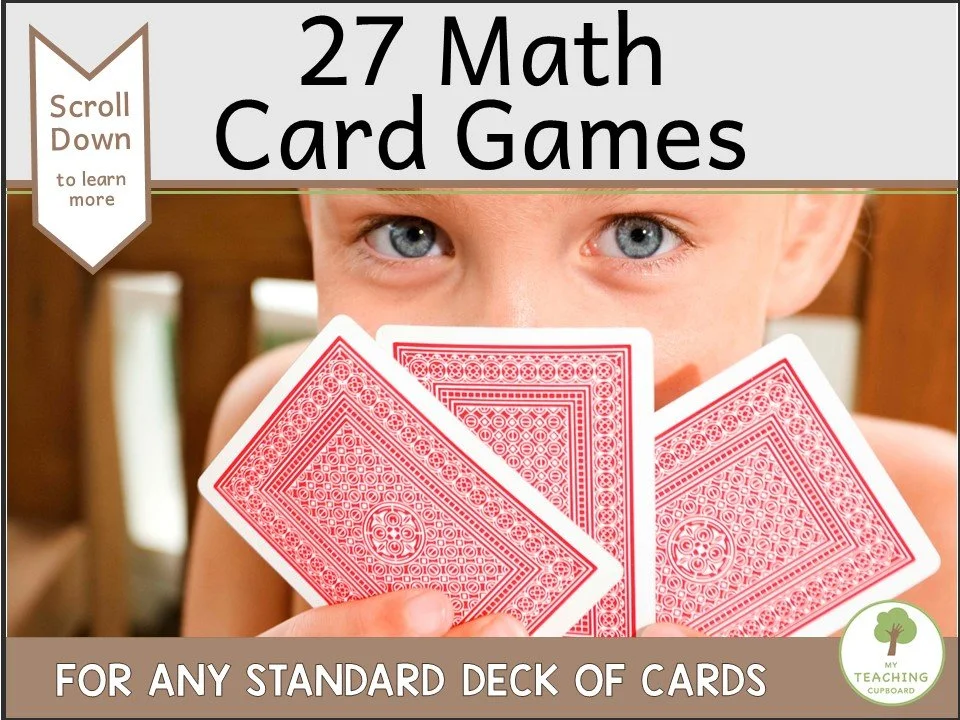
So, you've got a deck of cards lying around. What do you do? Play Go Fish? Maybe Gin Rummy if you're feeling fancy. But what if I told you that deck of 52 little rectangles is a secret math superpower waiting to be unleashed? Yep, it's true! Cards aren't just for shuffling and dealing; they're tiny, portable math laboratories.
Think about it. Those numbers on the cards? They're basically math problems in disguise. And those suits? They add a whole new layer of strategy. It's like a scavenger hunt for your brain, but way more fun than finding that last Tupperware lid.
Forget boring textbooks. We're talking about real-world math that's actually enjoyable. It's the kind of math that doesn't make you want to hide under your desk. It's the kind of math that makes you say, "Hey, I'm good at this!"
Must Read
And guess what? You don't need to be a math whiz to play these games. In fact, playing them might just make you one. It's a win-win, a mathematical coup d'état, a deck-tastic deal!
Card Games That Will Make You Love Math (Seriously!)
Let's dive into some games that are more than just games. They're brain boosters disguised as fun. We're talking about ways to practice addition, subtraction, multiplication, and even a little bit of probability, all without breaking a sweat. Or, you know, shedding a single tear.
The Classics With a Twist
Ever played War? It's simple, right? High card wins. But we can jazz it up! Let's call it Math War.
Here's the deal: Instead of just comparing the number on the card, you and your opponent draw two cards each. Then, you add them up. Whoever has the higher sum wins the battle. Boom! Addition practice. Suddenly, War isn't just about luck; it's about calculating skills.
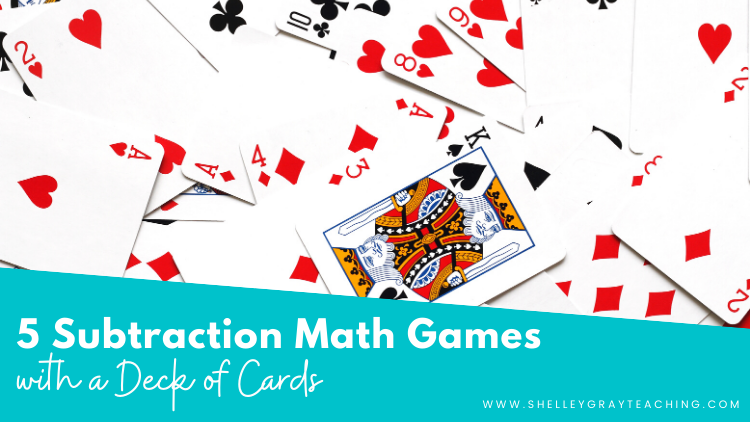
What if you want to get a bit more aggressive? Try Subtraction War. Draw two cards, subtract the smaller number from the larger one. The biggest difference takes the pot. It’s a good way to get comfortable with taking away numbers. And face it, sometimes you just need to take away numbers from a situation. Cards are easier.
Feeling ambitious? How about Multiplication War? Draw two cards, multiply them. Higher product wins. This is where those multiplication tables really shine. Imagine being able to multiply 7x8 in your head while your opponent is still trying to figure out what 3x5 is. You're basically a card-playing math ninja.
And here’s a quirky fact: Ace can be 1 or 11 in some games. This flexibility is a great way to introduce the concept of variables, even if you don’t call them that. It’s like a mathematical chameleon!
More Than Just Numbers: Probability and Strategy
Okay, so we've covered the basics. But card games are also fantastic for understanding probability. It’s the fancy word for “what are the chances?”
Think about games like Blackjack (or Twenty-One, as it’s often called). You're trying to get as close to 21 as possible without going over. This involves a lot of quick mental math and, importantly, estimating the likelihood of the next card drawn helping you or busting you.

You start to realize that if there are a lot of high cards already out, the chances of drawing another high card are lower. It’s a subtle, intuitive lesson in probability. You're not calculating complex formulas; you're just playing smart. And that's the best kind of learning.
Or consider Cribbage. This game is a masterclass in strategy and quick calculation. You’re looking at combinations of cards, trying to make points through “runs” (sequences of cards) and “nobs” (holding a Jack of the same suit as the starter card). It’s a delightful dance of addition and probability.
There’s a certain elegance to it. You’re not just playing cards; you’re building mathematical structures with them. It's like being an architect of points.
Games for Little Einsteins (and the Grown-Ups Who Love Them)
Card games are also amazing for younger kids. They’re tactile, engaging, and don’t feel like homework.
Go Fish can be tweaked for math practice. Instead of asking for a specific card, kids can ask for a card that, when added to their own, makes a certain number. "Do you have a 3? I have a 7, and I want to make 10." It’s addition in disguise!

Memory, the classic card-matching game, can also be a math booster. You can pair cards that add up to 10, or cards where the difference between them is 5. This makes a simple game a double-duty brain trainer.
And the sheer act of holding and sorting cards helps with fine motor skills and number recognition. It’s a gateway drug to more complex math later on. A friendly, colorful gateway.
The Quirky Charm of Card Math
What makes card games so perfect for math? It’s the tangible nature of it all. You can see the numbers. You can hold them. You can physically discard them or add them to your pile. This hands-on approach is crucial for understanding abstract mathematical concepts.
Plus, there’s the element of surprise. The shuffle and the deal introduce an element of randomness that keeps things interesting. You never quite know what you’re going to get, which mirrors the unpredictable nature of solving problems.
And let's not forget the social aspect. Playing these games with friends or family creates a relaxed, encouraging environment. Mistakes are just part of the game, not personal failures. You can laugh them off and try again.

Think about it. A deck of cards is incredibly inexpensive. You can take it anywhere. You can play a quick game of Math War while waiting for your order at a restaurant. You can practice your probability skills on a long train ride. It’s the ultimate portable learning tool.
Beyond the Numbers: Developing Critical Thinking
These games aren't just about arithmetic. They teach us about strategy, pattern recognition, and logical deduction. In games like Poker, for instance, understanding probabilities and reading your opponents involves complex critical thinking.
Even in simpler games, you're constantly making decisions based on the information you have and the potential outcomes. You’re developing a sense of cause and effect, of planning ahead. These are skills that translate to all areas of life, not just math class.
So, the next time you find yourself with a deck of cards, don't just shuffle and deal. Unleash the math magician within! You might be surprised at how much fun you can have, and how much smarter you become, one card at a time.
It’s a simple concept with profound implications. Cards are a gateway. A gateway to fun. A gateway to learning. A gateway to becoming a math-loving, card-shuffling genius. Who knew a bunch of pasteboard could be so powerful? It's a real deck-saster if you don't try them!