
How To Tell If Gold Is Real

Okay, let's talk about gold. We all love that shiny yellow stuff, right? It’s in our jewelry, our history books, and even a few epic movies. But how do you know if that sparkly bracelet you found in Grandma's attic is the real deal or just a very convincing imposter?
Let's be honest, the world of precious metals can be a bit… mysterious. It's like a secret club, and the handshake involves a tiny hammer and a very serious face. But don't worry, we're going to peek behind the velvet curtain without any fancy lab coats. This is about street smarts, not science degrees.
First off, let's address the elephant in the room: the magnet test. This is your first line of defense. Real gold? It's not magnetic. If your potential treasure jumps towards a magnet like a lost puppy, you've probably got yourself some iron pretending to be fabulous. So, grab a magnet. A strong one, ideally.
Must Read
If it's not attracted, that’s a good sign! Think of it as gold giving the magnet a polite but firm “no thank you.” It’s too sophisticated for that kind of playful roughhousing. It prefers a more dignified existence.
Next up, let’s talk about markings. Most real gold jewelry will have a tiny stamp on it. It's usually found on the clasp or the inside of a ring. These stamps tell you its purity. You might see numbers like 10K, 14K, 18K, or 24K. The higher the number, the more pure gold it is.
Think of K as "karat," which is basically gold's fancy unit of measurement. 24K is the pure stuff, like a superstar. 14K is still great, just with a bit more company. If you see something that looks like a stamp but is all blurry or weird, that’s a red flag. It’s like a bad autograph – hard to read and probably not worth much.
Then there's the "bite test." Now, I know what you're thinking. "Do I have to bite my jewelry like a pirate?" Well, sort of. This is a very old-school method, and probably not something you should do on that antique heirloom from your great-aunt Mildred. She might not appreciate it.

The idea is that pure gold is soft. So, a tiny, tiny bite mark might leave a slight indentation. However, this is risky. You could damage your precious item, or worse, chip a tooth. So, maybe leave this one to the professionals or those with very strong enamel and a strong stomach.
A more sensible approach is the density test. Gold is heavy. It’s got some serious heft to it. If you're holding a piece of jewelry that feels suspiciously light for its size, it might be a fake. Think of it like comparing a feather to a bowling ball. They're both objects, but their weight tells a different story.
If you have a few pieces, you can compare them. Hold a known real gold piece in one hand and the suspect in the other. Does one feel significantly lighter? That’s a clue. It’s like your intuition, but with more gravity.
What about that famous acid test? This is what jewelers often use. It involves tiny vials of acid. And, you know, not breathing in fumes. Definitely not a DIY project for your average Tuesday afternoon. This is for when you're really serious, like when you're buying a significant amount or are genuinely concerned about a valuable piece.
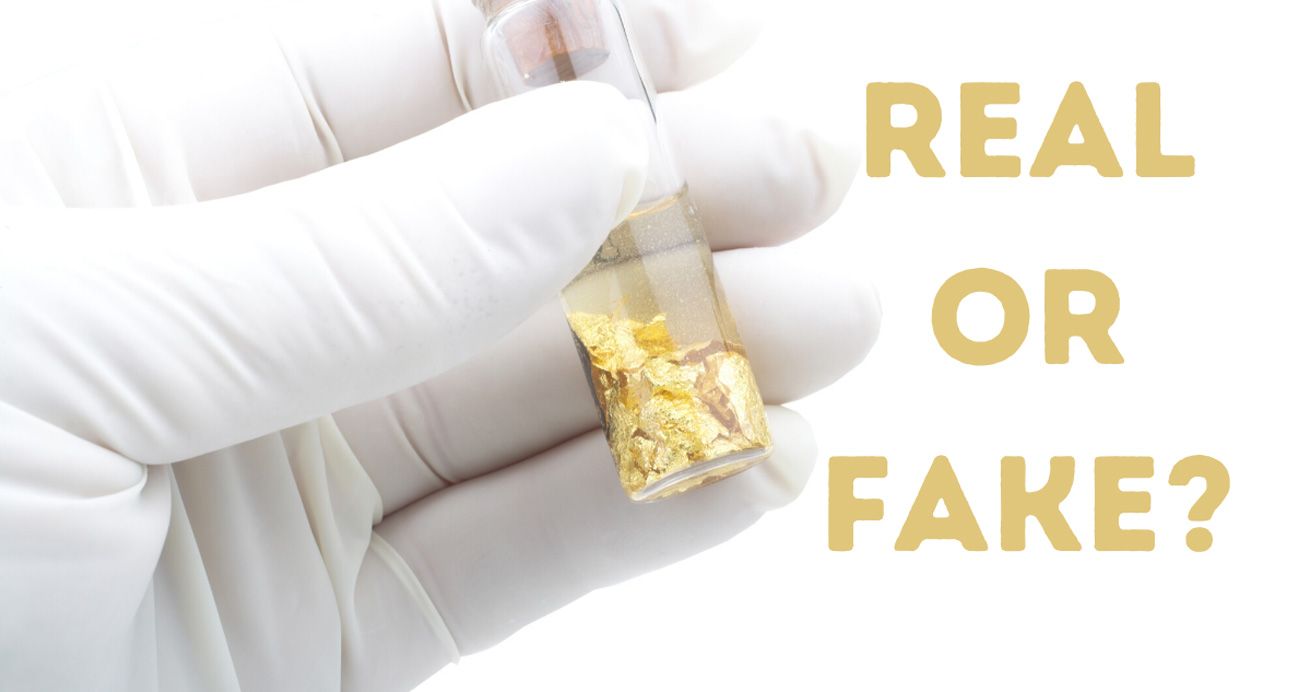
They use a small, unnoticeable spot on the metal and apply different strengths of acid. The way it reacts (or doesn't react) tells them the gold's purity. It's like a chemical interrogation. The gold has to confess its true identity.
Here’s a funny one: the ceramic scratch test. Find an unglazed ceramic tile. You know, the kind you might find on the floor in a very old house or a dusty basement. Gently rub your gold piece across it. Real gold will leave a golden-yellow streak.
If it leaves a black streak, that's a bad sign. It means you've likely got some pyrite, also known as "fool's gold." It’s pretty, but it’s a bit of a prankster. It looks the part but isn't the real treasure. So, the ceramic is basically saying, "Nope, not today, fakey."
Now, let's talk about color. Real gold has a distinct look. It’s warm and rich. If something looks too brassy, too orangey, or unnaturally shiny, it might be plated. Plating is like a thin coat of gold paint. It looks good from a distance, but up close, you can see through the charade.

Be wary of pieces that look too perfect. Perfection can sometimes be a sign of something artificial. Natural gold has nuances. It has character. It’s not trying too hard to impress you with a flawless veneer.
Consider the price. If someone is selling what looks like pure gold for pennies on the dollar, you should be very suspicious. Gold has a consistent market value. If a deal seems too good to be true, it almost certainly is. It’s like finding a unicorn at a dog show. Highly unlikely.
Think of it this way: Would you buy a Bentley for the price of a bicycle? Probably not. The same logic applies to gold. The price is a big indicator of its authenticity. So, do a quick online search for current gold prices to get a baseline.
What about skin discoloration? Some fake metals, especially when they react with your skin's natural oils and sweat, can leave green or black marks. If your supposed gold jewelry is turning your fingers a funky shade of emerald, it's probably not real gold. Gold, in its purer forms, shouldn't do that.

It's like a bad relationship – it leaves a mark. Real gold is more about a happy partnership. It sits there, looking fabulous, without staining your skin with evidence of its fakery.
The most reliable way, of course, is to take it to a professional. A reputable jeweler has the tools and the knowledge. They can give you a definitive answer. They’re like the wise elders of the gold community, the ones who know all the secrets.
It might cost a small fee, but peace of mind is priceless, isn’t it? Plus, you get to support local businesses. It’s a win-win, really. They’ll tell you if it’s pure gold, a mix, or just a very convincing pretend.
So, while we can’t all be gold-detecting superheroes with X-ray vision, these simple checks can help you navigate the shimmering world of gold. It’s about being observant, a little bit skeptical, and maybe having a good magnet handy. Happy hunting for that true yellow sparkle!

