How To Tell A Real Rolex Watch

Ah, the Rolex. Just the name conjures images of elegance, precision, and perhaps a touch of enviable success. For many, owning a Rolex isn't just about telling time; it's about owning a piece of history, a testament to meticulous craftsmanship, and a subtle nod to personal achievement. Whether you're a seasoned collector or simply admiring one on a friend's wrist, understanding what makes a Rolex a real Rolex is a fascinating journey into the world of luxury timekeeping. It’s a skill that can be both fun and, dare we say, financially prudent!
So, why bother with the nitty-gritty of authentication? Beyond the obvious desire to avoid being duped by a convincing counterfeit, knowing the genuine article allows you to truly appreciate the artistry involved. It’s like discerning a master painter's original from a skilled forgery – the subtle brushstrokes, the depth of color, the very soul of the piece are what matter. For everyday life, this knowledge can be incredibly empowering. It means when you invest in a Rolex, you're investing in something that holds its value, something built to last for generations, and something that carries an undeniable prestige.
The application of this skill is, of course, most relevant when considering a purchase, be it from a reputable dealer, a private seller, or even inherited. But it’s also a great party trick! Imagine confidently pointing out the subtle differences that separate a genuine Submariner from a clever imitation at a gathering. Common examples you might encounter are the iconic Datejust, the robust Explorer, or the sporty Daytona. Each has its own set of tell-tale signs that a discerning eye can spot.
Must Read
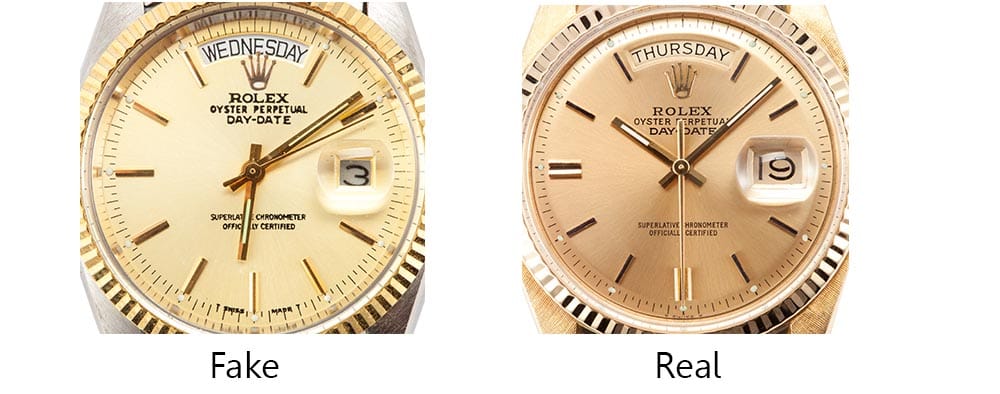
Ready to sharpen your Rolex-spotting senses? Here are some practical tips to enjoy the process more effectively. First, weight is key. Real Rolex watches are crafted from high-quality metals like Oystersteel or gold, giving them a substantial, satisfying heft. If it feels too light, it's a red flag. Next, pay close attention to the cyclops lens, that magnifying bubble over the date. On a genuine Rolex, it should magnify the date by 2.5 times, making it clearly and distinctly larger. Counterfeits often have weak magnification or a cloudy appearance.
Then there’s the second-hand sweep. While many quartz watches have a jerky tick, a genuine Rolex movement has an incredibly smooth, almost gliding sweep. Listen closely for that characteristic silent hum, not a distinct tick-tick-tick. The engraving on the case back is another tell. Most Rolexes do not have engravings on the outside of the case back, with a few exceptions for specific models. If you see intricate etching on the outside of a standard model, proceed with caution. Finally, the overall finish and detailing are paramount. Examine the dial for perfectly applied hour markers, crisp printing, and an immaculate finish. The bracelet should feel seamless, with smooth links and a secure clasp. These details might seem minor, but on a real Rolex, they speak volumes about the dedication to perfection. Enjoy the pursuit of knowledge, and who knows, you might just find yourself with an authentic masterpiece!

![[Identify] Real Rolex? : r/Watches](https://preview.redd.it/identify-real-rolex-v0-upn07kwzw88b1.jpg?width=640&crop=smart&auto=webp&s=191c004294154160e2a0d8940708388abe8262aa)