
How To Put In Coolant In A Car

Hey there, fellow car wrangler! So, you’ve noticed your car’s temperature gauge is looking a little… uh… warm? Or maybe you’re just feeling proactive, and that’s awesome! Either way, we’re going to talk about coolant. Don't let the name fool you; it's not just about keeping things frosty. Coolant, or antifreeze as some folks call it, is like your engine's personal bodyguard, protecting it from overheating in the summer and freezing solid in the winter. It’s a pretty big deal, so let’s dive in and learn how to give your trusty steed a refreshing drink.
Now, before we get our hands dirty (or, you know, coolant-y), let’s have a little chat about safety. This isn’t like topping up your windshield washer fluid; there are a few more things to consider. Think of it like preparing for a fun, but slightly messy, science experiment. You wouldn't want to get goo in your eyes, right? So, first things first: safety gear!
You'll definitely want some safety glasses. Trust me on this one. Coolant can be a bit… enthusiastic when it comes out of a pressurized system. We don't want any accidental eye-showers, do we? Also, a pair of gloves will be your best friend. Coolant isn't exactly made of sunshine and rainbows, and it can be pretty harsh on your skin, especially if you get it on any cuts or scrapes. Think of them as your superhero gauntlets for this mission.
Must Read
The other super-duper important safety rule is: NEVER open the radiator cap when the engine is hot! Seriously, this is the golden rule, the big kahuna, the Everest of coolant-changing advice. When your engine is running, that coolant is under pressure and boiling hot. If you try to unscrew that cap, you could get a blast of superheated liquid that's way worse than any steam burn you've ever imagined. It's like poking a sleeping dragon – not a good idea!
So, what’s the best time to tackle this? When the engine is completely cool. Like, stone-cold cool. Leave it for a few hours after driving, or ideally, do it first thing in the morning. Patience is a virtue, especially when it comes to keeping your car happy and you in one piece. Think of it as giving your car a nice, long nap before its spa treatment.
Alright, safety talk over. Let’s get to the good stuff! You'll need a few things to get started:
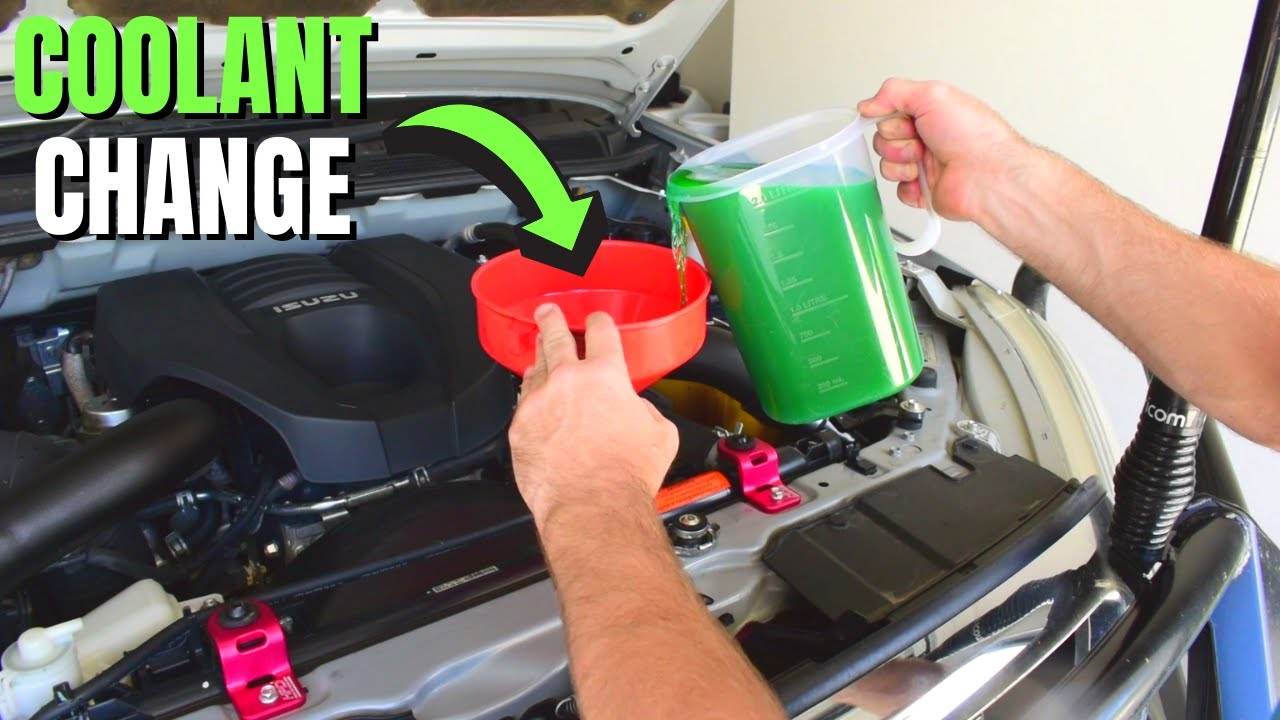
- New Coolant: This is the star of the show!
- Distilled Water: Don't just grab any old tap water; it can have minerals that gunk up your system.
- A Funnel: To avoid looking like a Jackson Pollock painting with coolant.
- A Container for Old Coolant: You can't just dump this stuff down the drain!
- A Rag or Paper Towels: For those inevitable little spills.
- Your Owner's Manual: Your car's secret diary, full of important info.
First, let’s figure out what kind of coolant your car likes. This is where your owner's manual struts its stuff. Cars are picky, just like us sometimes! They have different colors and types of coolant, and mixing them can cause a big ol’ mess, like putting ketchup on ice cream. You'll see stuff like "green," "orange," "pink," or even "blue" coolant. Your manual will tell you the specific type and color your car needs. Don't guess! It's worth a peek.
Now, find your coolant reservoir. This is usually a translucent plastic tank located somewhere in the engine bay. It’ll have "Min" and "Max" lines on it. If your coolant level is below the "Min" line, it’s time for a top-up. You might also see a radiator cap, usually on the radiator itself, which is a metal cap with a handle or a lever. We’ll talk about using both.
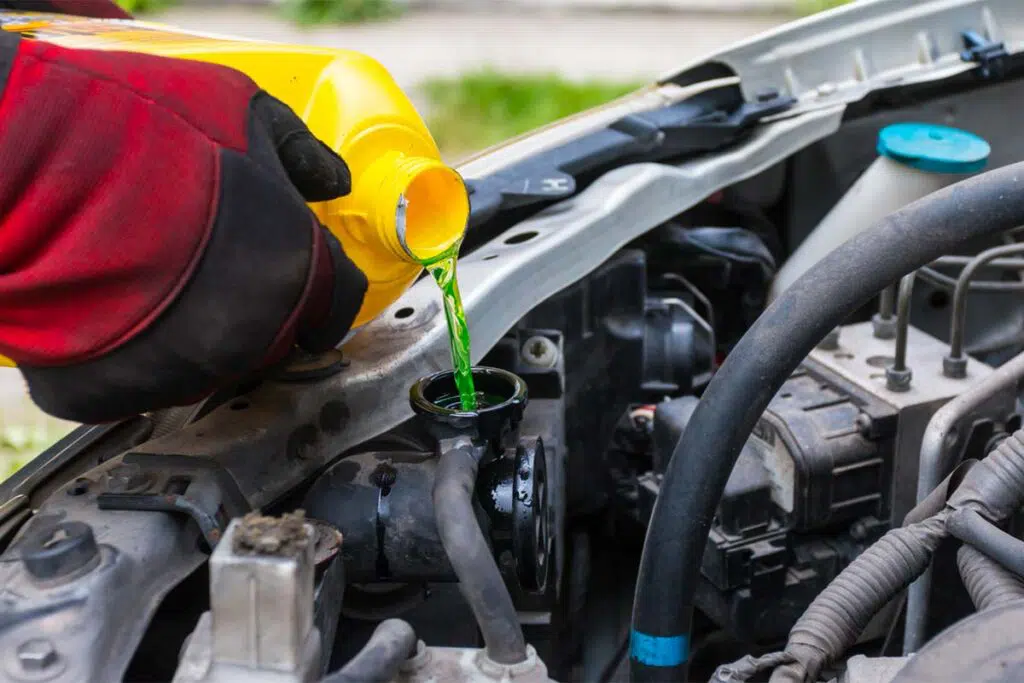
For a simple top-up, if your engine is nice and cool, you can often just add coolant directly to the reservoir. Unscrew the cap (remember, cool engine!), and using your trusty funnel, pour in the correct coolant until it reaches the "Max" line. If you're adding a significant amount, you'll likely need to mix coolant with distilled water. The common ratio is 50/50, but again, check your owner's manual. Some coolants come pre-mixed, which is super convenient if you're feeling a bit lazy (no judgment here!).
![How to Put Antifreeze in Car [Where Does Antifreeze Go?]](https://roadsumo.com/wp-content/uploads/2022/01/how-to-put-coolant-in-car-768x512.jpg)
If your coolant is really low, or you suspect a leak (uh oh!), you might need to add coolant to the radiator itself. Again, make sure the engine is COLD. Gently twist the radiator cap counter-clockwise. You might hear a slight hiss, which is normal as any residual pressure escapes. Once it’s off, look inside. If it’s empty, that’s a sign something’s up. Fill it up with your 50/50 mix (or pre-mixed coolant) until it’s close to the top. Then, put the radiator cap back on securely.
Don't forget to top up the reservoir too, if it’s low. It’s like giving your car a balanced meal and a drink. After you've added the coolant, put the caps back on tightly. You don't want any of that precious fluid escaping on your next adventure.
Once you’re done adding the coolant, it’s a good idea to start the engine and let it run for a bit, with the heater on full blast. This helps the new coolant circulate through the entire system, including the heater core. Keep an eye on that temperature gauge. If it starts creeping up too high, shut off the engine immediately and re-check the coolant level. Sometimes, when you add coolant, the system might need a little bit of time to burp out any trapped air.
And speaking of burping, sometimes a full coolant flush and fill is in order. This is a bit more involved than a simple top-up. It’s like giving your car a full internal cleansing. You drain out all the old, potentially gunked-up coolant, flush the system with water or a special flushing solution, and then refill it with fresh coolant. This is generally recommended every few years or a certain number of miles. If you’re feeling adventurous and your manual gives you the green light, you can totally tackle this yourself. It involves finding the radiator drain plug (usually at the bottom of the radiator) and sometimes a drain plug on the engine block itself. It's a bit messier, and you'll need a much bigger container for the old coolant, but it’s definitely doable.
When you drain the old coolant, remember that it’s a hazardous waste. You absolutely cannot pour it down the drain or on the ground. It’s toxic to animals and the environment. Most auto parts stores and many repair shops will take your old coolant for proper disposal. So, gather it up in your designated container and give it a responsible farewell.
Now, let’s talk about spotting potential problems. If you’re constantly needing to top up your coolant, that’s usually a sign of a leak. Look for puddles of colored liquid under your car (usually green, orange, or pinkish). It could be a leaky hose, a cracked radiator, or even a problem with the water pump or head gasket. If you suspect a leak, it’s best to get it checked out by a mechanic. Don’t let a small leak turn into a big, expensive problem!
![How To Put Coolant (Antifreeze) In Your Car [2024 Guide] - Auto Chimps](https://autochimps.com/wp-content/uploads/2022/05/How-To-Put-Coolant-Antifreeze-In-Your-Car-1024x576.jpg)
And what about those weird smells? If you’re smelling a sweet, syrupy odor when your engine is running, that could be coolant leaking onto hot engine parts. Again, time to investigate or call in the cavalry (a mechanic, that is).
So, there you have it! Putting coolant in your car isn't rocket science. It’s more like a friendly handshake between you and your engine. You’re showing your car you care, and in return, it’ll keep you cool, calm, and collected on your journeys. Think of yourself as a car whisperer, a mechanical maestro, a… coolant connoisseur!
And the best part? Every time you successfully add coolant or perform a basic check, you're not just maintaining a vehicle; you're building a relationship with it. You’re learning its language, understanding its needs, and becoming a more confident and capable car owner. So go forth, brave car caretaker! With a little bit of know-how and a dash of courage, you’ve got this. Your car will thank you with smooth, cool rides, and you’ll feel a swell of pride every time you see that temperature gauge sitting perfectly in the middle. Happy motoring!

