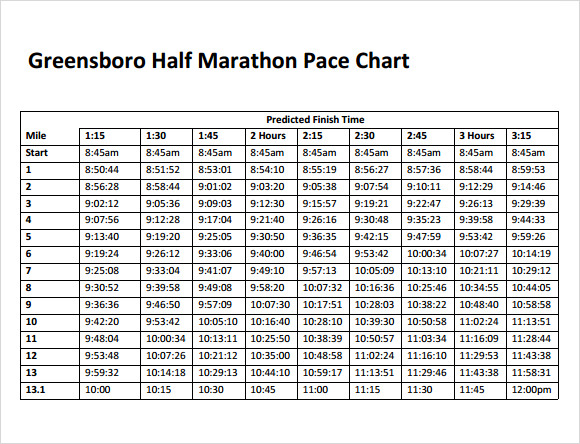
How To Pace For A Half Marathon

So, you've bravely signed up for a half marathon. Awesome! That’s like deciding to conquer Mount Everest, but with more cheering crowds and fewer Sherpas. But before you go out there and unleash your inner gazelle, let's talk about something super important: pacing. Think of it as your secret weapon, the magic sauce that turns a grueling slog into a triumphant trot.
Imagine this: you're at the starting line, buzzing with energy, the air thick with anticipation and maybe a hint of nervous flatulence. Your brain screams, "GO! FASTER! YOU'RE A SUPERHERO!" Resist that urge, my friend. That initial surge of adrenaline is like a tempting, sugary donut – delicious in the moment, but it’ll leave you feeling sluggish and regretting your life choices later.
Pacing is all about playing the long game. It’s the difference between sprinting a few blocks and then crawling home, versus smoothly gliding the entire 13.1 miles with a smile on your face. We’re aiming for the latter, obviously. Nobody wants to be that person who looks like they're being chased by a swarm of angry bees for the last few miles.
Must Read
The "Too Fast, Too Soon" Siren Song
That starting gun… it’s a dangerous thing. It’s like the starting pistol at a race where the prize is unlimited pizza. You’re going to want to bolt! But trust me, that initial burst of speed is a one-way ticket to the "wall of doom."
Your body isn't a rocket ship. It needs to warm up, settle into a rhythm. Think of it like easing your car into gear, not slamming it into fifth and hoping for the best. A little patience at the start pays off big time.
"The first mile is a lie. Don't believe it." – Some wise runner, probably.
Seriously, that first mile often feels ridiculously easy. It's like you've suddenly been gifted super-shoes and the ability to defy gravity. This is your brain trying to trick you. Recognize the deception! Keep it controlled, keep it steady.
Finding Your Magical Pace Number
Okay, so how do we find this mythical "magical pace number"? It’s not about picking a random number and hoping for the best. It’s about knowing yourself and your training.
Think back to your long training runs. What felt comfortable? What pace did you maintain without feeling completely wiped out? That’s your starting point. It’s your baseline. Your reference point.
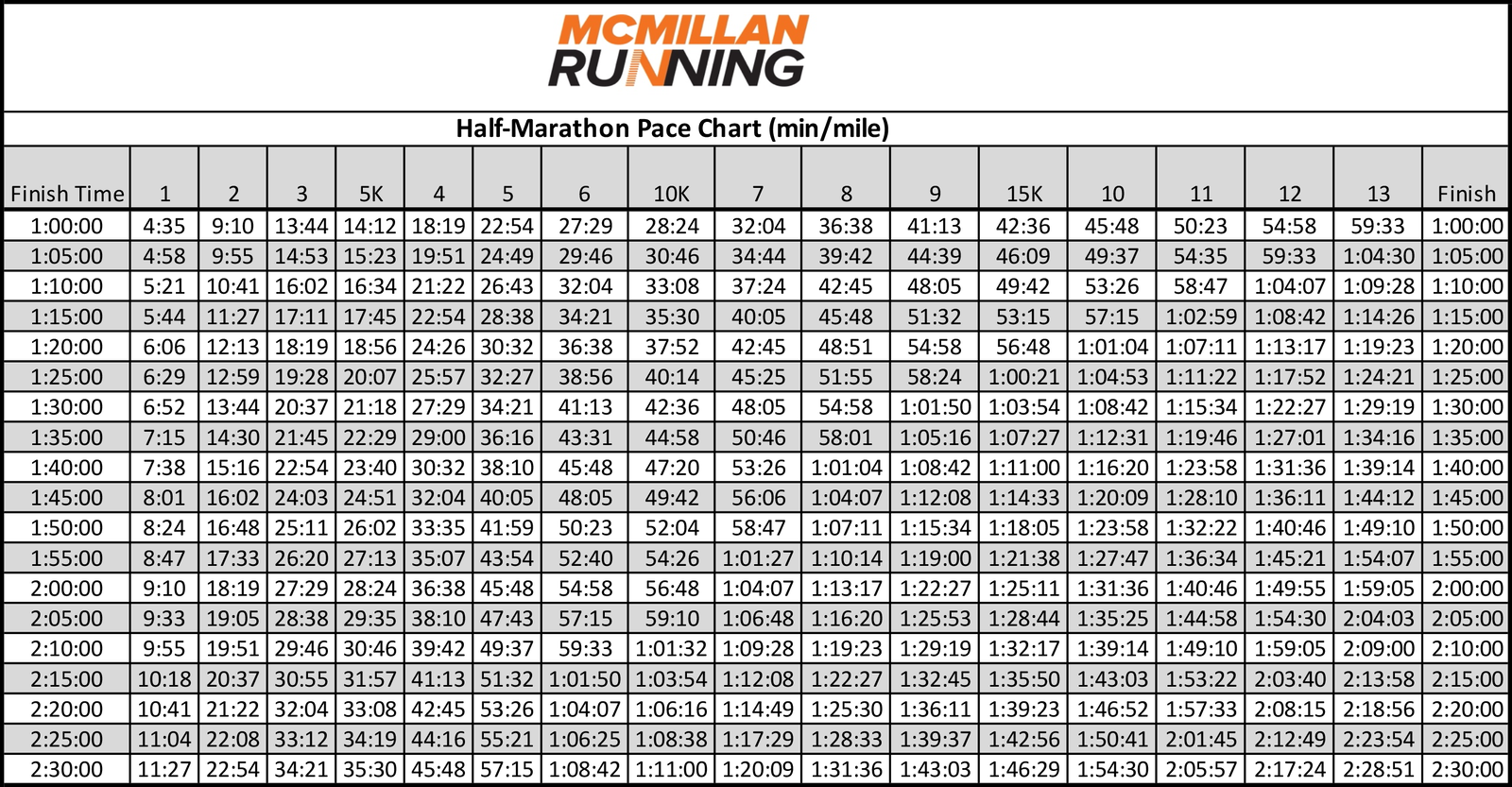
If you’ve been using a GPS watch (which, let’s be honest, most of us have), look at those longer runs. What was your average pace? That’s a pretty good indicator of what your body can handle for an extended period.
Another fun trick is to use a pace calculator. You plug in a time you’ve run for a shorter distance (like a 5k or 10k), and it spits out a projected half marathon pace. These are like fortune cookies for runners, but way more accurate!
The "Conversation Pace" Rule of Thumb
My absolute favorite way to explain pacing, especially for beginners, is the "conversation pace" rule. If you can hold a conversation with someone running alongside you without gasping for air like a beached whale, you're probably in the right ballpark.
Imagine you’re chatting with your running buddy about the latest episode of that binge-worthy show. You should be able to string together sentences without needing a breather every few words. If you’re just grunting and pointing vaguely, you’re going too fast!
This is a fantastic, organic way to gauge your effort. It’s not about precise numbers on a watch; it’s about how your body feels. It’s about listening to the whispers of your inner marathoner, not the screams.
The Race Day Strategy: A Multi-Phase Adventure
Race day isn't just one long, monotonous jog. It's an epic quest with distinct phases, each requiring a slightly different tactical approach.
Phase 1: The Cautious Cruise (Miles 1-3). This is where you deploy your "don't be a hero" strategy. Run a little slower than your goal pace, maybe even 10-20 seconds per mile slower. Let your body warm up and get used to the race atmosphere.
You'll see people zipping past you like they're late for a very important appointment. Don't get sucked in! They might be speed demons, or they might be setting themselves up for a spectacular crash and burn later.
Phase 2: The Steady Grind (Miles 4-10). This is your sweet spot. This is where you settle into your planned goal pace. This is where you’re rocking it, feeling strong and in control. It’s like cruising on a highway with the windows down.
You’ll start passing some of those early birds who went out too fast. Enjoy that feeling of quiet triumph! This is where smart pacing really shines. You're working, but you're not working too hard.
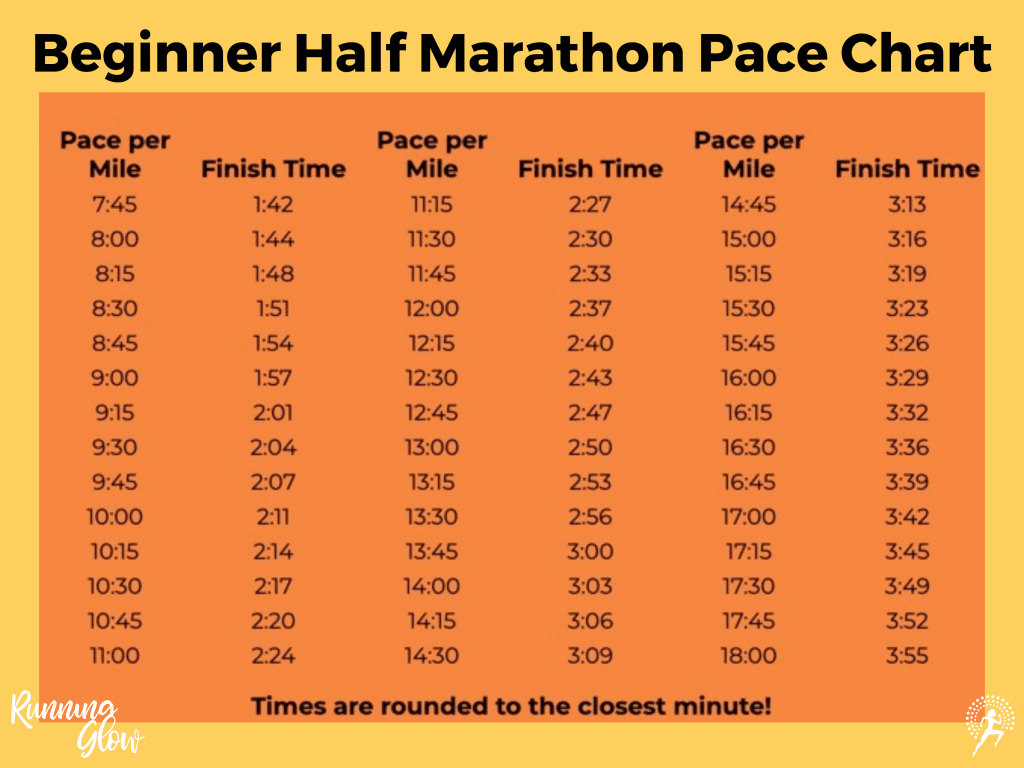
Phase 3: The "Push It Just a Tad" Zone (Miles 11-13.1). Now, and only now, can you start to think about picking it up a little. If you've paced yourself well, you’ll have some energy in the tank. You can gradually increase your speed, especially in the final mile.
This is where you channel your inner superhero. Dig deep! This is for the finisher’s medal, the bragging rights, and the celebratory pizza that awaits. You've earned this final surge.
What About Hills? Oh, The Hills!
Hills are the mischievous goblins of any race. They’ll try to derail your perfectly planned pace. Don't let them!
When you hit an uphill, your pace will slow down. That's physics, my friends. Don't fight it. Instead, focus on maintaining your effort. Shorten your stride, pump your arms, and power through.
On the downhill, you can pick up the pace a bit, but be careful! Don't let gravity do all the work and blast your quads to smithereens. Control is key. Think of it as a controlled descent, not a runaway train.

The trick with hills is to not panic. They are temporary. They are just little speed bumps on your glorious 13.1-mile journey.
Listen to Your Body, It's Smarter Than You Think
Ultimately, the best pacing advice is to listen to your body. Your body is an amazing machine, and it will tell you what it needs. If you're feeling incredibly strained in the first few miles, you're going too fast.
If you're feeling surprisingly strong as you approach mile 10, you might even have a little extra in the tank for a stronger finish. This is the beauty of flexible pacing. It’s not rigid; it’s adaptable.
Don’t be afraid to adjust your plan on the fly. Race day can bring unexpected wind, heat, or just a general feeling of "woah, this is harder than I thought." Adjusting your pace is a sign of intelligence, not failure.
So go out there, embrace the journey, and run smart. Your half marathon awaits, and with a good pacing strategy, you'll conquer it with style and a smile. Now go forth and be awesome!