How To Look For A Word On Mac

Ever feel like your Mac is a giant, digital library, and you're just trying to find that one specific book? Yeah, me too. It’s like a treasure hunt, but instead of gold doubloons, you’re hunting for a misplaced comma or a forgotten adjective. Don't worry, though! Finding words on your Mac is way easier than it sounds. And honestly, it's kind of a fun little party trick once you get the hang of it.
Think of it this way: your Mac is full of hidden gems, and the Find function is your trusty shovel. It’s not just for finding files, oh no. It’s for digging through your documents, your emails, even the deepest darkest corners of your web browser. It’s the digital equivalent of asking your super-smart friend, "Hey, where did I put that thing?"
The Universal "Ctrl+F" (or Command+F, if you're a Mac Person!)
This is your gateway drug to word-finding bliss. Seriously, if you learn nothing else, learn this. On pretty much every application that displays text on your Mac – and trust me, that's a lot – you can hit Command + F. That’s ⌘ + F, for the uninitiated.
Must Read
What happens next is pure magic. A little search bar pops up. It might be at the top of the window, or it might be tucked away in a sidebar. Don't be scared! It's just waiting for your command. Type in the word (or phrase) you're looking for. Hit Enter. And poof! Your Mac highlights every single instance of that word.
It's like a digital highlighter on steroids. You can see exactly where your target word is hiding. And often, you can even navigate between the results. Just a little arrow next to the search bar? That’s your express train to the next mention. Pretty neat, right?
Why is this so cool?
Imagine you wrote a 50-page report. Somewhere in there is a statistic you’re pretty sure you messed up. Instead of reading the whole darn thing again (shudder), you just Command + F for the number. Boom. Found it. You just saved yourself hours of tedious reading. That, my friends, is the power of the search bar.
Or, you’re having a text message conversation that’s gone on for days. Someone mentioned a specific restaurant. You want to remember the name. Instead of scrolling back and forth for an eternity, just Command + F for "restaurant" or "dinner." You'll zip right to the relevant messages. It’s like having a time machine for your conversations!
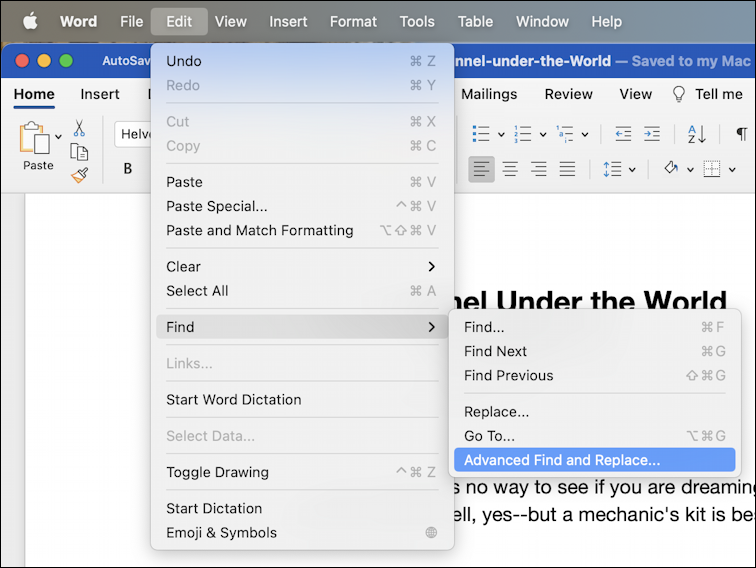
And the best part? It works everywhere. Pages? Yep. Word? Double yep. Notes? Absolutely. Safari? Chrome? Firefox? You betcha. Email? Of course. It’s the ultimate cross-platform peace treaty for your typing fingers.
Beyond the Basics: Spotlight, You Magnificent Beast!
Okay, so Command + F is for finding words within an open document. But what if you don't know which document has the word you’re looking for? That’s where Spotlight comes in. Think of Spotlight as your Mac's all-knowing oracle. It’s the super-powered search engine for your entire computer.
How do you summon this mystical oracle? Easy peasy. Hit Command + Spacebar. That’s ⌘ + Spacebar. Suddenly, a sleek little search bar appears right in the middle of your screen. It’s like a tiny, polite alien landing on your desktop.
Now, here’s the fun part. You can type anything into Spotlight. File names? Yes. App names? Obviously. But also… words within those files. That’s right. You can type a word, and Spotlight will show you all the documents, emails, calendar events, and even web pages that contain that word.

Spotlight's Quirky Genius
This is where the real magic happens. Spotlight isn't just a dumb search. It’s actually pretty smart. It learns what you use most often. So, if you’re constantly searching for "budget report," Spotlight will probably show you that file first. It’s like your Mac is saying, "I know you, seeker of the budget report!"
And it’s not just about finding text. You can use Spotlight to do calculations! Type "5+7" and it’ll show you "12." Type "weather New York" and it’ll give you the forecast. It's a little bit calculator, a little bit weather reporter, and a whole lot of helpful.
But back to words! Let’s say you have a bunch of meeting notes from last week, and you remember someone mentioning "synergy." Just hit Command + Spacebar, type "synergy," and watch as Spotlight unfurls a list of every document that mentions your favorite corporate buzzword. You can then click on the document, and it'll even show you a little preview with the word highlighted. How’s that for efficiency?
It’s the ultimate detective tool. You’re a word-detective, and Spotlight is your magnifying glass. You’re solving mysteries, one word at a time. And all it takes is a couple of key presses. It’s almost too easy, right?
Safari's Secret Scroll
So, you're cruising the web, reading an article, and you want to find a specific term. Maybe it's a newfangled tech word, or perhaps you just want to confirm that the author really did spell "receive" correctly. You guessed it: Command + F to the rescue!
Open up Safari (or Chrome, or Firefox – they all do this!). Navigate to the webpage. Hit Command + F. A little search bar will appear, usually right at the top of the browser window. Type in your word. And just like in your documents, Safari will highlight every instance of that word on the page.
You can even see a little counter. "1 of 5," for example. It tells you how many times your word appears and which one you're currently looking at. It’s like a personal tour guide for the text on any given webpage.
Web Wonders and Quirky Finds
This is great for comparing information. If you're researching a product, you can quickly search for specific features or brand names across multiple reviews. You’re not just reading; you’re scanning with purpose.
Ever seen a really long article and wondered if a certain keyword is even mentioned? Instead of scrolling endlessly, a quick Command + F tells you. It's the digital equivalent of skipping to the good part. And sometimes, the good part is just confirming a spelling.
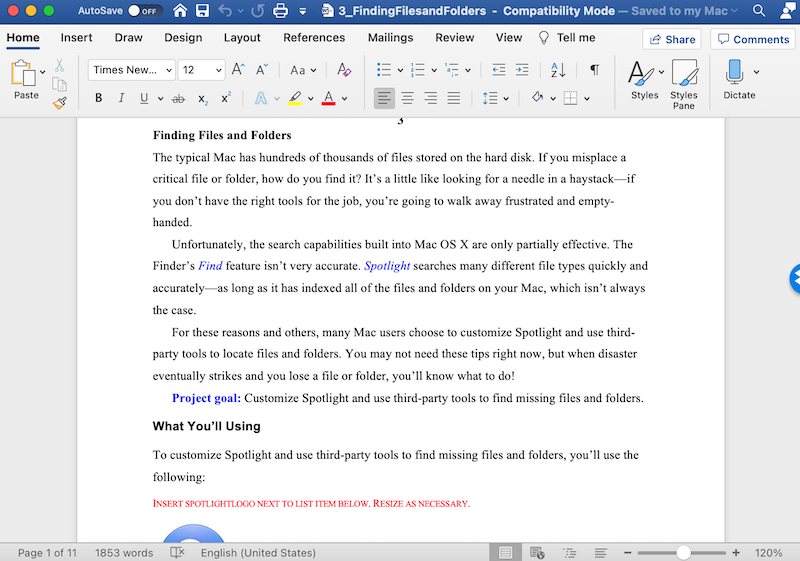
The truly fun part is when you stumble upon unexpected uses of words. You might be searching for "apple" and realize it's mentioned in a recipe, a tech review, and a historical anecdote. Your word-finding mission just turned into a mini-adventure.
It’s a little reminder that the internet is a vast, wild place, and words are its building blocks. And you, my friend, now have the keys to navigate that textual landscape with ease. So go forth and find! Your Mac is waiting to be explored, one word at a time.
A Little Word-Hunting Philosophy
Why is this even fun? Because it’s about control. It’s about taking a massive amount of information and being able to pinpoint exactly what you need. It’s a small superpower in your digital life.
It’s also about curiosity. Sometimes you search for a word just to see how many times it appears. Or you might be looking for a synonym and accidentally find a whole paragraph you’d overlooked. It's a constant invitation to discover more.
So, the next time you’re staring at your screen, feeling a bit lost in the text, remember your trusty sidekicks: Command + F and Command + Spacebar. They’re your secret weapons. They're your little digital elves, always ready to fetch that elusive word for you. Now go forth and search! The digital world awaits your keen eye.