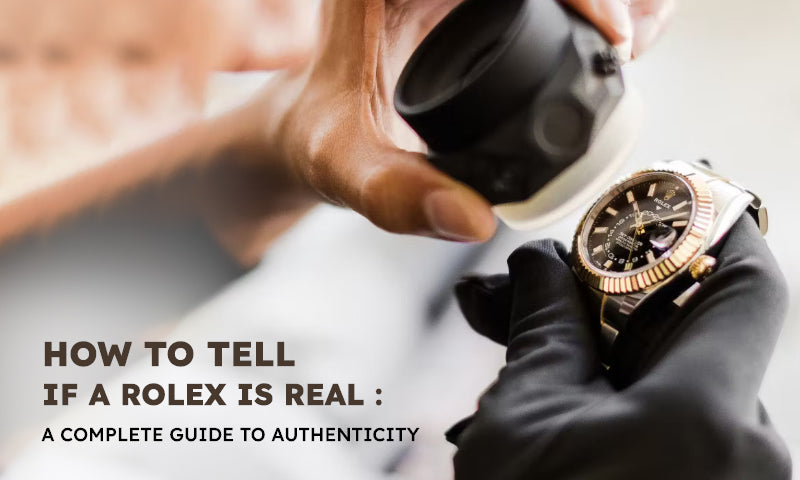
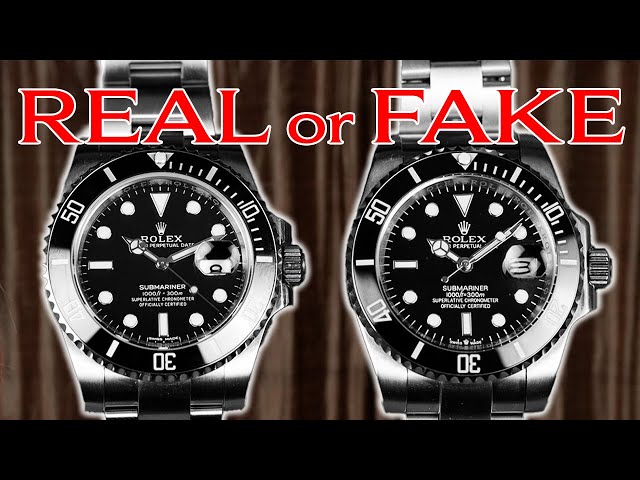
How To Know If A Rolex Is Real

Ah, the Rolex. Just the name itself conjures up images of James Bond zipping around in a submersible or perhaps your favorite movie star accepting an award with a gleam on their wrist. They're more than just watches; they're little pieces of history, little bits of magic. But with such a coveted item, comes the inevitable question: how do you know if the one you're admiring, or even thinking about buying, is the real deal?
Think of it like this: spotting a fake Rolex is a bit like being a detective, but way more fun and with less paperwork. You don't need a magnifying glass and a deerstalker hat, although a good pair of eyes and a dash of common sense go a long way. We're going to dive into some of the tell-tale signs, the little whispers that a true Rolex will give away, and how a phony might just be shouting its deception.
The Weight of Authenticity
One of the first things you might notice is the weight. Real Rolexes feel substantial. They are crafted from high-quality metals like Oystersteel, which is incredibly dense and solid. A fake, on the other hand, often feels lighter, a bit hollow, like it's made from cheaper materials that just look the part.
Must Read
Imagine picking up a perfectly crafted piece of jewelry versus a plastic toy that's trying to mimic it. That's the difference in feel you're looking for. It’s a subtle, yet incredibly important, indicator of genuine craftsmanship.
The Smoothness of Time
Now, let's talk about the second hand. On a genuine Rolex, the second hand moves in a smooth, sweeping motion. This is thanks to the intricate mechanical movement ticking away inside. It's a graceful dance, a testament to the engineering prowess of the brand.
A fake, however, often has a second hand that jumps from one second marker to the next. It's a jerky, stuttering movement, like a poorly animated cartoon. It might tick, but it doesn't flow. This is one of the easiest ways to spot a mimic, and often, the most telling.
The Cyclops Lens: A Window to Truth
Many Rolex models feature a distinctive Cyclops lens over the date window. This little bubble magnifies the date, making it easy to read. On a real Rolex, this magnification is precise and perfectly centered, giving you a clear, crisp view of the number.
Fake Cyclops lenses are often wonky. They might be off-center, or the magnification might be weak or distorted. It's like looking through a smudged window versus a crystal-clear one. The real deal offers perfect clarity, always.

The Detail is in the Dial
Let's zoom in on the dial itself. A genuine Rolex dial is a masterpiece of detail. The text is sharp, evenly spaced, and perfectly printed. Every single marking, from the brand name to the model designation, is executed with incredible precision.
Counterfeits often have blurry text, uneven spacing, or even misspellings. It’s the little imperfections that give them away. A real Rolex dial is a work of art, and the fakes often look like a hasty sketch in comparison.
The Crown's Secret
The Rolex crown, that iconic symbol of the brand, is usually found on the dial at the 12 o'clock position. On a genuine watch, this crown is perfectly formed and polished. It gleams with the same quality as the rest of the watch.
Fakes might have a crown that looks a bit rough, with less defined edges or an inconsistent finish. It's another subtle detail that separates the genuine article from its impostor. It’s the king’s seal, and it needs to be flawless.
Water Resistance: The Submarine Test
Many Rolex watches are famously water-resistant, some even designed for deep-sea diving. While you probably shouldn't test this yourself without proper knowledge, it's a testament to the engineering. A real Rolex is built to withstand pressure and water with incredible integrity.
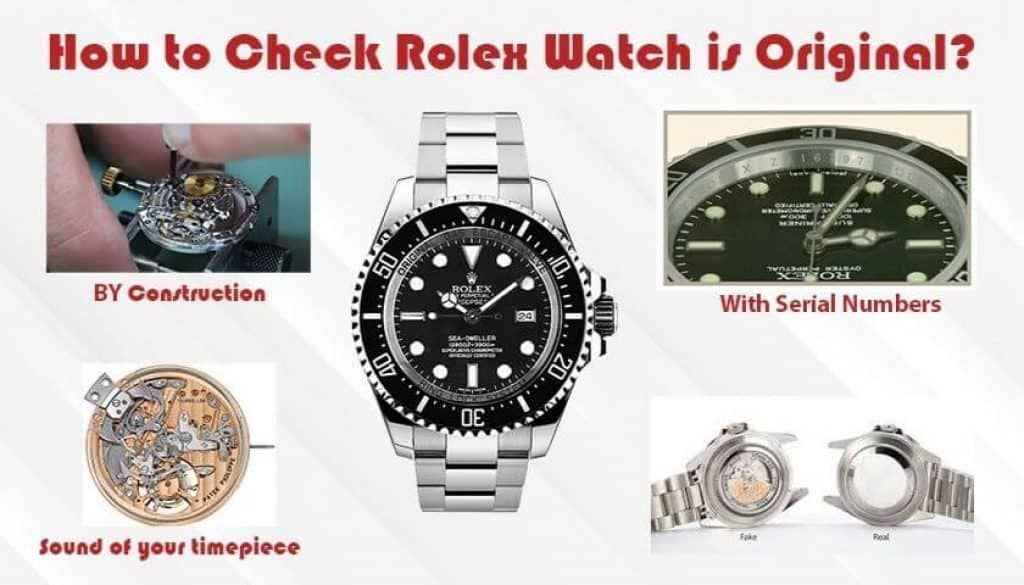
A fake, on the other hand, is likely to succumb to even a small amount of water. It’s like a leaky boat versus a submarine designed for the Mariana Trench. The difference in build quality and sealing is immense, and crucial for a true luxury timepiece.
The Movement's Heartbeat
The movement is the heart of any watch, and for Rolex, it's a marvel of engineering. While you can't always see it without opening the watch, the smooth sweep of the second hand is a direct result of this intricate mechanism. It's a symphony of tiny gears and springs working in perfect harmony.
The movements in counterfeit watches are often crude imitations. They might look superficially similar, but they lack the precision, durability, and craftsmanship of a genuine Rolex movement. This is where the real magic happens, and it's hard to fake that.
The Engravings Tell a Tale
Authentic Rolexes have fine, crisp engravings. You’ll find them on the case back, the clasp, and even the rehaut (the inner bezel ring). These engravings are precise and deep, a clear sign of quality manufacturing.
Counterfeits often have shallow, fuzzy, or uneven engravings. Sometimes, they’re not engraved at all, but rather etched or even printed on. It’s like comparing a finely chiseled sculpture to a quick doodle. The details matter immensely.
The Magnifying Glass of the Rehaut
Speaking of the rehaut, look closely at the engraving of the Rolex coronet at the 12 o'clock position on this inner bezel. On a genuine watch, this tiny coronet is perfectly aligned with the 12 o'clock marker on the dial. It’s a tiny detail that’s incredibly hard for counterfeiters to get right.

When this tiny crown is misaligned, it's a big red flag. It shows a lack of attention to the minuscule details that Rolex obsesses over. It’s a microscopic hint that something isn’t quite right.
The Feel of Quality Materials
Beyond just weight, the materials themselves feel different. Real Rolexes use high-grade stainless steel, precious metals like gold and platinum, and sometimes ceramic. These materials have a distinct sheen and a smooth, luxurious feel to the touch.
Fakes often use cheaper alloys that can feel rough, look dull, or even cause skin irritation. The bracelet, the case, the bezel – everything on a real Rolex feels as premium as it looks. It's a tactile experience that speaks volumes about its authenticity.
The Sound of Silence (or Not!)
This might sound a bit odd, but sometimes, the sound (or lack thereof) can be a clue. A genuine Rolex, with its meticulously crafted mechanical movement, is incredibly quiet. You might hear a faint, almost imperceptible whirring if you hold it to your ear, but it’s rarely a loud or distracting tick.
Many cheaper quartz movements used in fakes can be quite noisy. That distinct, loud ticking can be a giveaway that you're not dealing with a genuine Rolex. The silence of a real Rolex is a sign of its sophisticated inner workings.
The Price Tag Truth
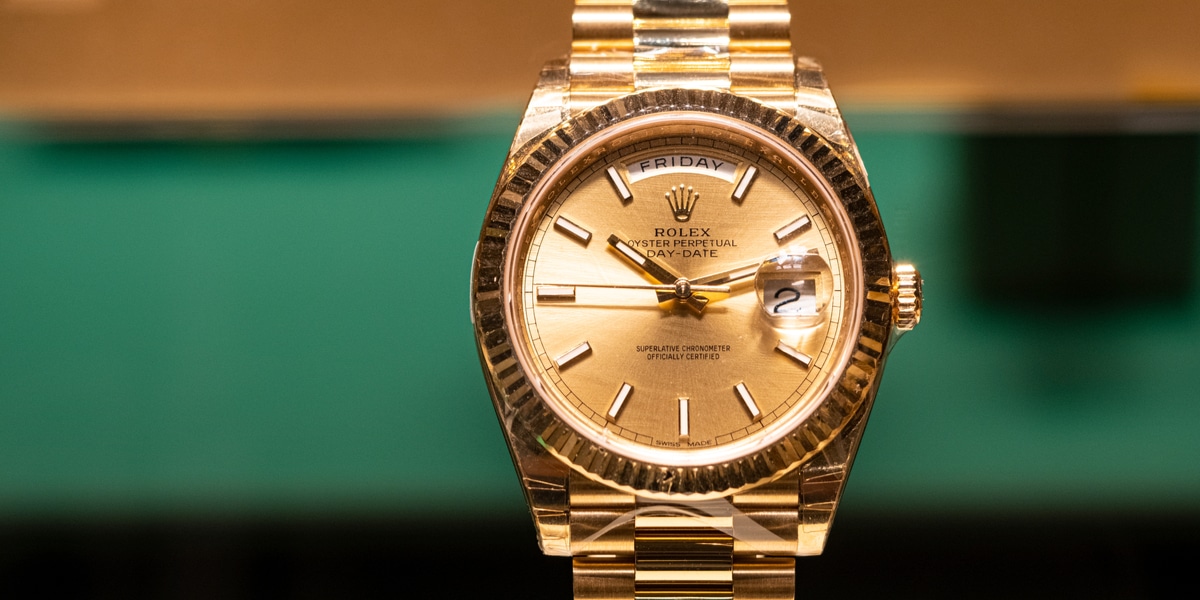
Let's be honest, a Rolex is a significant investment. If you see a brand-new Rolex being sold for a ridiculously low price, it's almost certainly a fake. The old adage of "if it seems too good to be true, it probably is" is especially relevant here.
Genuine Rolexes hold their value remarkably well due to their quality and desirability. A suspiciously cheap price tag is a siren song that leads to disappointment, not a dream watch. Save yourself the heartache and be wary of unbelievable deals.
Where to Buy and What to Ask
The safest bet for buying a real Rolex is from an authorized dealer. They are vetted by Rolex and guarantee authenticity. If you’re buying pre-owned, seek out reputable dealers with strong return policies and authentication services.
Don't be afraid to ask questions! A knowledgeable seller will be happy to answer them. They'll understand your concerns and can provide documentation and proof of authenticity. It’s your right to be sure you're getting the real deal.
Ultimately, spotting a fake Rolex is about paying attention to the details. It's about appreciating the incredible craftsmanship, the quality materials, and the rich history that goes into every single timepiece. It’s not just about telling time; it’s about owning a piece of legacy.
So, the next time you see a Rolex, take a moment. Feel its weight, admire its smooth sweep, marvel at its crisp details. You might just surprise yourself with your newfound ability to spot the genuine article. And who knows, maybe one day, that gleaming beauty on your wrist will be a real Rolex, a testament to your discerning eye and a little bit of that Rolex magic.