How To Know If A Coin Is Silver
Ever find yourself rummaging through a grandparent's old jewelry box, or perhaps scoring a curious find at a flea market, and then BAM! You hold a coin that just… feels different? It has a certain weight, a subtle gleam, and a whisper of history clinging to it. Your mind immediately jumps to that iconic image: a silver dollar, gleaming under a cowboy's campfire. But how do you actually know if that coin in your hand is the real deal, a genuine piece of silver history, or just a clever imposter? Don't worry, fellow treasure hunter, it’s not as daunting as it sounds. Think of it less like a high-stakes detective mission and more like a fun treasure hunt with a few handy tricks up your sleeve. We're going to dive into the wonderfully simple ways to spot some authentic silver, with a dash of history and a sprinkle of modern-day savvy.
Forget those elaborate, expensive metal detectors for a moment. While they have their place in serious collecting, for most of us, the journey to identifying silver coins starts with our own two hands and a bit of common sense. It’s about engaging with the object, feeling its presence, and listening to what it has to say. And trust us, silver has a story to tell.
The Magnetic Test: A Surprisingly Simple Start
Let's kick things off with one of the easiest and most accessible tests: the magnetic test. Now, before you go waving a giant magnet around your precious finds, remember that we're talking about small, everyday magnets, like the ones on your fridge. Silver itself is not magnetic. This is a crucial piece of information! So, if your coin is strongly attracted to a magnet, you can probably kiss your silver dreams goodbye for that particular piece. It's likely made from a base metal like iron or steel, which are highly magnetic.
Must Read
However, there's a slight caveat here. Some coin alloys, especially older ones, might contain small amounts of other metals that are mildly magnetic. But for the most part, a strong attraction to a common magnet is a dead giveaway that you're not holding pure silver. Think of it as a quick "nope" button for your treasure hunt. It’s a great way to weed out the obvious fakes right off the bat, saving you time and potential disappointment.
This little trick is incredibly handy when you're browsing through bulk coin bins at antique shops or flea markets. A quick swipe with a small magnet can instantly disqualify a pile of potential duds, allowing you to focus your attention on the more promising candidates. It's the ultimate low-effort, high-reward test for any aspiring coin detective.
The "Ring" Test: Listen Closely to the Metal's Song
This is where things get a bit more sensory and, dare I say, musical. Silver, when struck lightly, produces a distinct ringing sound. It's a beautiful, clear, and somewhat prolonged chime. Other metals? Not so much. They tend to produce a dull thud or a very short, uninspired clink. Think of the satisfying "ping" of a high-quality bell versus the unsatisfying "thump" of a cheap toy.
To perform the ring test, you'll need to be careful. You don't want to damage your coin, so avoid dropping it or striking it hard. The best way to do this is to hold the coin by its edge, between your thumb and forefinger, and then gently tap it with another coin (preferably one you know is not silver, or a less valuable coin). Listen intently to the sound produced.
A genuine silver coin will resonate with a clear, bell-like tone that hangs in the air for a moment. This is often referred to as the "silver ring." Base metals, on the other hand, will sound flat and dead. This test requires a bit of practice to get a feel for the nuances, but once you've heard the distinct sound of silver, you'll start to recognize it.
This test is particularly effective for higher-purity silver coins like Morgan dollars, Peace dollars, and older dimes, quarters, and half-dollars. You can even compare the sound of a suspect coin to a known silver coin to really hone your ear. It’s like training your auditory palate to recognize the distinct flavor of silver. Some collectors swear by this method as one of the most reliable, especially when dealing with coins where the markings have worn down over time.
Visual Inspection: The Devil (and the Silver) is in the Details
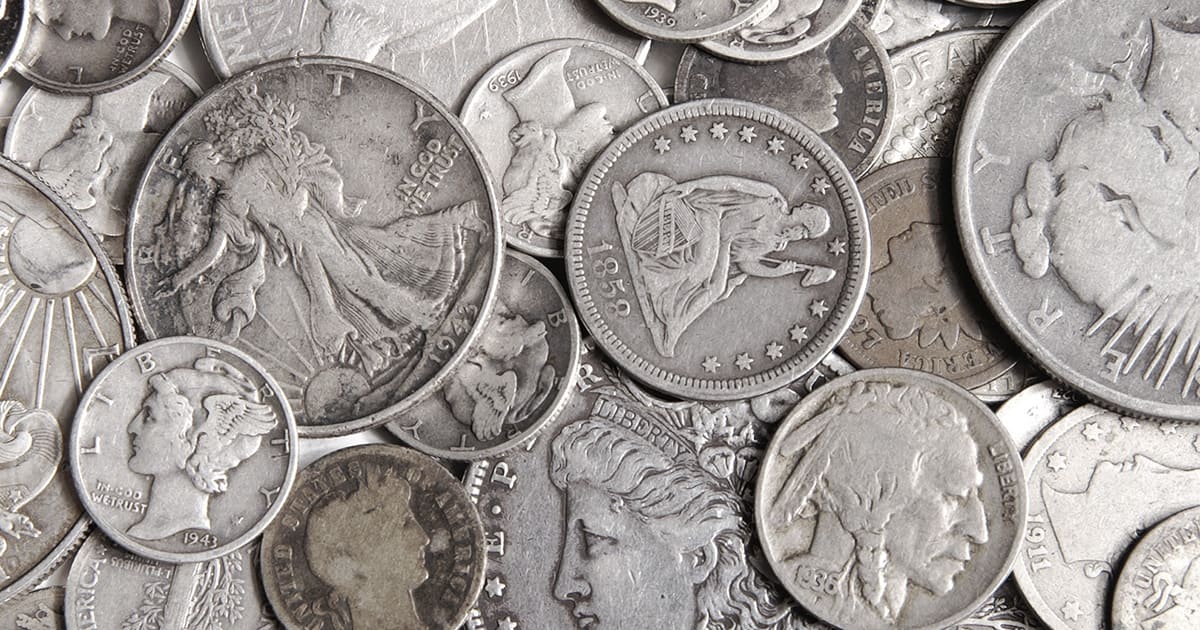
Beyond the sound and magnetism, a good old-fashioned visual inspection can tell you a lot. Silver has a unique luster and a tendency to develop a specific type of patina over time. While some coins might be polished to a blinding shine, true silver often exhibits a subtle, almost milky sheen. It's not as harsh or reflective as chrome, but rather possesses a softer, more inviting glow.
Pay attention to the color. Pure silver is a bright, white metal. However, as it ages and comes into contact with air and other elements, it develops what collectors call "patina." This isn't necessarily tarnish in the negative sense; rather, it's a natural oxidation that can create beautiful, deep toning, ranging from golden hues to rich blues and purples. This patina is often a sign of an authentic, older coin. Beware of coins that have an unnatural, uniform, or overly bright artificial toning, which can sometimes be a sign of doctored coins.
Examine the edges of the coin. Many older silver coins have reeded edges, meaning they have a series of parallel lines. This was originally done to prevent people from shaving off small amounts of silver from the edge to create more coins. The reeding should be clean and consistent. If the edge looks plain and smooth, it might be a modern, less valuable coin or a fake designed to mimic the look of silver.
Also, look for any signs of wear. Genuine silver coins, especially those that circulated, will show wear patterns consistent with their age and use. Be suspicious of coins that look perfectly preserved but have a suspect weight or feel. Sometimes, the weight is the first indicator that something is off, and we'll get to that in a moment.
The Weight and Dimension Test: It's All About the Numbers
This is where precision comes into play, and for serious collectors, it's a fundamental step. Silver has a specific density, meaning a certain volume of silver will always weigh a certain amount. Counterfeiters often struggle to perfectly replicate the exact weight and dimensions of genuine coins.
You'll need a good quality scale, preferably one that can measure in grams and to at least two decimal places. You'll also want to have the specifications of the coin you're trying to identify. Reputable coin collecting websites and books will list the exact weight and diameter of virtually every coin ever minted.

For example, a classic U.S. Morgan silver dollar (90% silver, 10% copper) should weigh exactly 26.73 grams. If the coin you're holding weighs significantly less or more, it's a strong indication that it's not a genuine Morgan dollar, or it might be a silver-plated base metal. Similarly, a U.S. Kennedy half-dollar (90% silver, minted from 1965-1970) weighs 11.5 grams.
Beyond weight, you can also measure the diameter and thickness of the coin. These measurements should also match the official specifications. Even a slight deviation can be a red flag. This test is incredibly effective because it relies on physical properties that are difficult for counterfeiters to replicate accurately, especially with older coins where the metal composition might be slightly different from modern alloys.
So, before you get too excited about that potentially valuable find, grab your scale and do your homework. Knowing the specifications for common silver coins you might encounter is a fantastic way to filter out the fakes. It’s a little bit of homework, but the payoff is knowing you're holding something genuinely special.
The "Feel" Test: Trust Your Intuition
This might sound a bit mystical, but there's a certain "feel" to genuine silver. It has a distinct weight and a coolness that can be quite palpable. When you hold a coin that is genuinely silver, it often feels solid and substantial in your hand. It has a certain density that base metals just can't quite replicate, even if they're the same size.
Compare it to holding a piece of aluminum foil versus a piece of lead. Even though they might take up similar space, the weight difference is immediately apparent. Silver, being a relatively dense metal, imparts a similar sensation. It’s a feeling of substance and permanence.
This "feel" test is often developed through experience. The more genuine silver coins you handle, the better you'll become at recognizing this unique sensation. It’s not a scientific measurement, but it’s a valuable intuition that seasoned collectors often rely on. Think of it as your internal silver-detecting radar.

If a coin feels surprisingly light for its size, or if it has an unusual metallic coolness that doesn't seem to dissipate, it might be worth investigating further. While not definitive on its own, this tactile assessment can serve as an excellent first impression that prompts you to employ the other, more objective tests.
The Acetone Test (With Caution!): A Deeper Dive for Toning
Now, this is a test that requires a bit more caution and is primarily used for examining toning, not for determining if the coin is silver itself. It's for when you've already got a strong suspicion that the coin is silver, but you want to check the authenticity of its surface toning.
If a coin has been artificially toned, meaning someone has applied chemicals to make it look old and valuable, this toning can often be removed with acetone. Acetone is a common solvent, often found in nail polish remover. You can get pure acetone at most hardware stores.
To perform this test, you'll need to place the coin in a small glass dish or bowl and pour a small amount of acetone over it, just enough to cover the coin. Let it sit for a few minutes. If the toning starts to disappear or rub off onto the dish, it's a strong indication that the toning is artificial. The acetone essentially dissolves the applied chemicals.
IMPORTANT NOTE: This test should only be used on coins you are reasonably sure are silver. Acetone will not damage genuine silver. However, it can damage other types of coins or coatings. Always test on a small, inconspicuous area if you’re unsure, or better yet, stick to coins where you’re confident about the base metal. And, of course, work in a well-ventilated area and avoid open flames!
This test is often a last resort for collectors who have identified a coin that looks too good to be true in terms of its toning. It can help distinguish between a naturally aged silver coin and a modern coin that has been artificially "aged" to deceive.

When in Doubt, Consult the Experts
Sometimes, even with all the tests in the world, you might still be on the fence. That's perfectly okay! The world of numismatics (coin collecting) is vast, and there are always nuances to learn. If you have a coin that you suspect is valuable silver, but you're not entirely sure, don't hesitate to seek professional help.
Local coin shops are fantastic resources. The owners and staff are typically knowledgeable and can often give you a quick assessment of your coin. For more valuable or rare items, consider consulting a professional coin grading service, like PCGS or NGC. They have experts who can authenticate and grade your coins with incredible accuracy, although this service comes at a cost.
The beauty of collecting is the shared passion and the willingness of the community to help. Don't be shy about asking questions. Most coin enthusiasts are thrilled to share their knowledge and help others discover the joy of history in their hands.
Remember, the goal isn't always to strike it rich, but to connect with the past, appreciate the craftsmanship, and enjoy the thrill of discovery. Even if that old coin turns out to be a common clad coin, it might still hold sentimental value or be a great starting point for learning more about history.
A Final Thought on the Allure of Silver
There's something inherently captivating about silver. It's been prized for millennia, used in everything from ancient currency to exquisite jewelry. Holding a piece of silver is like holding a tangible piece of history, a story that has been passed down through generations. Whether it's the satisfying heft of a silver dollar, the intricate design of an old coin, or the gentle gleam that catches the light, silver has a timeless appeal.
In our fast-paced, digital world, there's a grounding comfort in holding something physical, something that carries the weight of centuries. These simple tests – the magnetic pull (or lack thereof), the musical chime, the visual details, and the precise weight – are not just about identifying a metal. They are about engaging with an object that has a story to tell, a story that connects us to the people who made it, used it, and passed it down. So, the next time you find yourself holding a curious coin, take a moment, employ these simple tricks, and see what secrets it might reveal. You might just be holding a piece of history, waiting for you to discover it.