How To Know A Real Rolex Watch

So, you're eyeing that shiny Rolex. Awesome choice! But before you drop a small fortune, let's talk about how to make sure it's the real deal. Don't worry, it's not rocket science. Think of it as a fun treasure hunt for grown-ups. And honestly, who doesn't love talking about ridiculously cool watches?
First off, let's get one thing straight: fakes are everywhere. And some of them are really good. Like, "so good you'd have to be a detective" good. But fear not! We're going to equip you with the knowledge to spot the phonies. It’s all about the little things. The details. The things that scream "I'm the original, baby!"
The Weighty Truth
Okay, first up: weight. Real Rolexes are made with serious, high-quality materials. We're talking 904L stainless steel (fancy stuff!) and precious metals. This means they feel substantial. Solid. Not flimsy like a cheap imitation. Pick it up. Does it feel like a feather? Uh oh.
Must Read
Genuine Rolexes have a satisfying heft. It’s a feeling you get. A confidence in your hand. Fakes often use lighter, cheaper metals. So, when you're checking it out, give it a little wiggle. Feel that solid presence? That’s a good sign.
The Crystal Clear Difference
Next, let's talk about the crystal. Most modern Rolexes have sapphire crystal. This stuff is incredibly scratch-resistant. Like, super-duper scratch-resistant. It's also perfectly clear. Crystal clear. Get it?
Now, here's a fun trick. If you can, try putting a tiny drop of water on the crystal. On a real Rolex, the water will bead up like it's on a Waxy surface. On a fake, it'll likely spread out. It’s like the water knows who’s boss.
Another crystal quirk? The cyclops lens. That's the little magnifying bubble over the date. On a genuine Rolex, it magnifies the date by 2.5 times. It should be a nice, big, easily readable date. If it's just a slightly enlarged number, or even worse, hard to read, that's a red flag. A big, waving, red flag.
The Magnifying Glass of Truth
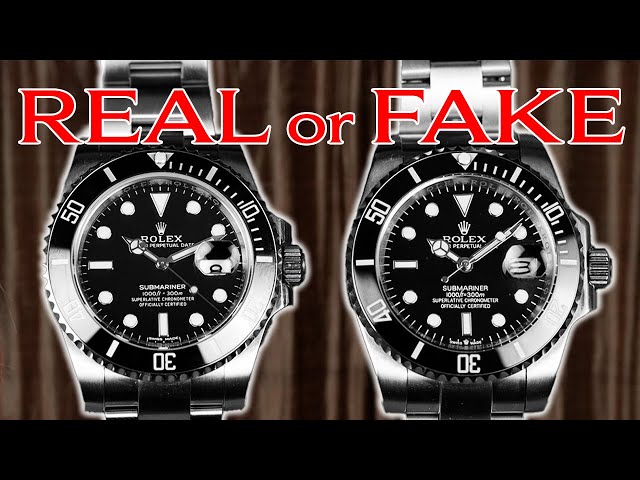
Speaking of magnifying, let's get out our virtual (or actual!) magnifying glass. Because the engravings on a Rolex are insane. They are incredibly precise. Crisp. Deep. Not blurry or shallow.
Check the case back. Most Rolexes don't have engravings on the outside of the case back. Some vintage ones might have specific engravings for special editions or achievements, but generally, it's smooth. If you see a logo or writing there on a modern watch, it's probably not a Rolex. The real action is on the inside of the case back, or on the rehaut (the inner metal ring between the dial and the crystal).
The serial number and model number are usually found between the lugs (those little bars that connect the strap to the case). You'll need to remove the bracelet to see them. On a real Rolex, these engravings are sharp and distinct. On a fake, they can be rough, uneven, or even look stamped.
The Crown Jewels
Ah, the crown! Every Rolex has a crown logo. And on a real one, it's perfect. Clean lines. Defined edges. It should be precisely applied to the dial and the winding crown itself.

And that winding crown? It should feel smooth and precise when you wind it. No grinding, no resistance. Clicking with authority. Like it knows its purpose. Fakes often have stiff or loose crowns. They just don't have that satisfying mechanical feel.
A little quirk: sometimes, you can see a tiny laser-etched Rolex crown logo on the sapphire crystal at the 6 o'clock position. It's super small and hard to see without a loupe. Not all Rolexes have it, but if you see it, and it looks perfect, it’s a good sign. If it looks blobby or uneven? Probably fake.
The Tick-Tock Tale
Now for the sound of success: the sweep of the second hand. Most Rolex watches have automatic movements. This means the second hand doesn't tick like a cheap quartz watch. It glides. Smoothly. It makes a gentle, almost imperceptible hum. Not a loud, jarring tick-tick-tick.
Watch closely. Does it sweep gracefully? Or does it jump from second to second? If it jumps, it’s almost certainly a quartz movement, and not a genuine Rolex. Some high-end fakes try to replicate the sweep, but often it’s not as smooth, or it might have a slight stutter. It’s all about that buttery smooth motion.
The Dial Deal
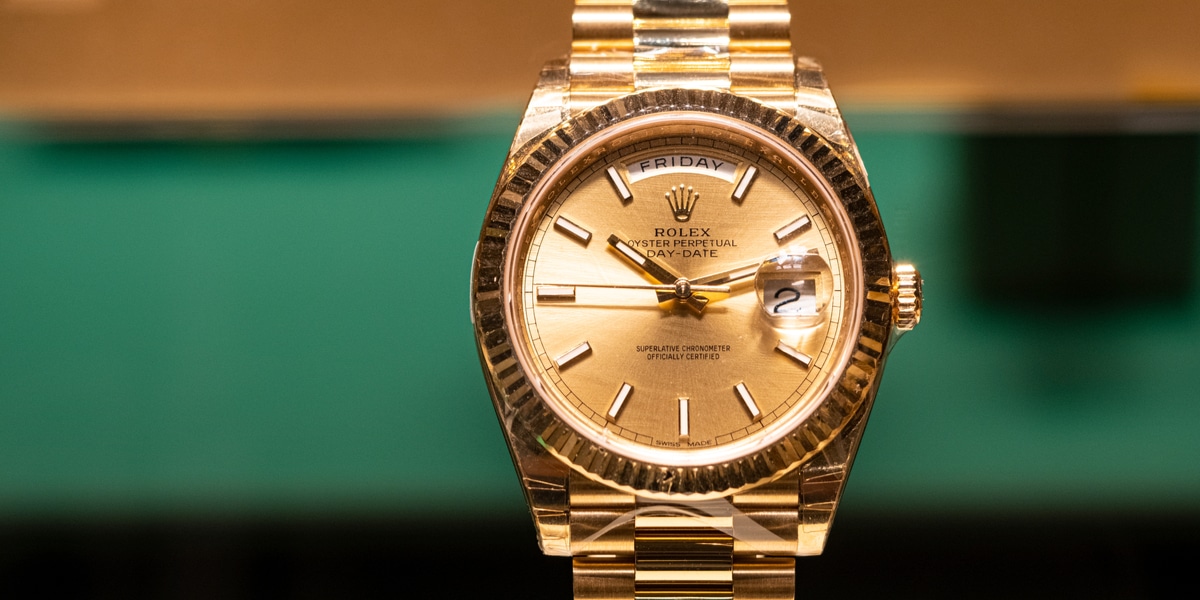
Let’s zoom in on the dial. This is where a lot of the magic happens. Look at the printing. The markers. The text. Everything should be perfect. No smudges. No misaligned letters. No sloppy lume (that glow-in-the-dark stuff).
The Rolex name itself should be flawlessly applied. The coronet logo should be perfectly formed. Even the tiny text, like "Superlative Chronometer Officially Certified," should be sharp and readable. Fakes often have blurry or slightly off-kilter text. It’s like they rushed the job.
And the lume? It should glow evenly and brightly in the dark. Not patchy or weak. It’s a subtle detail, but it speaks to the quality of the materials and craftsmanship.
The Bracelet Bonanza
Don't forget the bracelet! A real Rolex bracelet is a work of art. It’s smooth. Solid. The links fit together perfectly. There are no sharp edges. No rattling or looseness.

The clasp should also feel secure and well-made. It should click shut with a satisfying, solid sound. The Rolex coronet on the clasp should be well-defined. If the bracelet feels cheap, light, or noisy, you're likely looking at a fake.
The Paper Trail
Now, for the less tangible, but equally important stuff: the papers and the box. While these can be faked too, a complete set from a reputable dealer is a good sign. Does it have the original warranty card? The manual? The iconic green Rolex box?
Check the serial numbers on the papers. Do they match the serial number on the watch (remember, you might need to remove the bracelet to see it)? If the papers look cheap, or the serial numbers don't match, be suspicious. Very suspicious.
When in Doubt, Ask the Pros!
Honestly, the best way to be 100% sure? Take it to a reputable authorized Rolex dealer or a trusted watchmaker. They have the expertise and tools to spot a fake in a heartbeat. It might cost a small fee, but it's a tiny price to pay for peace of mind. Think of it as your final, definitive check.
So, there you have it! A few key things to look out for. It's a fun game of "spot the difference." And remember, even if you don't end up buying a Rolex today, knowing these details makes you a more informed buyer, and hey, you’ve learned some cool stuff about one of the most iconic brands in the world. Happy hunting!