
How To Get Paint Off Of A Wall
So, there I was, channeling my inner Picasso, armed with a paintbrush and a can of that vibrant shade of teal. You know, the one that looked so chic on the paint chip but, in retrospect, might have been a tad too enthusiastic for a rental apartment? Anyway, I was in the zone, creating my masterpiece (or so I thought), when my cat, Bartholomew, decided it was the perfect moment for a gravity-defying leap from the bookshelf. Next thing I know, I’ve got a Jackson Pollock-esque splatter of teal adorning the otherwise pristine white wall next to my carefully curated art collection. Cue the internal screaming. And the frantic Googling.
Sound familiar? That moment of sheer, unadulterated panic when something undesirable ends up on your wall? Whether it’s a rogue crayon masterpiece from a tiny human, a mysterious smudge that appeared out of nowhere, or your own artistic endeavors gone slightly awry (guilty as charged!), we’ve all been there. Walls are supposed to be a blank canvas, a backdrop, not a accidental gallery of oopsies. But fear not, my fellow decorators and accidental artists! Getting paint off of a wall is totally doable, and it’s usually way less dramatic than you think. Let’s dive in, shall we?
So, You've Got Some Unwanted Wall Art? Let's Talk Strategy.
First things first: don't panic. Seriously. Take a deep breath. Panicking usually leads to more scrubbing, more dabbing, and ultimately, more damage. We’re going for a calm, collected approach here, like a seasoned detective solving the case of the mysterious wall markings. And you, my friend, are the detective.
Must Read
The good news is, the method you’ll use really depends on a few key factors:
- What kind of paint are we dealing with? Water-based (like latex or acrylic) versus oil-based.
- How fresh is the paint? Wet paint is a whole different beast than dried-on paint.
- What kind of surface is your wall? Painted drywall? Wallpaper? Something else entirely?
Knowing these things will be your secret weapon. Think of it like choosing the right tool for the job. You wouldn’t use a hammer to screw in a lightbulb, right? Same principle applies here!
The Early Bird Catches the Worm (or in this case, the Eraser)
Let's start with the easiest scenario: fresh, wet paint. If you’ve just had a little… incident… and the paint is still wet, you’re in luck! This is your golden opportunity.
Grab a clean, damp cloth. Not soaking wet, just damp. Gently dab at the wet paint. The goal here is to absorb as much as possible without spreading it. Think of it like blotting a spill on your favorite shirt. Work from the outside in to avoid creating a bigger mess. If it’s a small splatter, a paper towel might even do the trick.
For slightly larger, but still wet, areas, a soft sponge can be your best friend. Again, keep it damp, not dripping. A little bit of mild dish soap mixed with water can be your secret ingredient here. It helps break down the paint without being too harsh.
Pro tip: Always test any cleaning solution in an inconspicuous spot first. You don’t want to discover that your miracle cleaner actually removes the wall paint too! Nobody wants to repaint an entire wall because they tried to fix a small smudge. Been there, done that, regretted it.
If you’re dealing with something like crayon marks (oh, the joys of toddlerhood!), you might be able to get away with a simple eraser. Yes, a regular pencil eraser! Gently rub the crayon mark. It’s surprisingly effective for waxy marks. For tougher crayon stains, a dab of baking soda paste (baking soda mixed with water) can work wonders. Apply, let it sit for a few minutes, then gently wipe away.
When Paint Decides to Stick Around: The Dried-Paint Dilemma
Okay, so the paint isn't so fresh anymore. It's dried. It’s hardened. It’s basically cemented itself to your wall, daring you to remove it. This is where things get a little more involved, but still totally manageable.
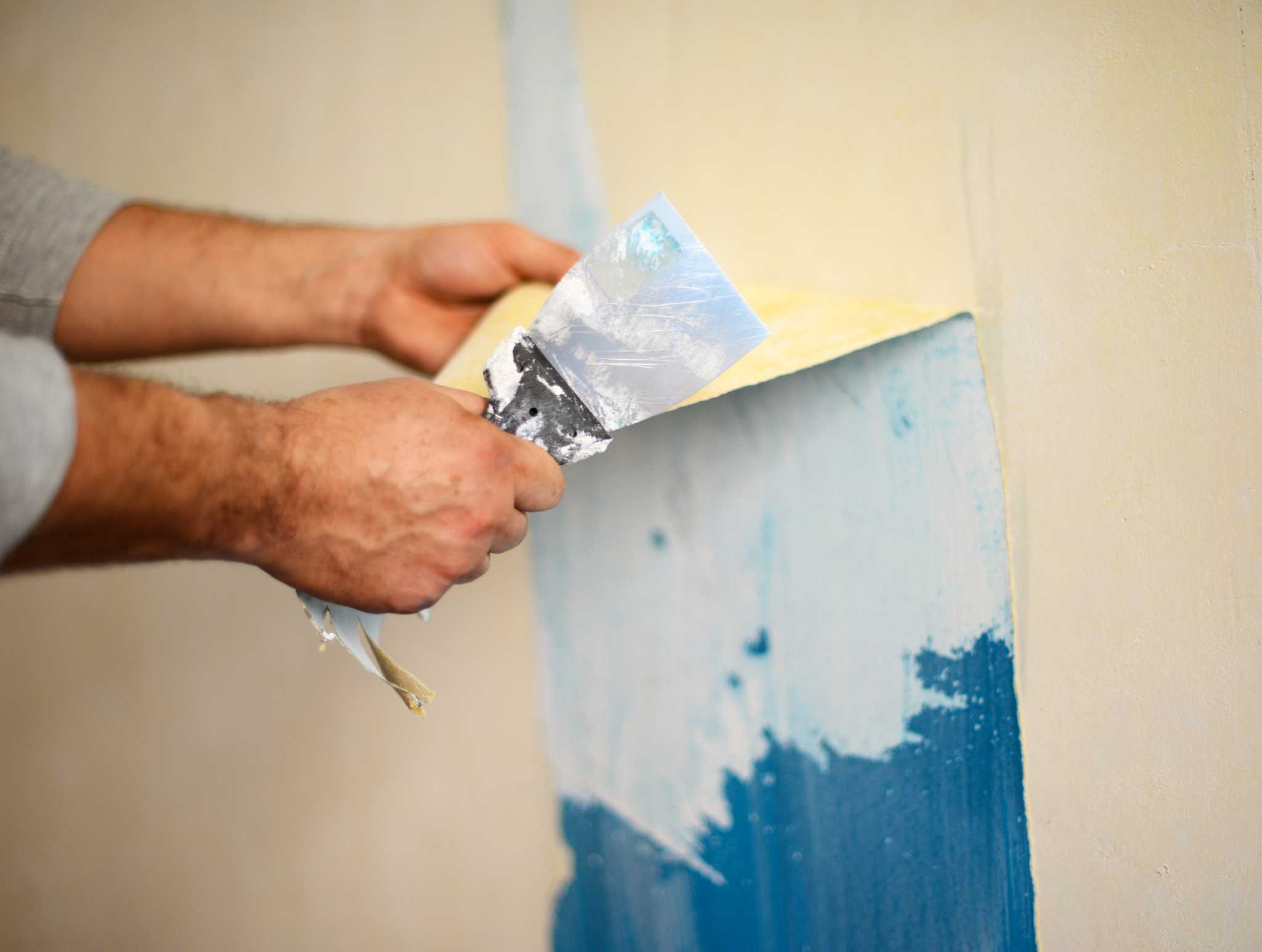
Your first line of defense against dried paint is often a good old-fashioned scraper. But hold on! Before you go hacking away at your wall like you’re trying to excavate ancient artifacts, let’s talk about the right kind of scraper. You want something with a smooth, flat edge, not a jagged one. A plastic scraper or a putty knife is usually your best bet. Metal can be too harsh and might scratch your paint or the wall surface itself.
Start by gently trying to lift an edge of the paint. If it comes away easily, you’re golden. If it’s resisting, don’t force it. You don't want to gouge the drywall. In these cases, you might need to soften the paint first. That’s where our cleaning solutions come back into play.
The Power of Water (and a Little Soap)
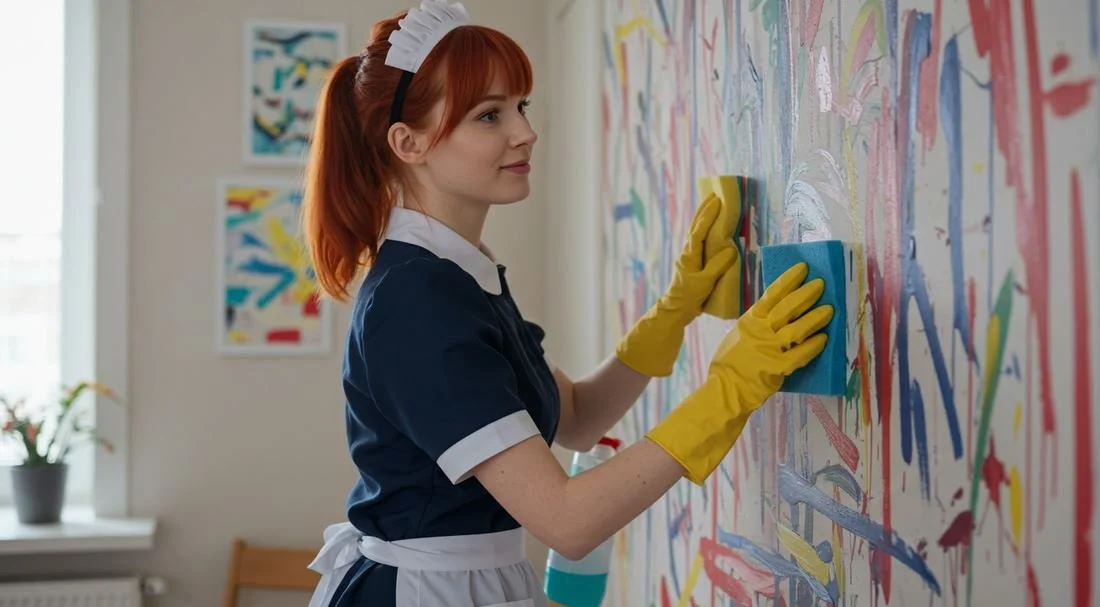
For water-based paints (latex, acrylic), warm water is your friend. Soak a sponge or a cloth in warm water, wring it out so it's damp but not dripping, and hold it against the dried paint for a few minutes. The goal is to rehydrate and soften the paint, making it easier to scrape or wipe away.
You can add a few drops of mild dish soap to your warm water. This is particularly helpful for grease or grime that might be mixed with the paint. Gently scrub the softened paint with the damp cloth or sponge. You might need to repeat this process a few times. Patience is key here, my friend. Think of it as a spa treatment for your wall. A tough, paint-stripping spa treatment.
Word to the wise: Be mindful of the wall’s finish. Glossy or semi-gloss paints are usually more durable and can withstand a bit more scrubbing. Matte or flat finishes are more porous and can absorb moisture or be damaged more easily. So, be gentle!
When Things Get Tough: The Magic of Rubbing Alcohol
If plain water isn’t cutting it, it’s time to bring out the big guns: rubbing alcohol. Isopropyl alcohol, the kind you find in the first-aid aisle, can be surprisingly effective at breaking down dried paint, especially water-based paints.
Dampen a cotton ball or a soft cloth with rubbing alcohol. Gently rub the paint stain. You’ll likely see the paint start to lift. Again, work in small sections and be patient. Rinse the area with a clean, damp cloth afterwards to remove any residue.
Important note: Rubbing alcohol can sometimes dull or even remove certain types of paint finishes. Always test it in an inconspicuous spot first. We’re trying to fix the problem, not create a new one!
Oil-Based Paint: The Stubborn Cousin
Oil-based paints are, as their name suggests, a bit more stubborn. Water won’t do much to soften them. For these, you’ll likely need a solvent.
Mineral spirits or paint thinner are the usual suspects for oil-based paint removal. These are strong chemicals, so ventilation is crucial. Open your windows, turn on fans, and make sure the area is well-aired out. Wear gloves to protect your skin and eye protection to keep your eyes safe.
Apply a small amount of the solvent to a clean cloth or sponge. Gently dab at the dried oil-based paint. The solvent will help break down the paint. You’ll then need to wipe away the loosened paint with a clean cloth.
Seriously, though: These solvents are potent. Use them sparingly and with extreme caution. If the paint is old and deeply ingrained, you might be looking at a more involved solution, or even the need for a professional. Don’t risk your health or the integrity of your walls for a stubborn paint smudge.
What About That Wallpaper Situation?
Ah, wallpaper. It's lovely when it's pristine, but it can be a nightmare when it gets painted. The approach here is different, and often more delicate.
If the paint is fresh and water-based, you might be able to carefully dab it off with a damp cloth, just like you would with a painted wall. But be very careful not to saturate the wallpaper, as this can cause it to peel or the paste to loosen.
For dried paint on wallpaper, things get trickier. You can try the gentle scraping method with a plastic scraper, but the risk of damaging the wallpaper is high. If the paint is thin, you might have some luck with a very mild soap and water solution, applied with a barely damp cloth, and then immediately dried with a clean, dry cloth. The key is minimal moisture and quick drying.
The sad truth: Sometimes, if the paint is heavy or has soaked into the wallpaper, the only solution might be to remove and replace the wallpaper section. It’s a bummer, I know. But it’s better than having a splotchy, damaged wall.
The Never-Ending Battle: Persistent Stains and Touch-Ups
So, you’ve scrubbed, you’ve scraped, you’ve maybe even dabbed with a bit of rubbing alcohol, and there’s still a faint mark. What now?
Sometimes, even after the paint is gone, the wall surface itself can be slightly altered. This is especially true if you’ve had to scrub pretty hard.

This is where the magic of touch-up paint comes in. If you’re lucky, you’ll have some leftover paint from when the wall was originally painted. If not, try to get a good match at the hardware store. Take a small chip of the wall paint with you if possible, or at least a good description of the color and sheen.
When you’re applying touch-up paint, use a small artist’s brush or a very fine-tipped roller. You want to blend the new paint seamlessly with the old. Don’t just slap a big blob of paint on there. Work in light, feathered strokes. You might need a couple of thin coats rather than one thick one. And again, test in an inconspicuous area first to ensure the color match is good.
The irony: Sometimes, the best way to fix a paint mistake is with… more paint. It's a funny old world, isn't it?
When All Else Fails: Embrace Imperfection (or Call a Pro!)
Look, sometimes, despite your best efforts, a tiny mark might remain. Or maybe you’ve tried a few methods and you're just not getting the results you want. It happens!
If the mark is small and barely noticeable, maybe you can learn to live with it. It's a sign of life, a testament to the fact that your home is lived in. Bartholomew and I have come to an understanding about that teal splatter. It’s now referred to as “Bartholomew’s Masterpiece” and serves as a funny anecdote, a conversation starter. (Okay, maybe I’ve just learned to strategically place a picture over it).
But if the damage is significant, or if you’re just not comfortable tackling it yourself, there’s no shame in calling in the professionals. A handyman or a painter can often work miracles and save you a lot of frustration. They have the tools, the knowledge, and the experience to fix it right.
Getting paint off of a wall can be a bit of a puzzle, but with the right approach and a little bit of patience, you can usually restore your walls to their former glory. So go forth, my brave wall-wrestlers, and conquer those paint stains! And maybe keep an eye on Bartholomew.

